 MMXXVI
Atlamál: the Greenlandic poem of Atli, with the women's dreams and the swapped message of runes
Atlamál retells the story of the Atlakviða, but in 103 stanzas: Guðrún sends a warning in runes, the messenger Vingi falsifies it, and the wives of Gunnarr and Högni dream of the danger.
Atlamál in grœnlenzku, “the Greenlandic Lay of Atli”, is a heroic poem of the Poetic Edda. It tells the same basic story as the Atlakviða, but is longer and has a different manner of narration. It has 103 stanzas and is the only Eddic poem written entirely in the metre málaháttr.
The plot
Atli plans to kill his brothers-in-law, Gunnarr and Högni, sons of Gjúki, and invites them to his hall. Guðrún, Atli’s wife and the sister of the two, learns of the plan and sends a warning in runes. The messenger, Vingi, corrupts the message, but Kostbera, Högni’s wife, reads enough to sense the danger.
The dreams
Högni dismisses Kostbera’s fear. She tells of dreams that troubled her, and he explains them away. Glaumvör, Gunnarr’s wife, has similar dreams, and Gunnarr also dismisses them, though he admits their lives may be short.
The journey
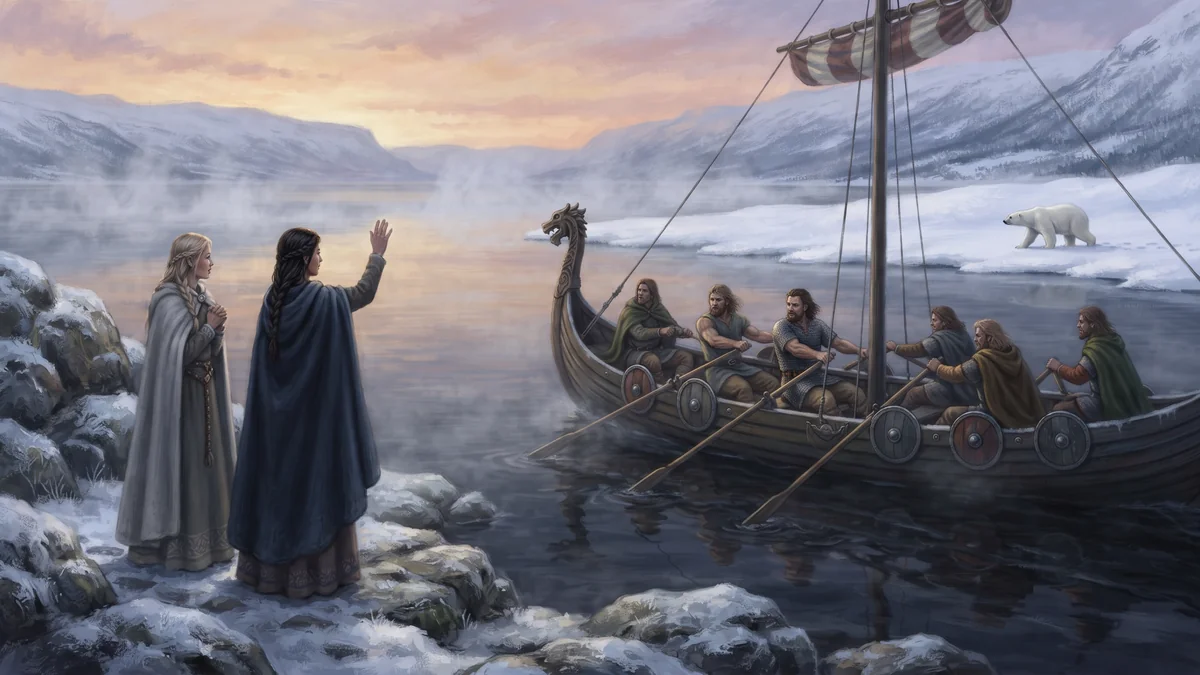
The brothers travel with three companions. At a fjord the women say farewell. Glaumvör makes Vingi swear there is no deception, and the men row away. On arrival Vingi confesses and is killed. Atli attacks the five guests with 30 men. Guðrún joins her brothers in the fight. They kill 18 of Atli’s warriors before being overpowered.
The outcome
After quarrels between Atli and Guðrún, and a comic episode involving the cook Hjalli, Atli has Gunnarr and Högni executed. Guðrún takes revenge with the help of Hniflungr, Högni’s son. The poem closes with the two trading recollections, with Atli’s request for an honourable burial, with her failed suicide attempt and with a remark on the good fortune of the man who fathered Gjúki’s children.
Why “Greenlandic”?
The Codex Regius calls both Atlamál and Atlakviða Greenlandic poems. Most scholars think Atlakviða predates the Norse settlement of Greenland and reject a Greenlandic origin for it. Atlamál, by contrast, fits a date compatible with Greenland, most likely the 12th century. The evidence includes a realistic polar bear in one of Kostbera’s dreams, the grim tone, which matches what is known of the settlement, and the modest standing of the chieftains, such as the Niflungar with only ten retainers.
In short
Atlamál shows how the same legend takes on a new face in the far west of the Norse world. To read the right runes and leave the swapped ones, play Guðrún’s runes.
Sources.
- English Wikipedia, article "Atlamál"
- Ursula Dronke, edition (1969), cited by Wikipedia
- Codex Regius, manuscript of the Poetic Edda