 MMXXVI
127 stories · 127 games
Viking Age
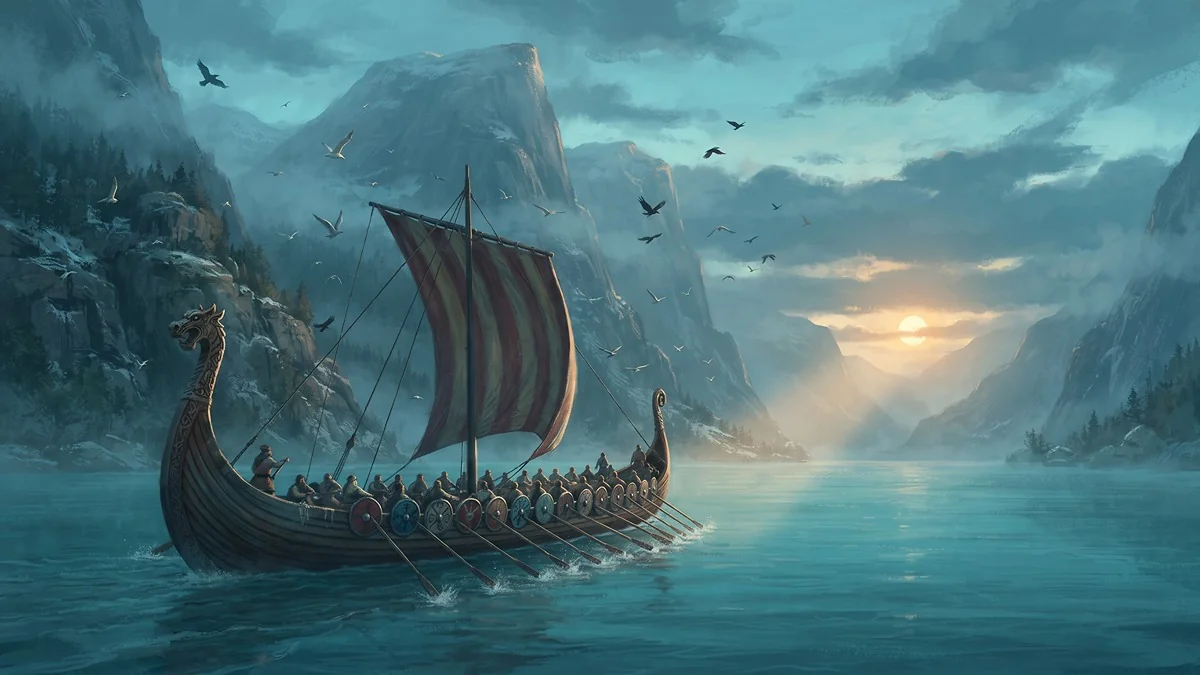
The sea was the road.
From the late eighth to the eleventh century, narrow ships carried traders, settlers and warriors from the North Sea to Constantinople and North America. Here archaeology speaks first: ships, swords, coins, runes and what we still do not know.
Start here
 Documented history
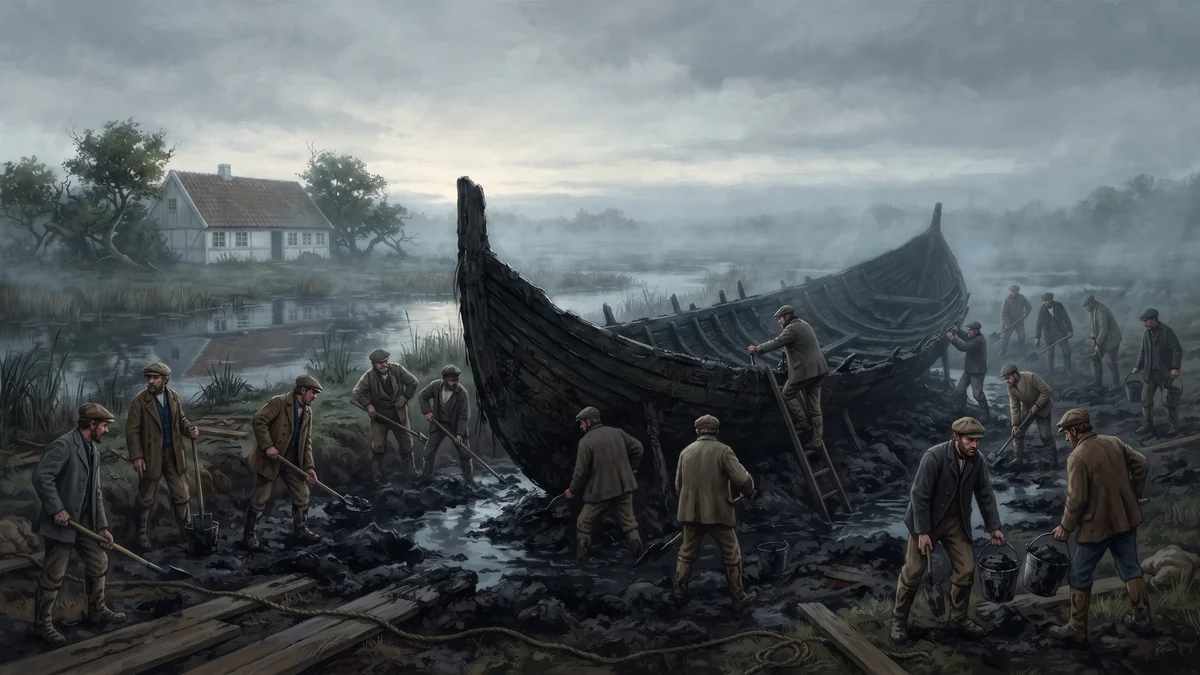
Nydam: the oak boat of AD 310 found in a Danish bog and taken as a spoil of war
In the Nydam bog in southern Denmark, the archaeologist Conrad Engelhardt found in 1863 a 23-metre oak boat with 14 pairs of oars, offered as a sacrifice more than 1,700 years ago. See what was found, what the war of 1864 changed and where the boat is today.
Read →
Stories of this realm
 Documented history
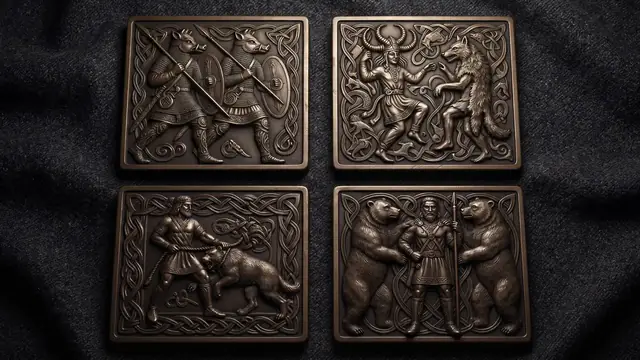
The Torslunda plates: four bronze dies from Öland and the dancing warrior in the horned headdress
In 1870, in a burial cairn on Öland in Sweden, four bronze dies were found that were used to stamp metal foils for Vendel-period helmets. See what each die shows and why some scholars see Odin and wolf-warriors in the scenes.
Read →
 Saga or medieval source
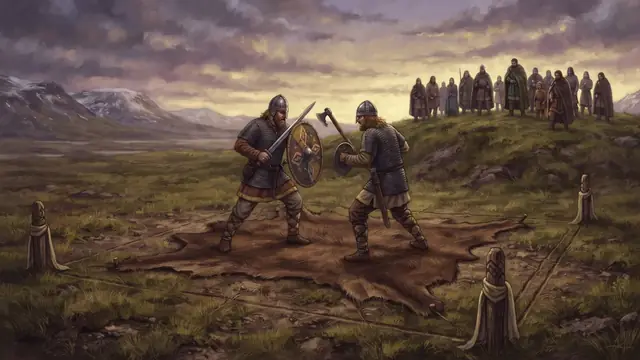
The hólmganga: the duel on the ox hide, the three shields and the ban of 1006
The hólmganga was the regulated duel of the Norse sagas: an ox hide on the ground, three borders around it, three shields each and a fight to first blood. See the rules according to Wikipedia and Kormáks saga, what the winner gained and why Iceland banned the duel in 1006.
Read →
 Documented history
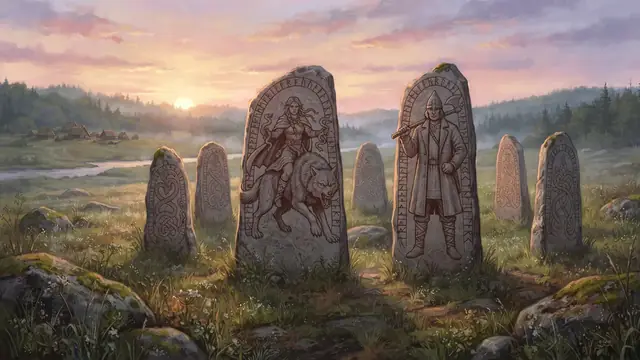
The Hunnestad Monument: the greatest Viking Age work in Scania, destroyed and rediscovered
The Hunnestad Monument, in Scania, was the largest and most famous of the Viking Age in the region. It was destroyed in the 18th century, but stones from it survive, and one turned up in a bridge in 2020. See what is known.
Read →
 Documented history
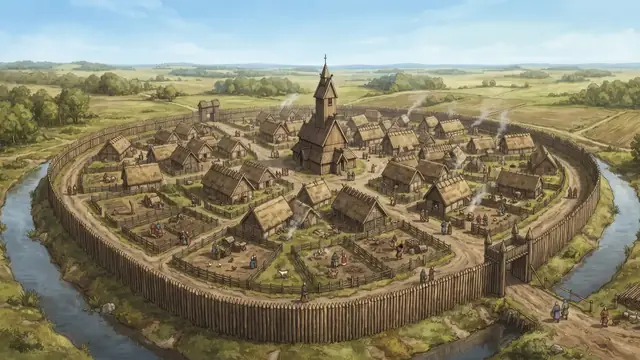
Lund: the city believed founded in 990, from 65 farms to 700 plots
Lund is believed to have been founded around 990, in the reign of Sweyn Forkbeard, to compete with the old centre of Uppåkra. See the wooden church, the churches, the cathedral and the figures of the town's growth, with the uncertainties.
Read →
 Documented history
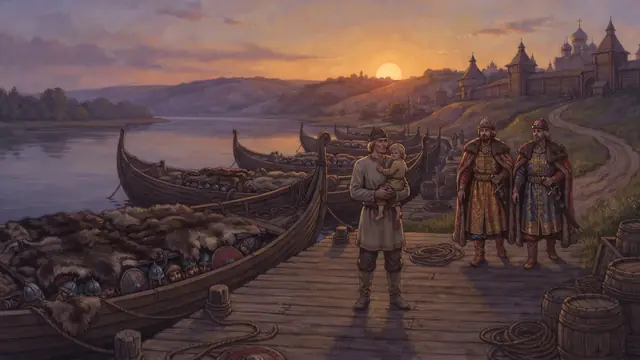
Askold and Dir: the first Varangian rulers of Kiev and the trick of the false merchants
Askold and Dir are the first Varangian rulers of Kiev named in the Primary Chronicle. In 882, it says, Oleg killed them with a merchants' trick. See what the chronicle says, what other sources tell and why their historicity is debated.
Read →
 Documented history
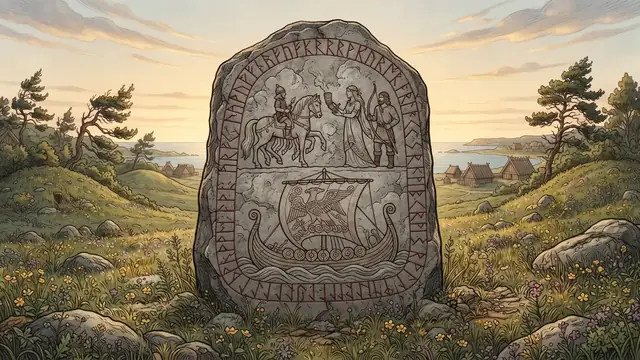
The Tjängvide stone: the eight-legged horse and the ship of Gotland
The Tjängvide stone, found in 1844 on Gotland, shows an eight-legged horse with its rider above and a ship below. See what is in each part of the stone and why the rider has several readings.
Read →
 Documented history
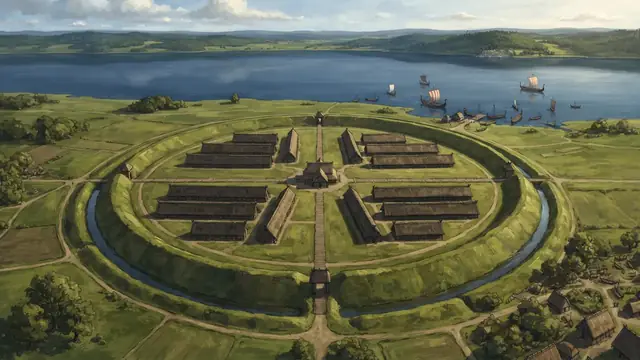
Aggersborg: the largest Viking ring fortress in Denmark, with 48 longhouses and 240 metres
Near the Limfjord in Denmark, a ring fort of about 980 has an inner diameter of 240 metres and 48 longhouses. See what it was like, what the excavations found and why the barracks idea was dropped.
Read →
 Documented history
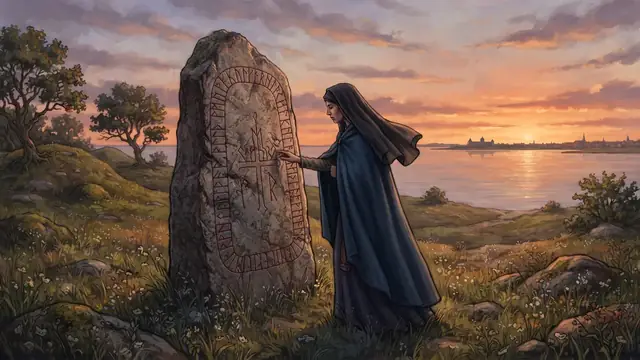
The Karlevi stone on Öland: the only complete skaldic poem carved on a runestone
On the Swedish island of Öland, a stone from the late tenth century carries a whole stanza in skaldic metre, the oldest preserved. See what it says, what remains obscure and the hammer of Thor carved on the back.
Read →
 Documented history
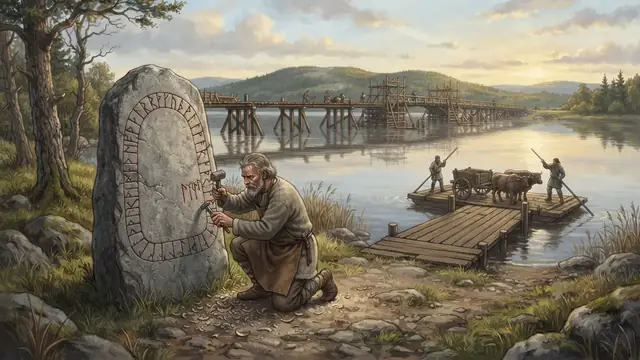
The Frösö stone: the northernmost runestone in Scandinavia and the man who "brought Christianity to Jämtland"
On the island of Frösön in northern Sweden, an eleventh-century stone records that Austmaðr, son of Guðfastr, raised it, had a bridge built and Christianized Jämtland. See what the inscription says and who made it.
Read →
 Documented history
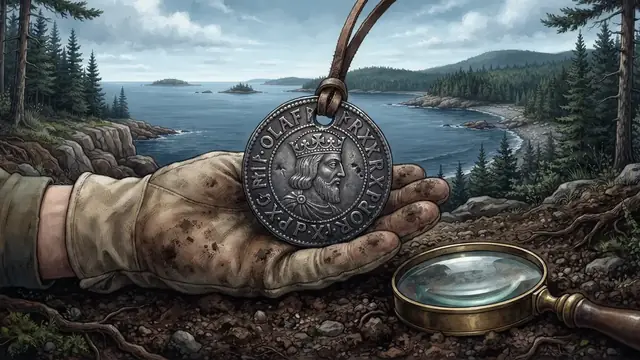
The Maine penny: an eleventh-century Norwegian penny found at a Native American site in the United States
In 1957, an amateur archaeologist said he found in Maine a silver penny of King Olaf Kyrre, of 1065–1080, at a Native American site. Is it genuine? How did it get there? See what is known and what is still disputed.
Read →
 Documented history
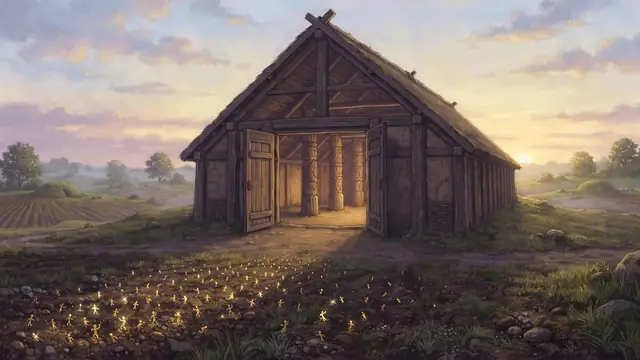
Uppåkra: the cult building rebuilt six times and the 200 gold foils
Near Lund, in Scania, Uppåkra was one of the great centres of the Nordic Iron Age. See what the excavation of the cult building found and what is still interpretation.
Read →
 Documented history
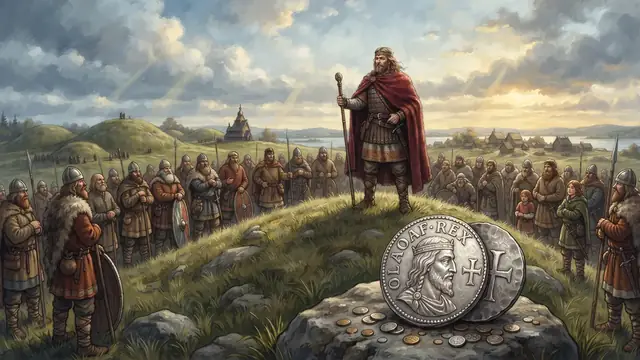
Olof Skötkonung: the Swedish king who minted the first coins and was baptized in four versions
Olof Skötkonung (c. 995 to 1022) was the first Swedish king to mint coins. See what we know about the nickname, the Sigtuna coins, the baptism told four ways and Thorgny's speech.
Read →
 Documented history
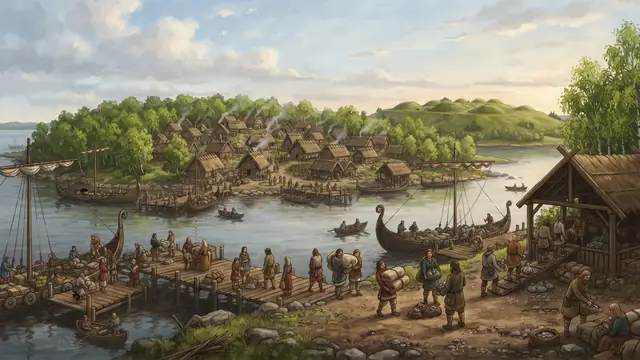
Birka: the Viking trading town on the island of Björkö in Lake Mälaren
Birka was a Viking Age trading town, founded around 750 on an island in Lake Mälaren. See what the excavations and the Life of Ansgar say, and what remains disputed.
Read →
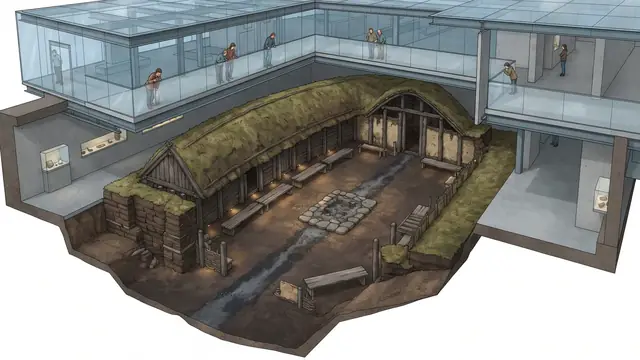 Documented history
Reykjavík 871±2: the longhouse under the city and the ash that dates the settlement
In a basement in central Reykjavík, remains of a settlement-age hall lie under a layer of ash. See what the excavation found, how the date was worked out and what it does not prove.
Read →
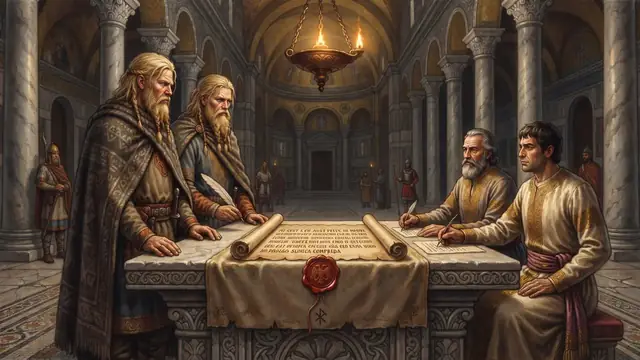 Documented history
The treaty of 911 between the Rus and Byzantium: the Norse names the chronicle kept
The Primary Chronicle keeps a treaty between the Rus and Byzantium, with the names of envoys that sound Scandinavian. See what it regulates and why some scholars doubt it.
Read →
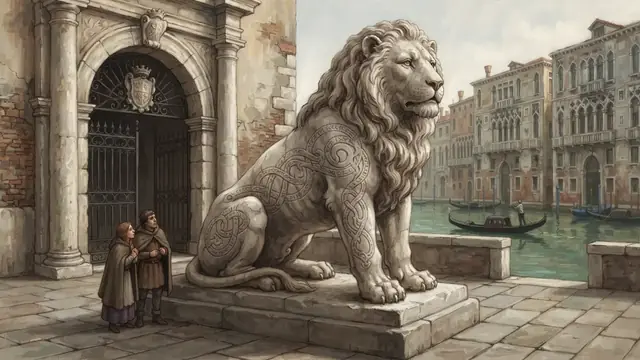 Documented history
The Piraeus Lion: the runes Vikings carved on a Greek marble lion, now in Venice
On a Greek marble lion in front of the Venice Arsenal, eleventh-century Scandinavians left runes. See what the inscriptions say, who studied them and what is still unknown.
Read →
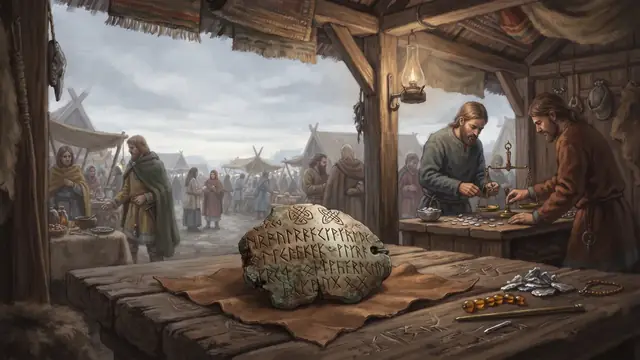 Documented history
The Ribe skull: runes on an amulet against a dwarf, around the year 725
A piece of human skull with runes, found at Ribe in 1973, seems to be an amulet against a dwarf who caused illness. See what the inscription invokes, who re-read it and what remains debated.
Read →
 Documented history
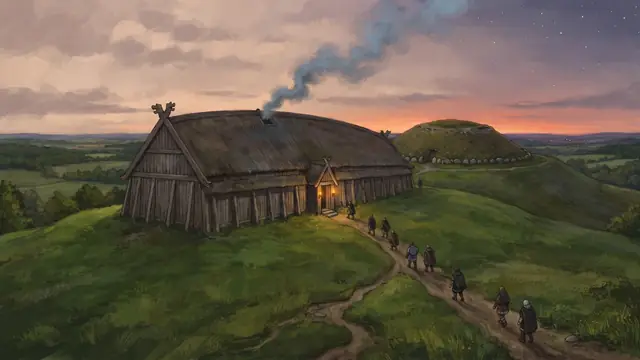
Lejre: the great royal hall in Denmark and the sacrifices every nine years
At Lejre, on Zealand, archaeologists found a 48-metre hall on top of an older one. See what the excavation shows, what Bishop Thietmar wrote about sacrifices and what is not known.
Read →
 Documented history
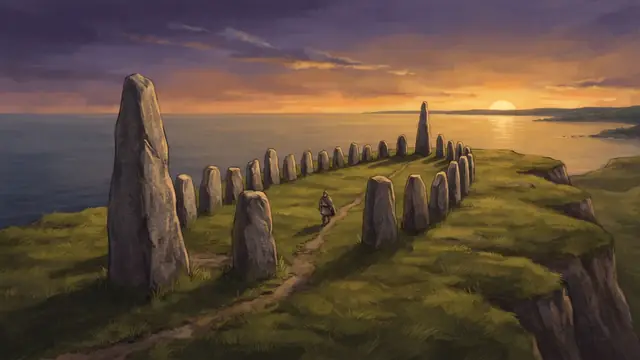
Ale's Stones: the stone ship of Sweden and the debate over its age
At Kåseberga, in Scania, 59 boulders form the outline of a 67-metre ship facing the Baltic. See what archaeology says about the age, the solar calendar debate and the legend of King Ale.
Read →
 Documented history
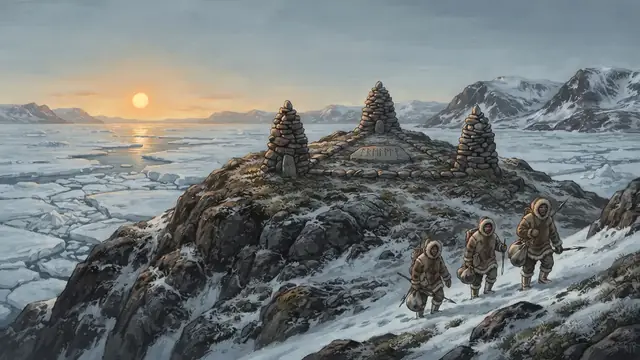
The Kingittorsuaq runestone: three Norsemen and three piles of stones in Greenland
In 1824 a stone with runes was found on an island in northern Greenland naming three men and three piles of stones. See the text, the approximate date, the six runes nobody can read and what remains uncertain.
Read →
 Documented history
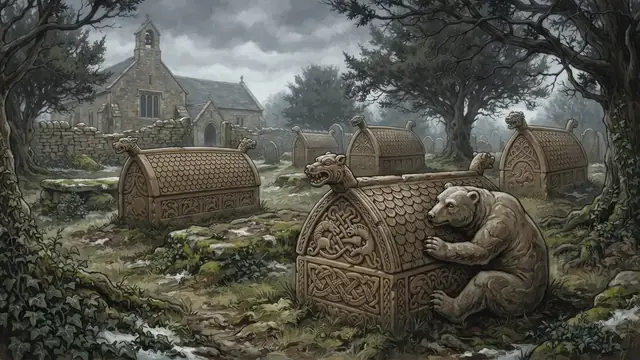
Hogbacks: the house-shaped gravestones of the Vikings in England and Scotland
Hogbacks are arched, house-shaped gravestones made in northern England and southwest Scotland in the tenth and eleventh centuries. See the stone shingles, the bears of Brompton, the five of Govan and what is still debated.
Read →
 Documented history
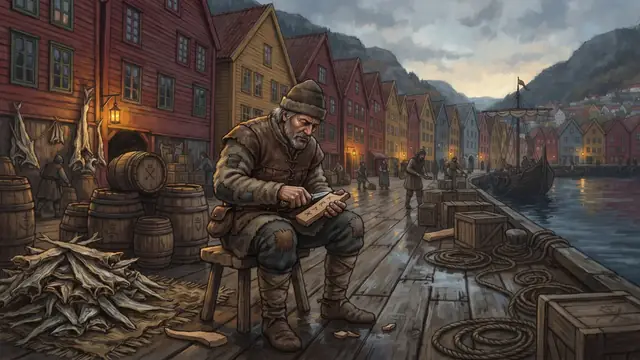
Bryggen: the rune sticks of Bergen, merchants' notes and love charms
Since 1955, about 670 medieval runic inscriptions have been found at Bryggen, in Bergen. See the sticks with owners' names, messages, Latin prayers and love charms, and what is still debated.
Read →
 Documented history
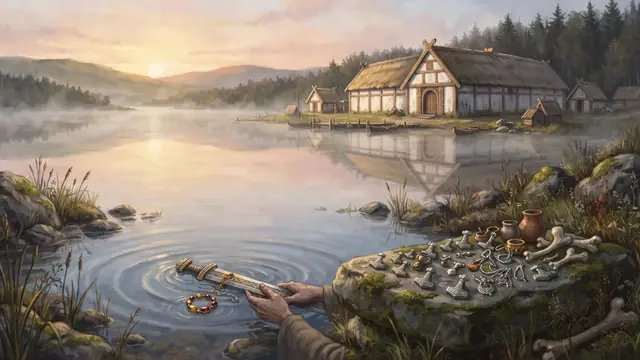
Tissø, the lake of Tyr, in Denmark: offerings and amulets of the Viking Age
Tissø, on Zealand, is "Tyr's lake". Excavations found weapons and jewellery thrown into the water, Thor's hammers and valkyrie pendants near the hall of a great lord. See what the National Museum says.
Read →
 Documented history
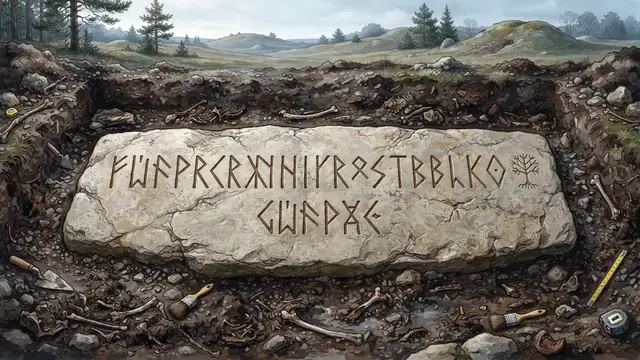
The Kylver Stone: the whole futhark carved on Gotland around 400
Found in 1903 over a grave on Gotland, the Kylver Stone carries the 24 runes of the Elder Futhark in order, the oldest known sequence, and a word that reads the same in both directions, sueus.
Read →
 Documented history
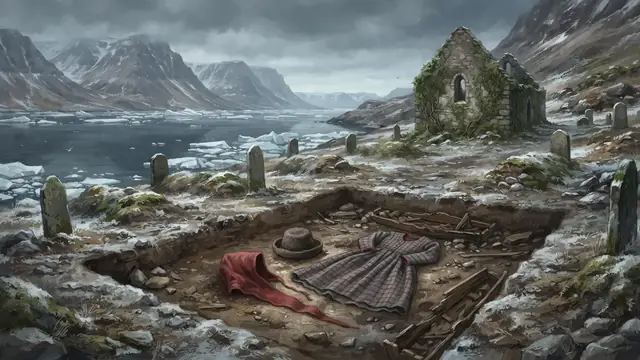
Herjólfsnes: the wool clothes found in the graves of Norse Greenland
In 1921, the archaeologist Poul Nørlund dug the churchyard of Herjólfsnes in Greenland and found hoods, hats and dresses of wool in European fashion. See what the clothes say about the Norse who lived there.
Read →
 Documented history
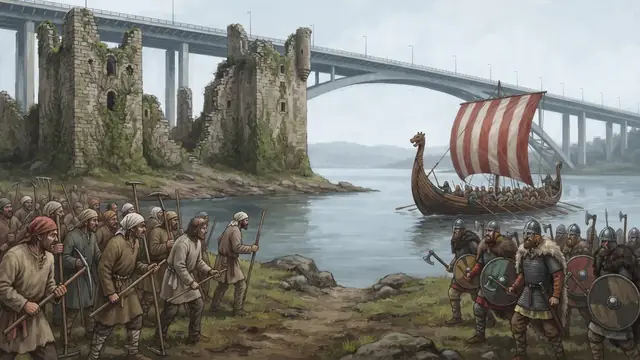
Catoira: the Torres de Oeste and the Viking Pilgrimage of Galicia
At Catoira, in Galicia, the ruined Torres de Oeste guarded the Arousa estuary from attacks by sea. Since 1961, the Viking Pilgrimage has reenacted the landing, today on the first Sunday of August. See what is known.
Read →
 Documented history
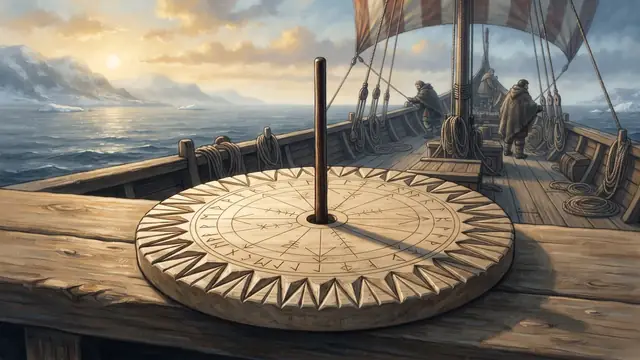
Uunartoq: the wooden disc found in Greenland and the idea of the sun compass
In 1948, in Norse Greenland, an archaeologist found a fragment of a wooden disc with notches. One hypothesis says it was a sun compass for Viking navigators. See what is known and what is debated.
Read →
 Documented history
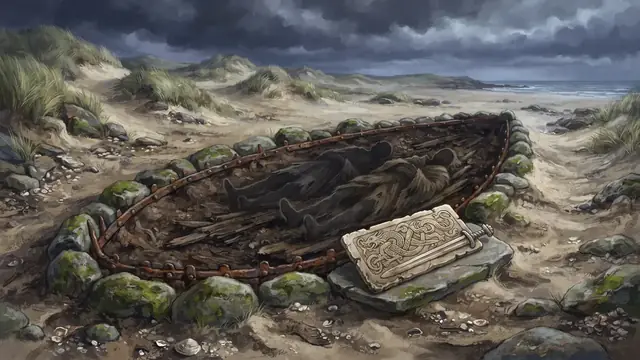
Scar: the Viking boat burial on the island of Sanday, in Orkney
On Sanday, in Orkney, a 6.5 m boat held the remains of a man, an elderly woman and a child, with a sword, arrows, a comb and a whalebone plaque. See what the 1991 excavation showed and what is not known.
Read →
 Documented history
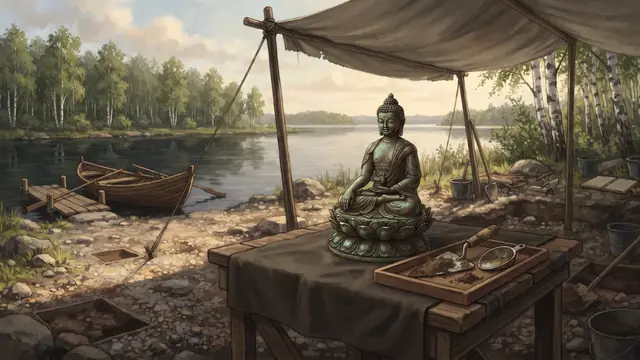
Helgö: the Buddha statuette found on an island in Lake Mälaren, Sweden
In 1954, an excavation at Helgö, in Sweden, turned up a small bronze statuette of the Buddha, in North Indian style and from the 6th century. See what is known of the piece, of the site and what remains open.
Read →
 Documented history
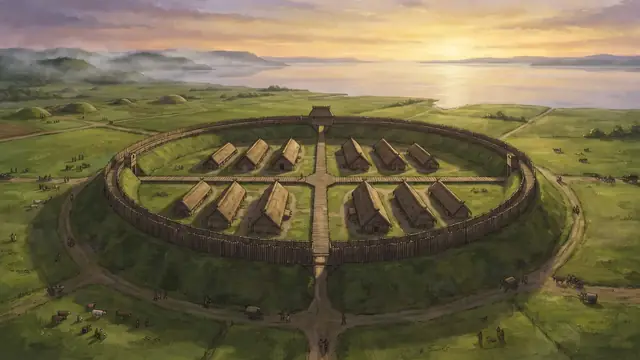
Fyrkat: the Viking ring fortress near Hobro, in Denmark, around 980
Fyrkat is a Viking fort in a perfect circle, 120 m across, with four gates and 16 longhouses. It was excavated between 1950 and 1958. See what is known of its construction, its graves and what remains uncertain.
Read →
 Documented history
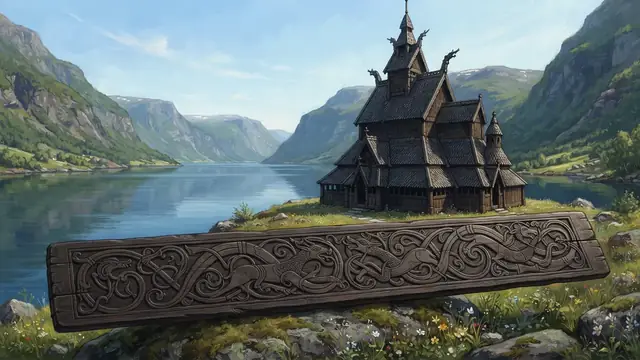
Urnes: Norway’s stave church and the carving style that bears its name
The stave church of Urnes, on the Lustrafjord, holds carvings of interlaced animals that gave the Urnes style its name. See what two sources say about the dates, the reused parts and the readings of the portal.
Read →
 Documented history
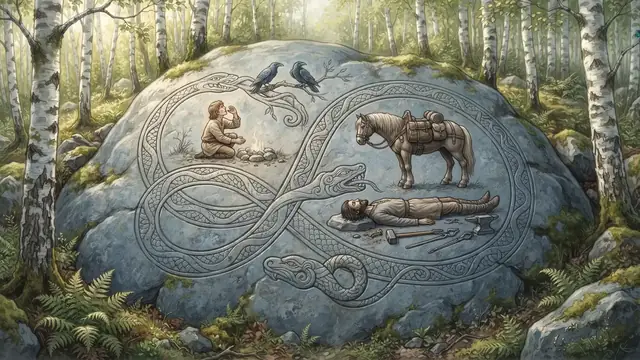
Ramsund: the carving of Sigurd on a rock in Sweden, around 1030
On a rock near Ramsund, in Sweden, a serpent band with scenes of the legend of Sigurd was carved around 1030. See what the entry says about the scenes, the family and the other Sigurd stones.
Read →
 Documented history
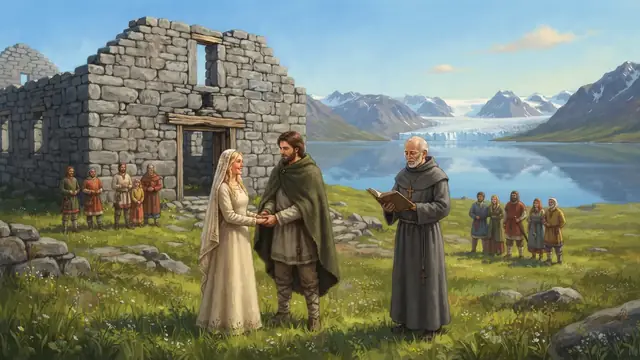
Hvalsey: the stone church of Greenland and the wedding of 1408
At Hvalsey, in Greenland, a stone church holds the latest record we have of the Norse of the island: a wedding in 1408. See what two sources say about the church, the record and what is not known.
Read →
 Documented history
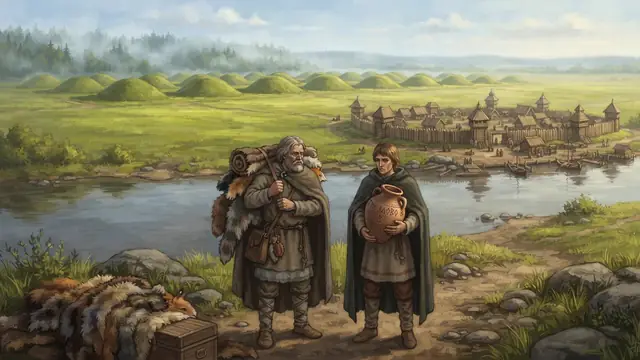
Gnezdovo: the great Varangian site near Smolensk, three thousand mounds and an inscription
Near Smolensk, in Russia, Gnezdovo was a trading post of the 10th century, with about 3,000 burial mounds. See what an entry says about the size, the mounds, the inscription in Cyrillic and what is debated.
Read →
 Documented history
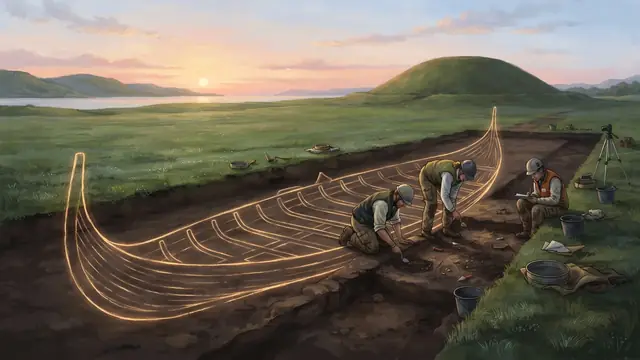
Gjellestad: the Viking ship found by georadar in Halden, Norway
In Halden, in eastern Norway, a georadar showed a Viking ship buried beside a great mound. See what three sources say about the discovery, the excavation, the measurements and what is still uncertain.
Read →
 Documented history
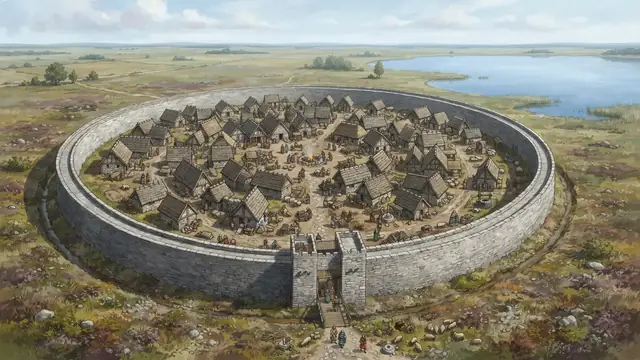
Eketorp: the ring fort of Öland, in Sweden, from the Iron Age to the 13th century
On Öland, in Sweden, the ring fort of Eketorp was used in three periods and then abandoned. See what two sources say about the phases, the buildings, the finds and what the dates leave open.
Read →
 Documented history
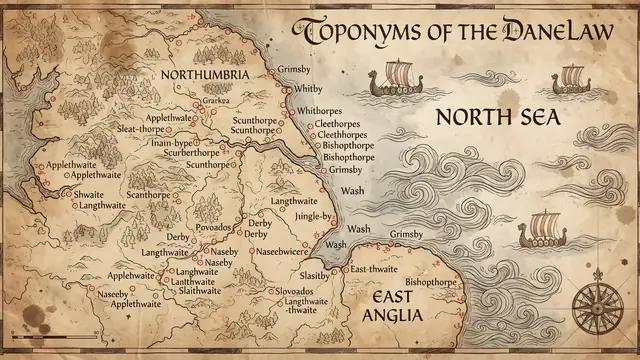
Norse place-names in England: what -by, -thorpe and -thwaite say about the Danelaw
Many hundreds of place-names of England, above all in the old Danelaw, have a Scandinavian origin. See what two sources say about the endings -by and -thorpe and why a name does not prove who the people were who gave it.
Read →
 Documented history
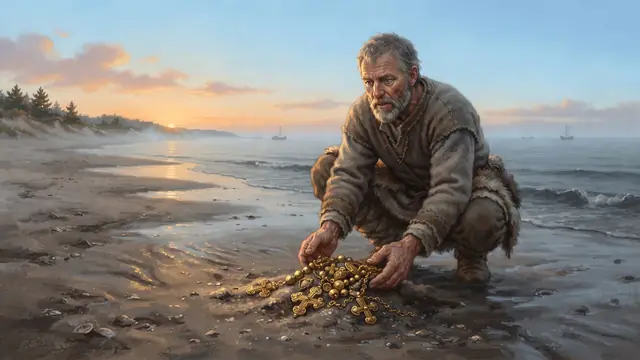
The Hiddensee treasure: gold pendants that join Thor's hammer and the cross
In 1873, after floods, 16 pendants, a brooch and a neck ring of gold from the 10th century appeared on a German island of the Baltic. See what two sources say of the treasure, where it is and why the link with a king is only a hypothesis.
Read →
 Documented history
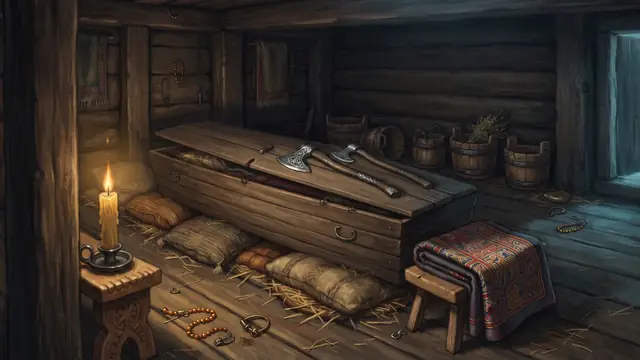
The Mammen grave: an axe with silver, a candle and a chamber dated to 970
In a mound near Viborg, in Denmark, there was a wooden chamber with a man in a coffin, an embroidered cloak, two axes and a large wax candle. The timber was felled in the winter of 970 to 971. See what two sources say and what is only a hypothesis.
Read →
 Documented history
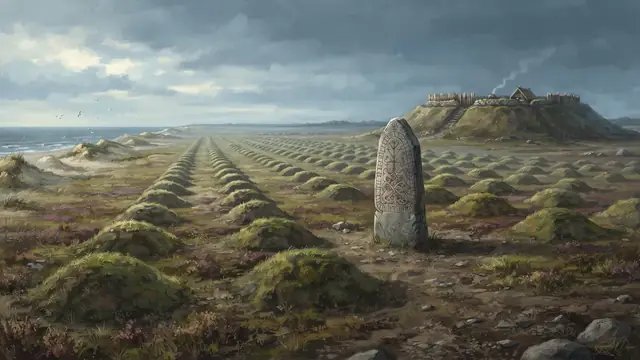
Grobiņa, in Latvia: the Scandinavian settlement, the mounds and Rimbert's "Seeburg"
Near Liepāja, on the Baltic coast, there are cemeteries with about 2000 mounds tied to a Scandinavian settlement. See what two sources say about Grobiņa, what depends on Nerman and on Rimbert and what remains unanswered.
Read →
 Documented history
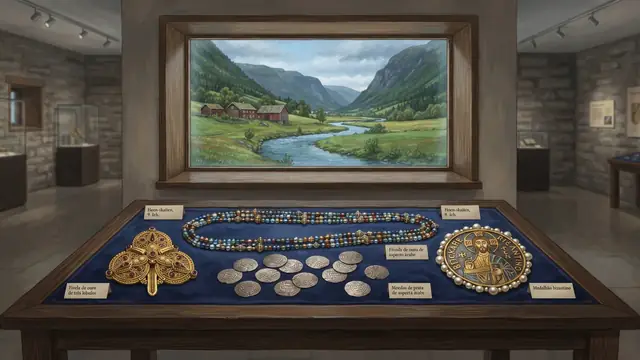
The Hoen treasure: gold, Arab coins and beads found in Buskerud
The Hoen treasure, found in 1834 in Buskerud, Norway, brings together jewellery, coins and beads of very different origins, deposited in the late 9th century. See what two sources say and where the counts differ.
Read →
 Documented history
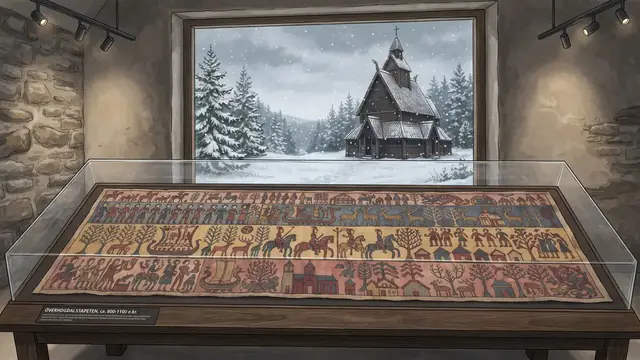
The Överhogdal tapestries: Viking Age textiles found in a Swedish church
The Överhogdal tapestries, found in 1909 in a church in Härjedalen, Sweden, show hundreds of human and animal figures. See what two sources say about the date, the counts and the interpretation.
Read →
 Documented history
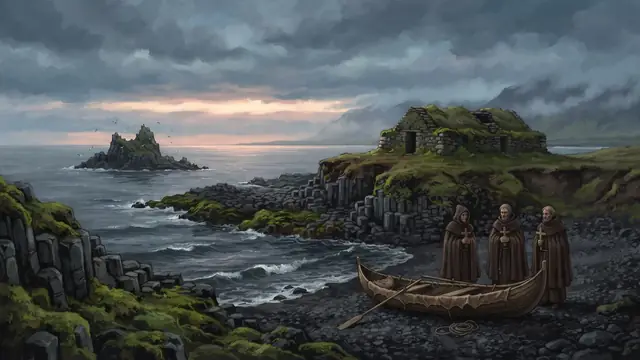
The papar: the "Christian men" the sources say lived in Iceland before the Norse
The papar are "Christian men" who, according to medieval Icelandic sources, lived in Iceland before the Norse. See what two sources say, what they rest on and why archaeology has not yet confirmed their presence.
Read →
 Documented history
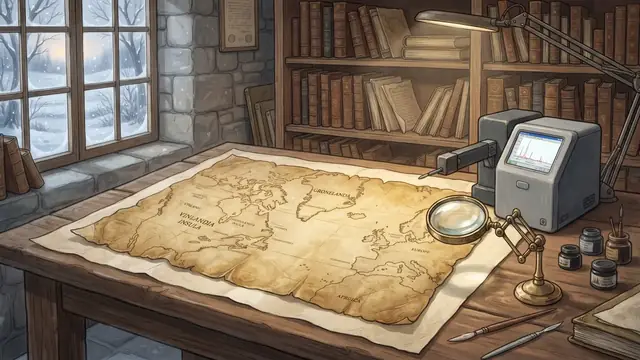
The Vinland Map: what Yale's analyses showed about the ink
The Vinland Map, held at Yale, was presented in 1965 as a medieval map with the Norse Vinland. In 2021, analyses of the ink showed titanium of modern use. See what two sources say and what remains unanswered.
Read →
 Documented history
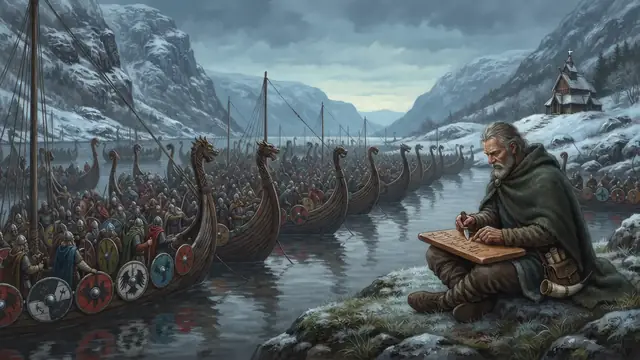
The Battle of Nesjar, in 1016: Olaf Haraldsson against Sveinn Hákonarson
On 25 March 1016, Olaf Haraldsson faced Sveinn Hákonarson at Nesjar, in Norway,. See what two sources say about the battle, the poems and the open points.
Read →
 Documented history
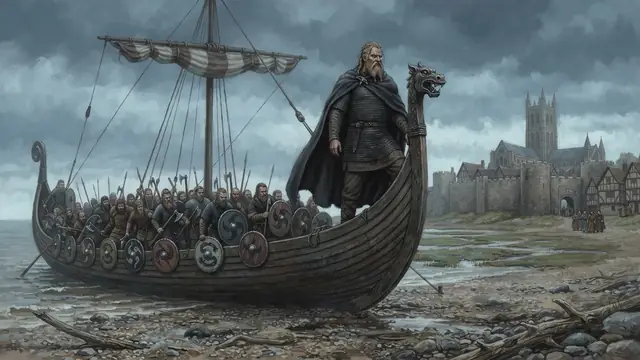
Thorkell the Tall: from the siege of Canterbury to the earldom of East Anglia
Thorkell the Tall was a Danish warlord who ravaged southern England, served King Æthelred and then Cnut, and vanished from the records in 1023. See what the sources tell and where they differ.
Read →
 Documented history
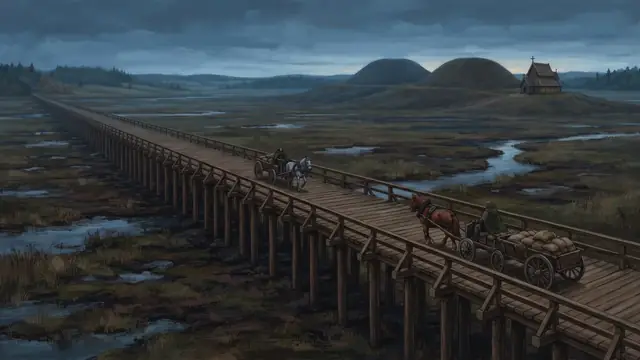
The Ravning Enge bridge: 760 metres of oak near Jelling
The Ravning Enge bridge, in the Vejle river valley in Denmark, was the country's longest timber bridge until 1935. See the measurements, the dating of the timber, the attribution to Harald Bluetooth and the differences between sources.
Read →
 Documented history
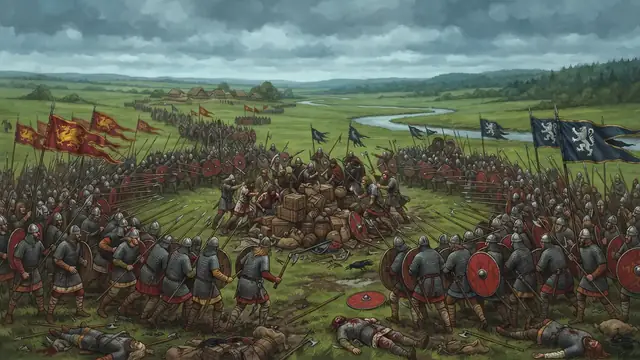
Battle of Tettenhall, 910: Edward, Æthelflæd and the end of a Viking army in Mercia
On 5 August 910, an army of Wessex and Mercia caught near Tettenhall the Northumbrian Vikings who were plundering Mercia. See what the sources say about the campaign, the kings killed and what is still unknown.
Read →
 Documented history
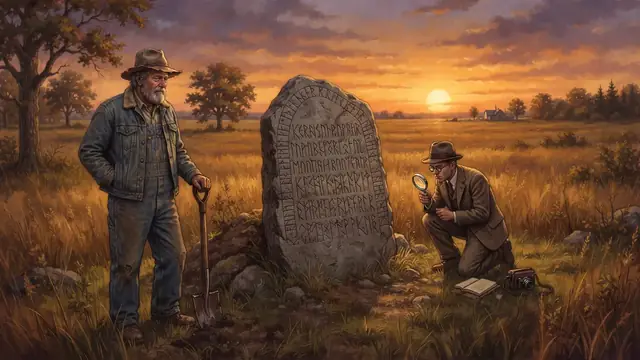
The Kensington Runestone: the runic inscription of 1362 found in Minnesota in 1898
The Kensington Runestone, reported in 1898 by Olof Ohman in Minnesota, bears a runic inscription dated 1362. See what it says, how it was examined and why most scholars regard it as a forgery.
Read →
 Documented history
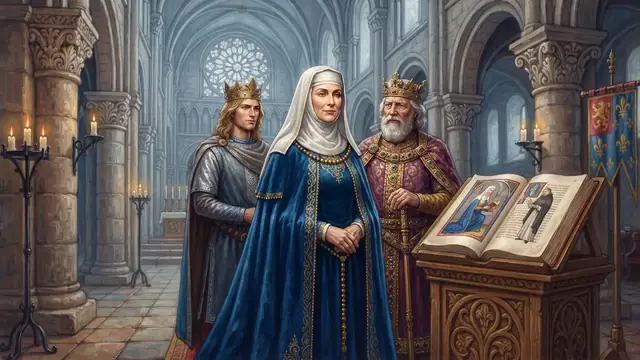
Emma of Normandy: the queen who married two kings of England and mothered two more
Emma of Normandy, born around 984, was queen of England twice: she married Æthelred in 1002 and Cnut in 1017. See her life, the Encomium that praises her and what the legend of the fire added later.
Read →
 Documented history
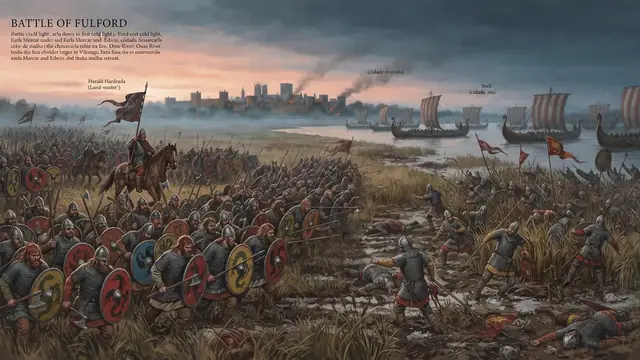
The Battle of Fulford, 1066: Harald Hardrada and Tostig against the earls of northern England
On 20 September 1066, south of York, Harald Hardrada and Tostig defeated the earls Edwin and Morcar at Fulford, five days before Stamford Bridge. See what the source records and which numbers remain in doubt.
Read →
 Documented history
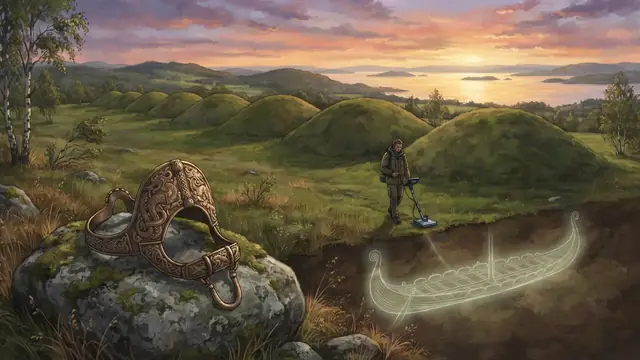
Borre, in Vestfold: seven great mounds, a buried ship and the style of knots and animals
The Borre cemetery in Norway has seven large mounds and 21 smaller ones, some more than 45 metres across. See what the excavations from 1851 to 2019 found, what the Borre style is and what remains only an indication.
Read →
 Documented history
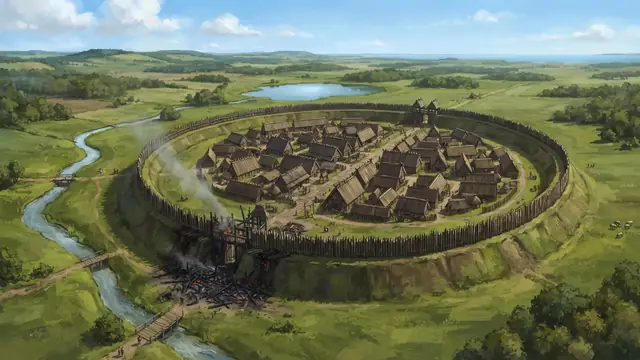
Borgring, the ring fortress of Køge: how a day's march pointed to a missing fortress
Borgring, on Zealand in Denmark, is a circular fort about 145 metres across, found in 2014 because the trelleborg-type fortresses lay a day's march from one another. See the discovery, the burnt gates and what remains unproven, such as the exact date and the builder.
Read →
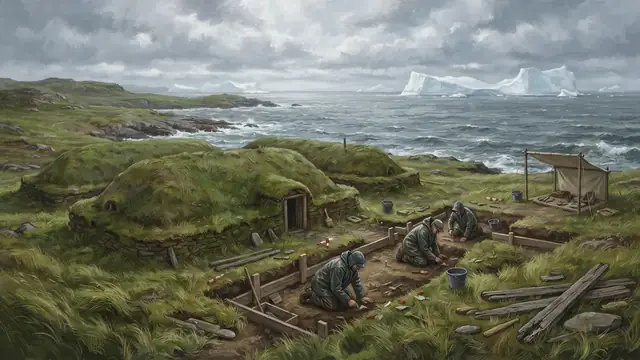 Documented history
L'Anse aux Meadows, the Norse site in Newfoundland: what the excavations showed
L'Anse aux Meadows, in Newfoundland, is a Norse site in North America, found in 1960. See what the source consulted gathers about the excavations of the Ingstads and Parks Canada, the eight buildings, the forge, the dates of 1014 and 1021 and the doubt about Vinland.
Read →
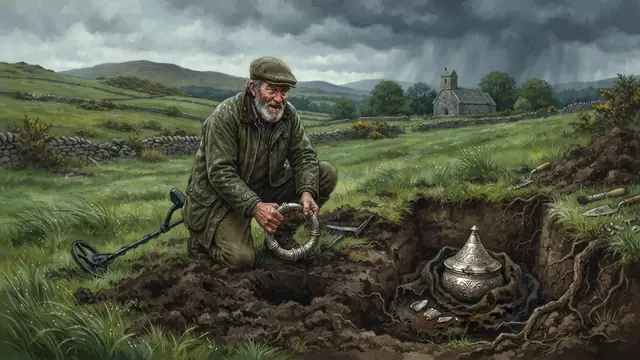 Documented history
The Galloway Hoard, in Scotland: what the article says about the 2014 find
The Galloway Hoard is a treasure buried around the year 900 and found in 2014 by a metal detectorist in south-west Scotland. See what the source consulted gathers about the find, the contents, the vessel of Asian origin, the 2017 purchase and the questions that remain unanswered.
Read →
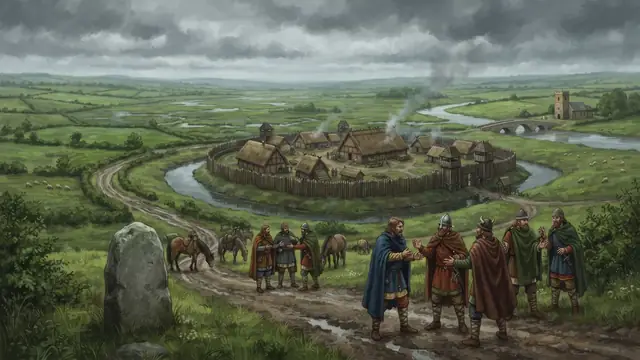 Documented history
The Danelaw, the "law of the Danes" in England: the treaty, the Five Boroughs and the place-names
The Danelaw was the part of England under Scandinavian law after the treaty between Alfred and Guthrum. See what the source consulted gathers about the name, the treaty, the Five Boroughs, the place-names in -by and -thorp, the reconquest in the 10th century and the doubts that remain.
Read →
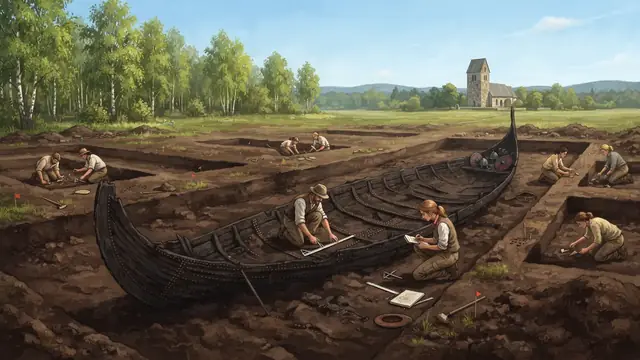 Documented history
Valsgärde, the boat graves near Uppsala: what Uppsala University has excavated since 1928
Valsgärde is a burial ground with boat graves about 3 km north of Gamla Uppsala, in Sweden. See what Uppsala University reports on the excavations from 1928 to 1952, the Vendel-period helmets, the broken glass vessels and the doubts the text itself leaves.
Read →
 Documented history
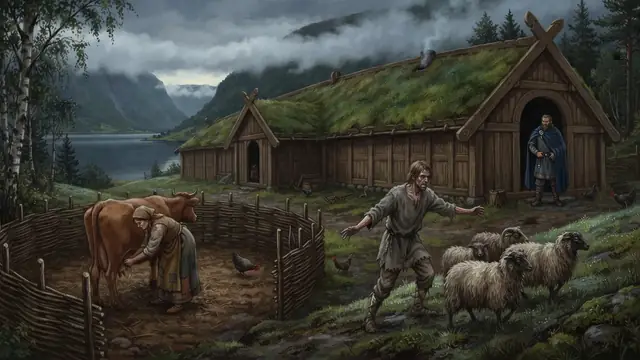
Thralls: the enslaved people of the Viking Age, between the free karl and the noble jarl
Thralls (þrælar) were the enslaved people of Viking Age Scandinavia, below the karl, the freeman, and the jarl, the noble. See what the source consulted gathers on how someone became a thrall, what they did, how they could be freed and how slavery ended.
Read →
 Documented history
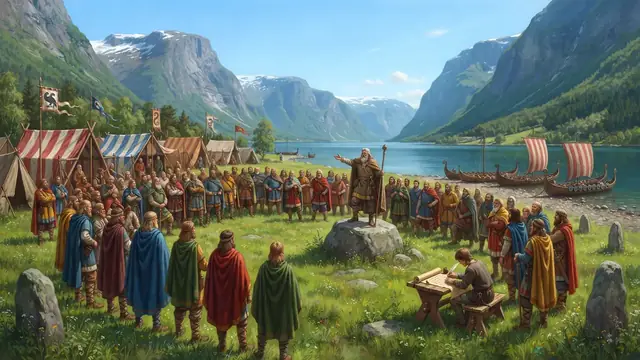
The Gulating, the assembly of western Norway: from the year 900 to the written law of Magnus Lagabøte
The Gulating was a yearly assembly in western Norway, from about 900 to 1300, and the Older Gulating Law is the oldest record of Norwegian law. See what the source consulted gathers on the place, King Hákon the Good, the versions of the law and the fee of 189 cattle.
Read →
 Documented history
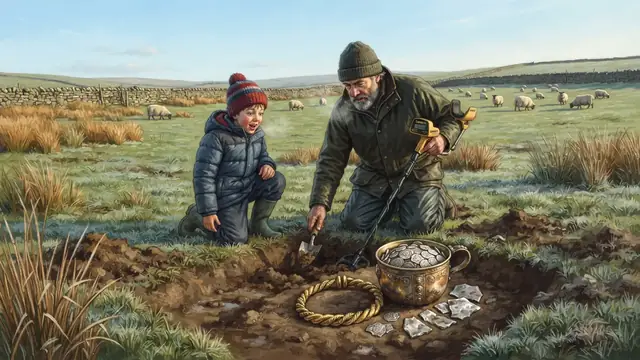
The Vale of York Hoard: 617 silver coins found by father and son with a metal detector
On 6 January 2007, near Harrogate, David Whelan and his son Andrew found, 30 cm deep, a Viking hoard of 617 coins and 65 other items. See what the source consulted gathers and what nobody knows about who buried it.
Read →
 Documented history
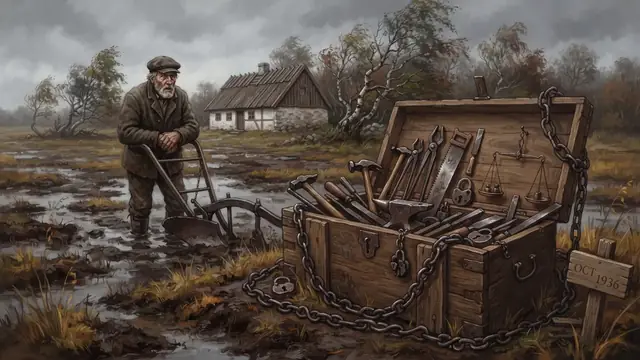
The Mästermyr chest: more than two hundred tools of a Viking craftsman found in a Gotland mire
In 1936 a Gotland farmer ploughed a field and struck an oak chest wrapped in chains. Inside were more than 200 tools, the largest Viking Age tool find in Europe. See what is known and what nobody knows.
Read →
 Documented history
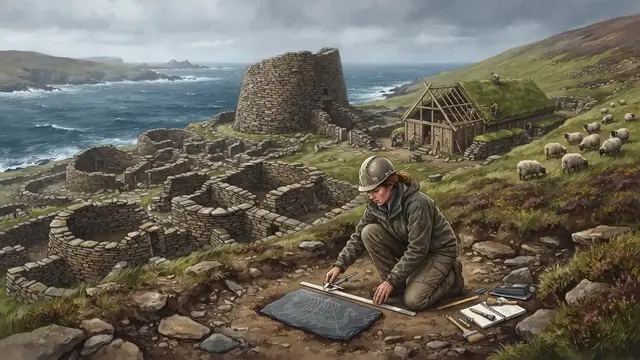
Jarlshof in Shetland: four thousand years of stacked houses and a Norse longhouse
At Jarlshof, in southern Shetland, a storm exposed layers of occupation from the Bronze Age to the Middle Ages. See what the source consulted gathers on the Norse longhouse, the loom weights, the stone drawings of ships and the name invented by Walter Scott.
Read →
 Documented history
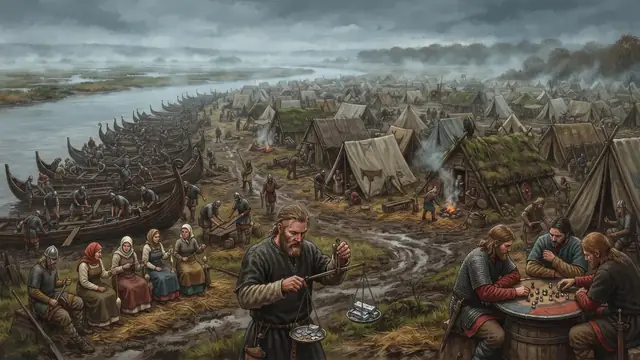
Torksey, 872–873: the winter camp of the Great Army that looked like a town on the move
In Lincolnshire, detectorists and archaeologists found more than a thousand objects in a field where the Great Army spent the winter. See what the University of Sheffield and Archaeology magazine say, and where the figures differ.
Read →
 Documented history
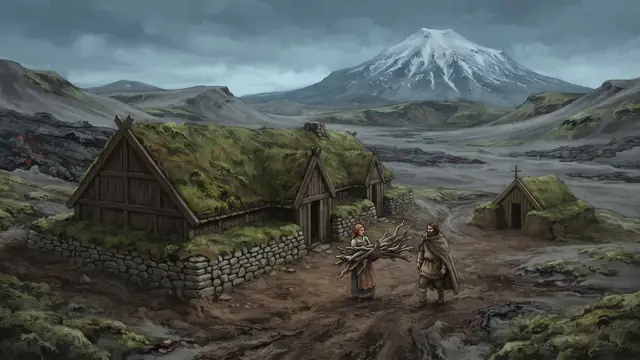
Stöng: the Icelandic farm buried by Hekla and the replica that shows how it might have looked
In the valley of Þjórsárdalur, ash from the volcano Hekla covered medieval farms. See what the guides consulted say about the ruins of Stöng, its rooms, the man tradition ties to the place and the rebuilt house.
Read →
 Documented history
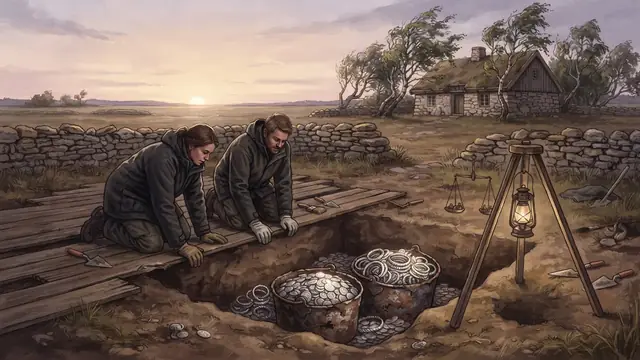
Spillings: the 67-kilo silver hoard found on Gotland during a film shoot
In 1999, archaeologists found under the floor of a Viking outbuilding on Gotland more than 14,000 coins and nearly 500 silver arm rings. See what the find contains, its date and why it matters.
Read →
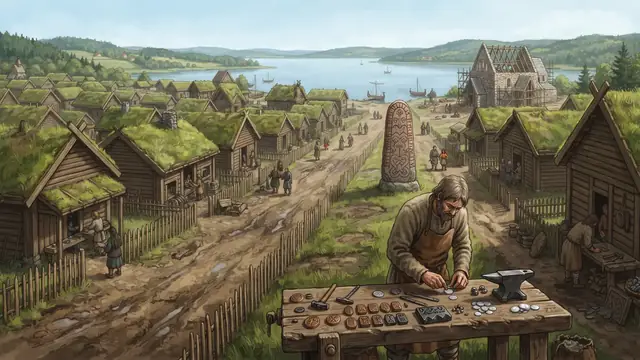 Documented history
Sigtuna: Sweden's first real town, with coins, aligned plots and more than 40 runestones
Founded around 980 on the shore of Lake Mälaren, Sigtuna replaced Birka and minted the first Swedish coins. See what the articles consulted say about its streets, crafts, runes, churches and the origins of its inhabitants.
Read →
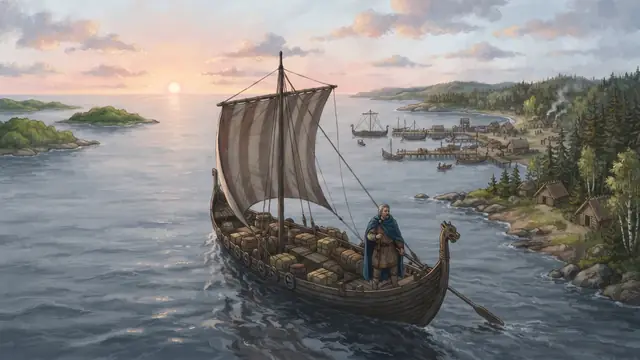 Documented history
Wulfstan of Hedeby: the voyage of seven days and nights to Truso, on the Baltic
A merchant of the late 9th century described, in an Old English text, the sea route from Hedeby to Truso. See what he tells, what the page consulted says and what remains in doubt.
Read →
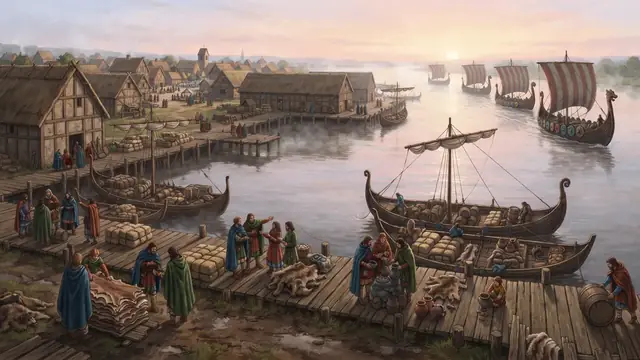 Documented history
Dorestad: the great port of the Rhine and the Viking raids from 834 to 863
A Frankish trading town on the banks of the Lower Rhine was attacked almost every year from 834. See what the page consulted says about trade, the raids and why it was abandoned.
Read →
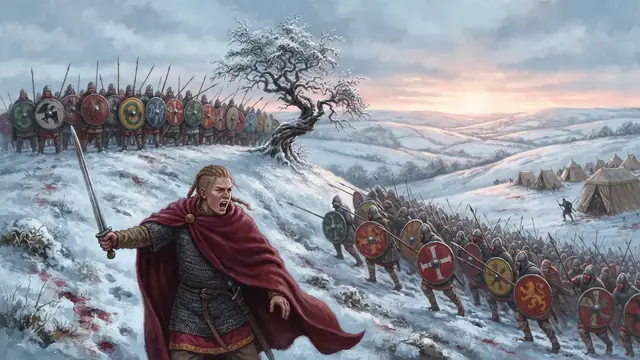 Documented history
Ashdown, 871: Alfred attacks uphill and defeats the Great Army
In January 871, the West Saxons faced two Viking kings and several earls on a Berkshire hill. See what Asser and the Anglo-Saxon Chronicle tell, and where the uncertain parts lie.
Read →
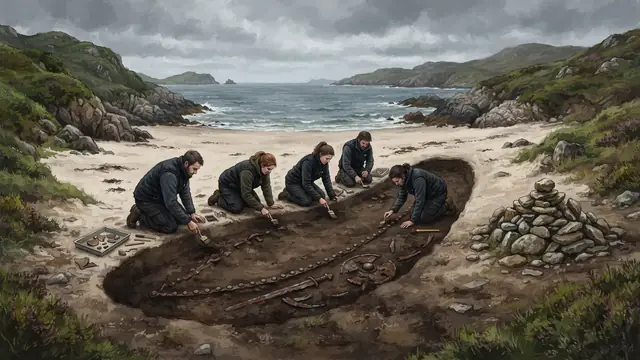 Documented history
Ardnamurchan: the Viking warrior buried in a boat on the coast of Scotland
In 2011, archaeologists found on the Ardnamurchan peninsula, in western Scotland, a 10th-century grave with sword, shield, axe and 213 rivets from a boat. See what the find shows and what is still hypothesis.
Read →
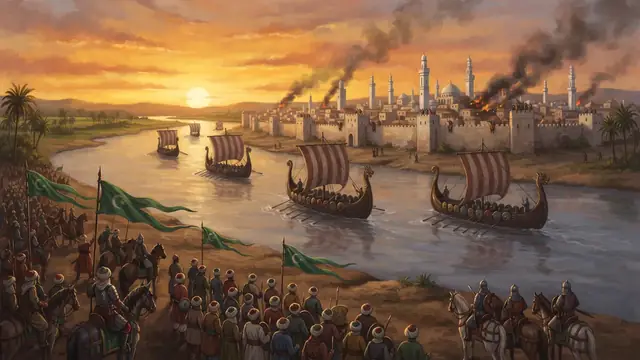 Documented history
Seville, 844: the Viking fleet that sailed up the Guadalquivir and was beaten by an emir
In 844, a fleet of Vikings, called "majus" by the Arabic sources, sacked Lisbon and sailed up the Guadalquivir river to Seville. See what the Muslim chroniclers say and what historians debate.
Read →
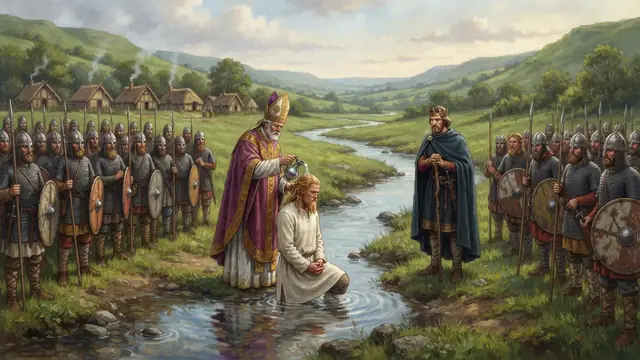 Documented history
Guthrum, 878: the Viking chieftain who was baptised, took a Christian name and became a king
After nearly taking the kingdom of Wessex, the Danish chieftain Guthrum was defeated by Alfred at Edington in 878 and accepted baptism. See what the sources say about Aller, Wedmore and the treaty that followed.
Read →
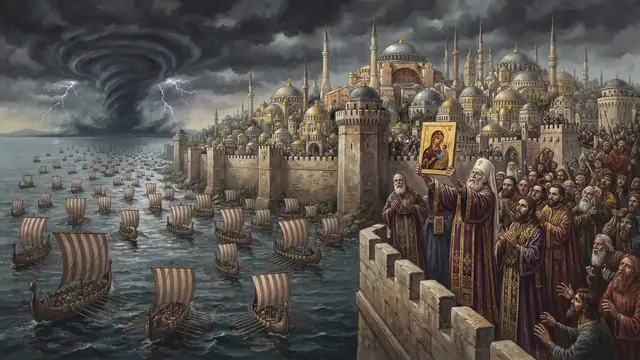 Documented history
Constantinople, 860: the Rus attack the city and Patriarch Photios speaks of "a thunderbolt from heaven"
In June 860, a fleet of Rus, people of Scandinavian and Slavic origin, appeared before Constantinople while the emperor was away. See what Photios' homilies say and what is later legend.
Read →
 Documented history
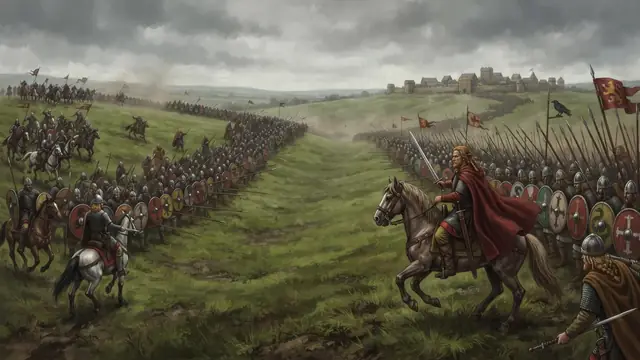
Assandun, 1016: the battle in which Cnut defeated Edmund Ironside
On 18 October 1016 the Danish king Cnut defeated Edmund Ironside's English at Assandun, and months later he ruled all England. See what the sources say and where the battle may have been.
Read →
 Saga or medieval source
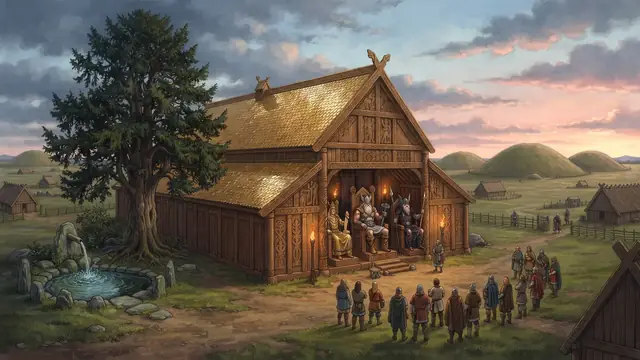
The temple at Uppsala: what Adam of Bremen told and what archaeologists found
Around 1075 the chronicler Adam of Bremen described a golden temple at Uppsala, with three gods and a great sacrifice every nine years. See the account, the scholars' doubts and what the excavations show.
Read →
 Documented history
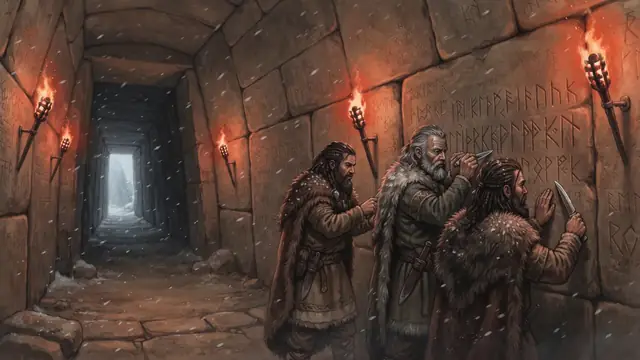
Maeshowe: the five-thousand-year-old tomb where Norsemen wrote on the walls
In Orkney, a Neolithic burial chamber holds one of the largest collections of Norse runes in Europe. They were graffiti written in the 12th century by men who sheltered there. See what they say and what they do not.
Read →
 Documented history
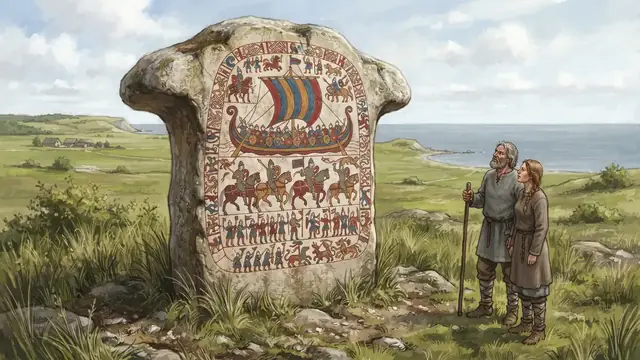
The picture stones of Gotland: carved sailing ships and colours that hardly survive
On the Swedish island of Gotland, hundreds of stone slabs were raised over centuries with images of ships, riders and scenes from legends. What they mean remains open. See what the museums know.
Read →
 Documented history
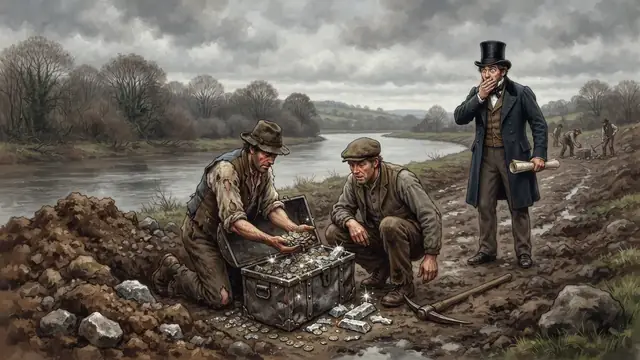
The Cuerdale Hoard: the largest Viking silver hoard ever found in Britain
In 1840 workmen repairing an embankment of the River Ribble, in Lancashire, found a lead chest with thousands of coins and pieces of silver. See what was inside and what remains unexplained.
Read →
 Documented history
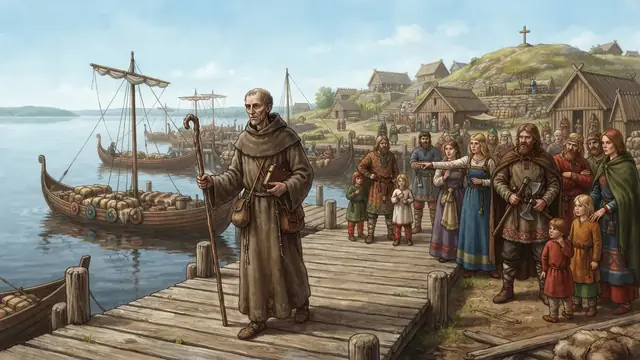
Ansgar: the monk who took Christianity to Denmark and Birka, and saw Hamburg burn
In the 9th century the monk Ansgar accompanied a converted Danish king and was sent to Birka, in Sweden. Later he lost his see to a Danish attack. See what the sources say and what they leave unsaid.
Read →
 Documented history
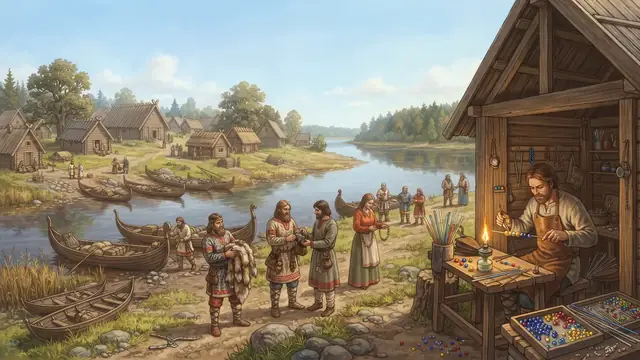
Staraya Ladoga: the trading post on the Volkhov where glass beads were made
Ladoga, which the sagas call Aldeigjuborg, was one of the first trading centres on the road that led east. See what the excavations and the chronicles reveal.
Read →
 Documented history
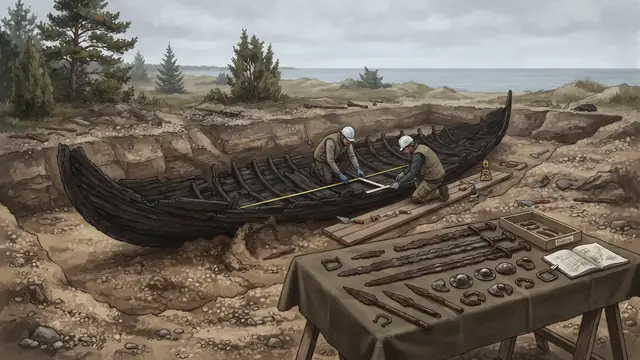
Salme: two ships buried with warriors, before the Viking Age
On the Estonian island of Saaremaa, two ships of about 750 held dozens of men with their weapons. See what archaeology and isotope analyses reveal.
Read →
 Documented history
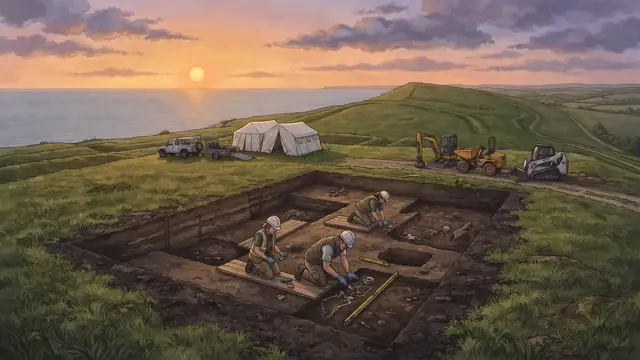
Ridgeway Hill: the Dorset mass grave and what the teeth tell
In 2009, roadworks in Dorset revealed the remains of 51 young men, killed around the year 1000. The isotopes in their teeth point to a Scandinavian origin.
Read →
 Documented history
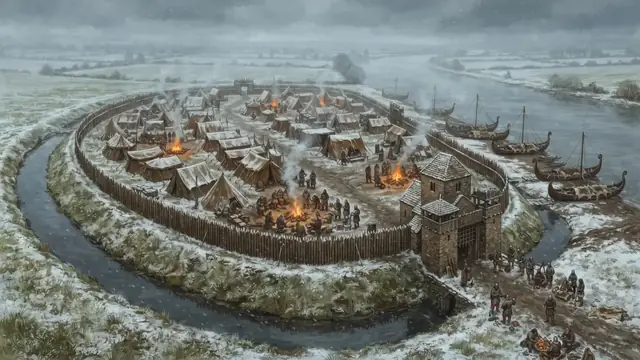
Repton, 873: the winter camp of the Great Army
In 873 the Great Army spent the winter at Repton, in England. Excavations found a fortified enclosure, a mass grave and a warrior with a Thor's hammer.
Read →
 Documented history
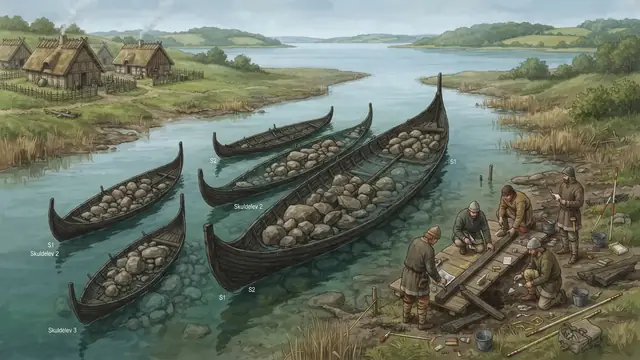
Skuldelev: the five Viking ships deliberately sunk in Roskilde Fjord
At Skuldelev, in Denmark, five ships were sunk in a narrow channel around 1070. The 1962 excavation revealed what Viking vessels were like.
Read →
 Documented history
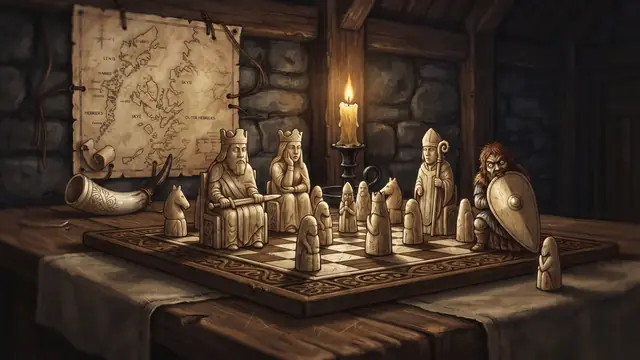
The Lewis chessmen: walrus ivory, warriors biting their shields and a hoard from the Hebrides
In 1831, on the island of Lewis, in Scotland, a set of medieval chess pieces in walrus ivory turned up. See what is known about who made them and why they ended up there.
Read →
 Documented history
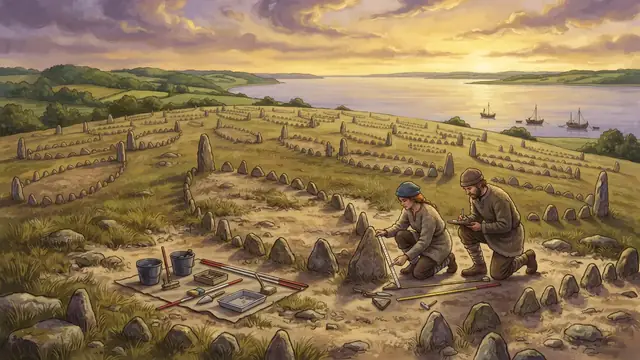
Lindholm Høje: the Danish cemetery of stone ships covered by sand
Near Aalborg, in Denmark, about seven hundred Iron Age and Viking Age graves were preserved under the sand. See what the excavations say about the stone ships.
Read →
 Documented history
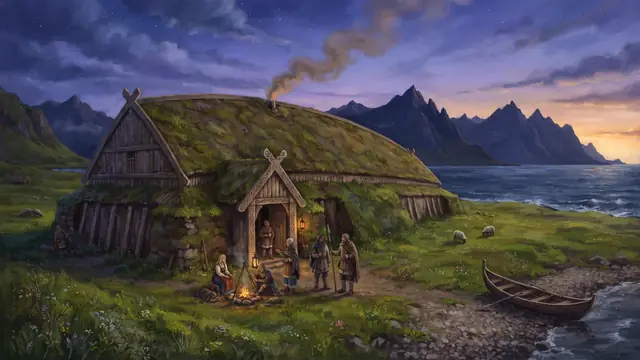
Borg, in the Lofoten: the 83-metre longhouse of a chieftain of the far north
On the island of Vestvågøy, in the Lofoten, archaeologists excavated a longhouse about 83 metres long. See what it reveals about the chieftains of northern Norway.
Read →
 Documented history
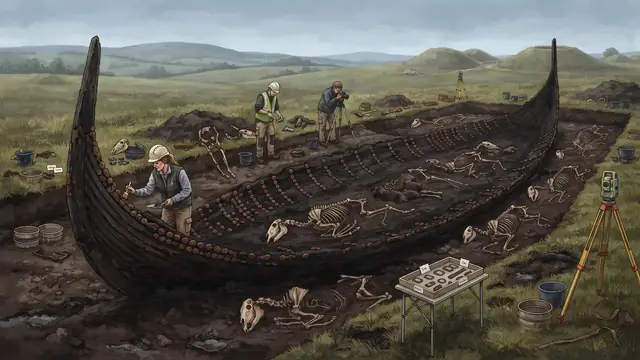
Ladby: the Danish ship grave that left only marks and rivets in the earth
At Ladby, on the island of Funen, a ship about twenty metres long was buried with a chieftain, horses and dogs, and the timber vanished. See how archaeologists read what remained and what is still unknown.
Read →
 Documented history
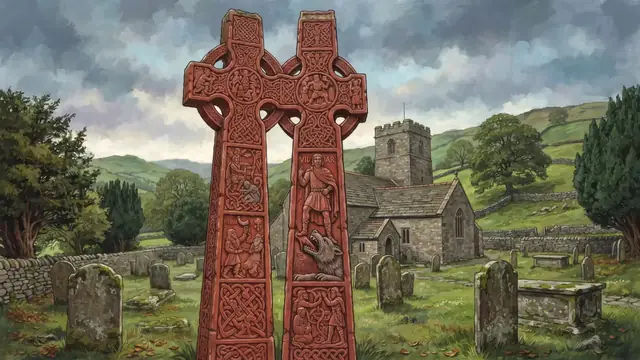
The Gosforth Cross: a Christian monument in England with scenes from Norse myths
The Gosforth Cross, in Cumbria, is about four metres tall and mixes Christian images with scenes that many scholars link to Norse myths. See what the stone shows and what is still debated.
Read →
 Documented history
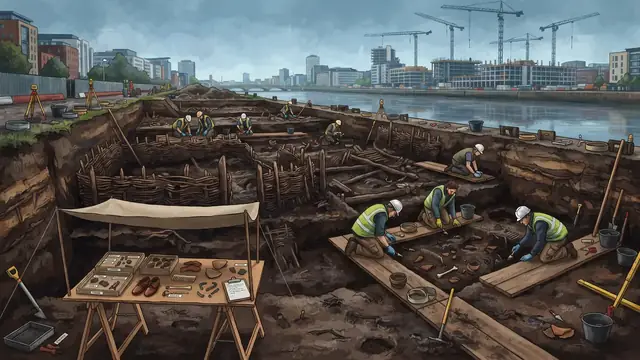
Wood Quay: the excavation that revealed Viking Dublin and the protest that tried to save it
From the 1960s to the 1980s, excavations at Wood Quay, in Dublin, brought to light houses, plots and objects of the Viking town. See what was found and how the project provoked one of the country's biggest protests.
Read →
 Documented history
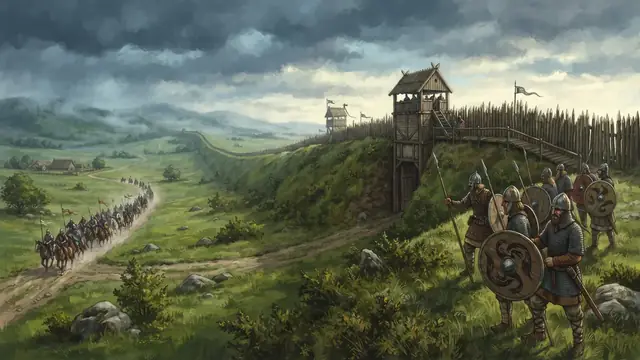
Danevirke: the earthen rampart the Danes raised against the Frankish Empire
The Danevirke is a line of earth-and-timber ramparts in southern Jutland, extended over centuries. See what the Frankish annals, dendrochronology and archaeology say about it.
Read →
 Documented history
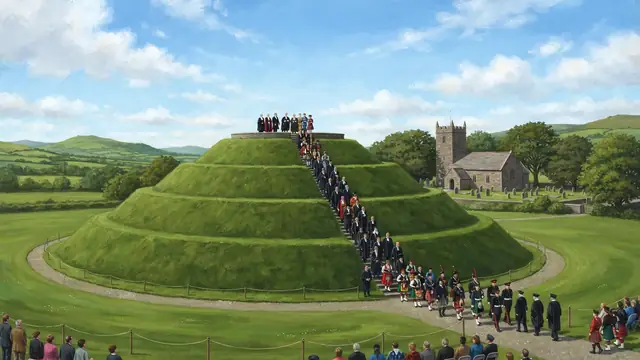
Tynwald: the Isle of Man assembly whose name comes from Norse and which still meets on a hill
The name Tynwald comes from the Norse *þingvöllr*, "assembly field". Every year, on 5 July, new laws are read from a four-tiered hill on the Isle of Man.
Read →
 Documented history
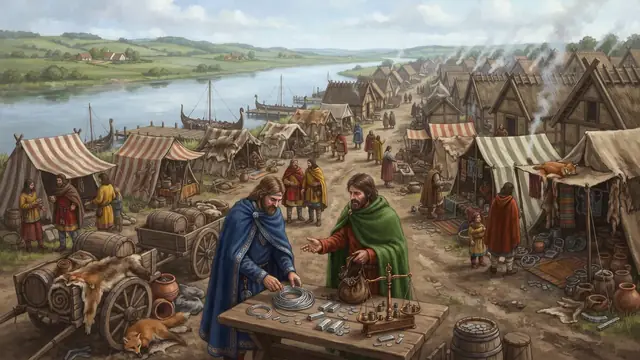
Ribe: the Danish market town that existed before the age of Viking raids
Excavations at Ribe show a seasonal market from about 704, with glass beads, imported pottery and coins. In the 9th century the monk Ansgar received permission there to build a church.
Read →
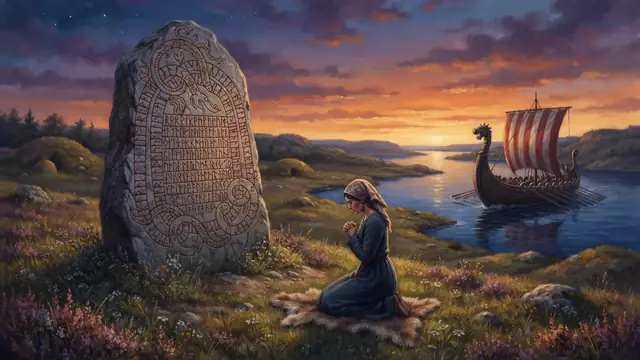 Saga or medieval source
Ingvar's stones: the Swedish expedition to Serkland that was carved in stone
About two dozen Swedish runestones remember the men who set out with Ingvar around 1036 and died far away. One says they went in search of gold. Here is what the stones and the saga tell.
Read →
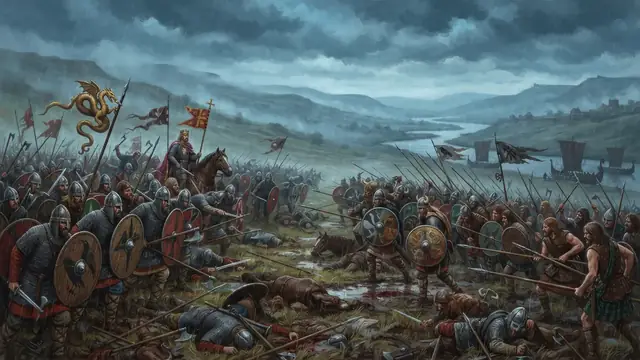 Documented history
Brunanburh, 937: the battle where an English king faced Vikings, Scots and Britons
In 937, King Æthelstan defeated an alliance of the Viking king of Dublin, the king of the Scots and the king of Strathclyde. We know the battle's name, but not its exact place.
Read →
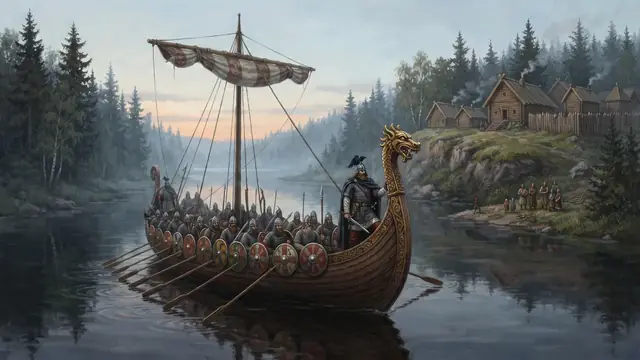 Saga or medieval source
Rurik and Oleg: how the Primary Chronicle tells of the call to the Varangians that gave rise to Kyivan Rus', and what archaeology adds
According to the Primary Chronicle, tribes in eastern Europe called Varangian princes to rule them. See what it says of Rurik and Oleg and what archaeology shows and leaves open.
Read →
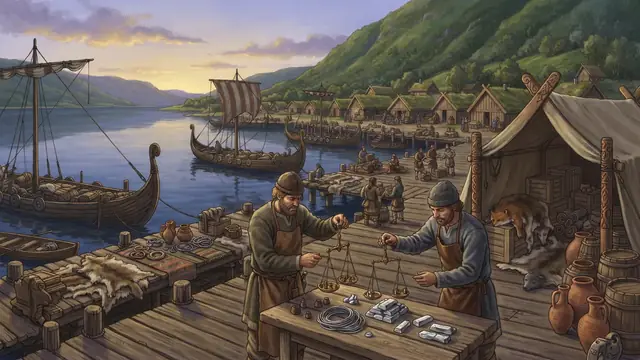 Documented history
Kaupang: the Viking market of Skiringssal, in Norway, and what scales, silver and graves reveal
Near Larvik, in Norway, excavations found Kaupang, one of the first Norse market towns, founded around 800. See what archaeology shows and how the name appears in Ohthere.
Read →
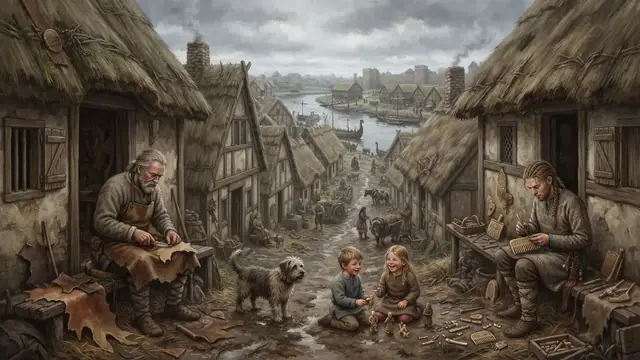 Documented history
Jórvík: Viking York and the Coppergate excavation that found houses, crafts and even what the residents ate
In 866 the Great Heathen Army took York, which the Vikings called Jórvík. Excavations at Coppergate in the 1970s revealed well-preserved houses and workshops. See what archaeology showed.
Read →
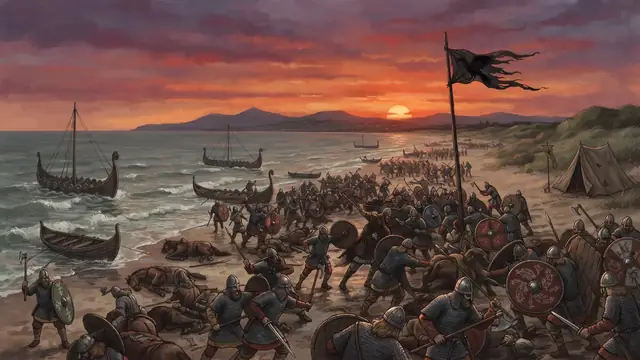 Documented history
Clontarf, 1014: the Good Friday battle in which Brian Boru died, and why it was not just Irish against Vikings
In 1014, near Dublin, the High King Brian Boru died after winning the battle of Clontarf. See what the Irish and Norse sources say and why the picture of Irish against Vikings is too simple.
Read →
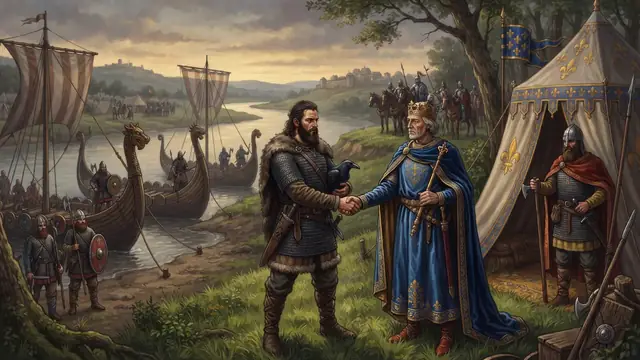 Documented history
Rollo and Normandy: how a Viking chief received lands from the Frankish king in 911
Around 911, the Frankish king Charles the Simple gave Rollo and his men the region of Rouen. Here is what the chronicles say and what legend added.
Read →
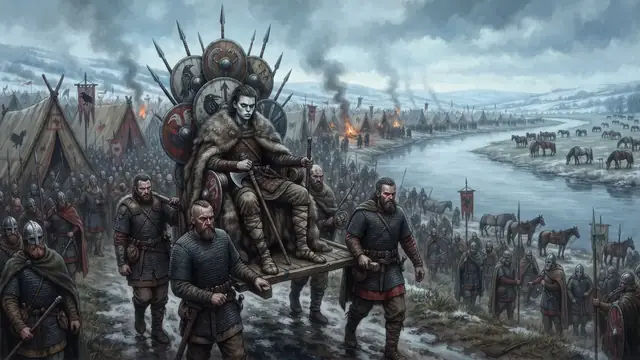 Documented history
Ivar the Boneless and the Great Heathen Army: what is known about the invasion that changed England
From 865, a Norse army moved across England for more than ten years. The chronicles describe the campaign, and the sagas link Ivar to it. What is certain, and what is not?
Read →
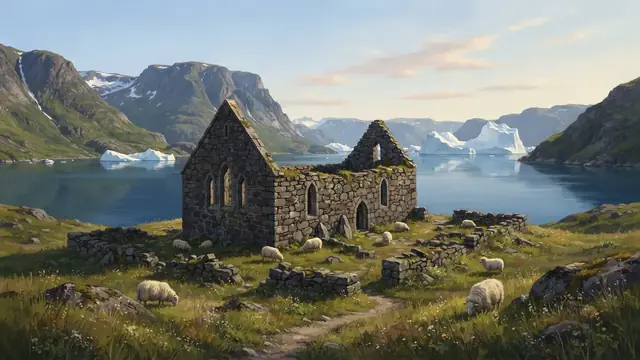 Documented history
Norse Greenland: four centuries of farms on the ice and the mystery of their end
The Norse lived in Greenland for more than four hundred years. The last known document is from 1408. Scholars still debate why the farms were left empty.
Read →
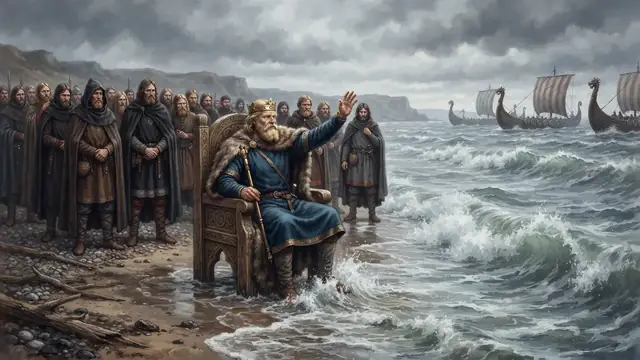 Documented history
Cnut the Great and the North Sea Empire: the king who ruled England, Denmark and Norway
Between 1016 and 1035, Cnut gathered the crowns of England, Denmark and Norway. Here is how it happened and what lies behind the story of the waves.
Read →
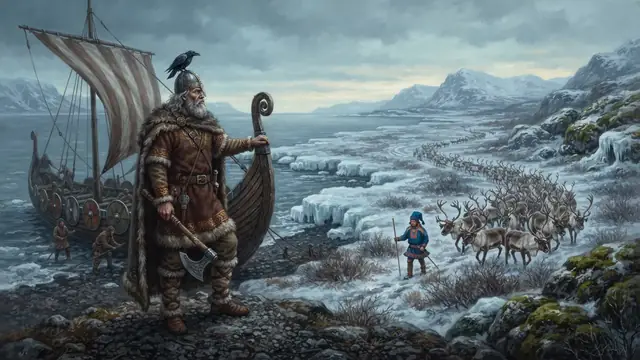 Documented history
Ohthere and the reindeer: an Arctic Norwegian's account to King Alfred
In the 9th century a chieftain from northern Norway told King Alfred of England how he lived among reindeer and collected tribute from the Sámi. The account was copied into a translation from Latin.
Read →
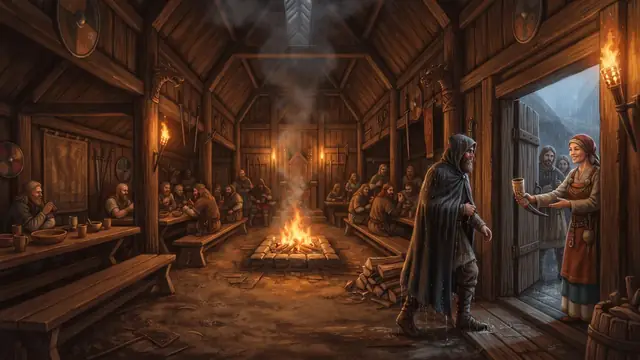 Saga or medieval source
Hávamál and Viking hospitality: what the poem asked of those who arrived and those who received
The Hávamál, a poem attributed to Odin, opens with advice for guests and hosts: fire, water, food and good conduct. It shows how a Norse hall received those from outside.
Read →
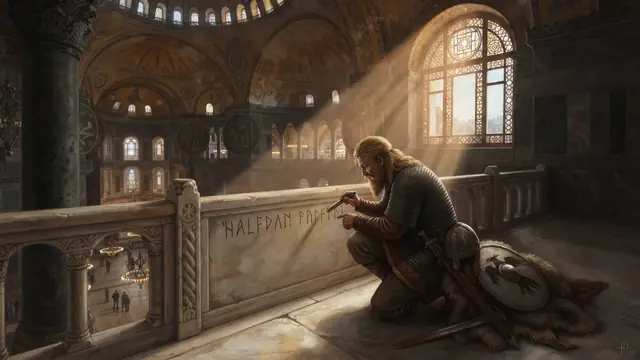 Documented history
Halfdan at Hagia Sophia: the runes a Norseman scratched into the marble of Constantinople
In a gallery of Hagia Sophia, in Istanbul, a runic inscription says that a man named Halfdan carved his name there. It is one of the rare direct traces of Norsemen in the city.
Read →
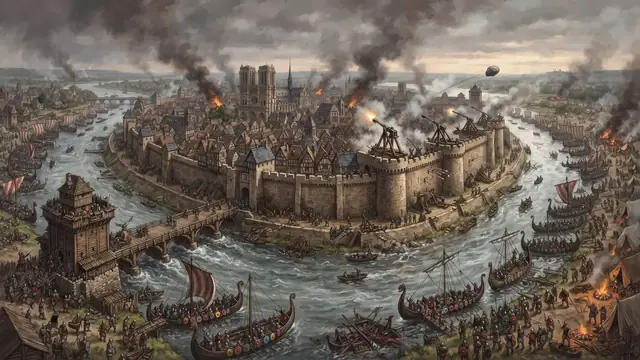 Documented history
The siege of Paris, 885–886: when the Vikings tried to sail up the Seine and met a bridge
For about a year, a large Viking fleet besieged Paris. The city, on its island, held out, and the story was told by an eyewitness monk, Abbo of Saint-Germain.
Read →
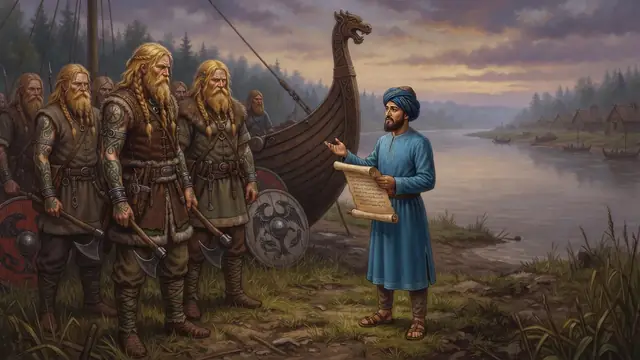 Saga or medieval source
Ibn Fadlan and the Rus' of the Volga: the Baghdad diplomat who described the Vikings
In 921–922 an envoy of the caliph travelled to the Volga and met merchants whom most scholars consider Scandinavian. His account includes tattoos, rituals and a ship funeral.
Read →
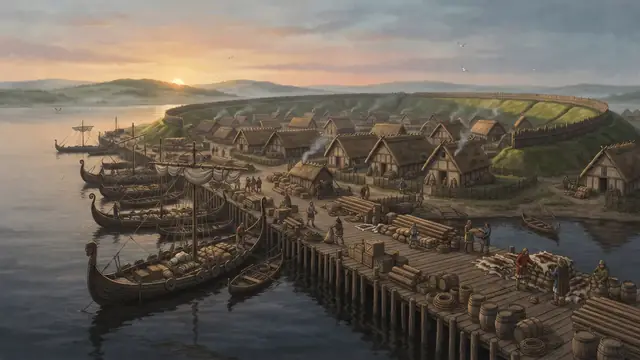 Documented history
Hedeby: the Viking port where the world's merchants met
At the base of the Jutland peninsula, Hedeby was for over two centuries one of the largest trading centres of the North. Today its ruins are part of a UNESCO World Heritage Site.
Read →
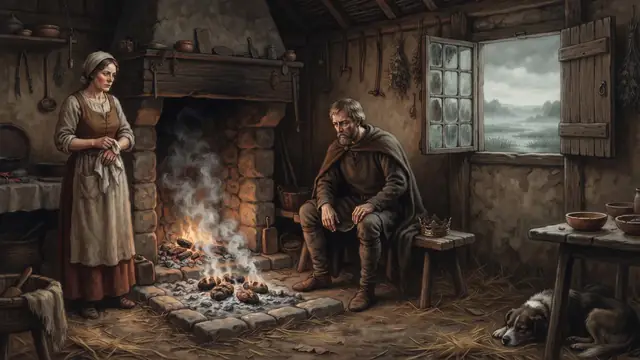 Documented history
Alfred the Great, the king who lost everything and won at Edington — and the burnt cakes
In 878 the king of Wessex fled to the Somerset marshes, gathered an army and defeated the Vikings at Edington. The story of the burnt cakes is a late legend.
Read →
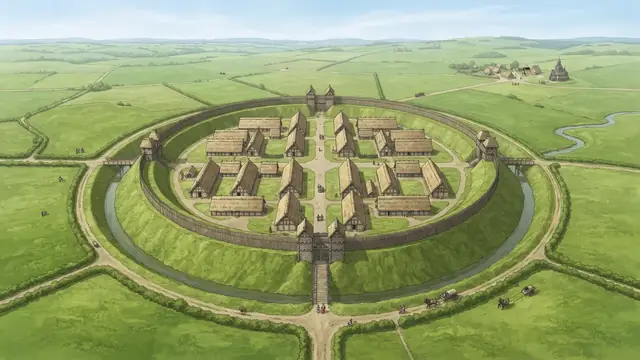 Documented history
Trelleborg: the circular fortress the Vikings built with perfect geometry
A ring of earth and timber with four gates, sixteen longhouses and a cemetery of young men. The fortress of Trelleborg, in Denmark, was raised in 981 and used for only a few years.
Read →
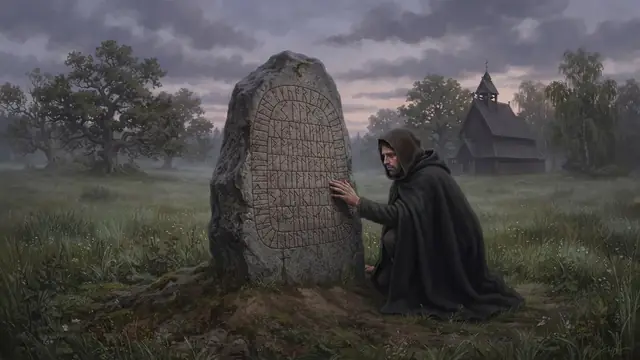 Documented history
The Rök Stone: the longest runic inscription in the world and the secrets it still keeps
With 725 runes, the 9th-century Swedish stone is the longest known runic text. A father raised it for his dead son, and scholars still debate what else it says.
Read →
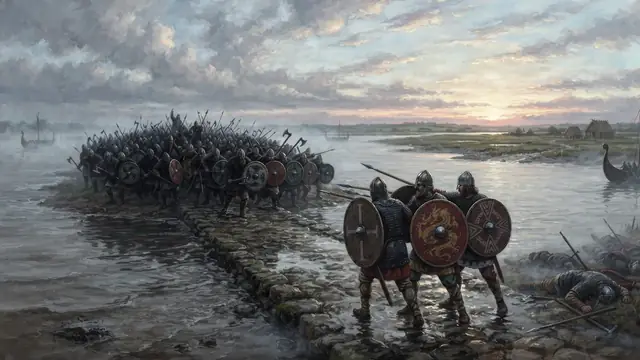 Documented history
Maldon, 991: the battle that led the English to pay tribute to the Vikings
On a causeway flooded by the tide, three Englishmen held a Viking army. The English leader then let the enemy cross, lost the battle and England began to pay the Danegeld.
Read →
 Documented history
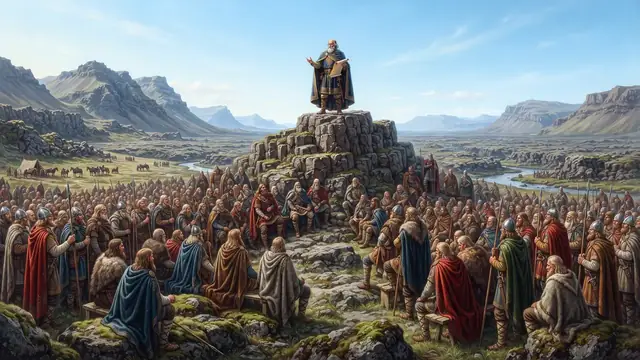
Althing, 930: the open-air parliament of Þingvellir and the man who recited the laws by heart
Around 930, Icelanders gathered in a lava valley to create an assembly without a king. The Althing is named the oldest legislature in the world and has survived, with interruptions, to this day.
Read →
 Documented history
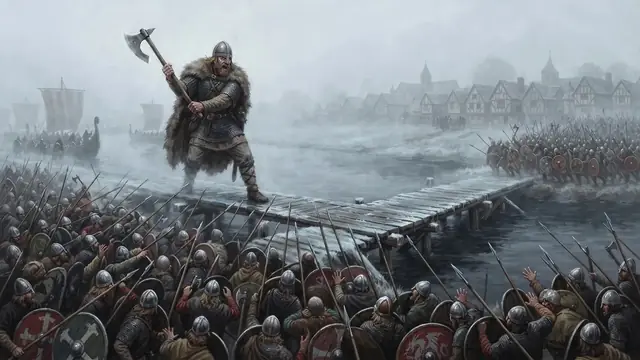
Stamford Bridge, 1066: the man who held the bridge and the battle tradition calls the end of the Viking Age
On 25 September 1066, King Harald Hardrada was killed by an arrow in England. Of some 300 Norwegian ships, only 24 went home, according to the Anglo-Saxon Chronicle.
Read →
 Documented history
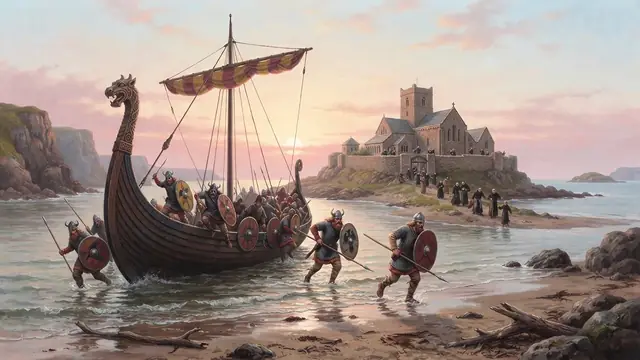
Lindisfarne, 793: the attack on the monastery that Europe remembers as the start of the Viking Age
On 8 June 793, men from the sea plundered the holy island of Lindisfarne. The chronicle speaks of omens, and a letter from Alcuin shows the shock the attack caused.
Read →
 Documented history
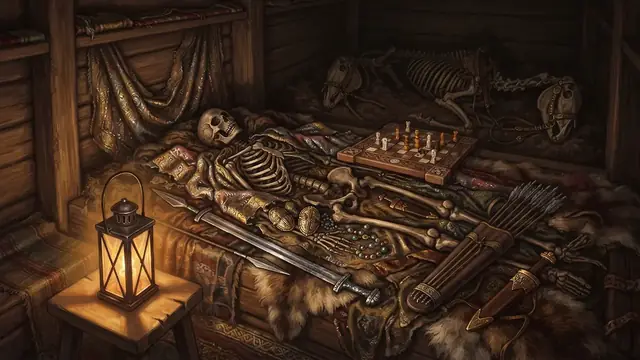
The Birka warrior: the grave excavated in 1878 and the debate DNA reopened in 2017
For over a century, grave Bj 581 was taken as that of a warrior chieftain. In 2017, DNA showed the skeleton was a woman's, and archaeologists are debating what that means.
Read →
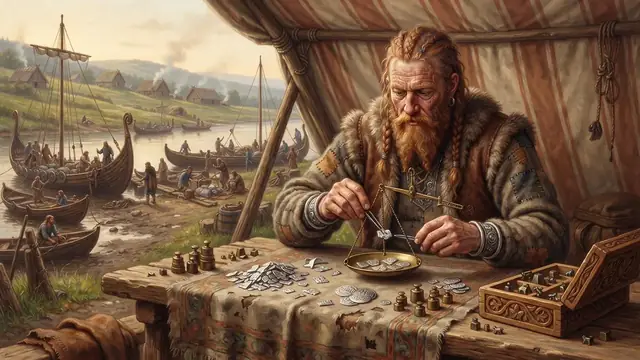 Documented history
Caliphate silver, pocket scales: how Arab coins ended up in Viking hoards
Tens of thousands of Islamic coins, the dirhams, have been found in Scandinavia. They show a trade network linking the Baltic to the East, and a money that was weighed rather than counted.
Read →
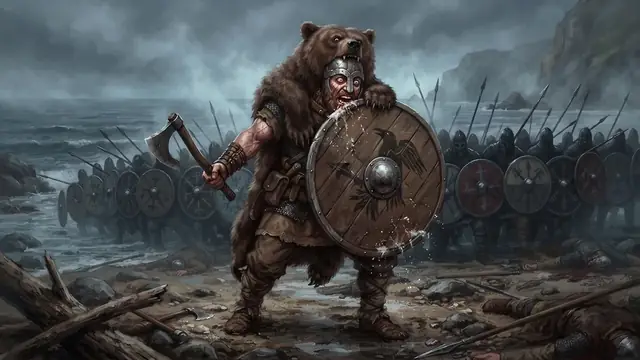 Saga or medieval source
Berserkers: the bearskin warriors, the fury the sagas describe and the Icelandic law that banned it
Poems and sagas speak of warriors who fought in a trance, biting their shields. No early source mentions mushrooms, an idea that only appeared in 1784.
Read →
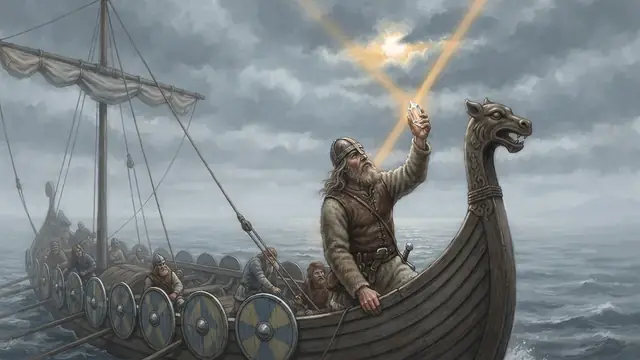 Saga or medieval source
The sunstone: the crystal that may have helped the Vikings find the sun in a cloudy sky
An Icelandic saga mentions a stone that shows where the hidden sun is. Modern experiments show a crystal could work, but do not prove the Vikings used one.
Read →
 Documented history
The Jelling stone: what Harald Bluetooth had carved in runes
Around 965, King Harald had a stone carved at Jelling honoring his parents and telling that he united Denmark and made the Danes Christian.
Read →
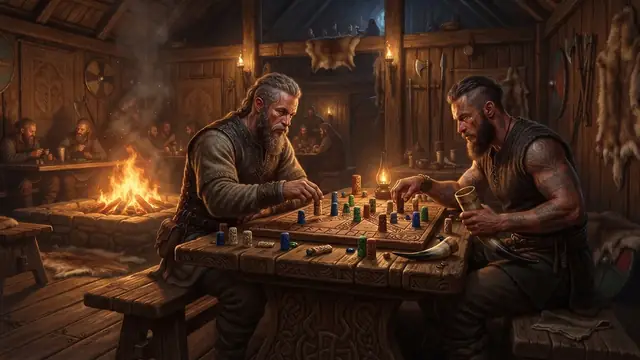 Documented history
Hnefatafl: the board game the Vikings played and no one knows exactly how it went
Hnefatafl boards have been found from Gokstad to Scotland. The game was asymmetrical, with a besieged king, but its original rules were lost.
Read →
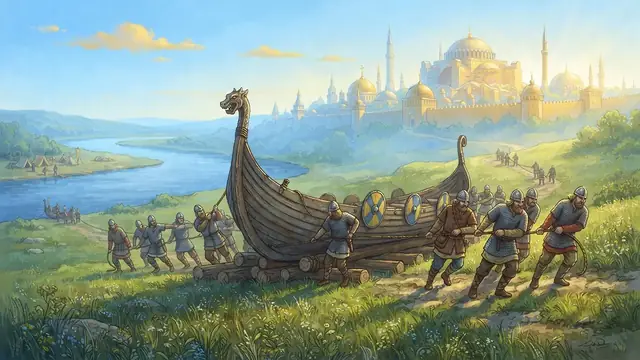 Documented history
The Varangian Guard: the Vikings who protected the emperor of Constantinople
In the late 10th century, warriors from the North began serving as the personal guard of the Byzantine emperors. Some left runes on the stones of Hagia Sophia.
Read →
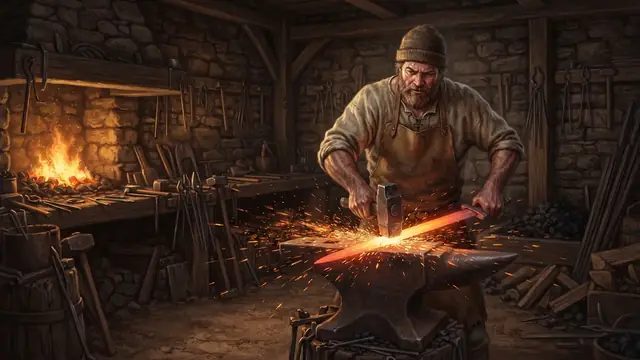 Documented history
The Ulfberht swords: the name engraved on Viking blades and the steel mystery
About 170 medieval swords bear the name VLFBERHT. Studies point to rare-quality steel in some blades and signs of imitation in others.
Read →
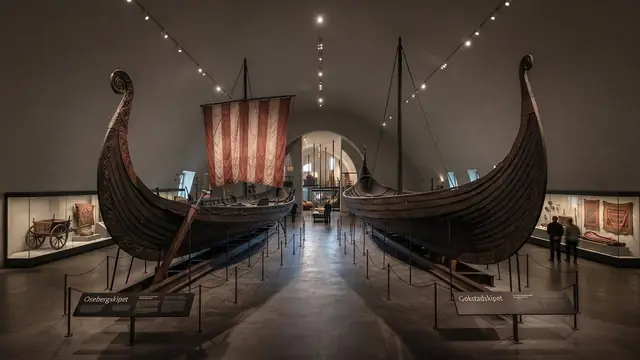 Documented history
The Oseberg and Gokstad ships: two Viking boats buried with their dead
Found in graves in Norway in 1880 and 1904, the Gokstad and Oseberg ships are among the best-preserved Viking vessels in the world.
Read →
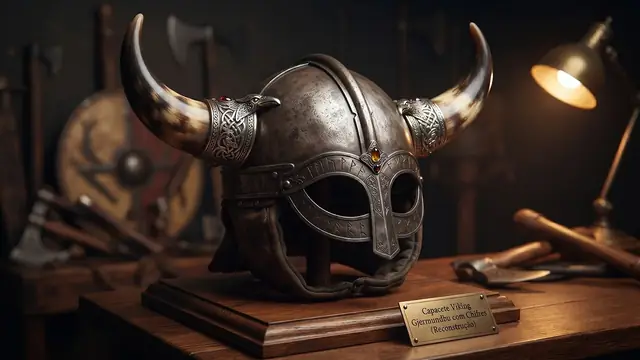 Documented history
Did the Vikings wear horned helmets? What the Gjermundbu find shows
No Viking horned helmet has ever been found. The only nearly complete one, found in Norway in 1943, is iron and round. The horned image is a 19th-century invention.
Read →
Play this realm
Games tied to the stories here. Fullscreen, no sign-up.
New
Hnefatafl in miniature
Take the king to one of the board’s corners before the attackers surround him, in a small version of the Viking game.
Play ▶
New
Carve the runes
Carve five runes by connecting the dots, as if chiseling the Jelling stone.
Play ▶
The Ulfberht blade
Strike the hot iron at the right moment and forge a sword bearing the inscription VLFBERHT.
Play ▶
The Oseberg hull
Drop oak planks at the right moment and build a Viking ship hull, as in the Oseberg and Gokstad ships.
Play ▶
Digging at Gjermundbu
Clear the soil from a Viking grave and uncover the iron Gjermundbu helmet, with no horns.
Play ▶
New
Drag the ship
Pull the rope at the right rhythm to drag the ship overland and reach Constantinople before nightfall.
Play ▶
New
The sunstone
The sky is cloudy. Move the marker along the horizon and find the hidden sun at the point where the crystal's two lights shine equally.
Play ▶
New
Stamford Bridge
Hold Stamford Bridge with your axe and watch for the spear under the planks.
Play ▶
New
Berserker fury
Build up the fury just right to fell each enemy without burning out.
Play ▶
New
The grave goods
Find the pairs of objects from grave Bj 581 at Birka, the Viking woman warrior's tomb.
Play ▶
New
Row to Lindisfarne
Row in the right rhythm and take the Viking ship to the island of Lindisfarne.
Play ▶
New
The merchant's scales
Add pieces of cut silver until you hit the exact weight the buyer asks for.
Play ▶
New
Build Trelleborg
Line up the spinning cross with the plan cross to raise the houses of the circular fortress.
Play ▶
New
Decode the Rök Stone
Carve words by tapping the runes of the younger futhark, in the order of the letters.
Play ▶
New
The Lawspeaker
Recite the law in the right rhythm by tapping the words that fall onto the golden line.
Play ▶
New
The Maldon causeway
Defend the Maldon causeway, which is clear only at low tide, and stop the Viking invaders.
Play ▶
New
The port of Hedeby
Stack the cargo crates on the quay of Hedeby without letting them fall into the sea.
Play ▶
New
The catapult of Paris
Hurl stones at the Viking boats coming up the Seine before they pass the bridge.
Play ▶
New
Ibn Fadlan's account
Separate what is in Ibn Fadlan's account from what was invented later.
Play ▶
New
Alfred's cakes
Take the cakes off the fire at the right moment, without letting them burn, as in the legend of Alfred.
Play ▶
New
Runes in Hagia Sophia
Find the runes hidden in the marble before the guards arrive.
Play ▶
New
Ohthere's reindeer
Guide Ohthere's reindeer into the pen without frightening them.
Play ▶
New
Guests in the hall
Welcome the guests with what each one needs, as the Hávamál instructs.
Play ▶
New
The course of the Seine
Turn the pieces of the river and bring the water from the spring to the sea.
Play ▶
New
Cnut's waves
Spread your colour across the board, move by move, until it is covered.
Play ▶
New
The shield wall
Bounce the ball with Ivar's axe and knock down the shield wall.
Play ▶
New
Crossing the fjord
Cross the fjord by hopping from one ice floe to the next.
Play ▶
New
The tide at Clontarf
Sink the three ships fleeing down the estuary with the tide.
Play ▶
New
The layers of Jórvík
Dig a plot in Jórvík without breaking the fragile layers.
Play ▶
New
Rurik's oars
Row in rhythm, alternating sides, and steer clear of the river banks.
Play ▶
New
Kaupang's market
Arrange the goods without repeating any in a row.
Play ▶
New
The field of Brunanburh
Flip the opponent's pieces and win the field.
Play ▶
New
Carts at the Ribe market
Unblock the street full of carts and clear a way to the quay.
Play ▶
New
Runes on the stone
Carve the right squares of the stone following the clues of each row and column.
Play ▶
New
The steps of the hill
Move the four discs from one post to another without putting a larger on a smaller.
Play ▶
New
The Danevirke wall
Place guards in the five lanes and hold the invaders at the wall.
Play ▶
New
The cross's interlace
Rotate the tiles until the thread links the entrance to the exit of the interlace.
Play ▶
New
Dublin's plots
Paint the map plot by plot until it is all one colour.
Play ▶
New
Ladby's rivets
Jump over neighbouring rivets until only one is left.
Play ▶
New
The fjord's five ships
Find the five sunken ships, shot by shot, before your shots run out.
Play ▶
New
The chief's grain
Sow the harvest grain across the store-rooms and keep more than your rival.
Play ▶
New
The ship's outline
Trace the stone ship's outline, passing each mark exactly once.
Play ▶
New
The knight's tour
Tour every square of the board with a knight, without repeating any.
Play ▶
New
The finds of Salme
Swap neighbouring pieces, make lines of three and collect the finds.
Play ▶
New
Repton's grid
Fill the 4×4 grid without repeating numbers in rows, columns and squares.
Play ▶
New
Ridgeway's table
Complete the 6×6 table with two symbols, never three alike in a row.
Play ▶
New
The beads of Ladoga
Line up five beads before your opponent on the workshop board.
Play ▶
New
Birka's board
Flip the rival's pieces with yours on a 6×6 board.
Play ▶
New
The chamber of Maeshowe
Decipher, by tries and clues, a secret sequence of 4 runes.
Play ▶
New
The Cuerdale hoard
Sort the coins by origin, leaving a single origin in each stack.
Play ▶
New
The temple at Uppsala
Put 8 sliding pieces in order on a 3×3 grid.
Play ▶
New
The Gotland picture
Paint the whole picture one colour, changing the colour of the patch in few moves.
Play ▶
New
The river map
Connect 5 pairs of same-coloured marks on a river map without crossing the paths.
Play ▶
New
The bells of Constantinople
Listen to the sequence of the four bells and repeat it in the same order, up to 9 taps.
Play ▶
New
The field of Assandun
Find three hidden groups in a 6×6 field with 24 shots or fewer.
Play ▶
New
The crates of Wedmore
Push the crates onto the marks, in three increasingly tight levels.
Play ▶
New
The route marks
Fill the 4×4 grid with four marks, without repeating any in a row, column or block.
Play ▶
New
The hill of Ashdown
Throw spears from below, bring down the 18 figures descending in rows and dodge their spears.
Play ▶
New
The quay of Dorestad
Swap neighbouring goods, join three or more of a kind and gather 70 with 16 swaps.
Play ▶
New
The dots of Swordle Bay
Connect dots, one line at a time, and close more squares than the rival.
Play ▶
New
The turf blocks
Cut turf blocks from a rectangle against the rival, without being left with the last block.
Play ▶
New
Spillings' coins
Add up coins to get as close as possible to 21 without going over, in six rounds.
Play ▶
New
Sigtuna's workshop
Send each piece that reaches the workshop left or right, coins on one side and combs on the other.
Play ▶
New
Torksey's odd piece
Find the odd gaming piece among similar ones, in ten ever harder rounds.
Play ▶
New
The tower of Jarlshof
Drop each sliding block at the right moment and stack a tower of ten floors.
Play ▶
New
The Mästermyr tools
Move a stack of four tools between three pegs, never putting the larger on the smaller.
Play ▶
New
The Vale of York coins
Grab the silver coins that pop up from the earth before they vanish, without losing more than five.
Play ▶
New
The accounts of the Gulating
Add up tokens to the exact sum each round asks for, with at most 3 mistakes.
Play ▶
New
The excavation at Valsgärde
Find three buried boats in a grid guided by the numbers on the edges, with up to 10 empty digs.
Play ▶
New
The thrall's jugs
Pour between jugs of 8, 5 and 3 measures until you leave 4 and 4, in up to 14 pours.
Play ▶
New
The survey at L'Anse aux Meadows
Probe a ground of 49 squares guided by the numbers of the neighbours and avoid 6 bog pools, with at most 2 mistakes.
Play ▶
New
The Galloway hoard
Sort pieces of four materials into six chests of four places each, in up to 35 moves.
Play ▶
New
The Five Boroughs
Take tokens from five boroughs, alternating with the opponent, and end up with the last one.
Play ▶
New
The paths of Borgring
Rotate path squares on a 5-by-5 board until all connect to the centre of the ring, in up to 60 turns.
Play ▶
New
Borre's knot
Trace every thread of a knot exactly once, without lifting your finger, with at most 2 mistakes.
Play ▶
New
The erased runes
Darken squares until no number repeats among the light ones, with no neighbouring dark squares and the light ones connected, on 3 stones.
Play ▶
New
The queen’s roads
Link all the towns by roads without exceeding the budget, on 3 maps.
Play ▶
New
The line of banners
Fill a board with banner heights, without repeating in a row or column, so that the numbers on the edges match, on 3 boards.
Play ▶
New
The hidden raiders
Reveal the squares without a raider, guided by the numbers, with at most 2 mistakes, on 3 fields.
Play ▶
New
The silver seals
Fill 4-by-4 boards with the numbers 1 to 4, without repeating in a row, column or block, on 3 boards.
Play ▶
New
The paths of the bridge
Join the pairs of the same colour with paths that do not cross, on 3 boards.
Play ▶
New
The fjord taken
Paint the whole map in a single colour from the corner, with a limited number of taps, on 3 maps.
Play ▶
New
The Hoen necklace
String all the beads on a single thread, passing once through each square, with limited time, on 3 necklaces.
Play ▶
New
The Överhogdal loom
Slide rows and columns of squares until the numbers are in order, with limited moves and time, on 3 screens.
Play ▶
New
The map and the copy
Find the differences between a map and its copy, with at most 2 mistakes, in 3 pairs of maps.
Play ▶
New
The waterskins of the papar
Measure the requested amount of water by passing it between two unmarked skins, with limited actions and time, in 3 rounds.
Play ▶
New
The Hiddensee pendants
Sort coloured pieces into tubes, one colour per tube, with limited moves and time, on 3 tables.
Play ▶
New
The axes of Mammen
Place axes on a board so that no two attack each other, with limited time, on 3 boards.
Play ▶
New
The farmsteads of the Danelaw
Mark squares of a grid so that the sums of the rows and columns match the numbers, with limited time, on 3 grids.
Play ▶
New
The mounds of Grobiņa
Place mounds of different heights on a grid, without repeating in a row or column and following the visibility clues, with limited time, on 3 grids.
Play ▶
New
The ship crossing
3D game: steer a ship across the sea, collect runes and dodge rocks and ice, with a limit of mistakes and limited time.
Play ▶
New
The planks of the portal
Slide numbered planks into the right order, with the empty square in the corner, with limited time, on 3 portals.
Play ▶
New
The loop of the serpent
Connect dots on a grid and close a single loop, following the number of each square, with limited time, on 3 grids.
Play ▶
New
The wall of stones
Drop stones at the right moment to raise a wall, with a limit of mistakes, on 3 walls.
Play ▶
New
The gates of Eketorp
Turn rings until the openings line up, with a limit of turns and limited time, on 3 forts.
Play ▶
New
The swap of boats
Swap the sides of two groups of boats on a narrow stretch, with limited time, on 3 stretches.
Play ▶
New
The dig at the fort
3D game: dig squares of the fort guided by hints from neighbours and find the sites, with a limit of failures and limited time.
Play ▶
New
Where is the Buddha?
3D game: follow the figurine shuffled among cups and point to where it is, with a limit of mistakes and limited time.
Play ▶
New
Course by the sun
3D game: hold the ship's course by the shadow of the disc, correcting the drift, with a limit of mistakes and limited time.
Play ▶
New
The stone enclosure
3D game: stack sliding slabs to raise the stone enclosure in the boat, with a limit of falls and limited time.
Play ▶
New
The lake amulets
3D game: find the eight pairs of offering objects lying face down, with a limit of mistakes and limited time.
Play ▶
New
The wool cloth
3D game: memorise the row of coloured threads and tap the spools in the same order, with a limit of mistakes and limited time.
Play ▶
New
The order of the futhark
3D game: tap the runes of the slab in the order of the futhark, with a limit of mistakes and limited time.
Play ▶
New
The defence of the towers
3D game: launch the stone from the tower when the power gauge hits the mark, with a limit of mistakes and limited time.
Play ▶
New
The three cairns
3D game: drop each stone when it is above the pile, with a limit of mistakes and limited time.
Play ▶
New
The rune sticks
3D game: sort each rune stick into the owner, message or prayer box, with a limit of mistakes and limited time.
Play ▶
New
The stone tiles
3D game: complete the row of tiles by choosing the piece that continues the pattern, with a limit of mistakes and limited time.
Play ▶
New
The Grydehøj mound
3D game: tap the mound that glints before the glint fades to collect the finds, with a limit of mistakes and limited time.
Play ▶
New
The dwarves of the market
3D game: stop the dwarves before they reach the stalls and do not tap the merchants, with a limit of mistakes and limited time.
Play ▶
New
The stone ship
3D game: tap when the marker is over the glowing place in the outline of the ship, with a limit of mistakes and limited time.
Play ▶
New
The runes of the lion
3D game: find the pairs of runes by turning two stones at a time, with a limit of mistakes and limited time.
Play ▶
New
The sieve of finds
3D game: keep the golden finds that pass along the sieve and do not touch the grey stones, with a limit of mistakes and limited time.
Play ▶
New
Scroll, seal and quill
3D game: remember the order in which the scroll, the seal and the quill glow and tap them in the same order after they swap places, with a limit of mistakes and limited time.
Play ▶
New
The sieve of gold foils
3D game: keep the gold foils that pass the sieve and do not touch the stones, with a limit of mistakes and limited time.
Play ▶
New
The boats at the quay
3D game: dock the boats at the quay that glows when the marker passes over it, with a limit of mistakes and limited time.
Play ▶
New
The Sigtuna coins
3D game: strike the Sigtuna coins when the bar passes the mark, with a limit of mistakes and limited time.
Play ▶
New
Every phrase in its part
3D game: match each phrase to the part of the Karlevi stone where it is, with a limit of mistakes and limited time.
Play ▶
New
The planks of the bridge
3D game: set each plank of the bridge in place when the marker passes over it, with a limit of mistakes and limited time.
Play ▶
New
The pairs of coins
3D game: find the pairs of matching coins by turning two at a time, with a limit of mistakes and limited time.
Play ▶
New
The fort, quadrant by quadrant
3D game: raise the fort's houses in the right quadrant when the bar passes the mark, with a limit of mistakes and limited time.
Play ▶
New
The pairs of images
3D game: find the pairs of images of the monument by turning two stones at a time, with a limit of mistakes and limited time.
Play ▶
New
Each detail in its part
3D game: match each detail to the part of the Tjängvide stone where it is, with a limit of mistakes and limited time.
Play ▶
New
Warriors and merchants
3D game: stop the warriors on the quay and do not touch the merchants, with a limit of mistakes and limited time.
Play ▶
New
The plots of the new town
3D game: mark the plot that glows when the marker passes over it, with a limit of mistakes and limited time.
Play ▶
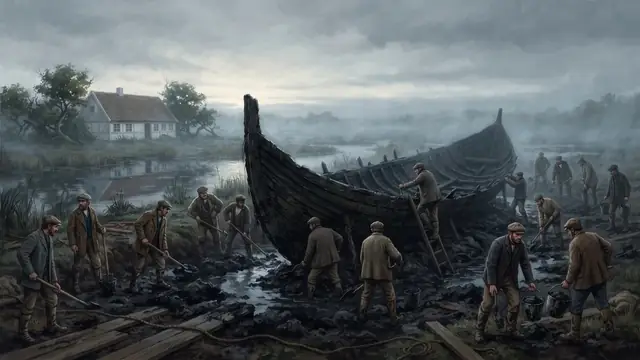 New
The planks of the hull
3D game: stack the planks of the Nydam boat's hull precisely, with a limit of mistakes and limited time.
Play ▶
New
The bronze foils
3D game: pick the bronze foils from the dies and avoid the broken chips, with a limit of mistakes and limited time.
Play ▶
New
Defend the hide
3D game: block the blows coming from the left, the centre and the right, with a limit of mistakes and limited time.
Play ▶
Other realms
Myths & Gods
105 stories · Enter →
Sagas & Kings
113 stories · Enter →
Tales & Folklore
101 stories · Enter →
Get the next stories
New myths, sagas and tales arrive every week, always with the source and the difference between history and legend.
I want to subscribe