 MMXXVI
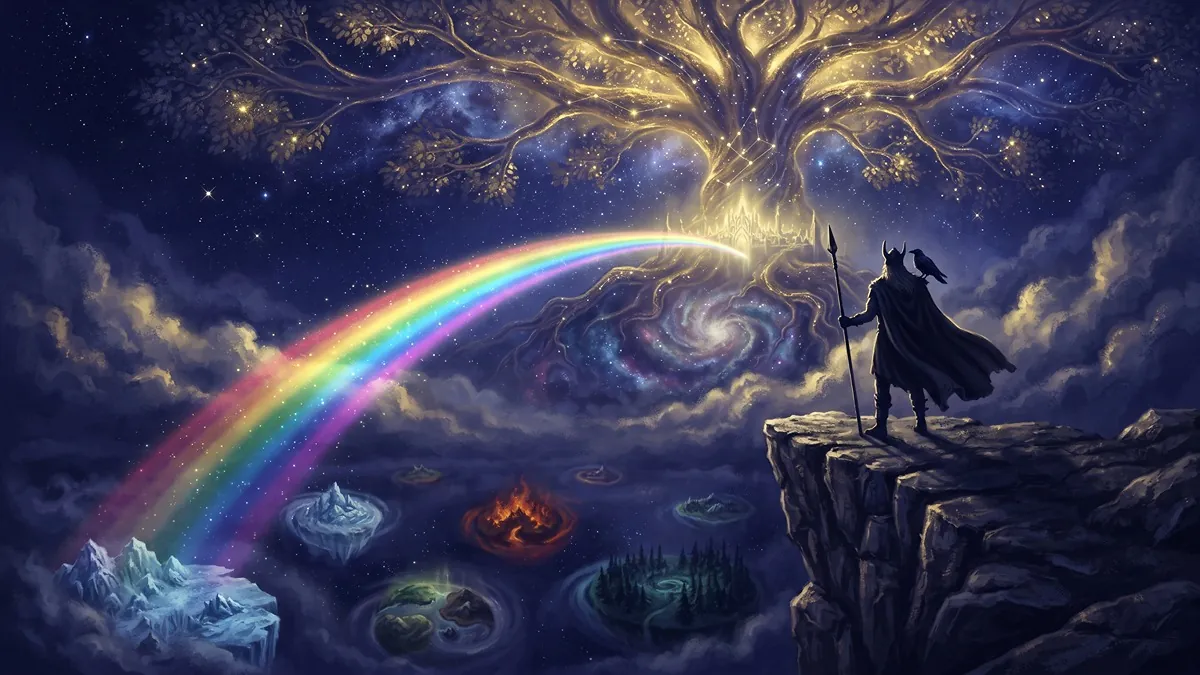
105 stories · 105 games
Myths & Gods
Before there were kings, there were gods.
Nine worlds hanging from a tree, a god who traded an eye for wisdom, a hammer that calls the storm. Here the myths are told as the sources kept them, in the Eddas and in Snorri, never passed off as history, and always with the origin of each piece.
Start here
 Myth or legend
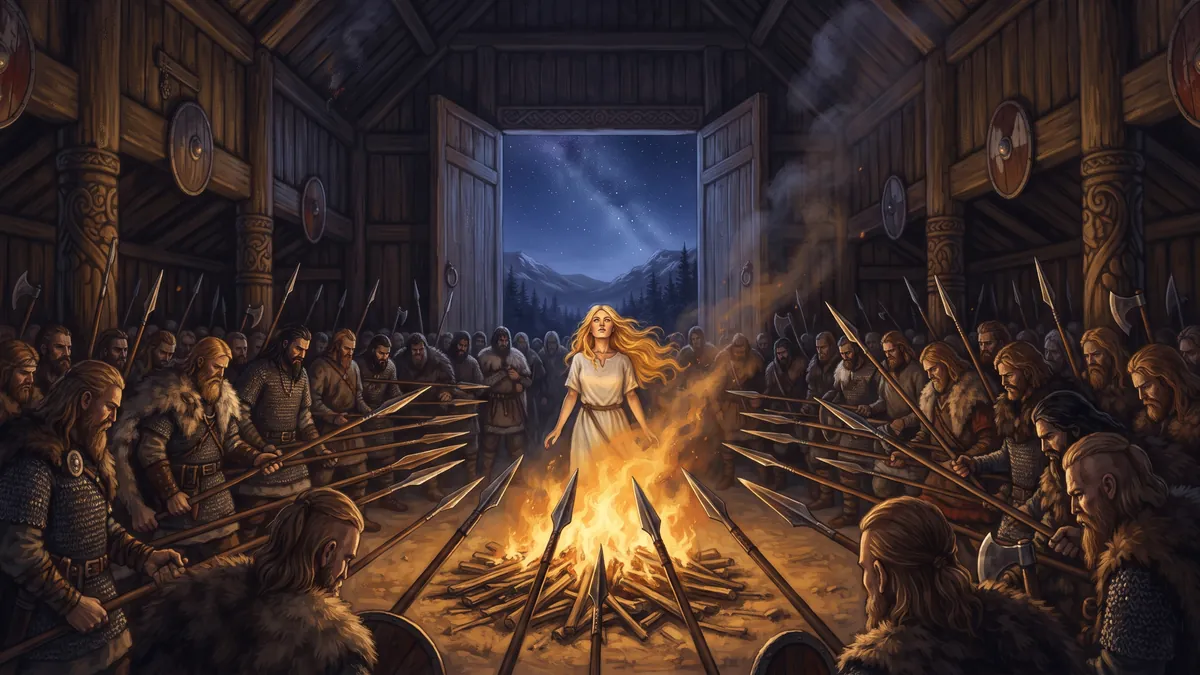
Gullveig, the one burned three times: the riddle in Völuspá before the war among the gods
In Völuspá, a figure called Gullveig is pierced with spears and burned three times in Odin's hall, and the next stanza tells the war between the Æsir and the Vanir. See what the poem says, what scholars propose and what remains unanswered.
Read →
Stories of this realm
 Myth or legend
Ginnungagap, the primordial void: where ice met fire and Ymir was born
Ginnungagap is the yawning abyss that existed before the world, according to Völuspá and Gylfaginning. See what Snorri tells of the northern ice, the southern sparks and the first giant, and what scholars debate about the name.
Read →
 Myth or legend
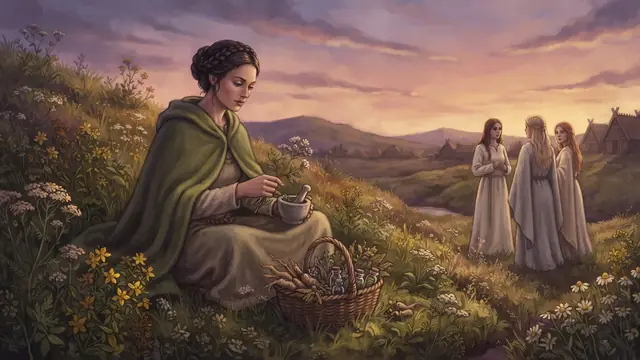
Eir, the physician among the goddesses: what the sources say about the ásynja of healing
Eir appears in Gylfaginning as "an extremely good physician", in Fjölsvinnsmál as one of Menglöð's maidens on the hill of healing, and in verse as an image for a woman. See what each source says and why scholars doubt whether she was a goddess or a valkyrie.
Read →
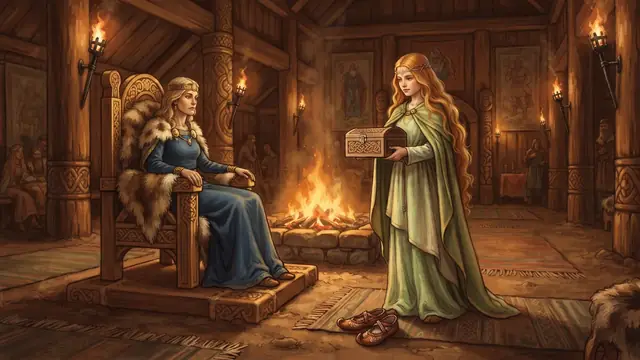 Myth or legend
Fulla, Frigg's handmaiden: the goddess of the ash-wood box, the shoes and the secrets
Fulla is Frigg's handmaiden in Grímnismál and the Prose Edda, and she may be the same Volla of a tenth-century German charm. See what each source says about her and where scholars disagree.
Read →
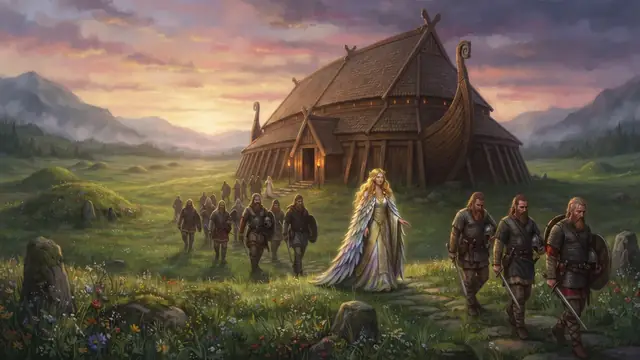 Myth or legend
Fólkvangr, Freyja's field: where the other half of the slain warriors go
According to Grímnismál and Gylfaginning, Freyja chooses half of those who die in battle, and Odin takes the other half. See what the sources say about Fólkvangr and the hall Sessrúmnir, and what scholars debate.
Read →
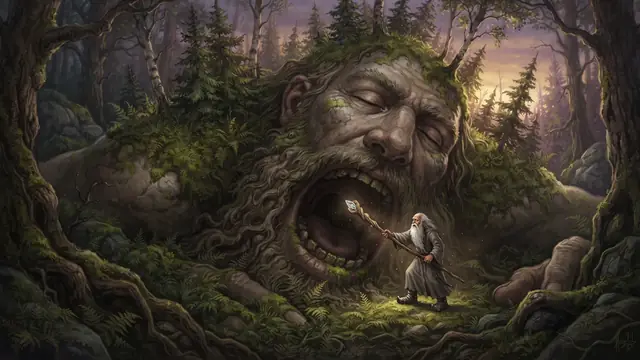 Myth or legend
Antero Vipunen, the sleeping giant of the Kalevala: the hero who went into his mouth for three words
In runos 16 and 17 of the Kalevala, Väinämöinen cannot finish his boat because three magic words are missing. He seeks them in the land of the dead and in the body of the giant Antero Vipunen. See the episode.
Read →
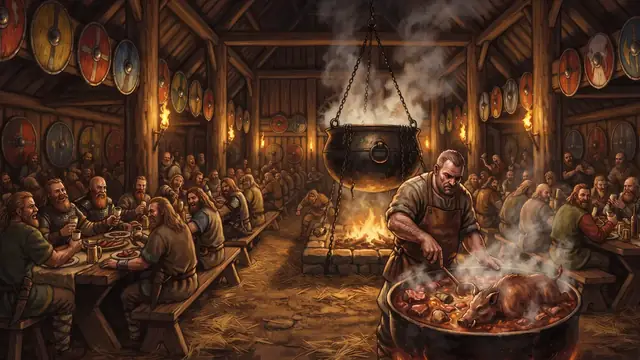 Myth or legend
Sæhrímnir: the boar the warriors eat every night in Valhalla, and that comes back whole
According to the Edda, the cook Andhrímnir boils the boar Sæhrímnir every day, and by evening it is whole again. See what Grímnismál and Gylfaginning say, and where scholars disagree.
Read →
 Myth or legend
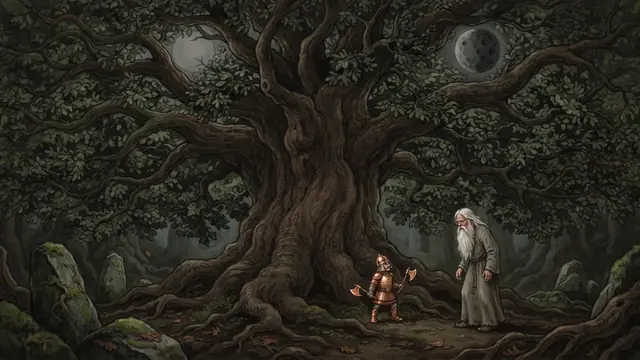
The great oak of the Kalevala and the tiny man who came out of the sea to fell it
In the second rune of the Kalevala, a giant oak hides the sun and moon until a tiny hero from the sea fells it in four strokes. See the episode and what comes after it.
Read →
 Myth or legend
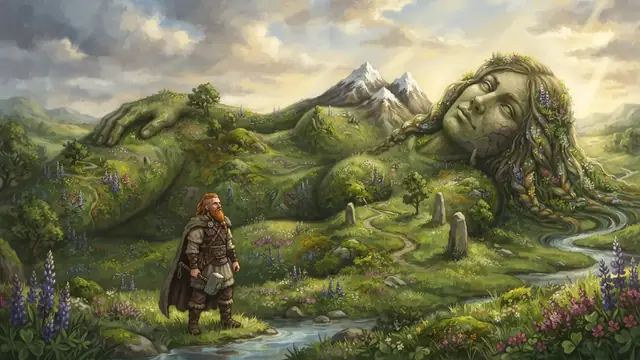
Jörð: the Earth as a goddess, mother of Thor and "bride of Odin" in the Norse sources
Jörð is the Earth itself, personified, and the mother of Thor. The sources say little about her and do not always agree on her parents. See what the Edda and the skalds record.
Read →
 Myth or legend
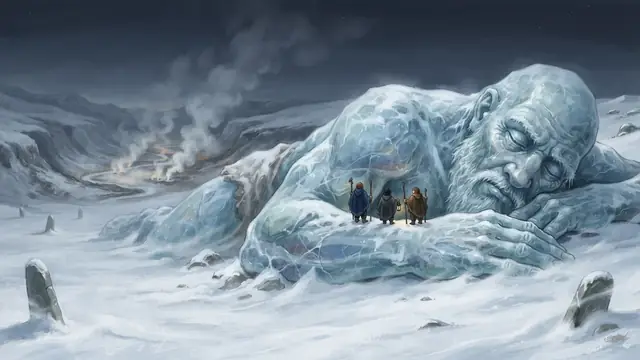
Ymir: the giant born of ice and venom whose body the gods made into the world
Ymir is the first giant of the Norse sources. See what the Prose Edda, the Völuspá, the Vafþrúðnismál and the Grímnismál say about his birth and death, and what is only hypothesis.
Read →
 Myth or legend
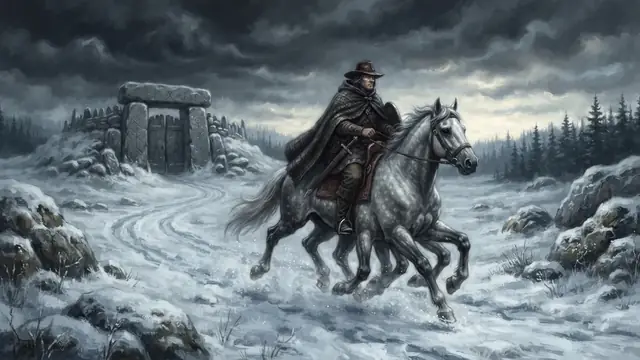
Sleipnir: Odin's eight-legged horse and his strange origin
Sleipnir is Odin's horse, the son of Loki and the stallion Svaðilfari. See what Snorri, the Grímnismál, the Hyndluljóð and the Tjängvide stone say about him.
Read →
 Myth or legend
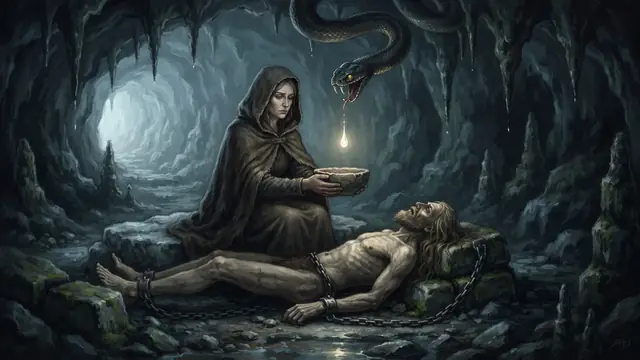
Sigyn: Loki's wife, who held the bowl under the venom
Sigyn appears little in the sources, but one scene made her known: she holds a bowl over her bound husband. See what the Völuspá, the Lokasenna, Snorri and the Gosforth Cross say.
Read →
 Myth or legend
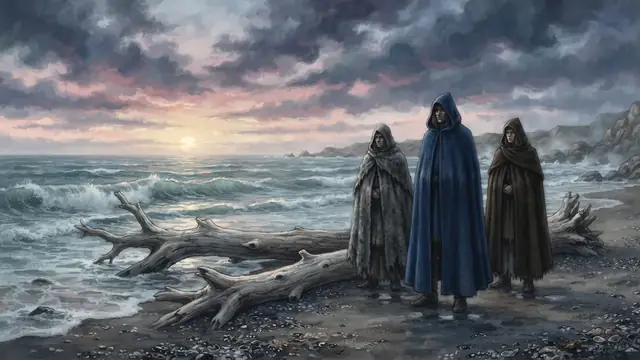
Vili and Vé: Odin's two brothers who help to make the world and the first couple
Odin had two brothers, Vili and Vé. See what the Prose Edda, the Völuspá, the Lokasenna and the Ynglinga saga say about them, and what is only scholars' guesswork.
Read →
 Myth or legend
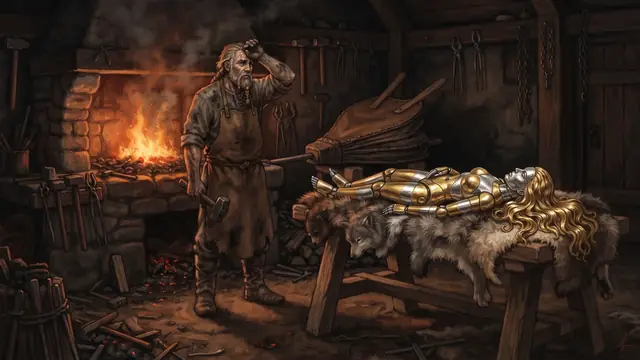
Ilmarinen and the golden bride: the smith of the Kalevala who forged a wife and found her cold
After losing his wife, the smith Ilmarinen forges a bride of gold and silver. See rune 37 of the Kalevala, what goes wrong and what Väinämöinen tells him.
Read →
 Myth or legend
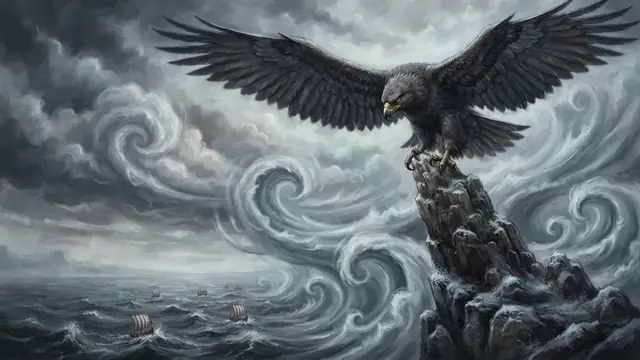
Hræsvelgr: the giant in the shape of an eagle who makes the wind with his wings
In the Poetic Edda and the Prose Edda, the wind comes from the wings of an eagle-giant sitting at the end of the sky. See what the texts say, what the name means and what stays unanswered.
Read →
 Myth or legend
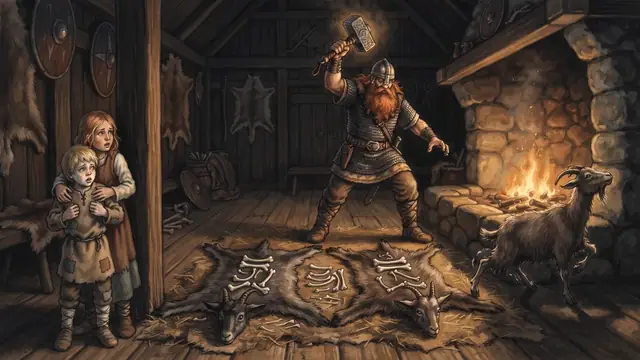
Thjálfi and Röskva: the broken bone and the two servants of Thor
In the Prose Edda, Thor eats his goats at a farm and revives them with the hammer, but one bone was broken. See how the farmer’s children, Thjálfi and Röskva, came to serve him.
Read →
 Myth or legend
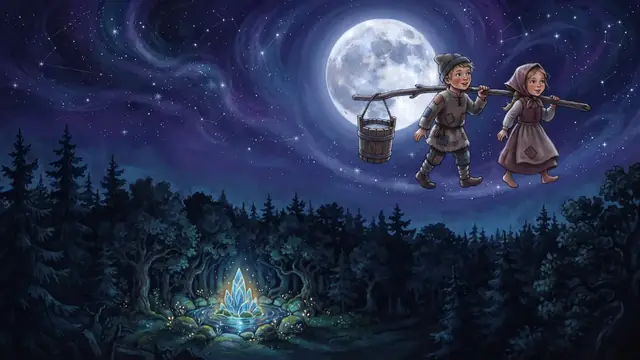
Hjúki and Bil: the children who follow the Moon carrying a pail in the Edda
In the Prose Edda, Máni takes two children from the earth who carry a pail on a pole. See what Snorri says about Hjúki and Bil, the Moon and the Sun, and what he does not say about the spots on the Moon.
Read →
 Myth or legend
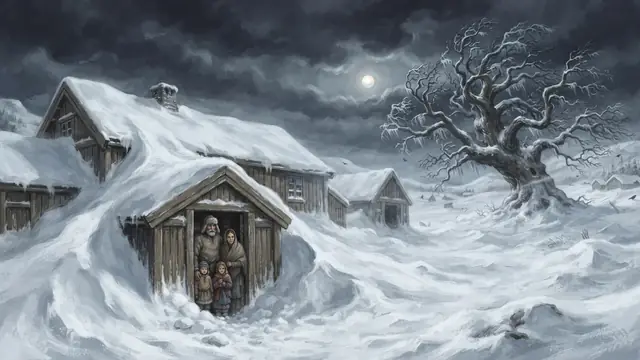
Fimbulvetr: the three-year winter with no summer that comes before Ragnarök
Before the Norse end of the world come three winters in a row, with no summer between them. See what Snorri and the Poetic Edda say about Fimbulvetr and what scholars debate about the year 536.
Read →
 Myth or legend
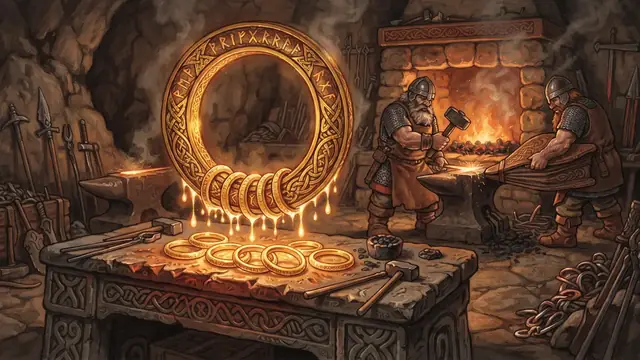
Draupnir: Odin's ring that drips eight rings every nine nights
Draupnir is Odin's gold ring, made by dwarves. See the wager of Loki that created it, what Snorri says about the dripping rings and the ring's fate on Baldr's pyre, and what remains uncertain.
Read →
 Myth or legend
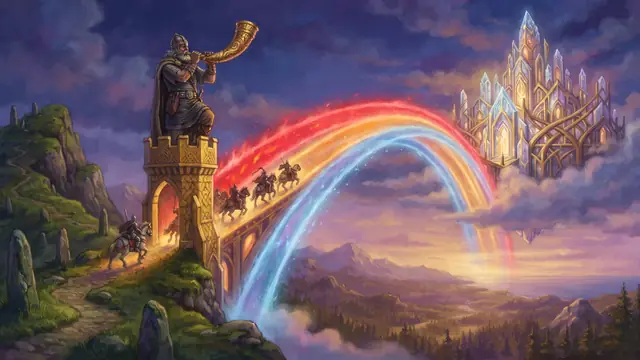
Bifröst: the three-coloured bridge the gods cross every day
Bifröst joins earth to heaven in Norse mythology. See what Snorri and the Poetic Edda say about its colours, its fire, Heimdall and the day the bridge breaks, and what remains uncertain.
Read →
 Myth or legend
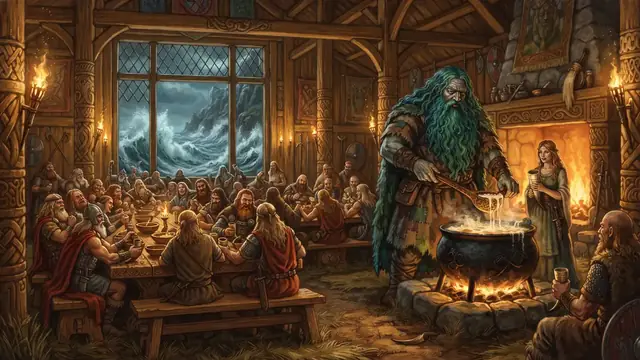
Ægir: the sea giant who brews ale for the gods and the feast of the Lokasenna
Ægir is the sea giant who gives feasts for the gods. See the cauldron of Hymiskviða, the servants Eldir and Fimafeng, the wife Rán and the nine wave daughters, and what scholars still debate.
Read →
 Myth or legend
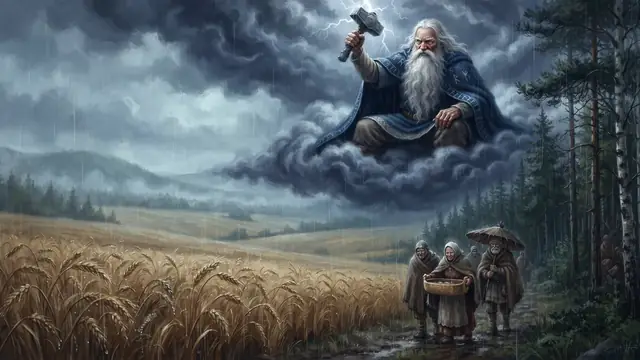
Ukko: the Finnish god of thunder and the feast of the vessel that asked for rain
Ukko is the "old man" of the Finnish sky, tied to thunder, rain and the harvest. See the May feast at which a vessel of drink was offered, what Agricola wrote in 1551 and what stays uncertain.
Read →
 Myth or legend
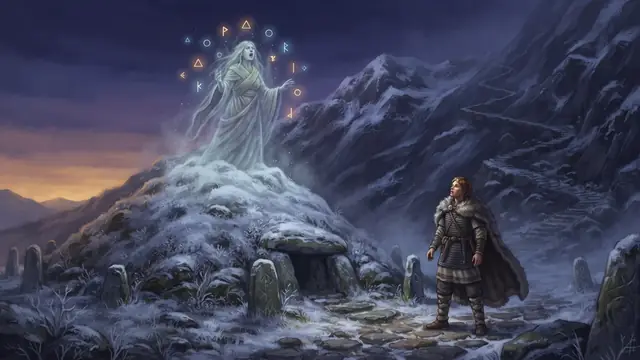
Grógaldr: the nine spells Gróa sings to her son Svipdagr
In the poem Grógaldr, a young man calls his dead mother from her grave and she sings nine spells for his journey: against fear, mockery, water, foes, fetters, storm, cold, the dead and giants.
Read →
 Myth or legend
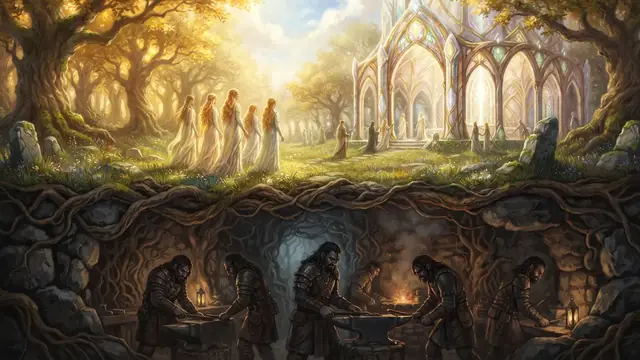
Álfheimr: light elves and dark elves in Snorri and in Grímnismál
Álfheimr is the land of the light elves, given to the god Freyr as a tooth-gift. See what the poem Grímnismál and Snorri say about elves fairer than the sun and elves blacker than pitch.
Read →
 Myth or legend
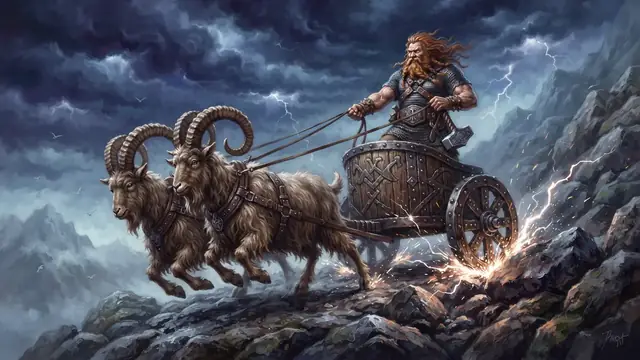
Tanngrisnir and Tanngnjóstr: the goats that pull Thor's chariot
Two goats pull Thor's chariot, are eaten at night and return to life in the morning, as long as no bone is broken. See what the Poetic Edda and the Prose Edda tell and what remains in doubt.
Read →
 Myth or legend
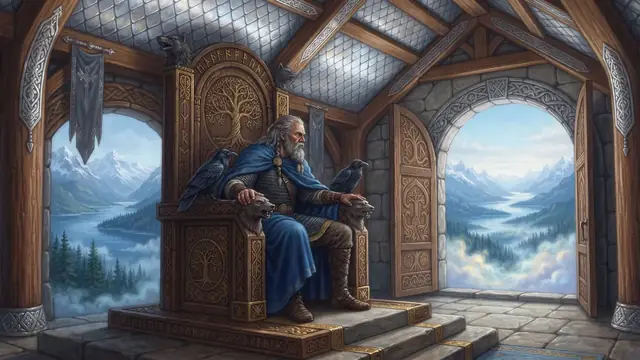
Hliðskjálf: Odin's seat from which all worlds are seen
Hliðskjálf is the high seat from which Odin sees and hears the worlds. The Poetic Edda and the Prose Edda mention it in episodes with Frigg, Freyr and Loki. See what the sources say and what stays open.
Read →
 Myth or legend
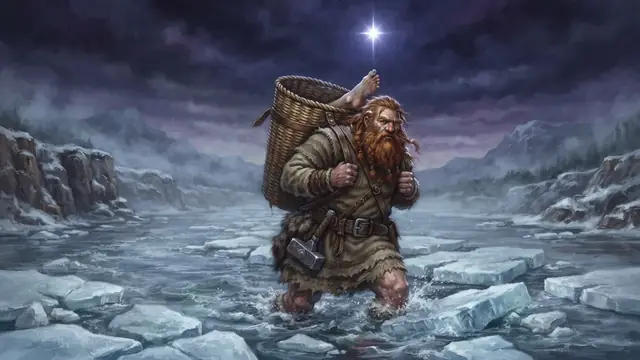
Aurvandil: the toe that became a star in the myth of Thor
Thor crossed a river of ice with Aurvandil on his back, in a basket. One toe stuck out, froze and was thrown into the sky. See what the Prose Edda tells and what scholars still debate.
Read →
 Myth or legend
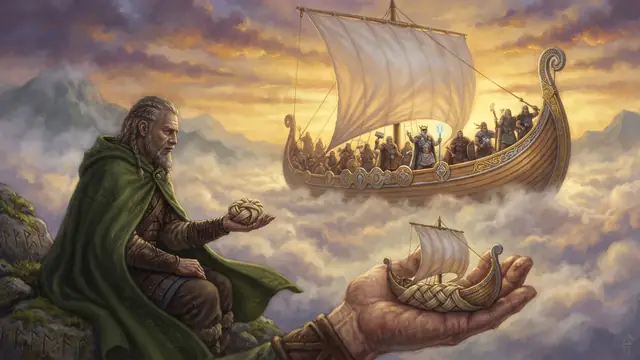
Skíðblaðnir: Freyr’s ship that folds like cloth and fits in a pocket
Norse mythology speaks of Skíðblaðnir, the best of ships, which carries all the gods and folds like cloth. See what the Poetic Edda, the Prose Edda and Heimskringla say about who made it and who owned it.
Read →
 Myth or legend
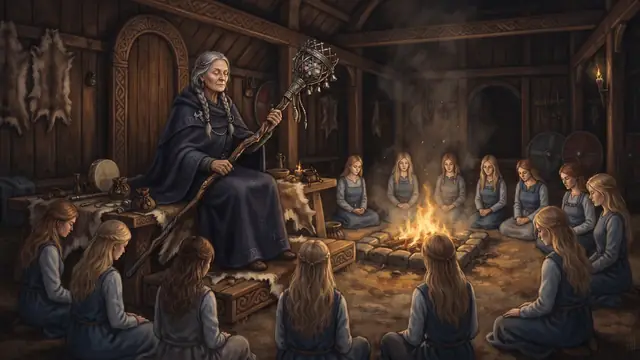
Seiðr: the Norse magic of the thread, the ritual distaff and the seeresses, the völur
Seiðr was a magic practice of the Viking Age tied to prophecy and curses, to a kind of distaff and to women seers, the völur. See what two sources say about the word, the account of Eiríks saga rauða and what is not known.
Read →
 Myth or legend
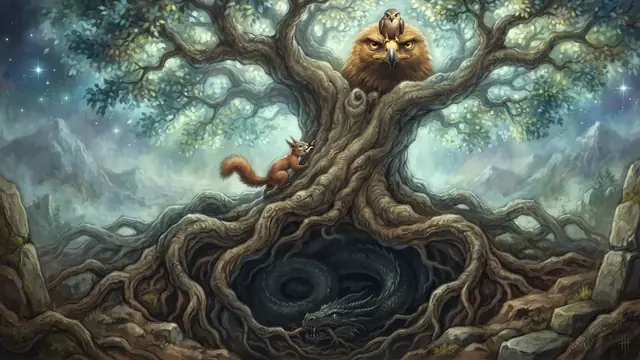
Ratatoskr: the squirrel who runs along Yggdrasil carrying messages between the eagle and Níðhöggr
In Norse mythology, a squirrel called Ratatoskr goes up and down the tree Yggdrasil carrying messages between an eagle, at the top, and Níðhöggr, below. See what the texts say, what the name means and what scholars propose.
Read →
 Myth or legend
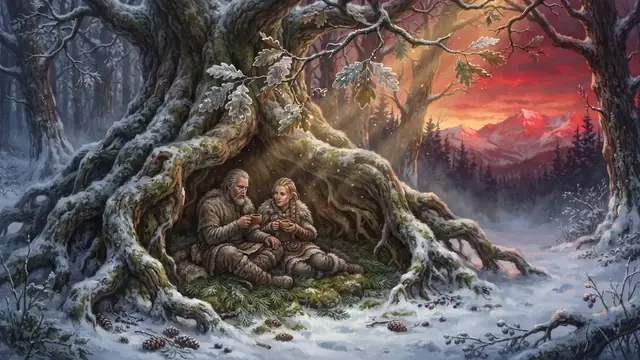
Líf and Lífþrasir: the couple who survive the end of the world in Hoddmímir's wood
In Norse mythology, a couple called Líf and Lífþrasir hide from a terrible winter and a great fire and then repopulate the world. See what the texts say, what scholars propose and what remains unanswered.
Read →
 Myth or legend
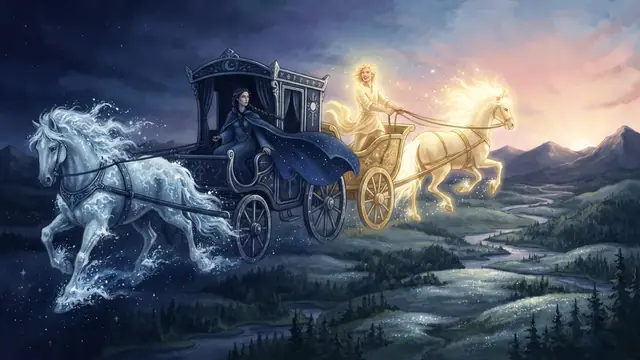
Nótt and Dagr: Night and Day in the Eddas, each with a chariot and a horse
In the Eddas, Odin gives Night, Nótt, and Day, Dagr, a chariot and a horse each and sets them in the sky. See what the sources say about their family, the horses and a disagreement between manuscripts.
Read →
 Myth or legend
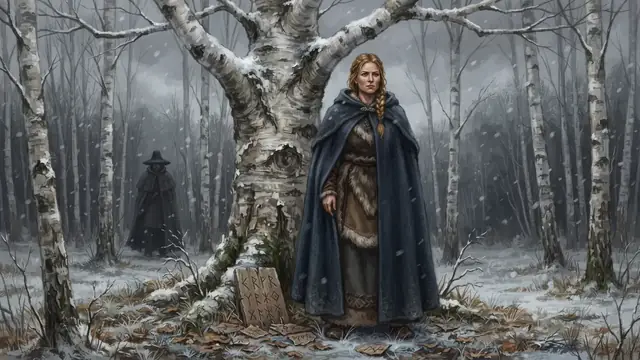
Rindr: the mother of Váli, Odin's spell and Saxo Grammaticus's princess Rinda
Rindr is the mother of Váli, the son of Odin who avenges Baldr. See what the Prose Edda, a poem by Kormákr and Saxo Grammaticus say, with Saxo turning her into a princess of the Ruthenians, and what is uncertain about her name.
Read →
 Saga or medieval source
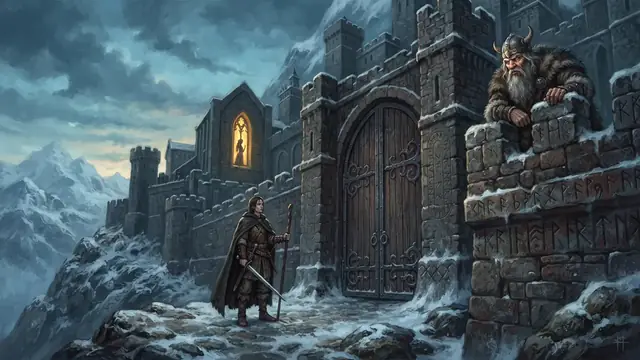
Fjölsvinnsmál: the castle watchman, Svipdagr's hidden name and Menglöð
Fjölsvinnsmál is the poem in which the young Svipdagr reaches a castle on a mountain top and hides his name from the watchman. See the plot, the link to Gróagaldr and to a medieval ballad, and what remains uncertain.
Read →
 Myth or legend
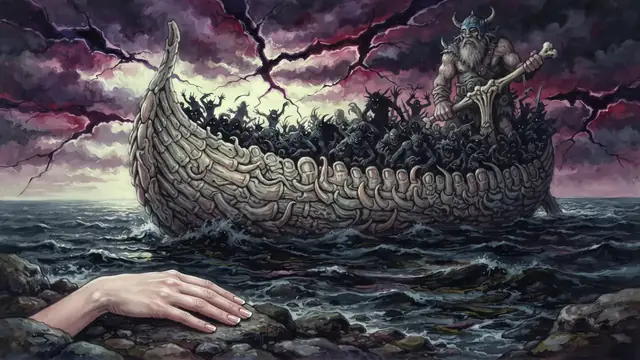
Naglfar, the ship made from the nails of the dead that sails at Ragnarök
Naglfar is the largest ship of Norse mythology, made from the nails of the dead, and carries monsters to the final battle. See what the Völuspá and the Prose Edda say, the doubts about its name and what remains uncertain.
Read →
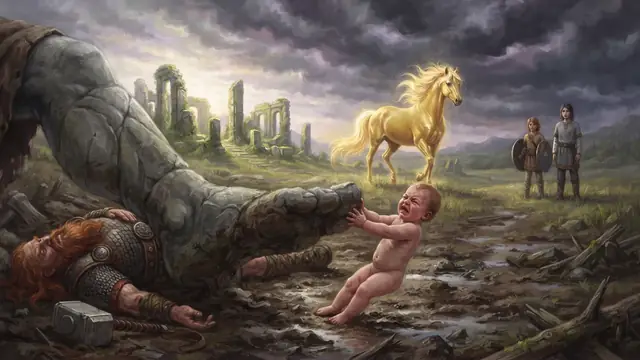 Myth or legend
Magni and Móði, the sons of Thor: the child who lifted a giant's foot and the ones who survive Ragnarök
Magni ("Strength") and Móði ("Wrath") are sons of Thor and are among those who survive Ragnarök. See the story of the three-night-old baby who frees his father from a giant, what the Edda says of each and what stays open.
Read →
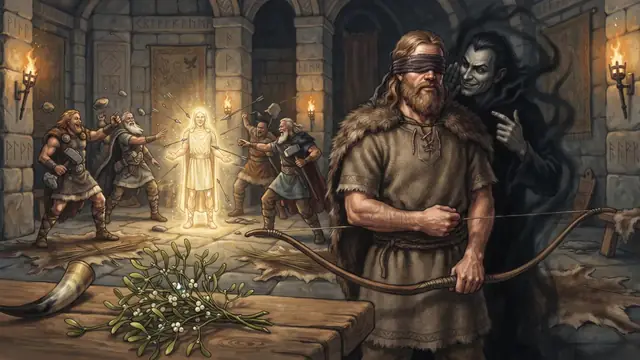 Myth or legend
Höðr, the blind god: the mistletoe dart, the death of Baldr and the two versions of the story
Höðr, son of Odin, is the blind god who shoots the mistletoe dart that kills Baldr. See what the Prose Edda tells, how Saxo Grammaticus changes everything and what remains uncertain about his fate.
Read →
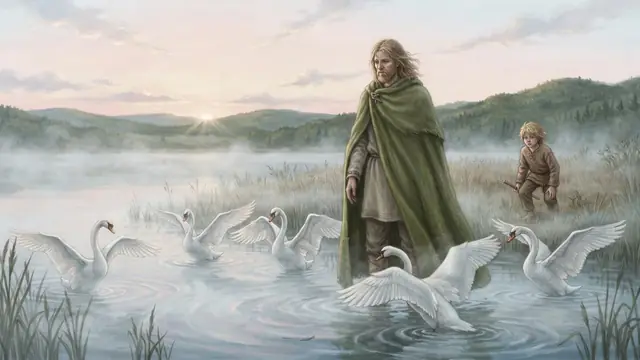 Myth or legend
Hœnir, the god who helps make humans and relies on Mímir: what the sources say
Hœnir is one of the Æsir, with few appearances in the sources: the making of Ask and Embla, a role as hostage among the Vanir, a Faroese ballad and a hypothesis that ties him to birds. See what each text offers and what stays uncertain.
Read →
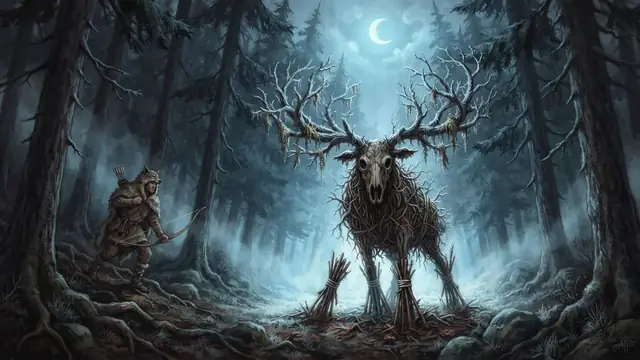 Myth or legend
Hiisi: from sacred grove to demon, and the elk he made of rotten wood
In Finnish and Estonian, hiisi first named sacred places, then mythical beings, and finally something close to the Christian devil. See what the article says about cemeteries, magic songs, the Kalevala and Lemminkäinen's elk, and what is only speculation.
Read →
 Myth or legend
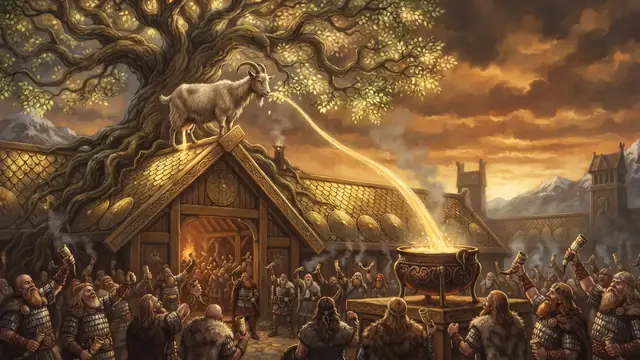
Heiðrún, the goat of Valhalla whose mead serves all the einherjar
The goat Heiðrún stands on Valhalla, eats the leaves of the tree Læraðr and mead runs from her every day. See what the Grímnismál and the Gylfaginning say, what the poem Hyndluljóð does with her name and why the etymology is debated.
Read →
 Myth or legend
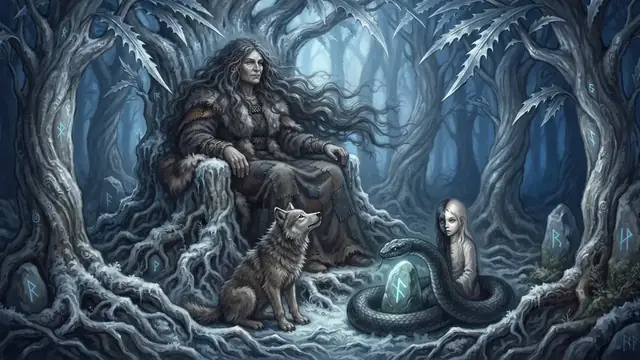
Angrboða, the giantess of Járnviðr: mother of Fenrir, Jörmungandr and Hel
Angrboða appears little in the sources: the Völuspá hin skamma names her as Loki's mate, the Gylfaginning gives her three monstrous children and the Völuspá speaks of an old woman in the Iron Wood. See what is attested, what is inference and why the name may be late.
Read →
 Myth or legend
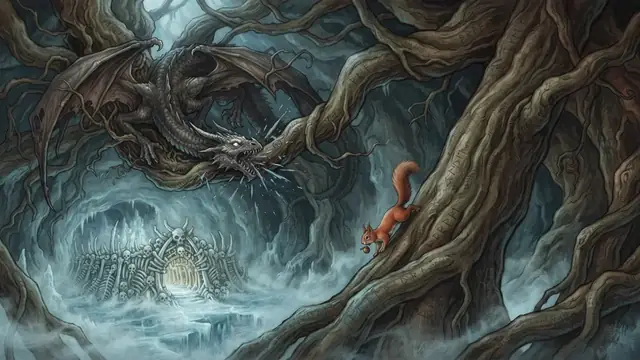
Níðhöggr, the dragon that gnaws the roots of Yggdrasill: what the texts say
Níðhöggr is, in the Norse sources, the being that gnaws one of the roots of the world ash and feeds on corpses in Náströnd. See what the source consulted gathers about the Gylfaginning, the Grímnismál, the Völuspá, the squirrel Ratatoskr and the debated meaning of the name.
Read →
 Saga or medieval source
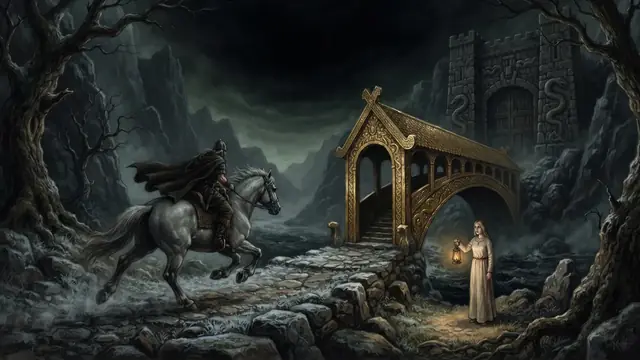
Hermóðr, the son of Odin who rode nine nights to Hel in search of Baldr
After Baldr's death, Hermóðr rides Sleipnir to the realm of Hel to ask for his brother's return. See what the source consulted gathers about the Gylfaginning, the Gjöll bridge, the conditional ransom and the doubts about who he was.
Read →
 Myth or legend
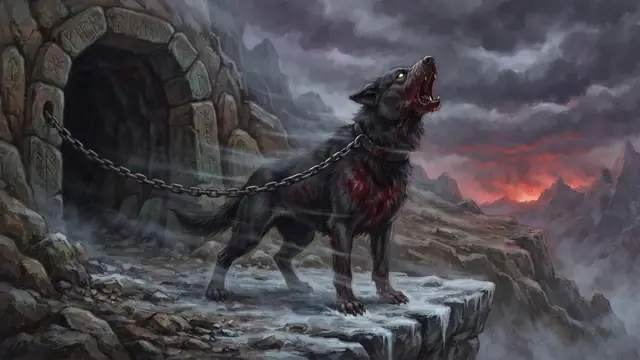
Garmr, the hound that howls before Gnipahellir: what the Norse sources tell
Garmr is a wolf or dog tied to Hel and to Ragnarök, the "blood-stained guardian" of the gate of the dead. See what the source consulted gathers about the Völuspá refrain, the Baldrs draumar, the Gylfaginning, the duel with Týr and the debate about Fenrir and Cerberus.
Read →
 Myth or legend
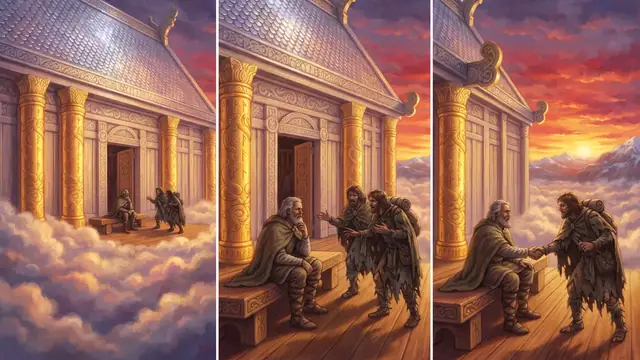
Forseti, the god who reconciles quarrels: what is known of the hall Glitnir
Forseti is the god to whom disputes are brought in Norse mythology. See what the article consulted says about the Gylfaginning, the hall Glitnir, the name Fosite among the Frisians and what remains unproven.
Read →
 Myth or legend
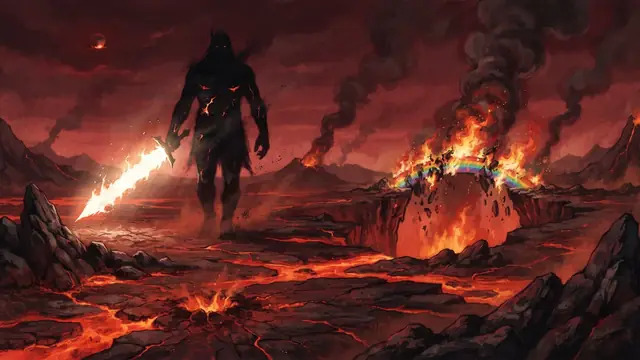
Surtr, the fire giant of Muspelheim: what the sources say about Ragnarök
Surtr is the jötunn who guards Muspelheim and, at Ragnarök, comes from the south with fire and a bright sword. See what the source consulted gathers on the sources, the battle with Freyr, the Surtshellir cave, the island of Surtsey and what scholars debate.
Read →
 Myth or legend
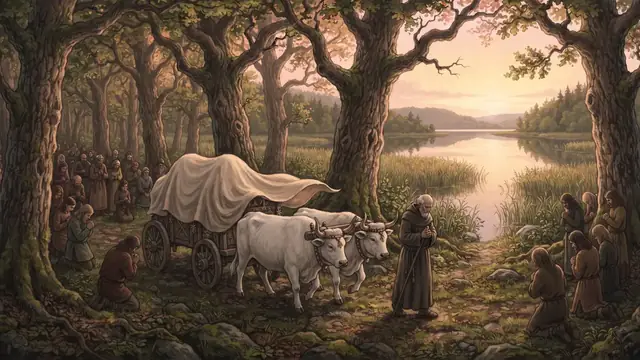
Nerthus, the goddess of the covered wagon: what Tacitus tells and what no one knows
Nerthus is a Germanic goddess mentioned by Tacitus in the Germania, in a rite with a covered wagon, a sacred grove and a lake. See what the source consulted gathers on the description, the kinship of the name with Njörðr and the scholars' doubts.
Read →
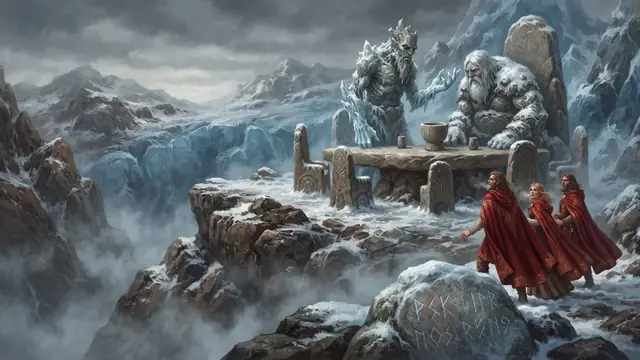 Myth or legend
The jötnar, the giants of Norse mythology: kin and rivals of the gods
The jötnar are the beings translated as giants in Norse mythology, and several gods descend from them or married them. See what the list consulted gathers on Bestla, Fárbauti, Jörð, Skaði, Gerðr, Mímir, Hrungnir and others.
Read →
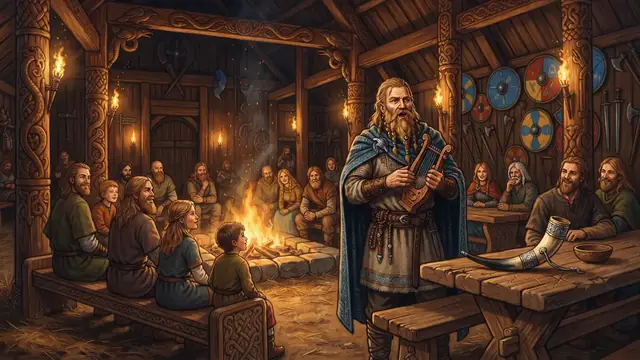 Myth or legend
Bragi, the god of poetry: what the Eddas and the court poems say about him
Bragi is the god of poetry in Norse mythology, husband of Iðunn. See what the source consulted gathers on the sources, the historical poet Bragi Boddason, the runes on the god's tongue and what remains in doubt.
Read →
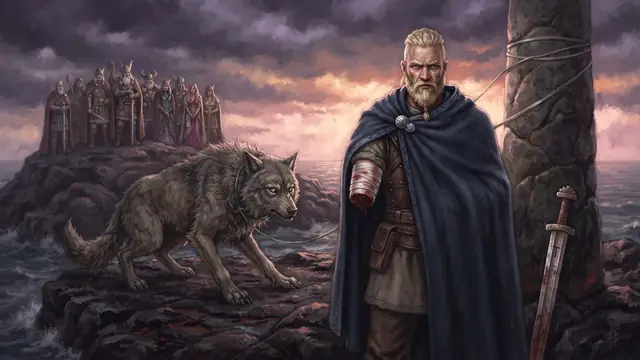 Saga or medieval source
Týr: the god who put his hand in the wolf's mouth and gave his name to Tuesday
Týr gave his right hand to Fenrir so the gods could chain him. See what the source consulted gathers about him, from Tacitus to the runes, and why some scholars think he was once a far more important god.
Read →
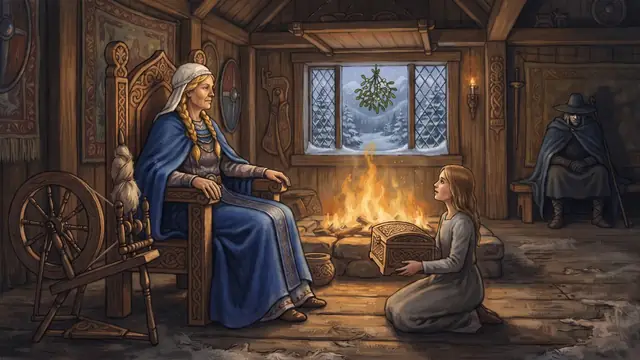 Saga or medieval source
Frigg: Odin's wife who made everything swear to spare Baldr, except one thing
Frigg is Odin's wife, Baldr's mother and the lady of the hall Fensalir. See what each source says about her, from Paul the Deacon to the Prose Edda, and where scholars admit doubt, especially about the link with Freyja.
Read →
 Saga or medieval source
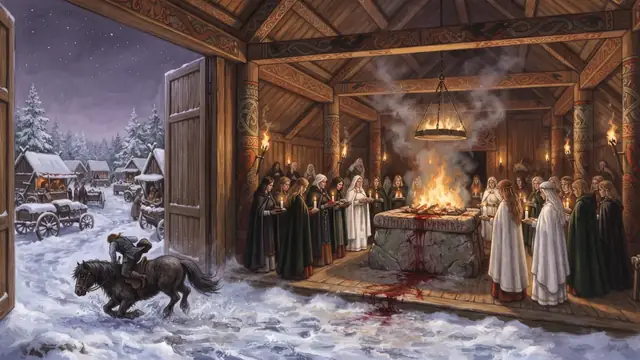
The dísir: female spirits, the sacrifice at Uppsala and the fair that still exists
The dísir are spirits or goddesses tied to fate, and the dísablót was the sacrifice in their honour. See what the sources say, from the Edda to the sagas, how the Uppsala Disting survived and what scholars still cannot decide.
Read →
 Saga or medieval source
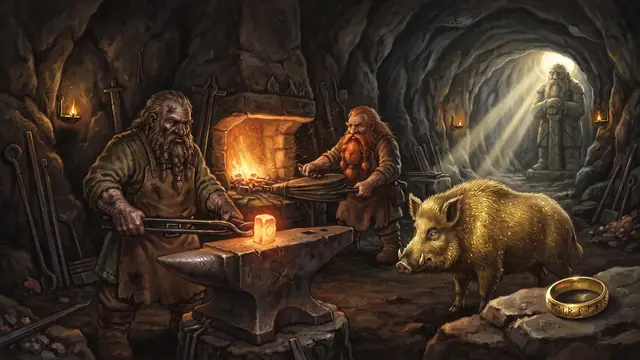
The dwarfs of the Edda: maggots in Ymir's flesh, smiths of the gods and stones at sunrise
The dvergar are born from Ymir's body, forge Thor's hammer and turn to stone in daylight. See what the source consulted gathers on dwarfs in Norse and German sources, and what nobody knows for sure, like their size.
Read →
 Saga or medieval source
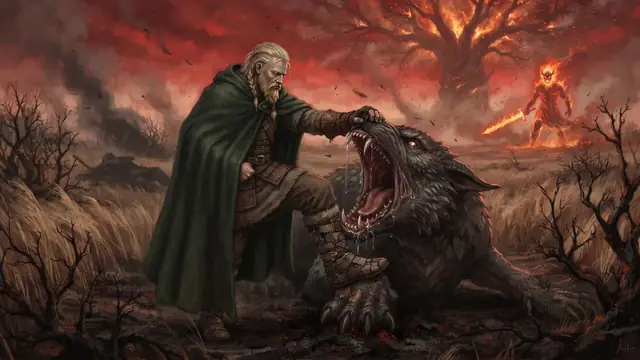
Víðarr: the silent god, the thick shoe and the end of the wolf Fenrir
At Ragnarök, Odin's quiet son steps on Fenrir's jaw with a shoe made of leather scraps. See what each source says about Víðarr's vengeance, and what the Gosforth cross may show.
Read →
 Saga or medieval source
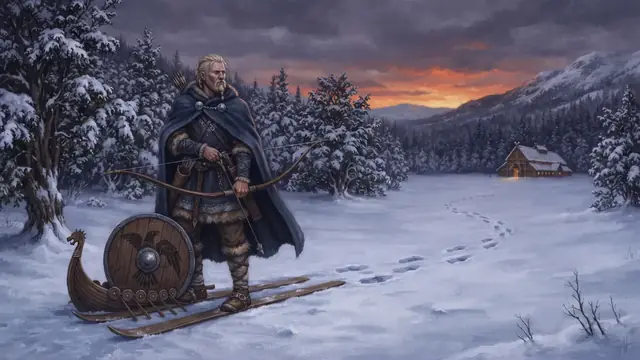
Ullr: the god of skis and the bow, of whom almost no stories remain
Ullr has a hall of yews, a shield that is a "ship" and dozens of place names, but hardly any myth. See what the sources say and what scholars propose to fill the gap.
Read →
 Saga or medieval source
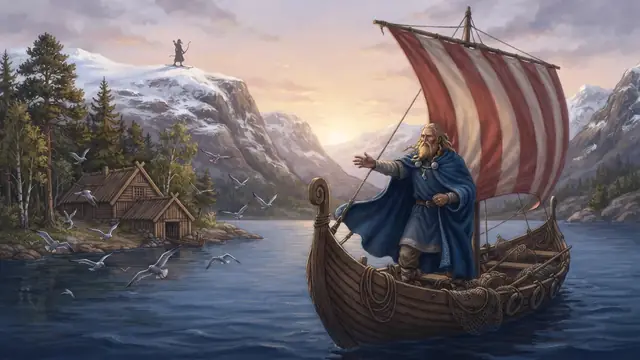
Njörðr: the god of the sea and wealth who married Skaði and could not stand the mountains
Among the Vanir, Njörðr is the lord of wind, sea and fishing. See what the Norse sources say about him, the failed marriage to Skaði and the exchange of hostages with the Æsir.
Read →
 Saga or medieval source
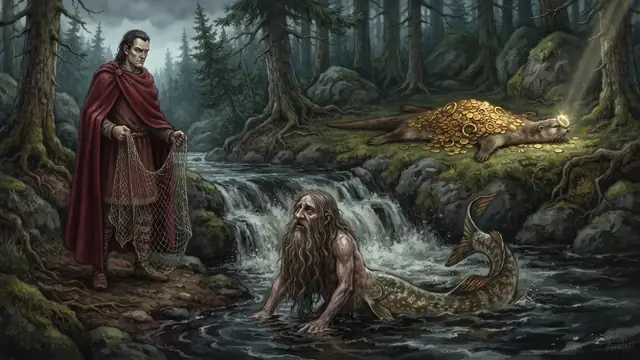
Reginsmál: Andvari, the ring Andvaranaut and the curse on the gold
In the Poetic Edda, the gods kill Hreidmar's son Otr and pay the ransom with the treasure of a dwarf who lives as a fish. See what the poem says about the ring, the curse and the end of Hreidmar.
Read →
 Saga or medieval source
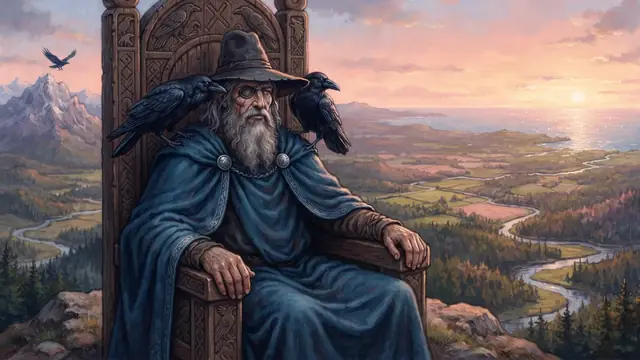
Huginn and Muninn: Odin's ravens, in the sources and in the finds
Two ravens fly every day over the world and return to tell Odin what they have seen. See what the Poetic Edda, the Prose Edda and the Heimskringla say about them, and what archaeology allows us to suppose.
Read →
 Saga or medieval source
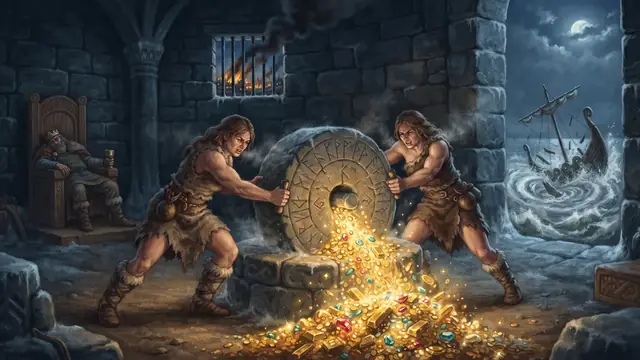
Grottasöngr: Fenja, Menja and the mill that ground gold, peace and salt
In the Prose Edda, two enslaved giantesses turn a magic mill for the Danish king Fróði. See how their song brings an army into being, and how the same mill ends up grinding salt at the bottom of the sea.
Read →
 Saga or medieval source
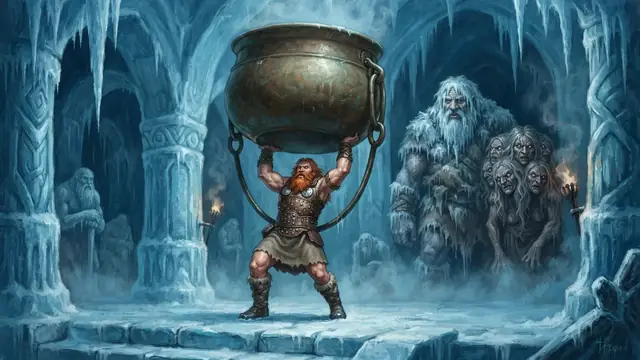
Hymiskviða: Thor and Týr go to fetch the giant Hymir's enormous cauldron
In the poem *Hymiskviða*, the gods run out of ale for Ægir's feast and Thor sets out with Týr to take from a giant the cauldron in which everything could be brewed. See what the text says and what scholars note.
Read →
 Saga or medieval source
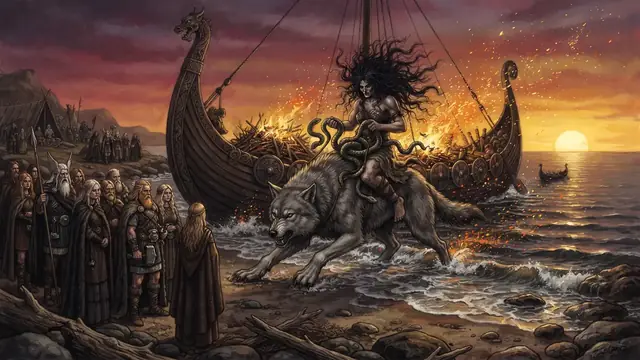
The funeral of Baldr: the giantess Hyrrokkin launches the gods' greatest ship
According to the *Gylfaginning*, the gods could not launch the ship Hringhorni for Baldr's funeral and summoned a giantess riding a wolf. See what Snorri and the poets say and what is debated.
Read →
 Saga or medieval source
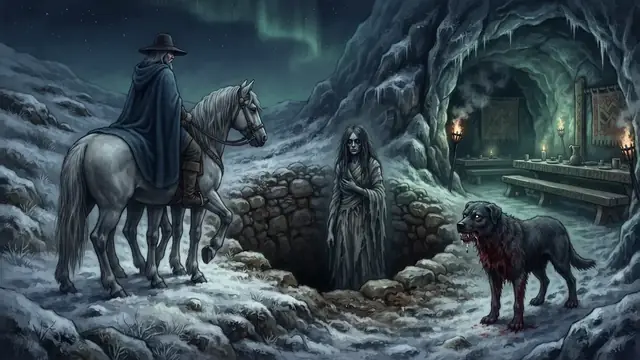
Baldrs draumar: Odin rides to Hel to hear what Baldr's dreams foretell
The short poem *Baldrs draumar* tells how Odin goes down to the realm of the dead and wakes a seeress from her grave to learn why his son Baldr has nightmares. See what the text says and what is debated.
Read →
 Saga or medieval source
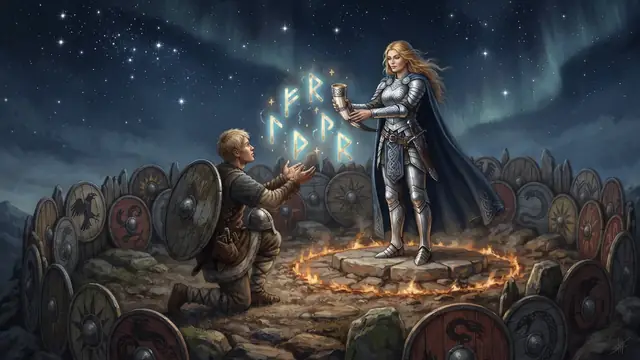
Sigrdrífumál: the valkyrie who woke up and taught Sigurd the runes
In the *Sigrdrífumál*, Sigurd wakes a sleeping valkyrie, and she gives him a drinking horn and a list of runes and advice. See what the poem says and why the text reached us in such disorder.
Read →
 Saga or medieval source
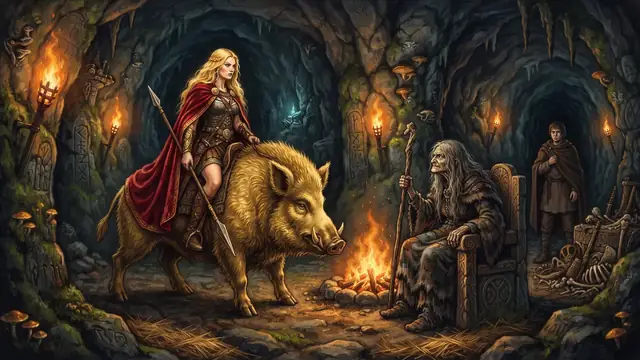
Hyndluljóð: Freyja rides a boar to the cave of the seeress who knows every family
In the poem *Hyndluljóð*, the goddess Freyja rides to the cave of a giantess and seeress to force her to recite the lineage of her protégé Óttarr. See what the text says and what scholars debate.
Read →
 Saga or medieval source
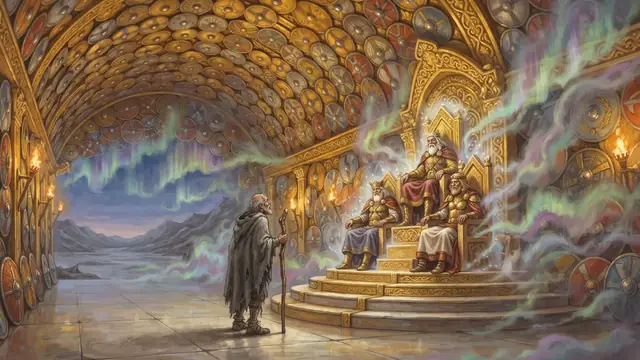
Gylfaginning: King Gylfi, disguised as Gangleri, asks questions in a palace that vanishes
The first part of Snorri Sturluson's *Prose Edda* uses the story of a Swedish king who visits Asgard in disguise to tell Norse mythology as questions and answers. See how the book is built.
Read →
 Saga or medieval source
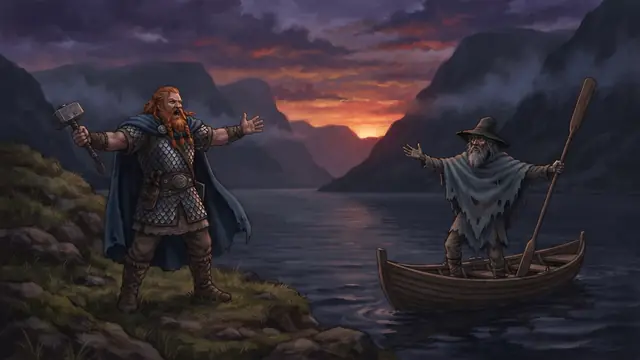
Hárbarðsljóð: the ferryman who would not take Thor across
In the *Poetic Edda*, Thor reaches a sound and finds a ferryman who mocks him instead of carrying him. Many readers see Odin behind the ferryman. See what the poem says.
Read →
 Saga or medieval source
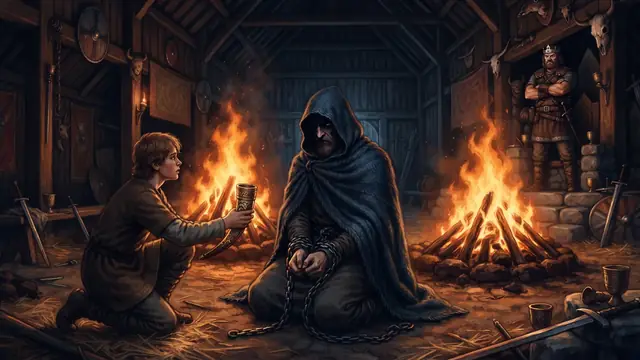
Grímnismál: Odin between two fires, speaking about the world
In the poem, Odin disguises himself, is tortured by a king and, seated between flames, describes the worlds and tells many of his names. See what the *Poetic Edda* says.
Read →
 Saga or medieval source
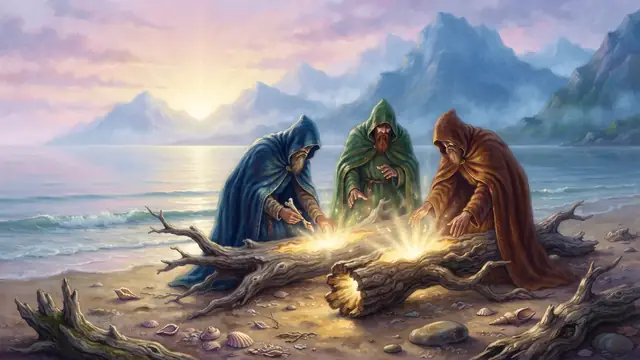
Ask and Embla: the first man and woman in the Norse sources
Two logs found on the beach become the first human couple. See what the *Völuspá* and Snorri say about Ask and Embla, and what remains in doubt.
Read →
 Saga or medieval source
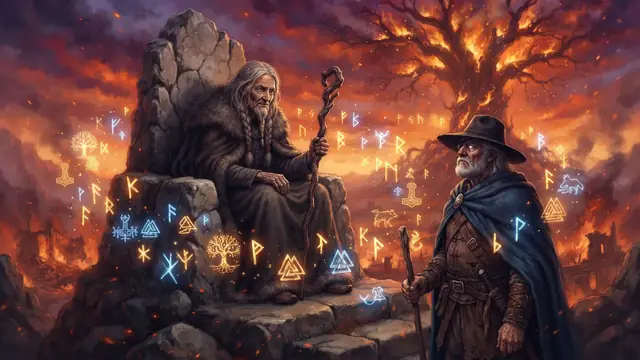
Völuspá, the seeress's prophecy that tells Odin of the beginning and end of the world
The poem *Völuspá* has a seeress tell Odin of creation, the war of the gods and the end of the world. See what the manuscripts say and what scholars debate.
Read →
 Saga or medieval source
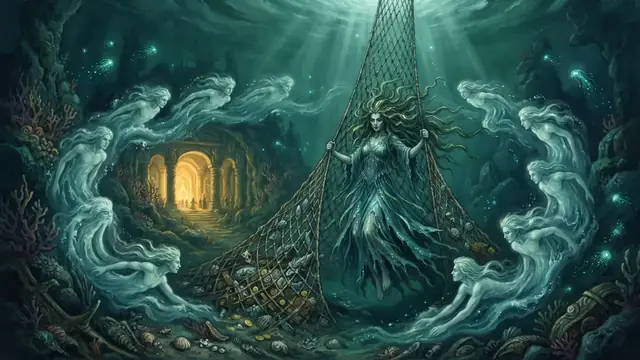
Rán, lady of the Norse sea, and the net that caught the drowned
In the Norse sources, Rán is Ægir's wife and the owner of a net that catches those who drown. See what Snorri, the *Poetic Edda* and a poem by Egill say.
Read →
 Saga or medieval source
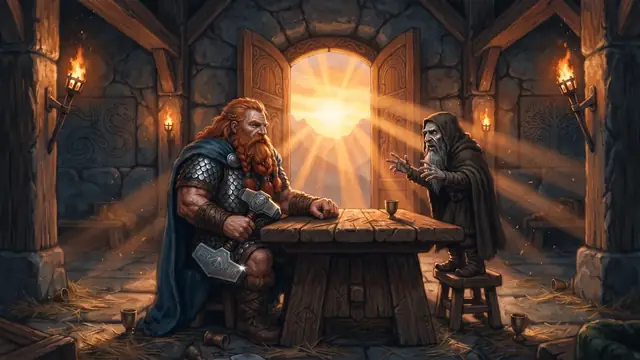
Alvíssmál: the dwarf who wanted to marry Thor's daughter and lost to the sun
In the poem *Alvíssmál*, Thor holds a dwarf with questions until daylight enters the hall. See what the text says and why it interests scholars of the language.
Read →
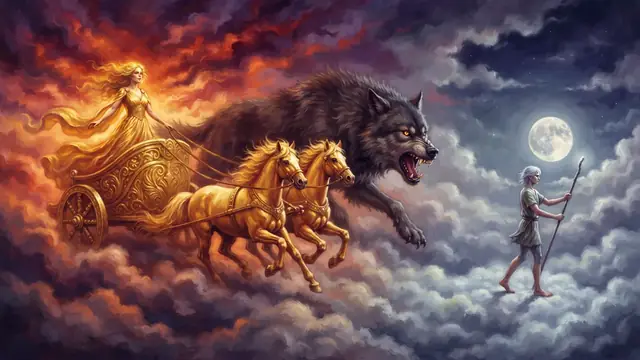 Myth or legend
Sól and Máni: the siblings who pull the sun and the moon with wolves at their heels
In Norse myth, Sól drives the sun and her brother Máni steers the moon, and both are chased by wolves. See what Snorri and the Poetic Edda say, and what remains uncertain.
Read →
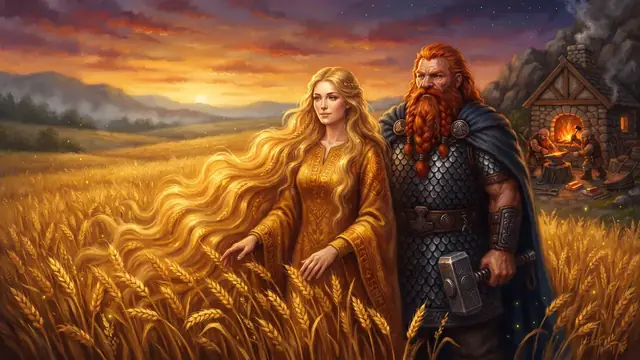 Myth or legend
Sif: the golden-haired goddess, wife of Thor, who barely appears in the myths
Sif, wife of Thor, is remembered for the golden hair that Loki cut and the dwarfs remade. See the little the sources say about her and what scholars try to infer.
Read →
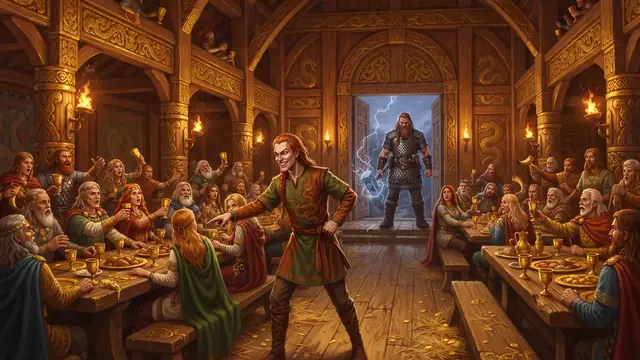 Myth or legend
Lokasenna: the feast of Ægir where Loki insulted the gods one by one
In the poem *Lokasenna*, from the Poetic Edda, Loki enters a banquet and insults each god and goddess present, until Thor arrives with his hammer. See what the text says and what scholars debate.
Read →
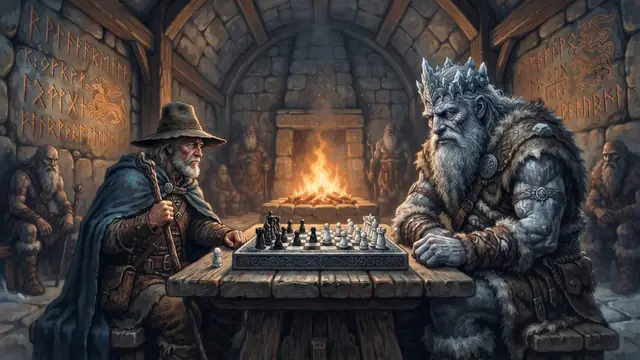 Myth or legend
Odin and Vafþrúðnir: the wisdom contest where the head was the stake
In the poem Vafþrúðnismál, a disguised Odin challenges a giant famed for wisdom to a contest of questions, wagering his head. The last question, about Baldr, reveals who he is.
Read →
 Myth or legend
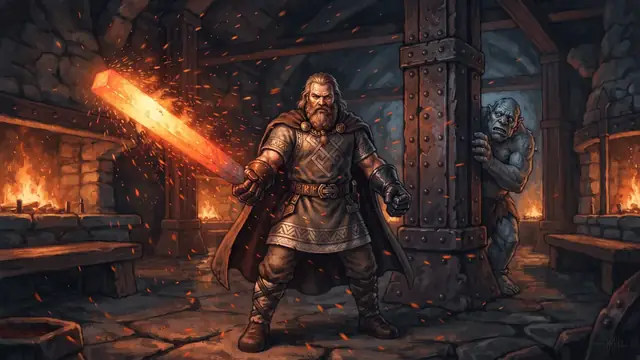
Thor and the giant Geirrøðr: the glowing iron, the iron gloves and the rising river
According to Snorri and the poem Þórsdrápa, Thor went to Geirrøðr's hall without hammer or belt, crossed a swelling river and caught a glowing bar with iron gloves. Here is the story.
Read →
 Myth or legend
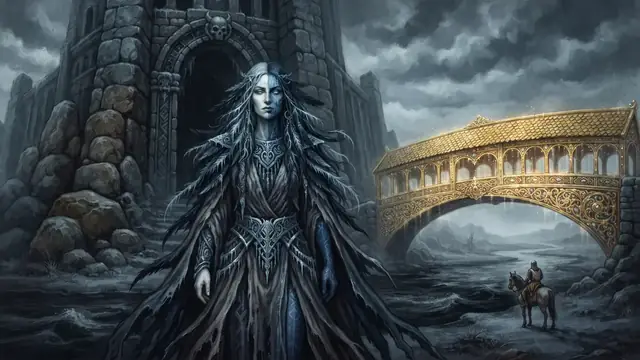
Hel and Helheim: the queen of the dead who lived in a house where Hunger was the plate
According to Snorri Sturluson, Hel, a daughter of Loki, ruled those who died of sickness or old age in an underground realm where even the tableware had grim names. Here is what the sources say.
Read →
 Myth or legend
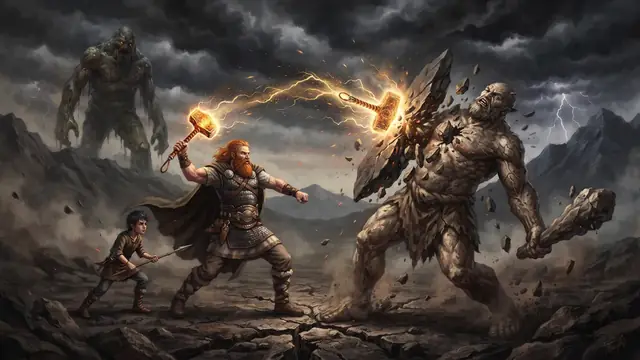
Thor against Hrungnir: the duel with the stone-hearted giant and the shard that stayed in the god's head
According to Snorri, the giant Hrungnir got drunk in the gods' hall and challenged Thor to a duel. See how it ended and why a piece of stone stayed in the god's head.
Read →
 Myth or legend
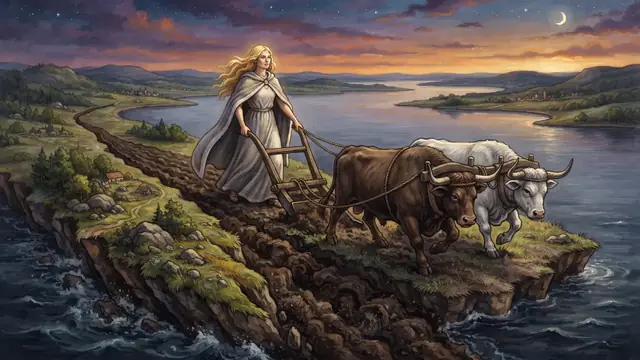
Gefjon and Zealand: the goddess who ploughed an entire island in one night, with four oxen
According to Snorri Sturluson, a goddess asked the Swedish king for as much land as she could plough in a day and a night, and tore the island of Zealand loose. See what the source says.
Read →
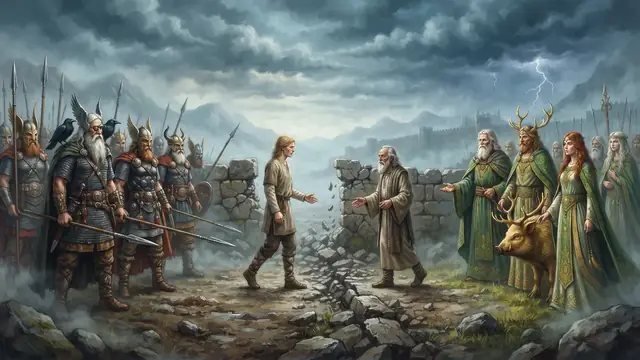 Myth or legend
The war between Æsir and Vanir: the first war in the world and the exchange of hostages that brought peace
The Norse poems speak of a war between two groups of gods that ended in a deal and an exchange of hostages. See what the Völuspá and Snorri tell, and where the sources differ.
Read →
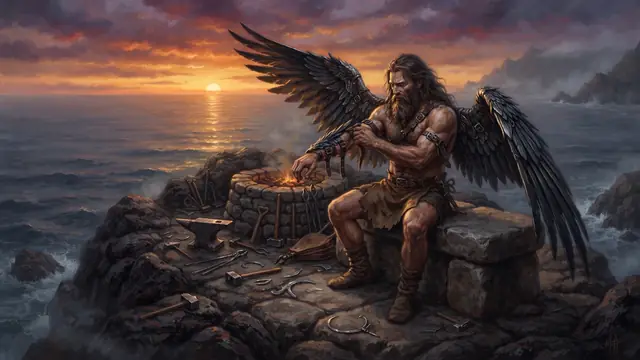 Myth or legend
Völund, the smith whom a king held on an island and who escaped by flight
The poem Völundarkviða, in the Poetic Edda, tells how King Níðuðr lamed and enslaved the smith Völund, and how he took revenge and escaped through the air.
Read →
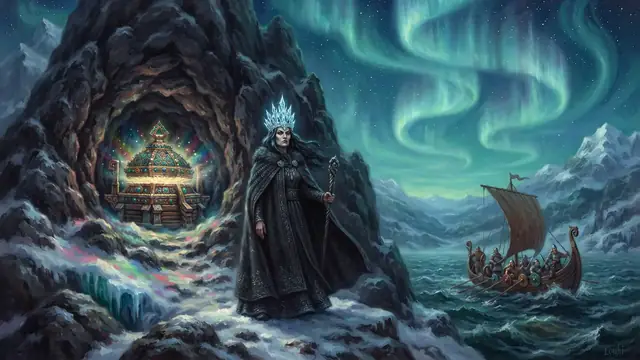 Myth or legend
The Sampo and Louhi: the magic mill the smith Ilmarinen forged and that broke at sea
In the Kalevala, the smith Ilmarinen forges the Sampo for the mistress of Pohjola, and the heroes try to steal it. Here is what the Finnish poem tells and how it was put together.
Read →
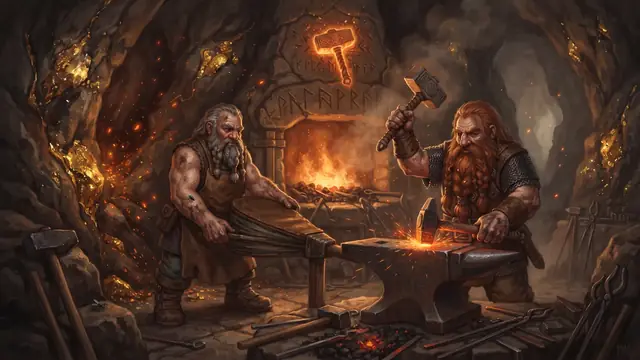 Myth or legend
Brokkr and Sindri forge Mjölnir: the wager in which Loki bet his own head
According to Snorri Sturluson, Thor's hammer was born from a wager between Loki and two dwarf smiths, and a fly spoiled the forging. Here is what the myth tells.
Read →
 Myth or legend
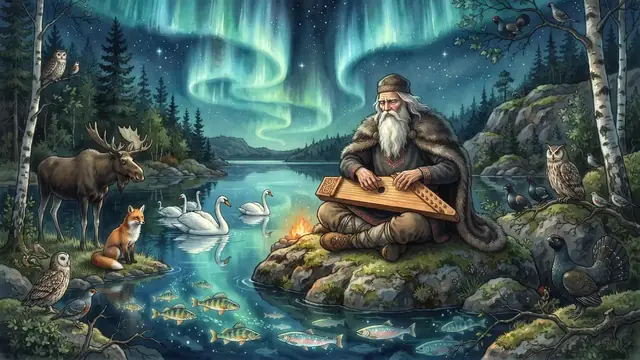
Väinämöinen and the kantele: the music that made nature weep
In the Kalevala, the old sage Väinämöinen builds the first kantele from the jawbone of a great fish, and his music enchants humans, beasts and even the sea.
Read →
 Myth or legend
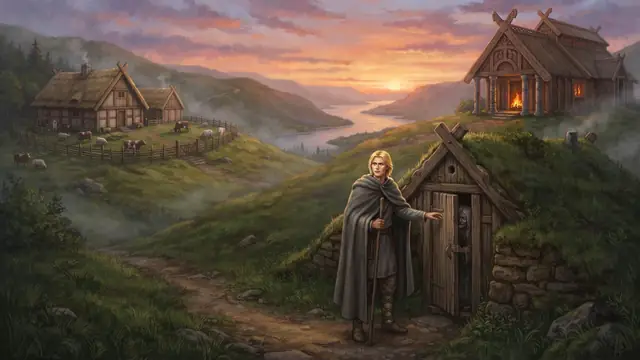
Rígsþula: how Heimdall, in disguise, visited three houses and gave rise to the orders of society
In the poem Rígsþula, Heimdall walks the earth as Ríg and passes through three houses. From each visit a social order is born: the thrall, the farmer and the jarl.
Read →
 Myth or legend
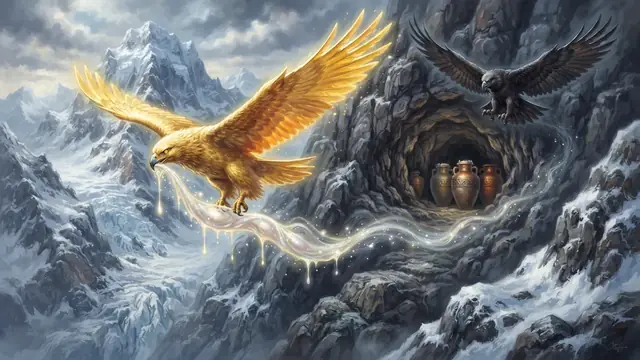
Odin and the mead of poetry: the theft that gave poets their art
In the Prose Edda, Odin disguises himself, wins over the guardian Gunnlöð and drinks all the mead that held the poets' wisdom. Then he flees, flying as an eagle.
Read →
 Myth or legend
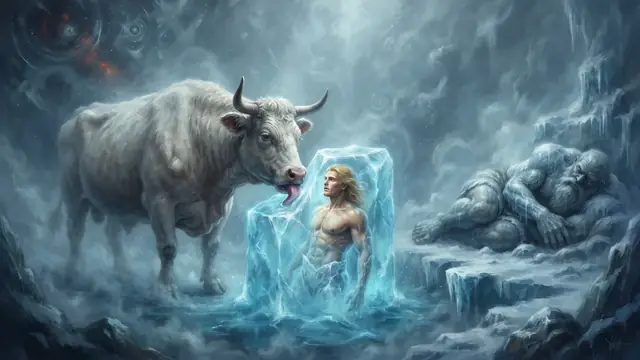
Auðumbla, the cow of the ice: the Norse myth in which the first god emerges
In the Prose Edda, the cow Auðumbla feeds the giant Ymir and licks blocks of salty ice until a man, Búri, Odin's grandfather, emerges from them.
Read →
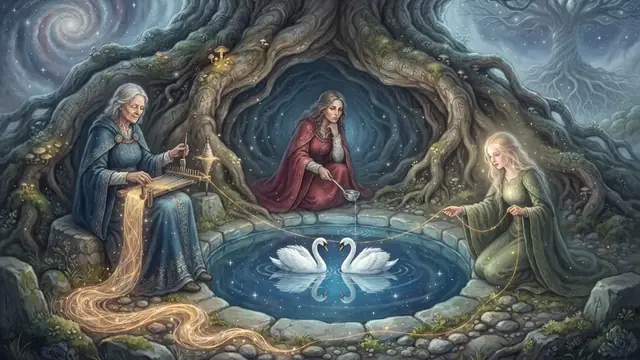 Myth or legend
The Norns: the three women who tend the world tree and everyone's fate
By the well of Urðr, beneath a root of Yggdrasil, three women water the tree with water and mud and decide lives. The Norse texts speak of them in a few dense stanzas.
Read →
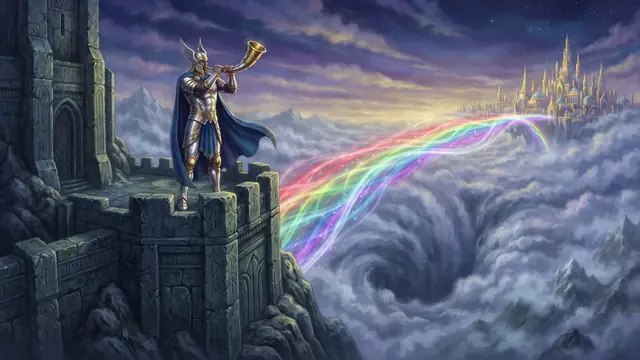 Myth or legend
Heimdall: the watchman who hardly sleeps and guards the rainbow bridge
The god who sees hundreds of miles and hears grass grow guards Bifröst, the bridge of the gods. At Ragnarök, the sound of his horn will give the final warning.
Read →
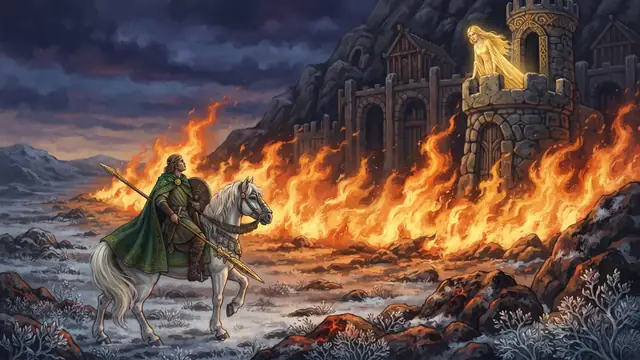 Myth or legend
Freyr and Gerðr: the god who gave away his sword for love
In the poem Skírnismál, the god Freyr sees a giantess from afar and falls sick with love. His servant Skírnir is sent to win her, first with gifts and then with threats.
Read →
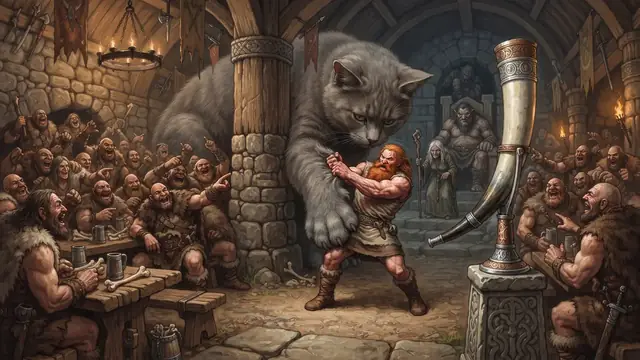 Myth or legend
Thor in Útgarðr: the giant's challenges that were all illusions
In the Prose Edda, Thor and his companions lose every test at Útgarða-Loki's castle. In the end, the giant reveals that each defeat hid a trick, and that the god nearly beat the impossible.
Read →
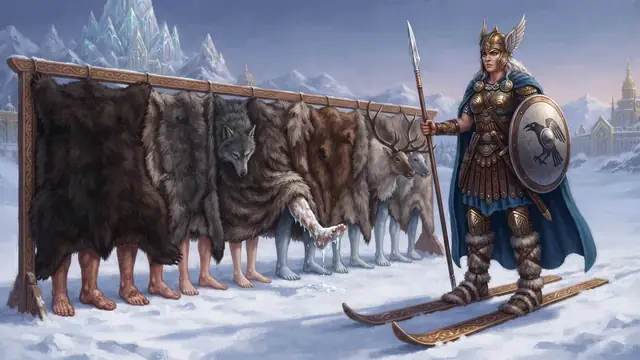 Myth or legend
Skaði chooses a husband by his feet: the mountain goddess who wanted Baldr and got Njörðr
To make up for her father's death, the gods let the giantess Skaði choose a husband, but only by looking at feet. She believes she has picked the handsome Baldr and has chosen the sea god.
Read →
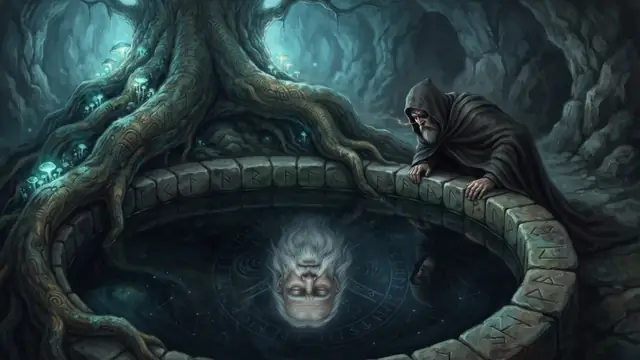 Myth or legend
Mímir and the well of wisdom: the eye Odin gave and the head that kept speaking
In the Norse sources, Odin gives an eye to drink from Mímir's well, and Mímir himself, beheaded by the Vanir, goes on advising the god. Two stories from different texts form the picture.
Read →
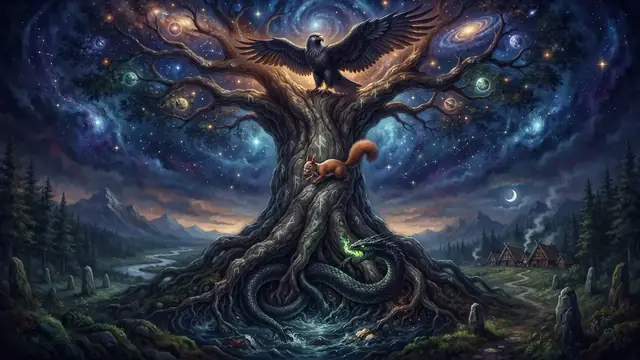 Myth or legend
Yggdrasil, the world tree: what the sources say and what only modern interpreters added
The Eddas describe a giant ash with three roots, an eagle, a serpent and a gossiping squirrel. The nine worlds, however, are never listed.
Read →
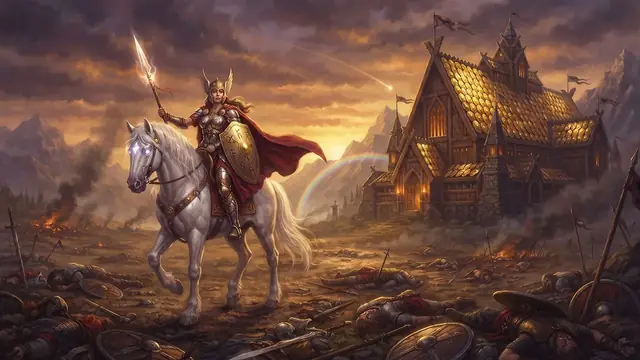 Myth or legend
Valkyries and Valhalla: whom Odin and Freyja receive among those slain in battle
The poems of the Edda describe a hall of spears and shields where warriors fight by day and feast at night. Who chooses the dead, and how much of the popular image was invented later?
Read →
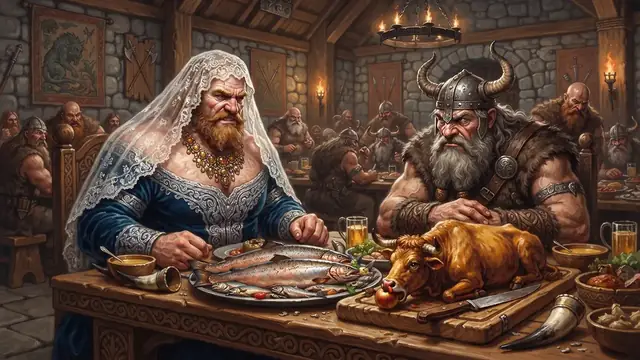 Myth or legend
Thor dressed as a bride: the poem in which the hammer is stolen and the giant Thrym expects to marry
In the Poetic Edda, the giant Thrym hides the hammer Mjölnir and returns it only in exchange for Freyja. The gods' plan is one of the funniest episodes in Norse mythology.
Read →
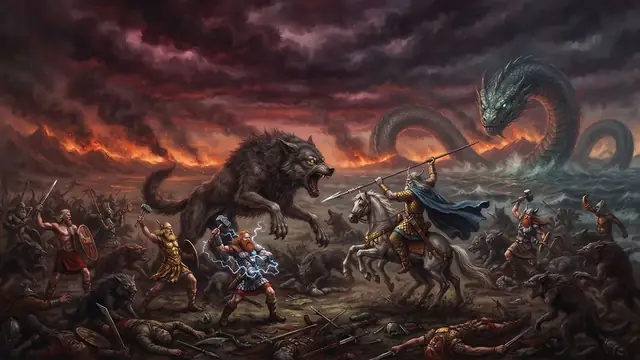 Myth or legend
Ragnarök: how the Norse poems tell the end of the world, and what comes after
In the Völuspá and in Snorri, the gods die in battle, fire consumes everything and the earth rises green from the sea again. The sources differ on several details.
Read →
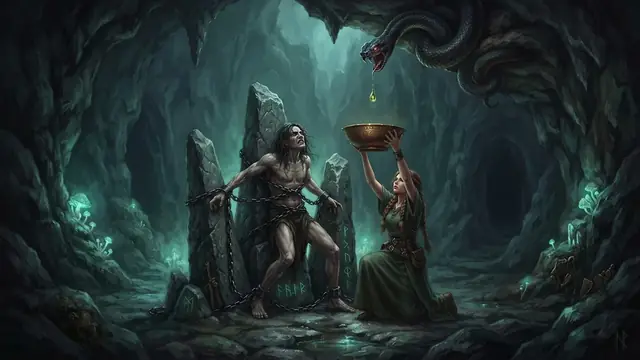 Myth or legend
Loki in chains: the feast where he insulted the gods and the punishment that awaits him until Ragnarök
In the Lokasenna, Loki insults the gods at a feast. In Snorri, he is caught as a salmon and bound to three stones with a serpent dripping venom, and only his wife shields him.
Read →
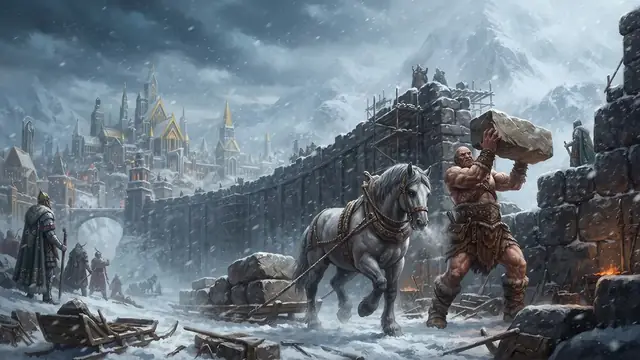 Myth or legend
How Loki tricked the builder of Asgard's wall and gave birth to the horse Sleipnir
A builder and his horse nearly finished the gods' wall in a single winter. Loki, turned into a mare, delayed the work, and from that came Odin's horse.
Read →
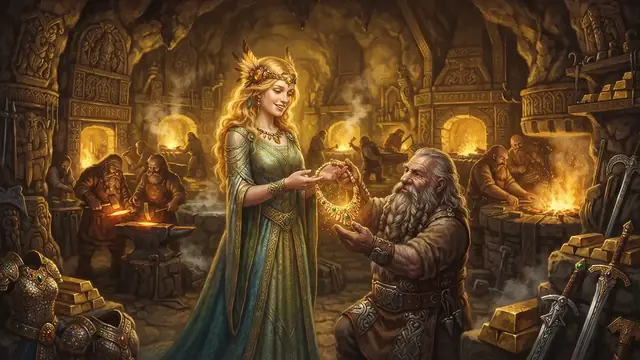 Myth or legend
Freyja and the Brísingamen necklace: what the Norse sources say about the goddess's jewel
Brísingamen is the goddess Freyja's best-known necklace. The sources link it to dwarf smiths, a theft by Loki and a fight between gods in the form of seals.
Read →
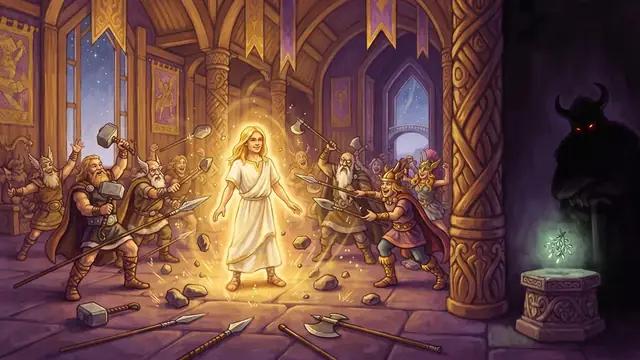 Myth or legend
Baldr, the god nothing could harm, and the sprig of mistletoe nobody remembered to protect
Baldr's mother made every thing swear not to hurt him. She left out one small sprout, and it was with that sprout that the god died.
Read →
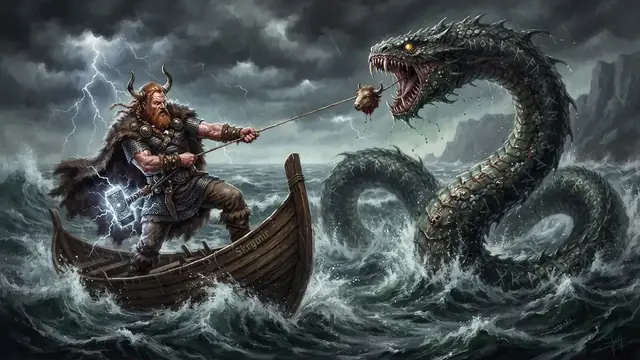 Myth or legend
Thor hooks the Midgard Serpent, and the giant Hymir cuts the line
Using an ox head as bait, Thor fishes up the serpent Jörmungandr, but the giant Hymir, in fear, cuts the line before the god can finish it.
Read →
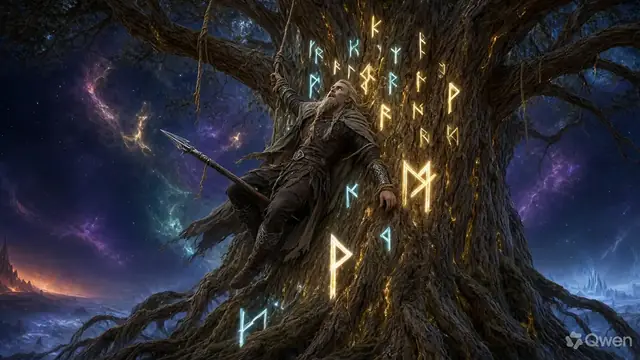 Myth or legend
Odin hangs for nine nights on a tree to win the runes
In the poem Hávamál, the god Odin offers himself, wounded by a spear and hanging on a tree for nine nights, and returns with the knowledge of the runes.
Read →
 Myth or legend
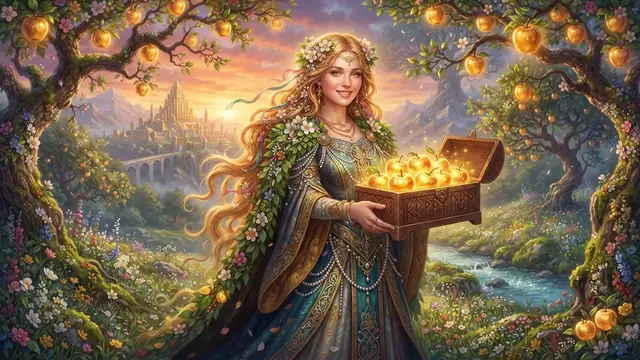
The gods grow old when the giant Thjazi steals Idun and her apples
According to Snorri, the goddess Idun keeps the apples that keep the gods young. When a giant abducts her, they age, and Loki must bring her back.
Read →
 Myth or legend
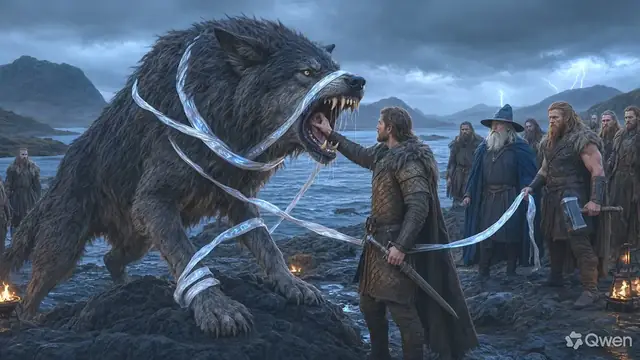
How the Norse gods bound the wolf Fenrir, and why Týr lost his hand
The gods raised the wolf Fenrir in Asgard until they feared his strength. Only a ribbon made of things that do not exist could bind him, and the price was Týr's hand.
Read →
Play this realm
Games tied to the stories here. Fullscreen, no sign-up.
New
The wall of Asgard
Be Loki disguised as a mare and distract the builder’s horse so the wall of Asgard is not finished before summer.
Play ▶
Thor's fishing trip
Hold the line, let go when the serpent lunges, and bring Jörmungandr to the surface, as in the story told by Snorri.
Play ▶
Gleipnir, the impossible ribbon
Gather the six things that no longer exist so the dwarfs can make Gleipnir, then hold the ribbon at the right tension to bind the wolf Fenrir.
Play ▶
The dwarfs’ forge
Watch the order of the anvils and repeat the strikes of the four dwarfs forging Freyja’s necklace.
Play ▶
The flight of Huginn
Flap with the raven Huginn, fly between the branches of the World Tree and bring the news to Odin.
Play ▶
Idun and the apples
Catch the golden apples of youth before they fall and dodge the eagle, in an adventure inspired by the myth of Idun.
Play ▶
New
Frigg's oaths
Tap things in the world to collect each one's oath not to harm Baldr, and keep an eye out for the small mistletoe sprout.
Play ▶
New
The last battle
Defend the gods' hall from wolves and giants until the dawn of Ragnarök.
Play ▶
New
Ratatoskr and the tree
Run up the trunk of Yggdrasil as the squirrel Ratatoskr and carry messages from the eagle to the dragon.
Play ▶
New
Sigyn's bowl
Catch the serpent's venom with Sigyn's bowl so the earth does not shake.
Play ▶
New
The Valkyrie's choice
Send each fallen warrior to the right hall, Valhalla or Fólkvangr, before he hits the ground.
Play ▶
New
Where is the hammer?
Follow Thor's hammer hidden under the cushions of the giant Thrym.
Play ▶
New
Mímir's well
Answer the questions of Mímir's head about the story of the well of wisdom.
Play ▶
New
Choose by the feet
Pick the cleanest pair of feet, like the goddess Skaði, before time runs out.
Play ▶
New
Útgarða-Loki's challenges
Drink from the horn, lift the cat and wrestle the old woman in the giant's three tests.
Play ▶
New
The colours of Bifröst
Repeat the sequence of colours Heimdall plays on the horn and guard the Bifröst bridge.
Play ▶
New
Leap the wall of fire
Jump the fires with Skírnir's horse on the way to Gerðr's hall.
Play ▶
New
The threads of the Norns
Keep the Norns' golden thread taut inside the wavering band.
Play ▶
New
Tune the kantele
Tune the strings of Väinämöinen's kantele until they sound true.
Play ▶
New
The three draughts
Drink the mead of poetry in three draughts, neither too little nor too much.
Play ▶
New
The three houses
Send each family to the right house, as Rígr does in the verses of the Rígsþula.
Play ▶
New
Auðumbla's ice
Melt the ice with the cow's tongue and reveal the first man.
Play ▶
New
Flies at the forge
Swat Loki's flies before they bite the smith and spoil the hammer.
Play ▶
New
The smith's feathers
Put the feathers of Völund's wings in order by swapping them.
Play ▶
New
The shards of the Sampo
Slide the pieces and restore the Sampo that broke at sea.
Play ▶
New
Gefjon's land
Divide the ground into rectangular plots, one for each number.
Play ▶
New
The scales of peace
Share the gifts between the two pans until the scales balance.
Play ▶
New
Hrungnir's shards
Slice the flying shards of stone before they fall.
Play ▶
New
The torch in Helheim
Cross the dark maze of Helheim guided only by the light of your torch.
Play ▶
New
Geirrøðr's bars
Catch the glowing iron bars before they hit the ground.
Play ▶
New
The duel of the stones
Play Nim against the giant and take the last stone.
Play ▶
New
The sun and the wolf
Bat the sun back before the wolf catches it and get it past your opponent.
Play ▶
New
Ægir's cups
Drop cups in Ægir's hall and line up four before Loki.
Play ▶
New
Sif's hair
Slide the golden braids into the right order, with the space in the corner.
Play ▶
New
Rán's meshes
Join neighbouring dots and close more meshes of the net than Rán.
Play ▶
New
The seeress's runes
Throw coloured runes and make every group of three vanish before they reach the seeress.
Play ▶
New
Thor's questions
Stack the questions with exact timing until the sun rises.
Play ▶
New
Hárbarðr's boat
Take everyone to the other bank without anyone being eaten.
Play ▶
New
The gods' gifts
Merge equal blocks and make the 128 block before time runs out.
Play ▶
New
Odin's names
Guide the spark, collect 12 names and avoid the flames and your own trail.
Play ▶
New
Hyndla's torches
Light the 25 torches of the cave, knowing that each tap also changes its neighbours.
Play ▶
New
Sigrdrífa's rune
Reveal a rune on a 5×5 grid following the clues for each row and column.
Play ▶
New
Gylfi's hall
With a ball and a paddle, knock down all the bricks of the hall before losing your 3 balls.
Play ▶
New
Hymir's cauldron
Carry Hymir's cauldron for 36 steps, pushing it back to the centre before it tips.
Play ▶
New
Baldr's dreams
Find the 6 pairs of signs among face-down cards, in 14 moves or fewer.
Play ▶
New
The ship Hringhorni
Slide the pieces to clear a path and take Baldr's ship out to sea.
Play ▶
New
Andvari's gold
Catch 20 gold coins with the bag and let the cursed ring pass, up to two at most.
Play ▶
New
Grotti's millstones
Join pieces of the same number on a 4×4 board until you form the piece of 256.
Play ▶
New
A round over Midgard
Take the raven through 14 gaps between stones and trees, tapping to make it flap.
Play ▶
New
The harbour dice
Roll the die, add up the voyage haul and bank it in the harbour before a 1 comes up, until you reach 50 points.
Play ▶
New
Ullr's ice
Slide across the ice, unable to stop midway, and reach the marker in few moves.
Play ▶
New
Víðarr's shoe
Stop the marker in the right band five times and push Fenrir's jaw before missing three.
Play ▶
New
Frigg's pairs
Turn the pieces over two at a time and find the eight matching pairs, in few tries.
Play ▶
New
Týr's links
Tap the lights, which change their neighbours, and put out the whole net in few taps.
Play ▶
New
The dwarfs' mine
Dig the mine guided by the numbers on neighbouring squares and do not step on two traps.
Play ▶
New
The dísir's lights
Repeat a sequence of lights that grows by one light each round, up to round 8.
Play ▶
New
Bragi's runes
Fill a 4-by-4 grid with four runes, repeating none in any row, column or square.
Play ▶
New
Surtr's flame
Paint the patch of fire from colour to colour until it covers the whole field, in up to 22 moves.
Play ▶
New
Nerthus's wagon
Drag the pieces of the grove to clear a path and take the red wagon to the exit.
Play ▶
New
Gods and jötnar at the river
Cross the river with 3 gods and 3 jötnar in a two-seat boat, never leaving the gods outnumbered.
Play ▶
New
Forseti's verdict
Find a hidden verdict of four coloured symbols in up to 8 guesses, guided by gold and pale dots.
Play ▶
New
Hermóðr's nine nights
Tap the instant the marker crosses the gold band, for nine nights, with at most 2 mistakes.
Play ▶
New
Níðhöggr's roots
Tap the knots of a 5-by-5 grid to flip them and their neighbours and leave every root whole, in up to 18 taps.
Play ▶
New
Garmr's howls
Repeat a sequence of sounds and colours that grows to 8 howls, with at most 2 mistakes.
Play ▶
New
The hostage and the exchanges
Over 10 rounds, choose to hand over or keep the offering against a partner and reach 28 points.
Play ▶
New
Heiðrún's mead
With two unmarked vessels, fill, empty and pour until you measure the amount of mead asked for, in 5 measures.
Play ▶
New
The Iron Wood
Paint the patch in the corner, colour by colour, until the whole ground is one colour in up to 16 moves.
Play ▶
New
Hiisi's grove
Plant four kinds of tree in 16 clearings without repeating in a row, column or block, with at most 2 mistakes.
Play ▶
New
Who is lying?
Over 5 rounds, work out who tells the truth and who lies from each one’s statement, with at most 2 mistakes.
Play ▶
New
The ropes of Naglfar
Drag the knots of a tangle of ropes until no rope crosses another, in 3 levels.
Play ▶
New
Magni’s turn
Turn 2-by-2 quadrants on a 3-by-3 board until the numbers 1 to 9 are in order, with a limited number of turns.
Play ▶
New
The rings of the gate
Move a stack of rings from one rod to another without placing a larger ring on a smaller one, in 3 rounds.
Play ▶
New
The way to Rindr
Turn path pieces to link the entrance to the exit before time runs out, on 3 maps.
Play ▶
New
Day and night
Fill the grid with suns and moons, half of each in every row and column and never three alike in a row, on 3 grids.
Play ▶
New
Líf’s hiding place
Fill the right squares of a grid using the number clues of each row and column, with limited time, on 3 grids.
Play ▶
New
The creatures of the tree
Find the pairs of symbols among face-down cards, with a limit of mistakes and limited time, on 3 tables.
Play ▶
New
The thread of seiðr
Take beads from threads against an opponent and get the last one, with limited time, in 3 rounds.
Play ▶
New
The ship in the pocket
Fit pieces of different shapes into a grid until no square is left empty, with limited time, in 3 pockets.
Play ▶
New
The river of ice
3D game: cross a river by hopping from ice block to ice block at the right moment, with 3 falls and limited time.
Play ▶
New
The high seat
3D game: tap the lit lanterns of the nine worlds before they go out, with a limit of mistakes and limited time.
Play ▶
New
The goat chariot
3D game: pull Thor's chariot: jump rocks, pass under the beams and collect bones, with a limit of crashes and limited time.
Play ▶
New
Rain on the field
3D game: steer Ukko's cloud and drop the rain over the fields, with a limit of mistakes and limited time.
Play ▶
New
Light and shadow
3D game: send the light elves up and the dark elves below, with a limit of mistakes and limited time.
Play ▶
New
The nine charms
3D game: drive off each danger with the stone of the same shape and colour, with a limit of mistakes and limited time.
Play ▶
New
The three colours
3D game: repeat the sequence of colours that lights up on the Bifröst bridge, with a limit of mistakes and limited time.
Play ▶
New
The ninth night
3D game: tap only when the count reaches the ninth night to release the rings of Draupnir, with a limit of mistakes and limited time.
Play ▶
New
The gods' ale
3D game: fill the empty horns at Ægir's feast and do not spill the full ones, with a limit of mistakes and limited time.
Play ▶
New
Snow from four sides
3D game: sweep the snow drifts around the house when each one's bar passes the mark, with a limit of mistakes and limited time.
Play ▶
New
The phases of the moon
3D game: complete the row of Moon phases by choosing the one that comes next, with a limit of mistakes and limited time.
Play ▶
New
The bones on the hide
3D game: lay the short bones on the hide and never touch the thigh bone, with a limit of mistakes and limited time.
Play ▶
New
The brothers' gifts
3D game: deliver each gift to the right brother, among Odin, Vili and Vé, with a limit of mistakes and limited time.
Play ▶
New
The wind from the wings
3D game: push the blue gusts that leave the eagle's wings and let the red ones pass, with a limit of mistakes and limited time.
Play ▶
New
The gold on the embers
3D game: tap when the ladle is over the glowing ember to put gold on it, with a limit of mistakes and limited time.
Play ▶
New
Every part in its place
3D game: give each part of Ymir's body back to the earth, the sea or the sky, with a limit of mistakes and limited time.
Play ▶
New
Sleipnir's road
3D game: catch the sheaves of oats and dodge the stones on Sleipnir's road, with a limit of mistakes and limited time.
Play ▶
New
The bowl under the venom
3D game: put Sigyn's bowl under the spot where the venom drips, with a limit of mistakes and limited time.
Play ▶
New
The supper that returns whole
3D game: serve the meat of Sæhrímnir at the right table when the bar passes the mark, with a limit of mistakes and limited time.
Play ▶
New
Every mention in its source
3D game: match each mention of Jörð to its source: Prose Edda, Poetic Edda or skalds, with a limit of mistakes and limited time.
Play ▶
New
The oak chips
3D game: gather the oak chips and do not touch the whetstones, with a limit of mistakes and limited time.
Play ▶
New
What Frigg asks for
3D game: tap what Frigg asks for: the ash-wood box, the shoes or the ring, with a limit of mistakes and limited time.
Play ▶
New
Freyja's choices
3D game: follow the golden glow of Freyja's choices across the nine mounds of the field, with a limit of mistakes and limited time.
Play ▶
New
The forge inside the giant
3D game: strike the forge at the right station when the bar passes the mark, inside the giant, with a limit of mistakes and limited time.
Play ▶
New
Sparks for Ymir
3D game: catch the sparks of Múspell and avoid the blocks of hard ice, with a limit of mistakes and limited time.
Play ▶
New
Herbs on the hill of healing
3D game: pick the green herbs on the hill of healing and avoid the dry thistles, with a limit of mistakes and limited time.
Play ▶
 New
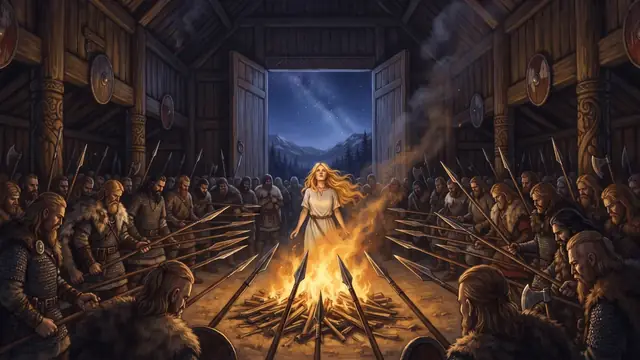
The hall of gold
3D game: run through the hall collecting gold coins and dodging spears, with a limit of mistakes and limited time.
Play ▶
Other realms
Sagas & Kings
113 stories · Enter →
Viking Age
127 stories · Enter →
Tales & Folklore
101 stories · Enter →
Get the next stories
New myths, sagas and tales arrive every week, always with the source and the difference between history and legend.
I want to subscribe