 MMXXVI
Eir, the physician among the goddesses: what the sources say about the ásynja of healing
Eir appears in Gylfaginning as "an extremely good physician", in Fjölsvinnsmál as one of Menglöð's maidens on the hill of healing, and in verse as an image for a woman. See what each source says and why scholars doubt whether she was a goddess or a valkyrie.
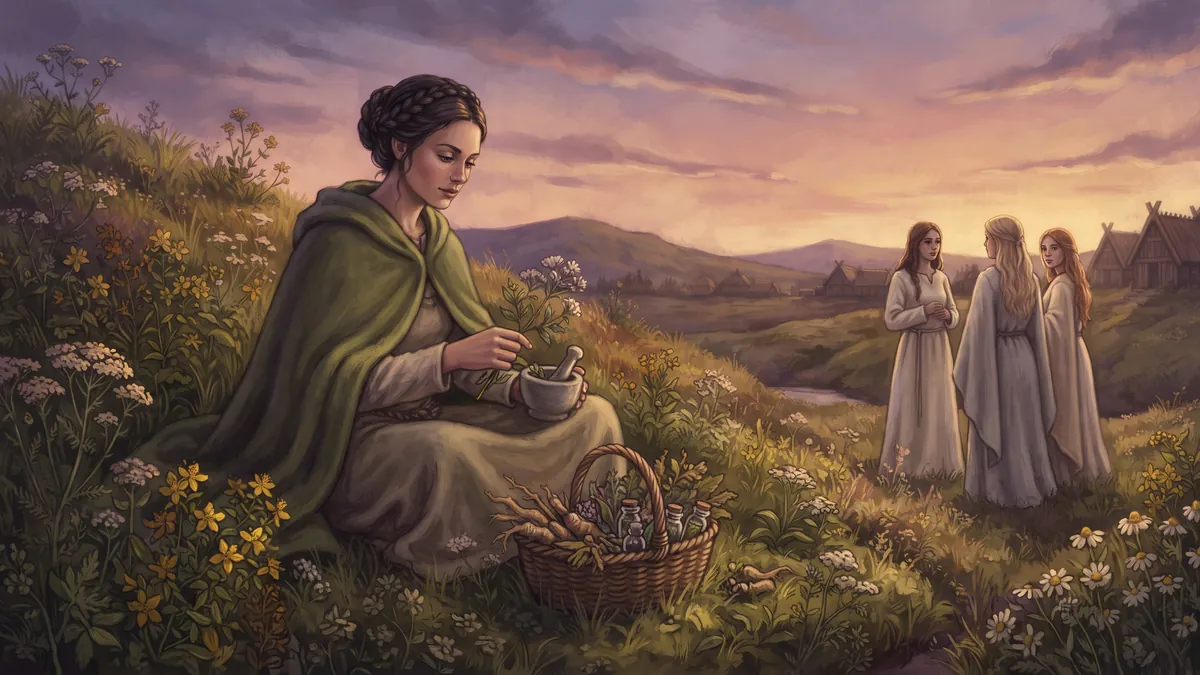
Among the Norse goddesses, few have as few lines as Eir. And yet her name became tied to a simple idea: that of the one who heals.
The name
In Old Norse, eir means “protection”, “help”, “mercy”. Wikipedia describes Eir as a goddess or valkyrie associated with medical skill and compares her with the Greek goddess Hygieia.
What the sources say
In Fjölsvinnsmál, in the Poetic Edda, the watchman Fjölsviðr lists the maidens who serve Menglöð. Among them is Eir. They sit on the hill Lyfjaberg, “hill of healing”. Fjölsviðr says that offerings made to these maidens bring help and protection from pestilence and peril. Wikipedia does not point to a specific role for Eir there beyond her presence in the list.
In Gylfaginning, in ch. 35, High names Eir third among the sixteen ásynjur and says she is “an extremely good physician”. Nothing more is said about her.
In Skáldskaparmál, in ch. 75, Eir appears in a list of valkyrie names, but not in the list of ásynjur in the same chapter.
In skaldic poetry, Eir serves as a kenning for a woman. Wikipedia gives examples such as “Eir of riches” in Gísla saga, and uses by the tenth-century poets Kormákr Ögmundarson and Hallfreðr vandræðaskáld. The name kept being used in woman-kennings in the rímur.
A rune stick from Bergen
Around 1300, in Bergen, someone carved on a wooden stick the record of a commercial transaction, and Eir appears in it in a woman-kenning. Then comes a verse from a displeased scribe. Mindy Macleod and Bernard Mees read the first line as something like “women make me miserable” or “marriage makes me miserable”, and the second as “women often take a lot of sleep from me”.
Goddess or valkyrie?
Scholars do not agree.
- Andy Orchard considers the apparent conflict among the sources and weighs the two roles. He says the etymology fits Eir best as a goddess and servant of Menglöð, but reminds us that valkyries could also wake the dead.
- John Lindow doubts that a goddess Eir was believed in. He says it is problematic to trust Snorri and imagine she existed.
- Rudolf Simek suggests Eir may originally have been a valkyrie, and treats Menglöð’s servant of the same name as a separate figure.
- Hilda Ellis Davidson says “virtually nothing” is known about Eir beyond healing. She considers that all the mentions refer to the same figure and sees Menglöð’s maidens as guardian spirits who “shelter and save” those who make offerings, perhaps like household protectors.
- Henry Adams Bellows links Eir to Lyfjaberg and argues that the stanza implies Menglöð is a goddess of healing, perhaps a form of Frigg.
What the sources do not give
There is no myth of Eir healing anyone. Wikipedia records no episode in which she treats a wounded god. What exists is three things: a sentence by Snorri, a list in Fjölsvinnsmál and the use of the name in verse.
In short
Eir is a figure of few lines, but a coherent one: healing. Who she was, goddess, valkyrie or servant of another goddess, remains an open question.
To train your memory with the herbs of the hill of healing, play Herbs on the hill of healing.
Sources.
- English Wikipedia, article "Eir", with the passages from Fjölsvinnsmál, Gylfaginning (ch. 35), Skáldskaparmál (ch. 75) and skaldic poetry
- The Bryggen runic inscription, Bergen (c. 1300), cited in Wikipedia
- Andy Orchard, John Lindow, Rudolf Simek, Hilda Ellis Davidson and Henry Adams Bellows, cited in Wikipedia