 MMXXVI
101 stories · 101 games
Tales & Folklore
When the light goes early, the tales grow.
Trolls under the bridge, nisser in the barn, huldrefolk in the forest. Scandinavian folklore was gathered by people like Asbjørnsen and Moe, and here it sits beside original stories, always flagged as invented.
Start here
 Myth or legend
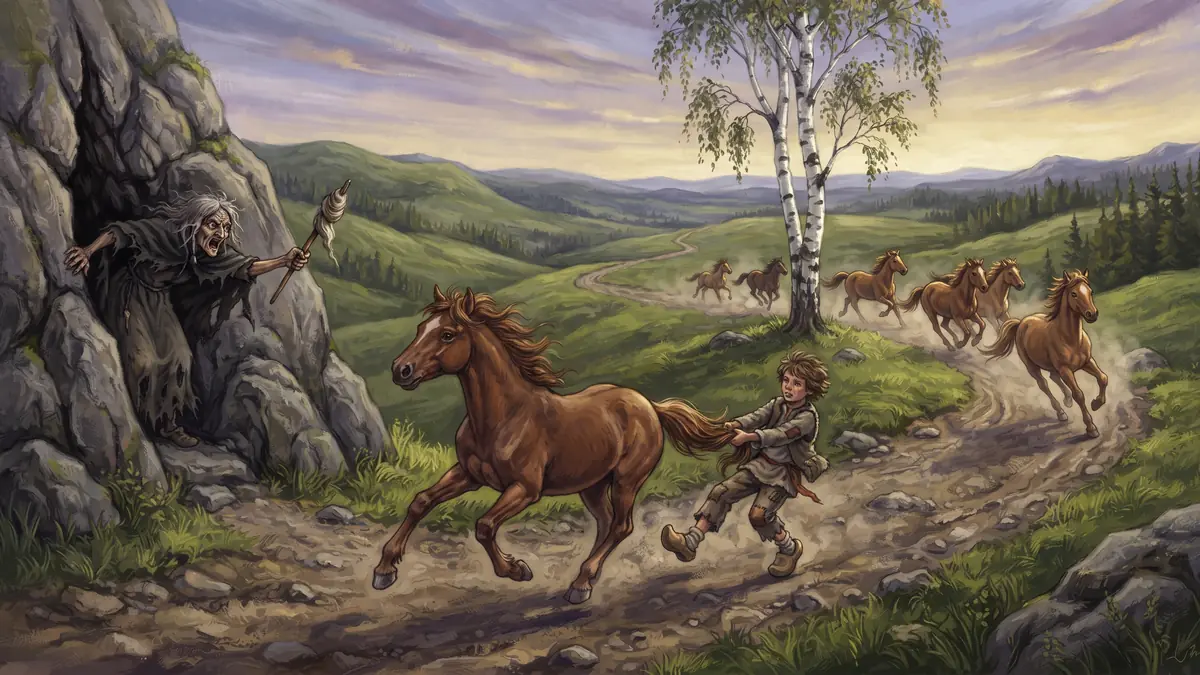
The Seven Foals: the Norwegian tale of the lad in the ashes who ran after seven foals and broke a troll's spell
In the tale "The Seven Foals", by Asbjørnsen and Moe in Dasent's translation, the king promises his daughter to whoever watches seven foals for a day. Two brothers fail with an old woman in a rock cleft, and the youngest follows the foals, drinks from a pitcher and brings the bread and wine from the church. See the sequence.
Read →
Stories of this realm
 Myth or legend
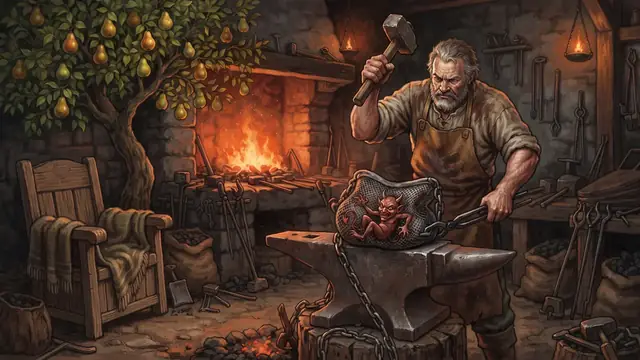
The Master-Smith: the Norwegian tale of the smith who trapped the devil in a pear-tree, a chair and a steel purse
In the tale "The Master-Smith", by Asbjørnsen and Moe in Dasent's translation, a smith who made a bargain with the devil is granted three wishes by Our Lord and uses them all against the devil. See the sequence: the forge, the pear-tree, the chair, the steel purse, the nine locks and the hammer at heaven's gate.
Read →
 Myth or legend
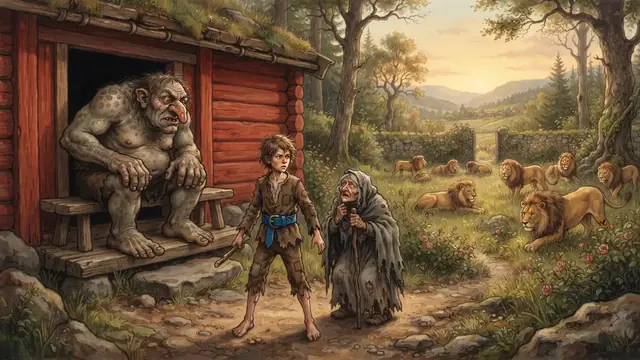
The Blue Belt: the Norwegian tale of the poor boy who found a belt, beat a troll and danced as a bear to find the princess
In the tale "The Blue Belt", by Asbjørnsen and Moe in Dasent's translation, a beggar woman's son ties on a belt found on the road and gains enormous strength. See the sequence: the troll, the lions' milk, the castle, the blindness, the hare's spring and the hidden princess.
Read →
 Myth or legend
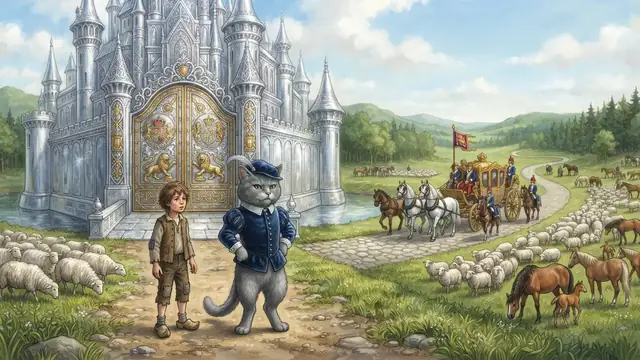
Lord Peter: the Norwegian tale of the cat who made the youngest son pass for a lord and tricked a troll with a story about rye
In "Lord Peter", by Asbjørnsen and Moe in Dasent's translation, the heir to a cat sends deer to the king, leads the king to a silver castle and holds off the troll who owns it until sunrise. See the sequence and what Dasent's introduction says about the tale.
Read →
 Myth or legend
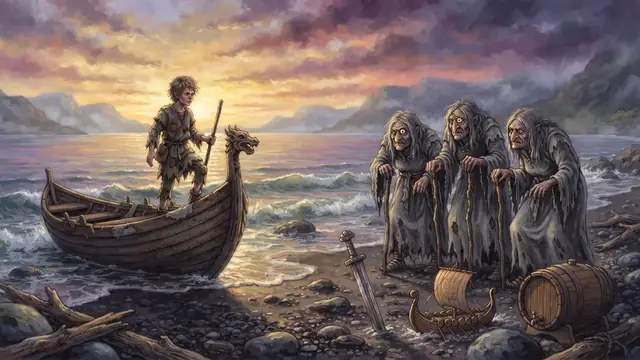
Shortshanks and the three one-eyed hags: the Norwegian tale of the three gifts
In "Shortshanks", a tale by Asbjørnsen and Moe, a boy steals the eye of three hags and gives it back only in return for three gifts: a sword, a ship and the art of brewing. See what each gift does, in Dasent's translation.
Read →
 Myth or legend
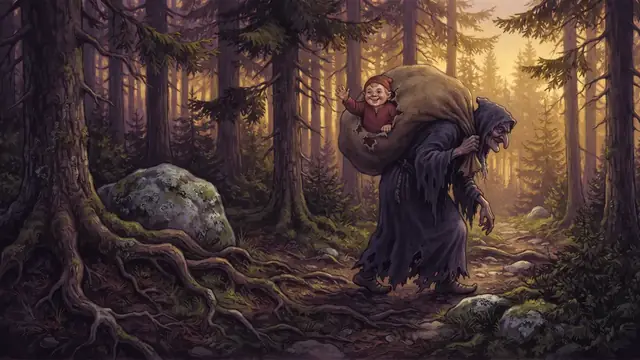
Buttercup: the Norwegian tale of the chubby boy who fooled the witch with the sack three times
In a tale by Asbjørnsen and Moe, a boy who loves sweets is carried off in a sack by a witch. He swaps himself for a root and a stone and turns the tables. See the tale, step by step, in Dasent's translation.
Read →
 Myth or legend
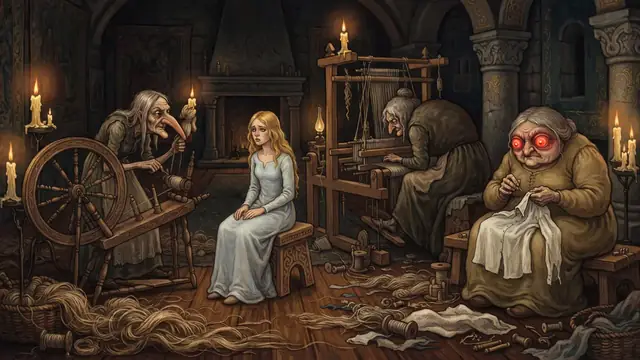
The Three Aunts: the Norwegian tale of the girl who spun, wove and sewed without working
In "The Three Aunts", a tale by Asbjørnsen and Moe, a poor girl is helped by three strange old women to spin, weave and sew. Each asks only one thing: to be called aunt. See what each aunt does and how the prince reacts.
Read →
 Myth or legend
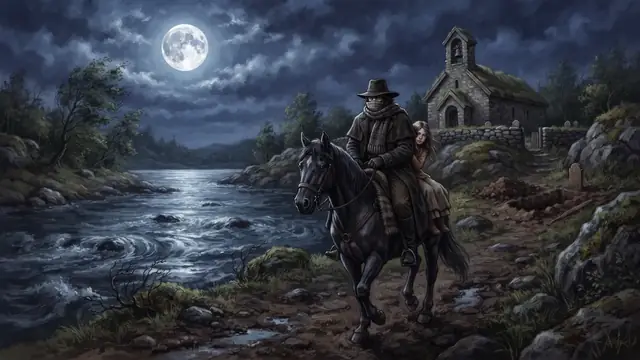
The Deacon of Myrká: the Icelandic tale of the dead bridegroom who rides on Christmas Eve
A deacon promises to return on Christmas Eve to fetch his sweetheart. He has drowned in the river, but he appears anyway. See the Icelandic tale, the sleeve that saved Guðrún and where this kind of story comes from.
Read →
 Myth or legend
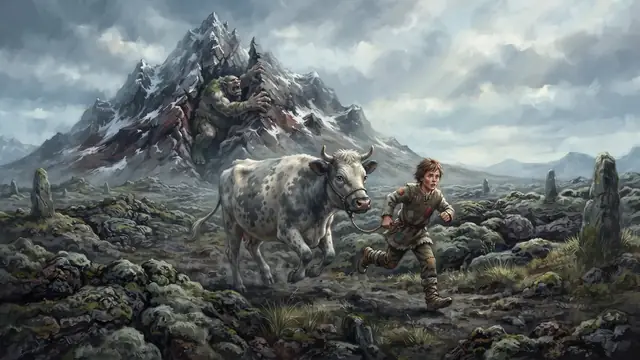
Búkolla: the Icelandic tale of the magic cow and the boy who outran two trolls with three hairs
In Búkolla, a boy searches for his parents' missing cow and frees her from a troll cave. Three hairs from her tail become a river, fire and a mountain in the escape. See the tale, step by step.
Read →
 Myth or legend
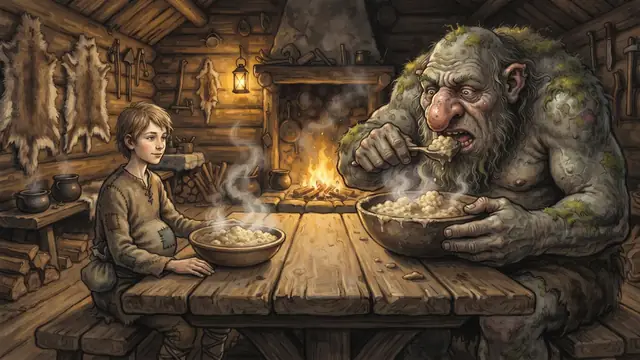
Askeladden and the troll: the porridge-eating match that the clever boy won with a bag
A poor farmer sends his three sons to cut wood, and only the youngest, Askeladden (Boots), faces the forest troll. See the Asbjørnsen and Moe tale in Dasent's translation: the cheese, the spring and the bag of porridge.
Read →
 Documented history
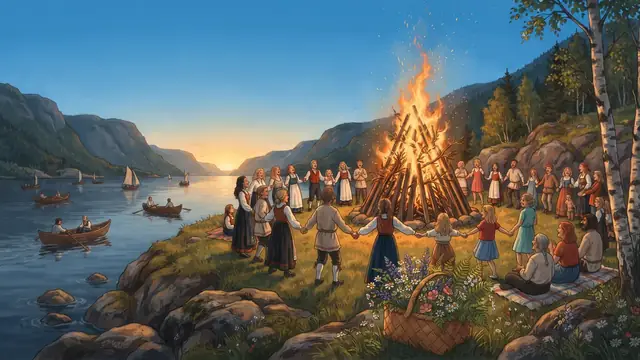
Sankthans and Jonsok: Norway's midsummer night of bonfires
The night of 23 June is St. John's Eve in Norway. See what the sources say about the bonfires, the holiday abolished in 1770 and the herbs, and what is only assumption about pagan origins.
Read →
 Myth or legend
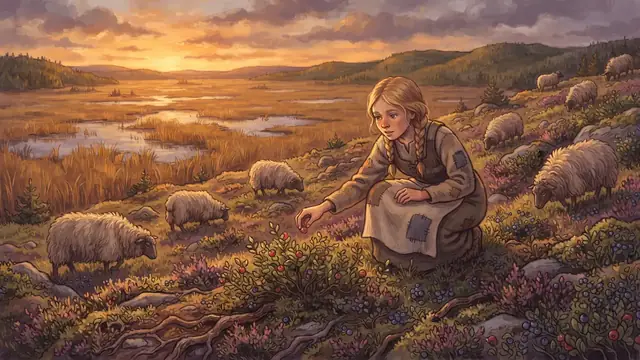
Marjatta: the shepherdess of the berry and the boy who dethroned Väinämöinen
In the last rune of the Kalevala, the shepherdess Marjatta becomes pregnant from a berry, the son is born in a stable and Väinämöinen loses his place. See what the poem says and what is scholars' reading.
Read →
 Myth or legend
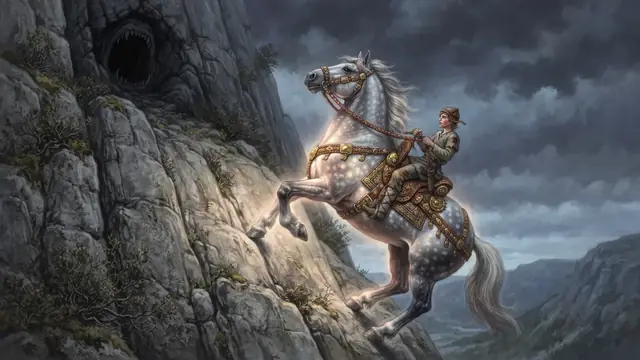
Dapplegrim: the dapple-grey horse that rescued the princess from the troll
A Norwegian tale from Asbjørnsen and Moe, "Grimsborken" in Norwegian: a talking horse, three impossible tasks and a final game of hide-and-seek. See the plot and the tale's classification.
Read →
 Myth or legend
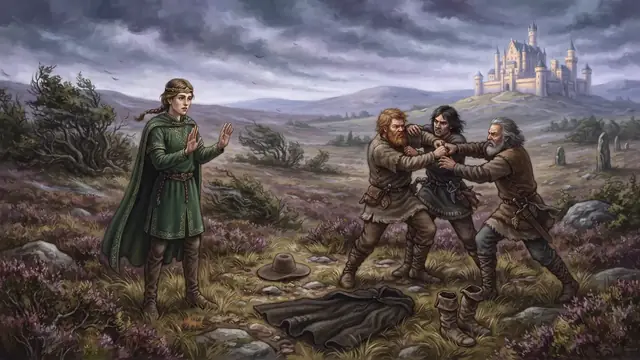
The Three Princesses of Whiteland: the tale of the boat, the troll and the three treasures
A Norwegian tale from Asbjørnsen and Moe, translated by Dasent: a lad frees three princesses buried up to their necks, loses his wife and wins her back with a hat, a cloak and boots. See the plot and the sources.
Read →
 Myth or legend
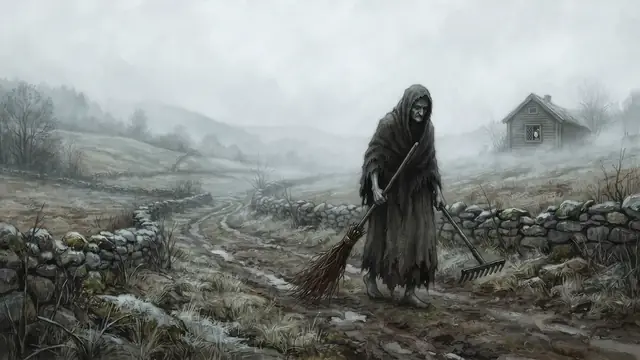
Pesta: the old woman of the Black Death in Norwegian folklore, with rake and broom
In Norwegian legends the Black Death travels from farm to farm as an old woman with a rake and a broom. See what each tool means and what Kittelsen's drawings show.
Read →
 Myth or legend
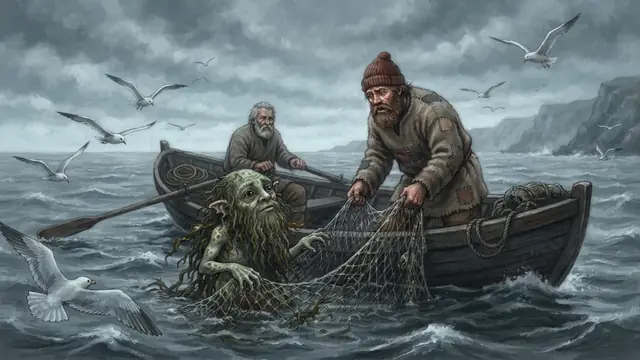
The marbendill who laughed three times: the merman of Icelandic folklore
A farmer catches a marbendill, who laughs three times and explains why only in return for his freedom. See Jón Árnason's tale, the older saga and the Icelandic expression that grew from it.
Read →
 Myth or legend
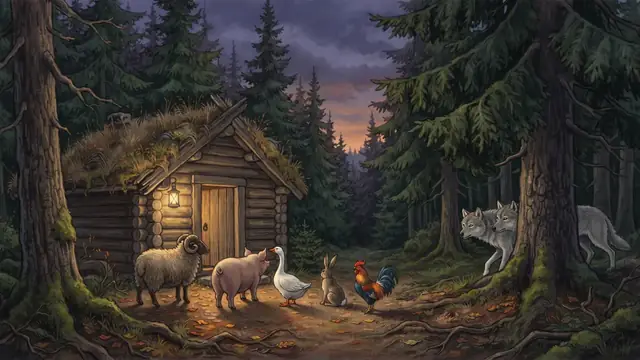
The sheep and the pig who set up house in the forest: an Asbjørnsen and Moe tale and the wolves
A sheep and a pig escape the slaughter and build a house in the forest with the help of a goose, a hare and a cock. See how the group drives off two wolves and what the tale says about life at home.
Read →
 Myth or legend
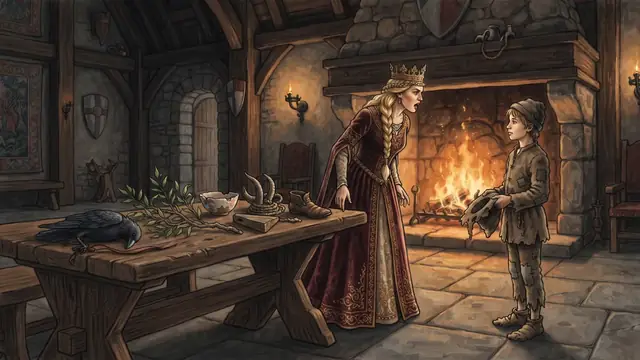
The princess who could not be silenced: the Asbjørnsen and Moe tale in which the youngest wins with six finds
A princess always has the last word, and the king promises half the kingdom to whoever silences her. See how the youngest uses what he found on the road, and why the tale still makes people laugh.
Read →
 Myth or legend
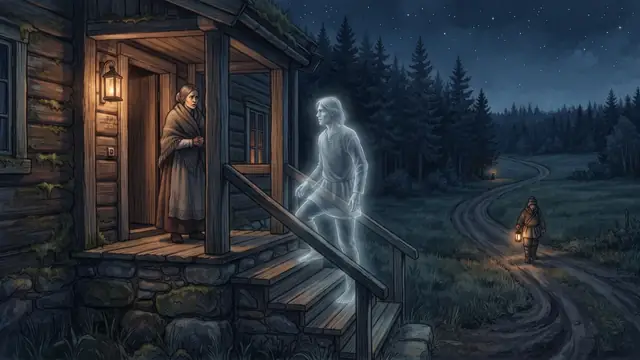
Vardøger: the spirit heard before the person arrives, in Norwegian belief
In Norway, some say they heard someone’s steps on the stairs before the person arrived. See what the Store norske leksikon says about the vardøger, its names and its Nordic relatives.
Read →
 Myth or legend
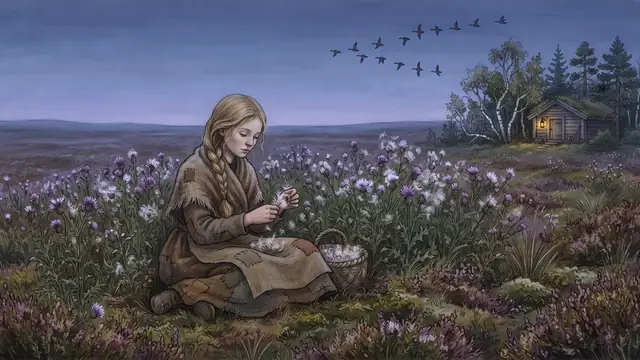
The Twelve Wild Ducks: the Norwegian tale of the sister who could not speak, laugh or weep
Twelve princes turn into wild ducks and their sister must make twelve shirts without speaking, laughing or weeping. See the tale by Asbjørnsen and Moe, as Dasent translated it, and what remains uncertain.
Read →
 Myth or legend
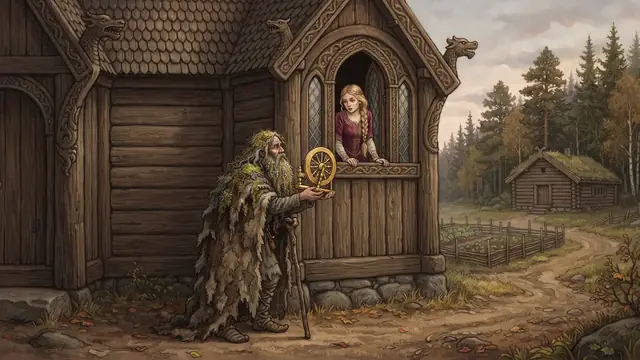
Hacon Grizzlebeard: the Norwegian tale of the proud princess and the beggar who was a prince
A princess who scorns every suitor ends up married to a beggar. See the tale "Hacon Grizzlebeard", by Asbjørnsen and Moe, step by step, and why it is read with unease today.
Read →
 Documented history
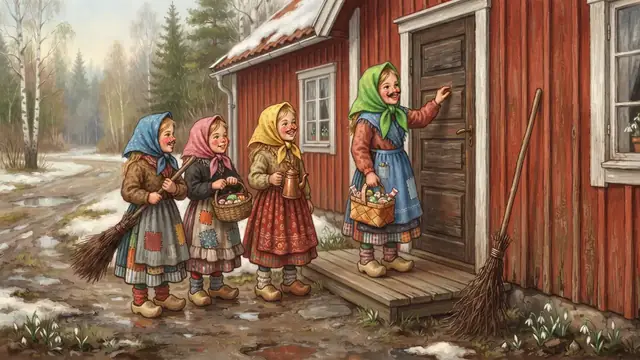
Easter witches in Sweden: from Blåkulla to children with Easter cards
In Sweden, children dress up as witches on Maundy Thursday or Easter Eve. See what the Nordiska museet says about the origin in the belief in Blåkulla and about today’s custom.
Read →
 Myth or legend
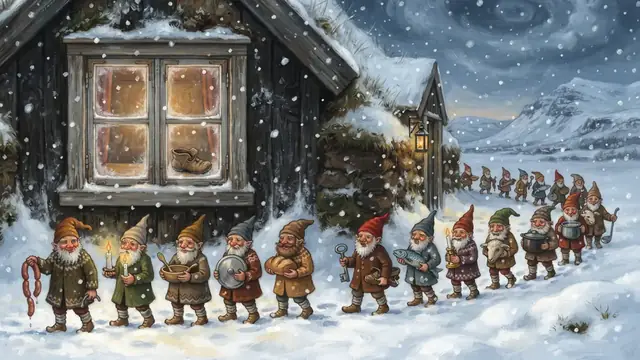
The thirteen Jólasveinar of Iceland and the Christmas nights of naughty lads
The Jólasveinar are thirteen figures of Icelandic Christmas, one per night. See the names and mischief of each, the 1746 ban on scaring children, the 1932 poem that fixed the list, and what remains uncertain.
Read →
 Myth or legend
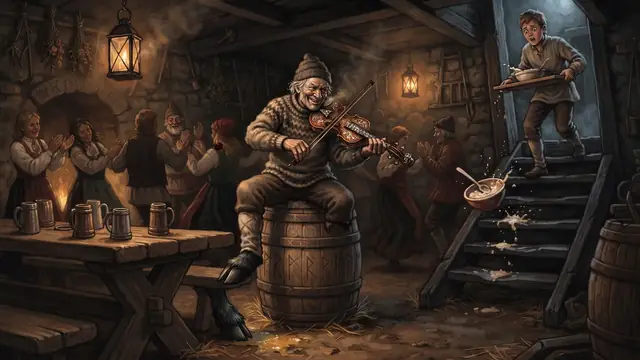
Fanitullen: the devil's tune and the wedding fight in Hol in 1724
Fanitullen is the "devil's tune" of the Norwegian fiddle. See the legend of the wedding in Hol, Hallingdal, in 1724, the fiddler on the barrel and the hoof, the fight the courts recorded, and what remains uncertain.
Read →
 Myth or legend
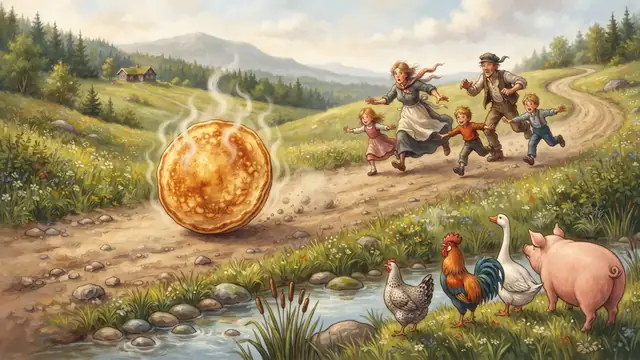
The runaway pancake: an Asbjørnsen tale with the pig at the brook
A pancake runs away from a woman, her husband and seven children and rolls down the road. See the plot of the Norwegian tale collected by Asbjørnsen, the animals it meets and the pig at the brook, and what remains uncertain.
Read →
 Myth or legend
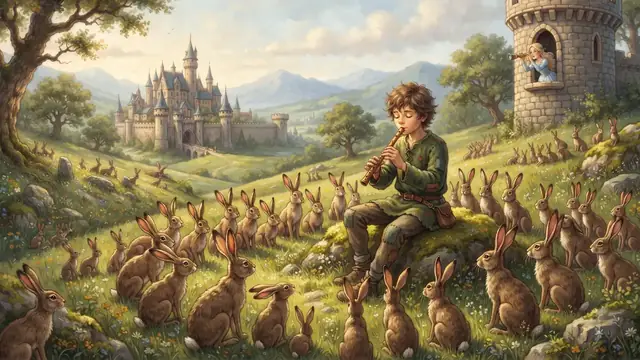
Osborn's pipe and the king's hares: a tale from the Asbjørnsen collection
Three brothers herd the king's hares, and only the youngest gets a magic pipe. See the plot of Asbjørnsen's tale in Dasent's translation, the trades for kisses, the vat of lies, and what remains uncertain.
Read →
 Myth or legend
Why the bear has a short tail: the fox, the ice and the fish
In a tale by Asbjørnsen and Moe, the fox teaches the bear to fish with his tail in a hole in the ice. The tail freezes and breaks. See the tale, the "tail-fisher" type and versions from other countries.
Read →
 Myth or legend
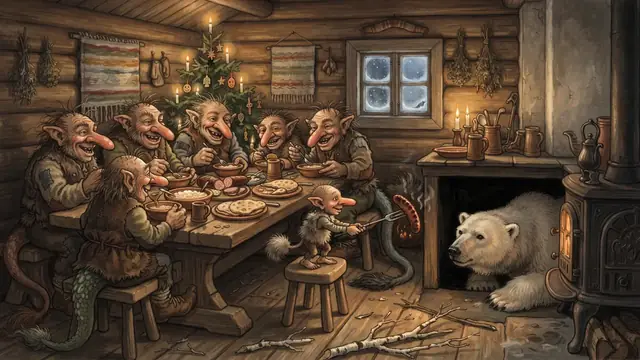
The cat on the Dovrefjell: trolls, a white bear and a sausage on Christmas Eve
Every year, on Christmas Eve, the trolls take over Halvor's house on the Dovrefjell. One year a man with a white bear asks for shelter. See the tale of Asbjørnsen and Moe, the line about the "cat" and the type of tale it belongs to.
Read →
 Myth or legend
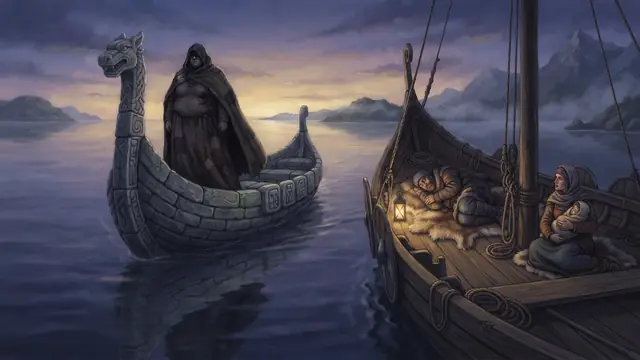
The witch in the stone boat: an Icelandic tale of King Sigurd and the chain
In an Icelandic tale, a troll-woman arrives in a stone boat, takes the queen's place and binds the true queen under the floor with a chain. See Jón Árnason's story, how Sigurd breaks it and what is debated in the name.
Read →
 Myth or legend
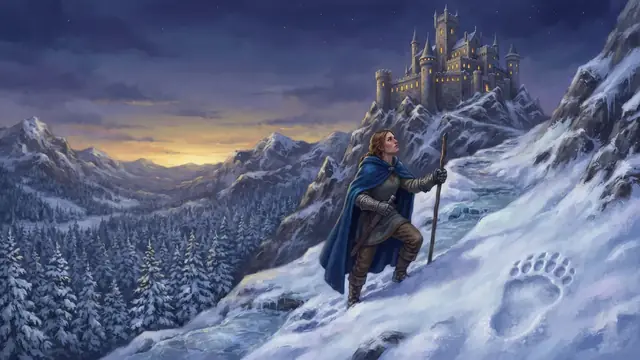
White-Bear-King-Valemon: Asbjørnsen and Moe's tale of an enchanted bridegroom
A princess goes to live with a white bear who becomes a man at night. By lighting a candle to see him, she breaks the spell and must follow him to a witch's castle. See the plot, the variants and the doubts.
Read →
 Myth or legend
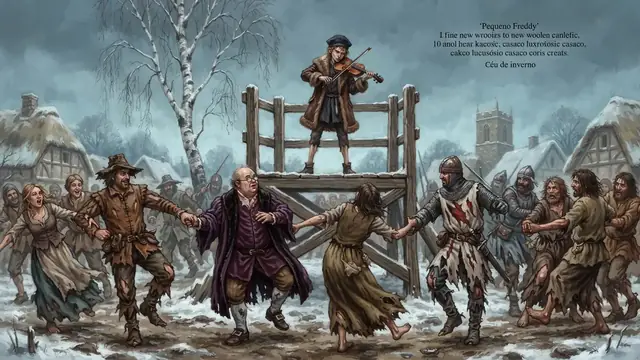
Little Freddy with his Fiddle: the Norwegian tale of the fiddle that makes everyone dance
A poor boy gives his three pennies to three beggars and gains three wishes: a fiddle that makes people dance, a gun that never misses and the power not to be refused. See the plot of the tale and what stays open.
Read →
 Myth or legend
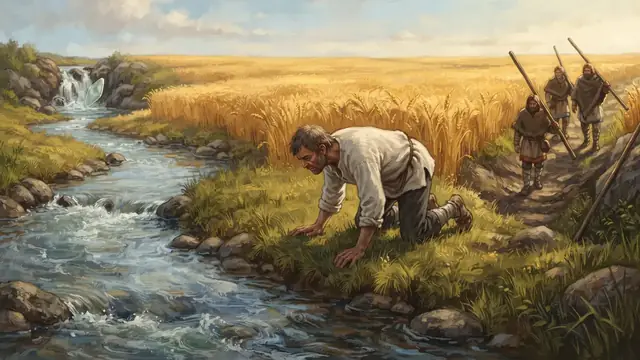
The Contrary-Minded Woman: a Norwegian tale about stubbornness and the river
A couple argue by a river over whether the grain should be reaped or clipped with shears, and the wife will not yield even under water. The tale by Asbjørnsen and Moe ends with a search against the current. See the plot and the versions.
Read →
 Myth or legend
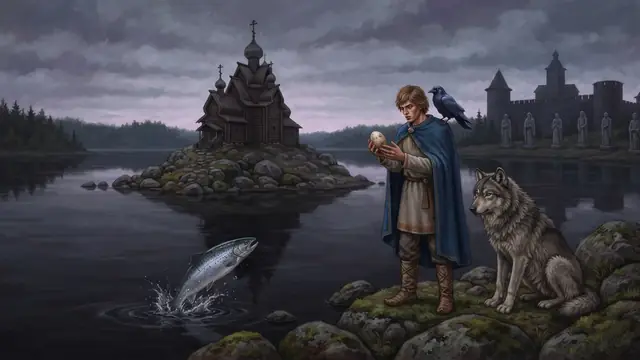
The giant who had no heart in his body: the Norwegian tale of Asbjørnsen and Moe
A prince, a raven, a salmon and a wolf face a giant who kept his heart in an egg. See the plot of the Norwegian tale collected by Asbjørnsen and Moe and what the entry says about versions around the world.
Read →
 Documented history
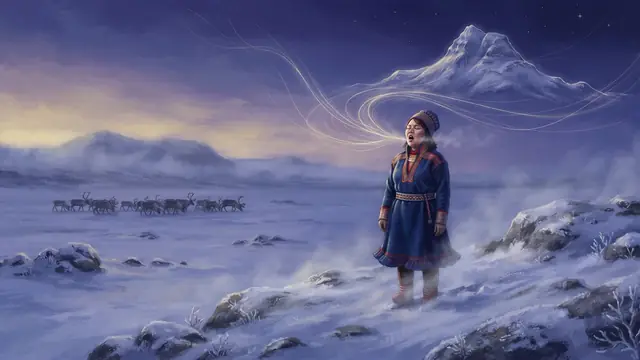
Joik: the Sámi song that evokes a person, an animal or a place
Joik is a traditional form of Sámi song. See what two sources say about what it is, what it means to joik someone, the condemnation by the Church and the return of joik in the 20th century.
Read →
 Myth or legend
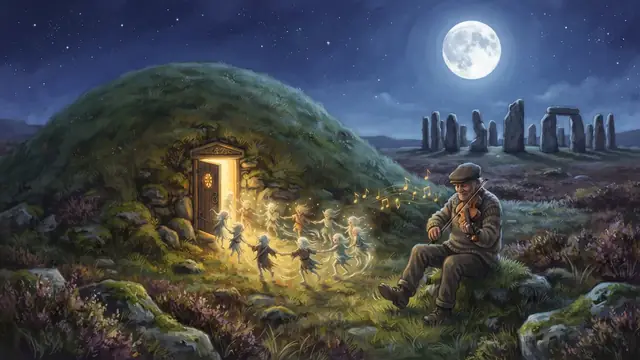
Trow: the mound spirits of Orkney and Shetland, the fiddlers and the dance of stone
In Orkney and Shetland, folklore speaks of the trows, spirits that live in mounds, come out at night and love fiddle music. See what two sources say about them, where the name comes from and what remains in doubt.
Read →
 Myth or legend
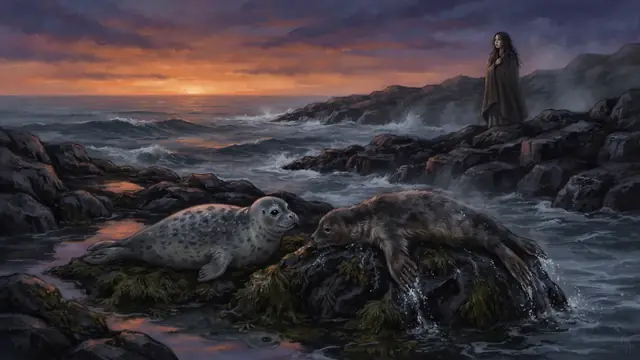
Selkie: the seal who sheds her skin and becomes a person in the northern isles of Scotland
In Orkney and Shetland, folklore speaks of seals that shed their skin and become people, and of a bride who loses her skin. See what two sources say about selkies, the variants that exist and the theories of origin.
Read →
 Myth or legend
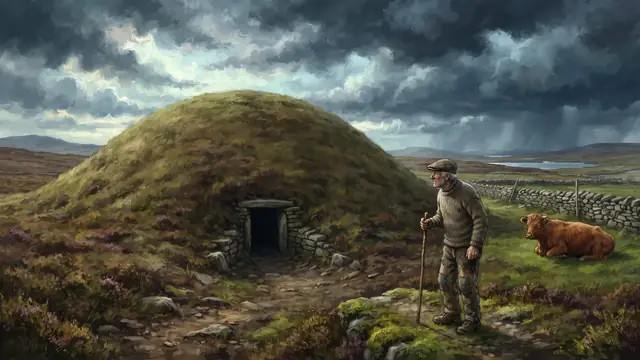
Hogboon: the mound spirit of Orkney and the stories of Maeshowe
In Orkney, the hogboon, or hogboy, is the spirit of a burial mound, with a name that comes from Old Norse haug-búi. See what two sources say about what it did, the accounts from Maeshowe and what remains uncertain in them.
Read →
 Myth or legend
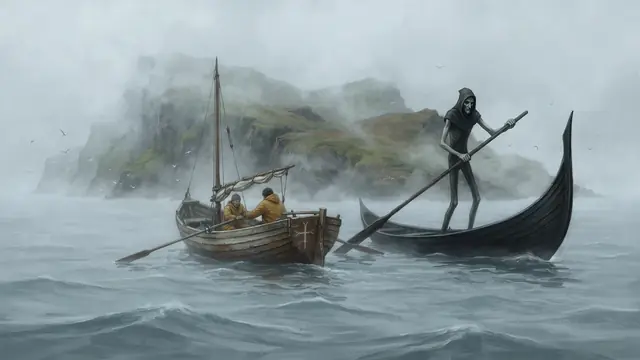
Finfolk: the sea sorcerers of Orkney, the silver coin and the chalk cross
In Orkney, folklore speaks of the Finfolk, sorcerers who change shape, live in the sea and abduct people in spring and summer. See what three sources say, what they cite and what remains unanswered.
Read →
 Myth or legend
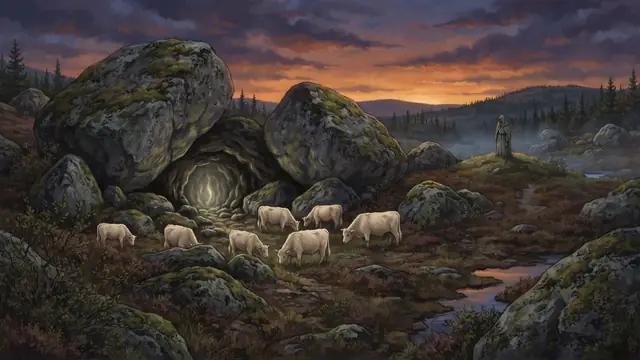
The vittra: underground beings of northern Sweden and the milk among the stones
The vittra is a being of northern Swedish folklore, tied to the underground world and to cattle. See what three sources say about her, what the neighbourly beliefs tell and what still has no clear origin.
Read →
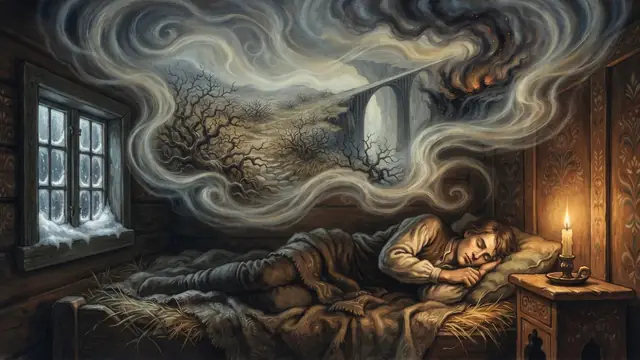 Saga or medieval source
Draumkvedet: Olav Åsteson's dream and the medieval ballad of Norway
Draumkvedet, the "Dream Poem", tells that Olav Åsteson slept from Christmas to the thirteenth day and saw hell and part of heaven. See how the ballad was collected, what is known of it and what stays uncertain.
Read →
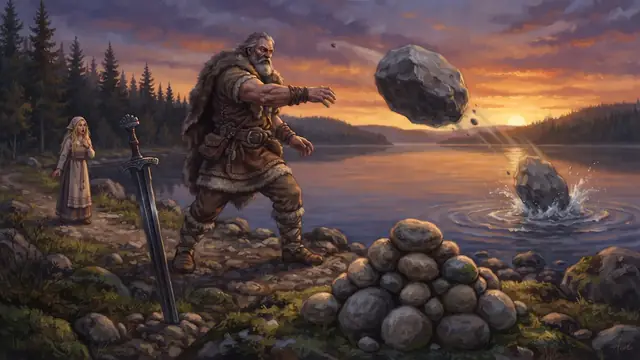 Myth or legend
Kalevipoeg: Kreutzwald's Estonian epic, the giant hero and the thrown stones
The Kalevipoeg is the Estonian epic that Friedrich Reinhold Kreutzwald compiled after 1850, with a giant hero, a cursed sword and thrown stones. See how it was made, the three versions and what the source leaves open.
Read →
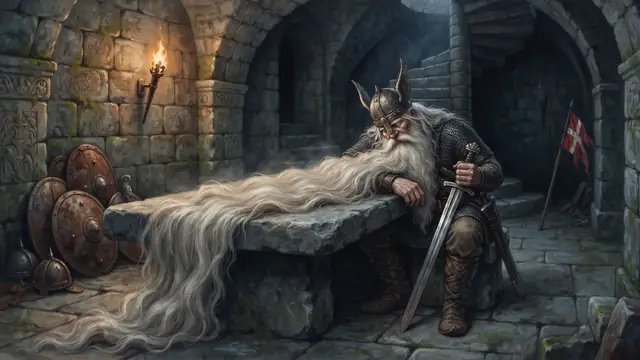 Myth or legend
Holger Danske, or Ogier the Dane: from Charlemagne's knight to the hero who sleeps at Kronborg
Holger Danske, or Ogier the Dane, already appears in the Chanson de Roland, around 1060, and in Denmark becomes the hero who sleeps beneath Kronborg. See the figure's path, the works that took him up and what remains uncertain.
Read →
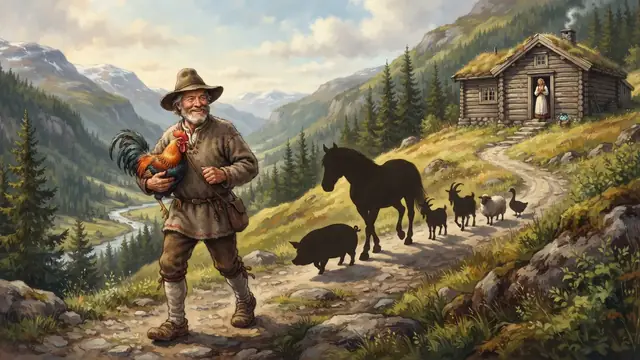 Myth or legend
Gudbrand on the Hill-side: the farmer who traded the cow down to nothing and still won the bet
In Gudbrand on the Hill-side, a Norwegian tale by Asbjørnsen and Moe, a farmer trades his cow for a horse, a pig, a goat and a sheep, and his wife praises every trade. See the plot, the retellings by Andersen and Jensen and what remains uncertain.
Read →
 Myth or legend
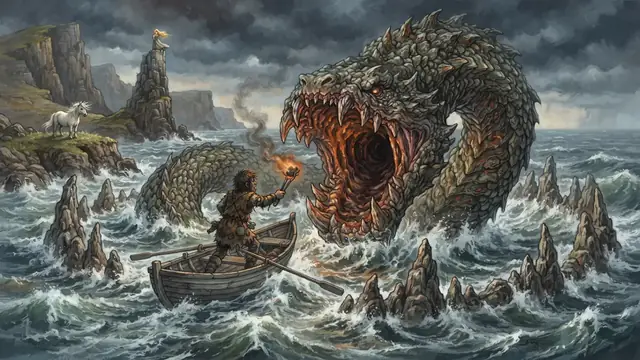
Assipattle and the Stoor Worm: the Orkney tale in which the monster gives birth to the islands
In the Orkney tale, Assipattle, the seventh son, sets the liver of the Stoor Worm alight with a burning peat; the worm's teeth become the northern islands. See the plot, who recorded it and what scholars debate.
Read →
 Myth or legend
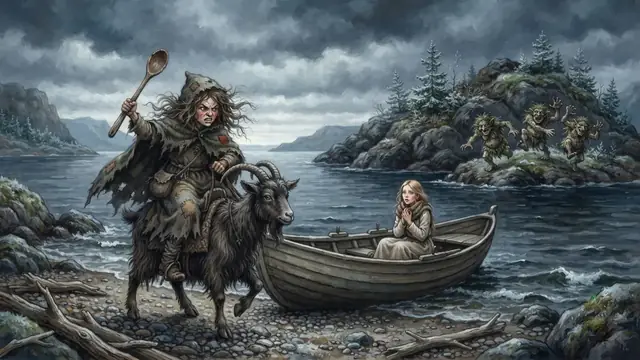
Tatterhood (Lurvehette): the ugly princess who rides a goat and defeats the trolls
In Tatterhood, an ugly, loud princess who rides a goat and carries a wooden spoon goes to the trolls' island and recovers her sister's head. See the plot, the ATU 711 type, where the tale is found and what the sources leave unsettled.
Read →
 Myth or legend
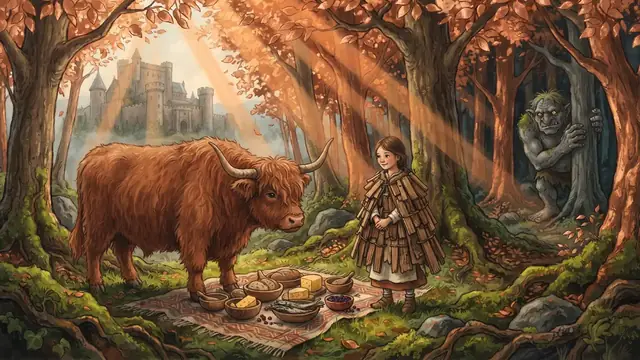
Kari Trestakk: the dun bull, the stepmother and the golden shoe in a tale by Asbjørnsen and Moe
In Kari Trestakk, a dun bull feeds a girl persecuted by her stepmother and fights trolls in copper, silver and golden woods. See the plot, the tale's classification among Cinderella types and what is known of Norwegian variants and the alleged Sámi version.
Read →
 Myth or legend
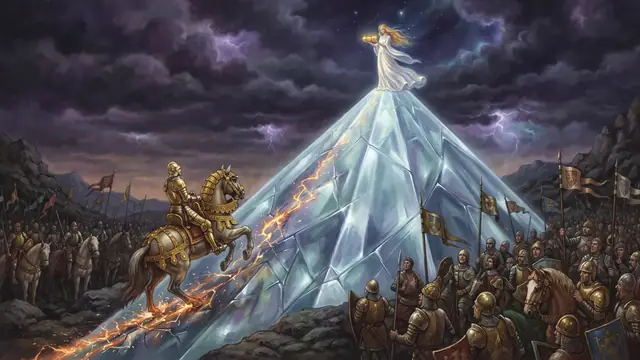
The Princess on the Glass Hill: the youngest son, the horse and the three golden apples
In “The Princess on the Glass Hill”, the youngest son keeps watch over the meadow, wins a horse and, in three attempts, climbs the glass hill and takes the princess’s three golden apples. See the plot, the ATU 530 type and the hypotheses about the tale’s origin, which remain disputed.
Read →
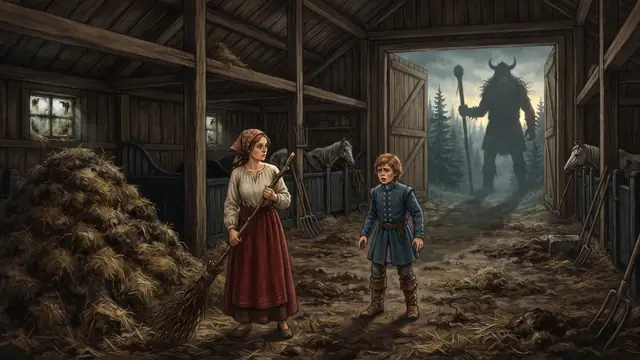 Myth or legend
The Mestermøy, the master maid: Asbjørnsen and Moe's tale and the “magic flight”
The Mestermøy is a Norwegian tale from Asbjørnsen and Moe's collection, tied to the "magic flight" type. See what the source consulted gathers about who told it, the plot, the giant's tasks, the flight, the forgotten bride, the variants and what remains uncertain.
Read →
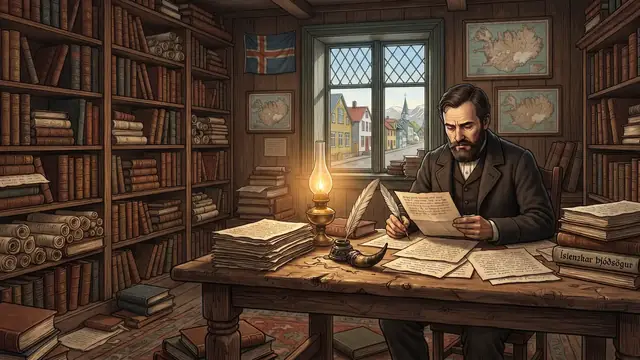 Documented history
Jón Árnason and the folktales of Iceland: the collection published in Leipzig in 1862 and 1864
Jón Árnason (1819–1888) was a librarian in Iceland and gathered the Íslenzkar þjóðsögur og æfintýri, published in two volumes in Leipzig. See what the source consulted gathers about his life, the partnership with Magnús Grímsson, Konrad Maurer's encouragement, the influence of the Brothers Grimm and the later editions.
Read →
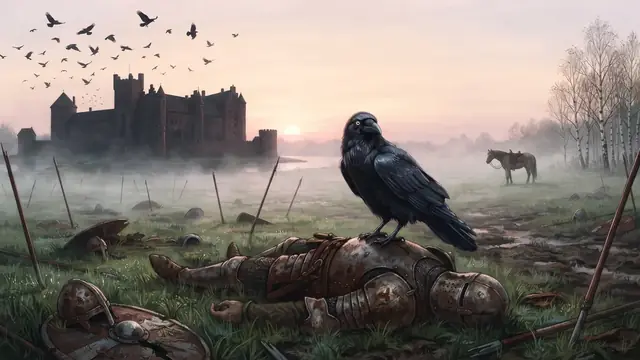 Myth or legend
The valravn, the knight-raven of Danish folklore: the ballad and Jens Bille's notes
The valravn is a supernatural raven of Danish folklore, and the ballad "Valravnen" tells of a knight turned into a raven. See what the source consulted gathers on the ballad, the manuscripts, the 1893 account and the hypotheses of Grundtvig and Grimm.
Read →
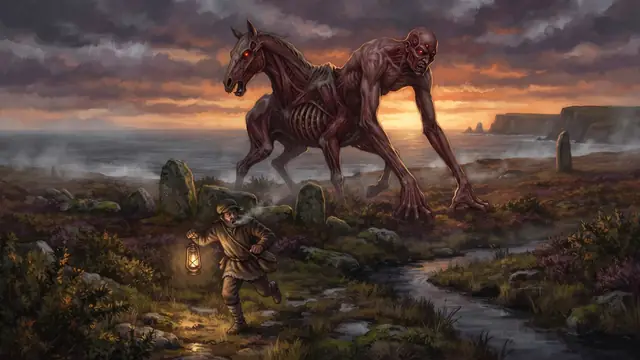 Myth or legend
The nuckelavee of Orkney: the horse demon that will not cross fresh running water
The nuckelavee is a creature of Orkney folklore, in Scotland, half horse and half man and skinless, that cannot bear fresh running water. See what the source consulted gathers on the origin, the first record, the appearance and the Mither o' the Sea.
Read →
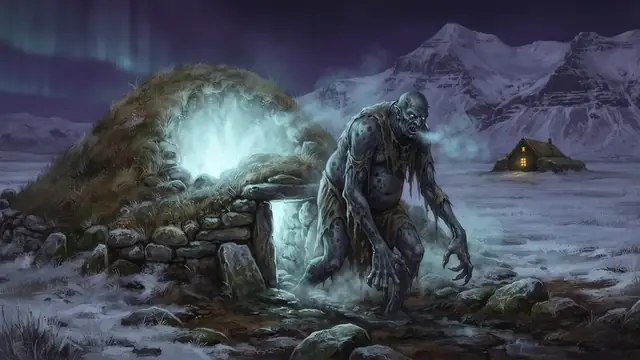 Myth or legend
The draugr, the dead who do not stay in the mound: what the Icelandic sagas tell
The draugr is, in the Icelandic sagas, the dead who leave the grave, strong, foul-smelling and hard to beat. See what the source consulted gathers on Kárr the Old, Glámr, Víga-Hrappr, the expulsion by "door-doom" and how a draugr was undone.
Read →
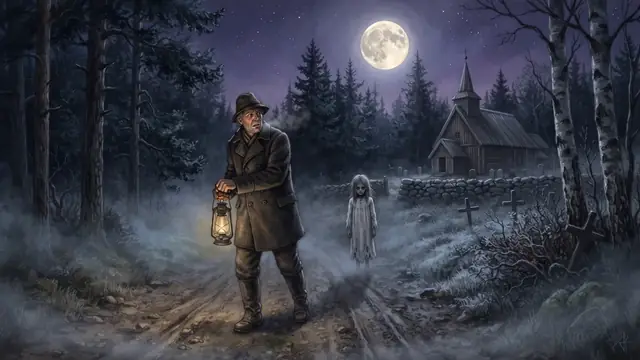 Myth or legend
The myling: the soul of a child who asks to be carried on the road at night in Nordic folklore
The myling is, in Scandinavian folklore, the soul of a child who died without baptism or burial and pursues those who walk alone at night. See what the source consulted gathers on the name, the meeting on the road, the remedies against it and what the tale reveals about the past.
Read →
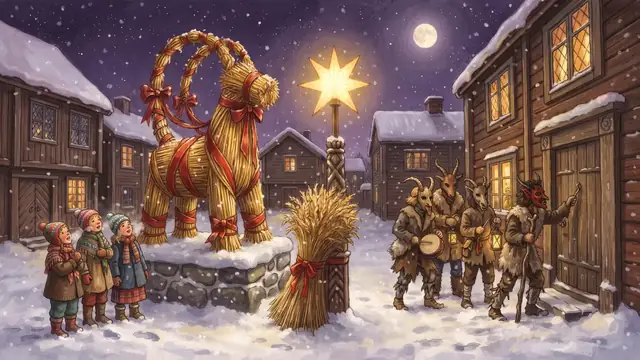 Myth or legend
The Scandinavian Yule goat: from the last sheaf of grain to the great straw goat
The julbock, the Yule goat, appears in Scandinavia as a sheaf of straw, a masked figure and later a giver of gifts to children. See what the source consulted says about the origin, what is only theory and today's straw goats.
Read →
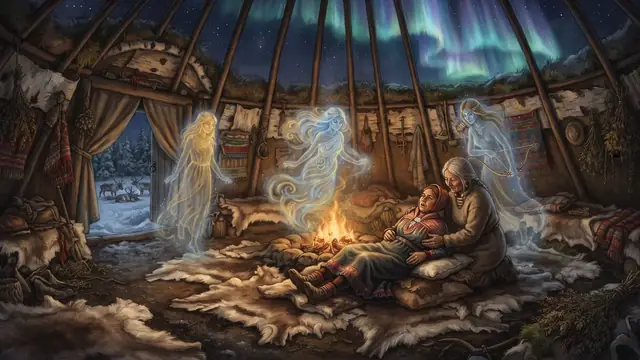 Myth or legend
The Áhkká: the Sámi goddess of birth and the three daughters who guarded the fire, the door and the bow
For the Sámi, Máttaráhkká and her three daughters, Sáráhkká, Juoksáhkká and Uksáhkká, looked after birth: the fire, the bow and the door of the tent. See what the source consulted gathers on each one, the offerings, the naming rite and what remains in doubt.
Read →
 Documented history
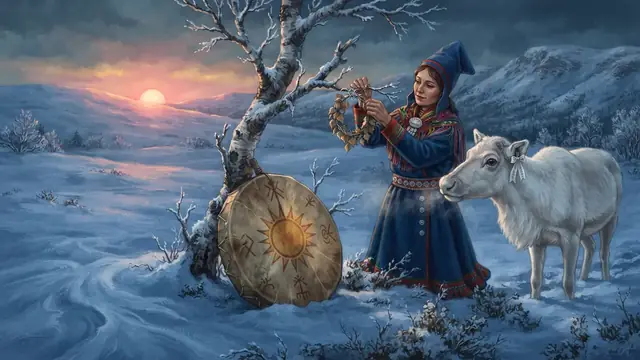
Beaivi: the Sámi sun, the daughter in a carriage of reindeer bones and the rings on the drums
Among the Sámi, the Sun is also a deity, tied to spring and reindeer. See what the article consulted says about Beaivi, the drums, the offerings and why several claims still lack a source.
Read →
 Myth or legend
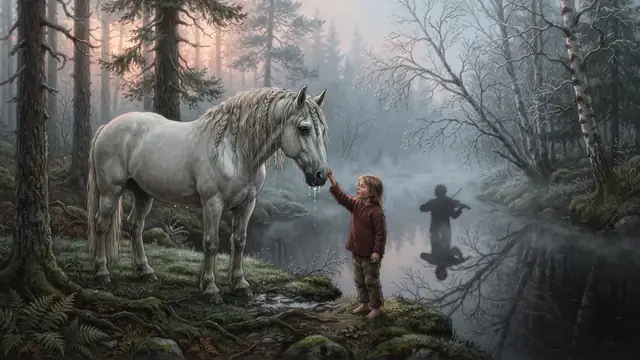
Bäckahäst: the white brook horse that drowns whoever climbs on its back
In the mist, by a river, a majestic white horse waits. Whoever climbs on it never gets off. See what the article consulted says about the brook horse, the nøkk in other forms and what remains uncertain.
Read →
 Myth or legend
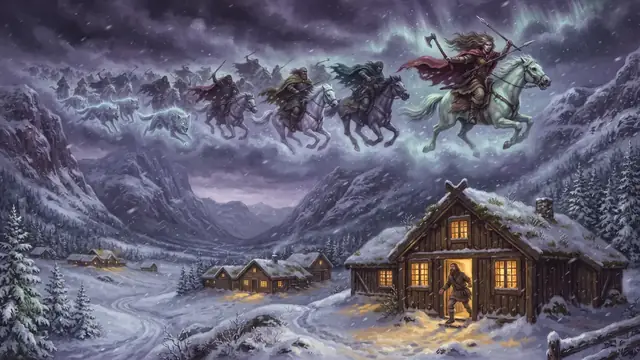
Åsgårdsreia: the Wild Hunt that Norway heard passing in midwinter
Ghost riders, barking hounds and a storm: this is the Wild Hunt, in the North called Åsgårdsreia or Oskoreia. See what is attested, and when, and how much of Grimm's thesis about Odin is hypothesis.
Read →
 Documented history
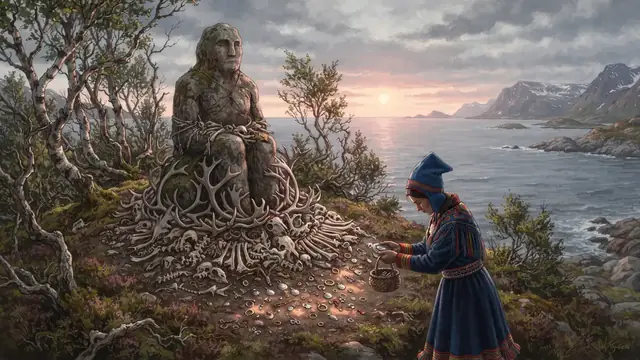
Sieidi: the sacred stones of the Sámi and the offerings left before them
Among the Sámi, rocks that stood out in the landscape were places of offering and respect. See what a research article says about two sieddit in Alta, the offerings and the role of the missionaries.
Read →
 Myth or legend
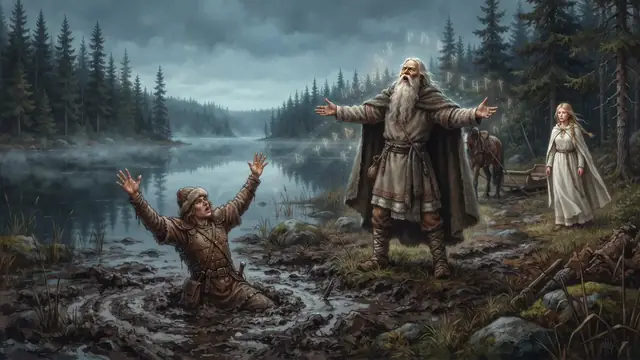
Joukahainen and Väinämöinen: the singing contest of the Kalevala
At the beginning of the Kalevala, a young man challenges the old singer Väinämöinen and ends up sinking into a bog. See what the page consulted says about the promise of the sister, the revenge and the origins of the name Joukahainen.
Read →
 Myth or legend
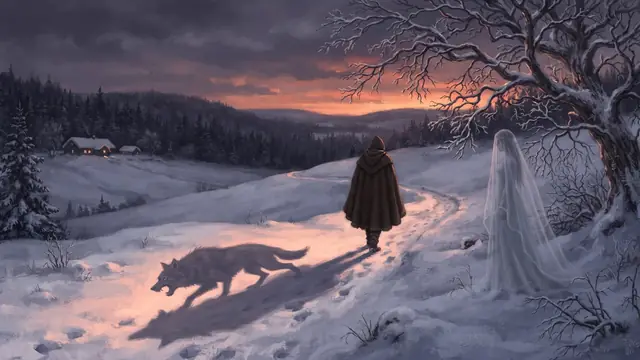
Fylgja: the "follower", the spirit that accompanies a person in the sagas
In the sagas, certain spirits accompany a person in the form of an animal or a woman, warn of danger and, when someone sees them, announce death. See what the sources consulted say, and where they differ.
Read →
 Myth or legend
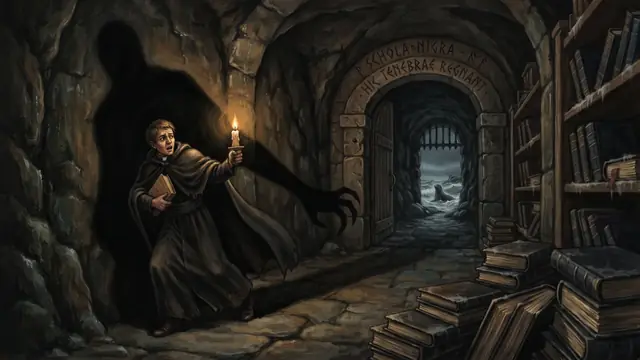
Sæmundur the Wise: the Icelandic priest who outwitted the devil at the Black School
In Iceland, the priest Sæmundur Sigfússon, who really lived in the 11th century, became the hero of a tale: he studied at a school where the devil kept the last pupil, and he left it by cunning. See what is history and what is folklore.
Read →
 Saga or medieval source
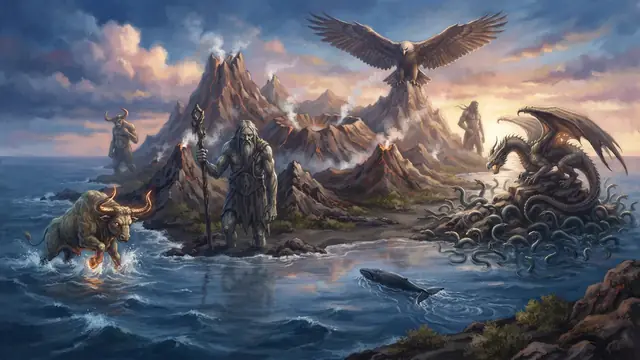
Landvættir: the dragon, the bird, the bull and the giant that protect Iceland, according to the Heimskringla
In the saga of Olaf Tryggvason, in the *Heimskringla*, the Danish king Harald Bluetooth sends a wizard in the shape of a whale to spy on Iceland. He meets four beings that block each coast. See what the saga says and how the scene became a symbol.
Read →
 Myth or legend
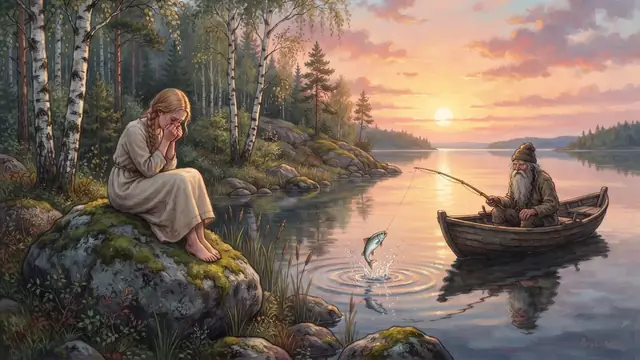
Aino, in the Kalevala: the young woman promised to Väinämöinen who chose the sea
In the *Kalevala*, Aino is the sister of Joukahainen, promised as payment to an old singer. Instead of marrying, she goes to the seashore. See what the poem says, where the name comes from and how the story became a painting.
Read →
 Myth or legend
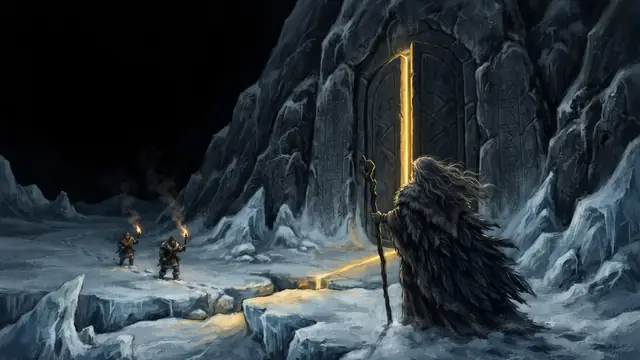
Louhi steals the sun and the moon: the coldest episode of the Kalevala
In the *Kalevala*, the mistress of Pohjola, Louhi, hides the sun and the moon in a mountain and leaves the world without light. See how the episode is told and where the book comes from.
Read →
 Myth or legend
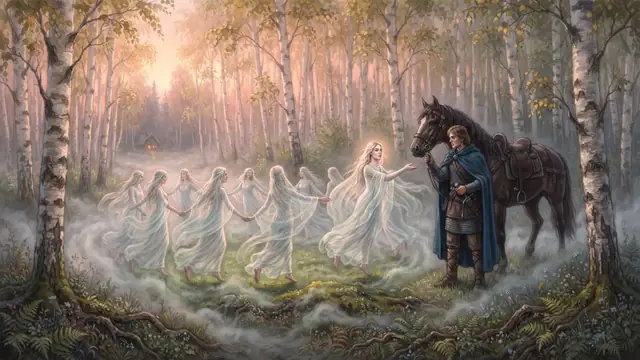
Elveskud: the ballad of the knight who refused to dance with the elf maidens
One of Scandinavia's most popular ballads tells of a knight who, on the eve of his wedding, meets elf maidens dancing in the woods. See how the story changes from country to country and how it reached Goethe.
Read →
 Myth or legend
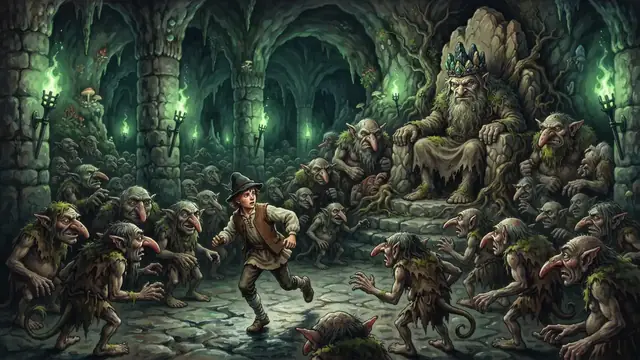
Peer Gynt and the Mountain King: from folk tale to Ibsen's stage
Peer Gynt began as a figure of Norwegian tales and legends, before gaining Ibsen's drama and Grieg's music. See what is known of the sources and what was invention.
Read →
 Myth or legend
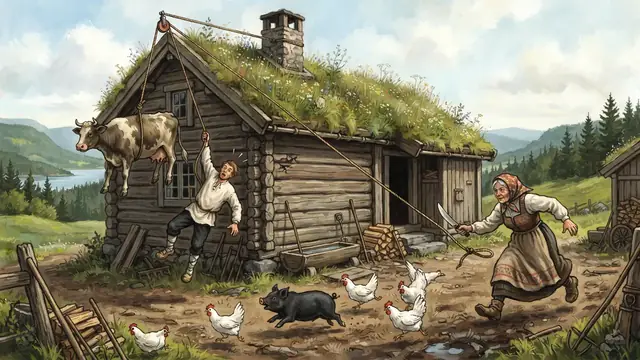
The man who was to mind the house: the Norwegian tale of the cow on the roof
A husband thinks his wife's work is easy and swaps places with her for a day. The result is one of the funniest folk tales collected by Asbjørnsen and Moe.
Read →
 Myth or legend
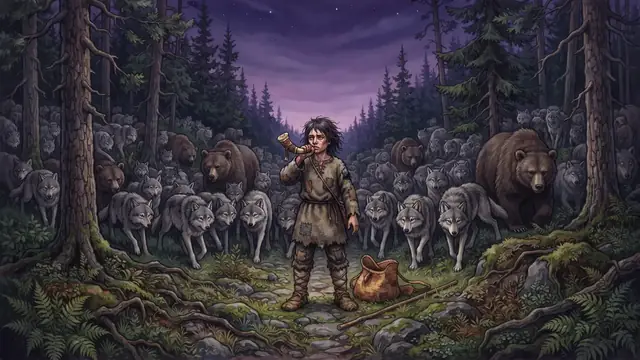
Kullervo: the young slave of the *Kalevala* who turned wolves into a herd
Among the heroes of the *Kalevala*, Kullervo is the most tragic. See how the poem presents him, what is known of the story's origins and what it inspired later.
Read →
 Myth or legend
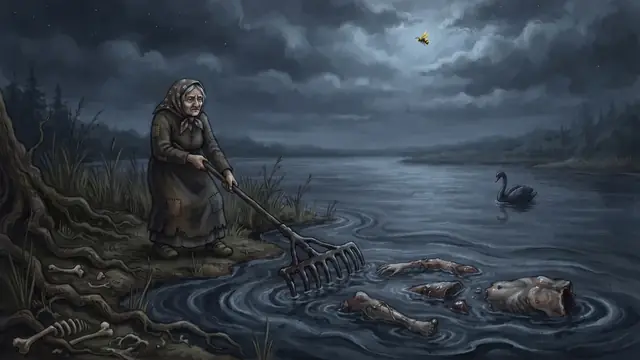
Lemminkäinen in the river of Tuonela: the mother who fished her son's pieces out with a rake
In the *Kalevala*, the adventurer Lemminkäinen is killed in the land of the dead, and his mother gathers his body from the river with an iron rake. See what cantos 14 and 15 say.
Read →
 Myth or legend
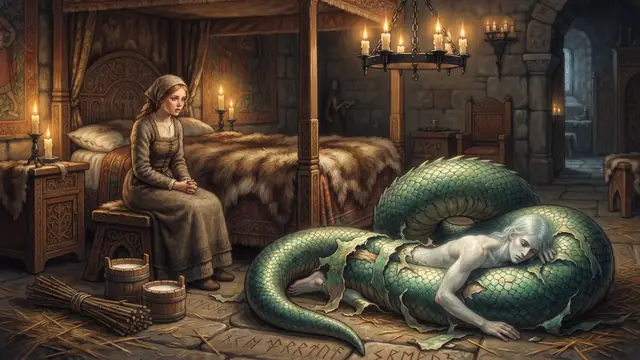
Kong Lindorm: the Danish tale of the serpent prince and the bride of shirts
In the Danish tale of King Lindorm, a prince is born in the shape of a worm and becomes a man only if the bride takes off a shirt for each skin he sheds. See the sources and versions.
Read →
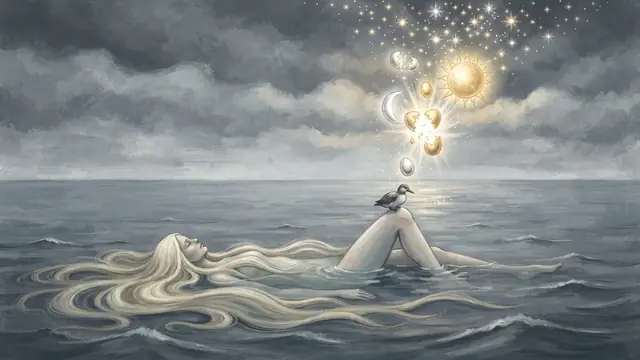 Myth or legend
Ilmatar: the daughter of the air who floated seven hundred years at sea and the duck that laid the world
In the first canto of the *Kalevala*, Ilmatar, the daughter of the air, floats in the sea, and the world is born from the eggs of a bird. See what the poem tells and how it was assembled.
Read →
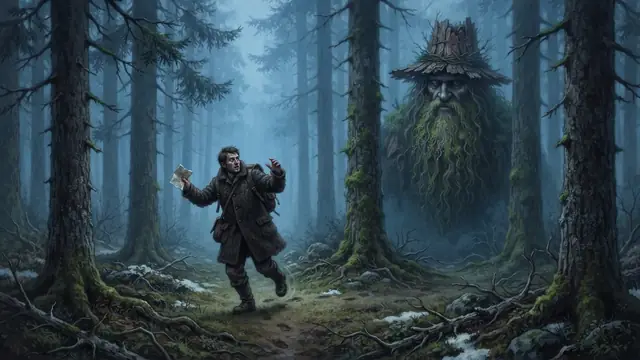 Myth or legend
Tapio, lord of the Finnish forest, and the spell of getting lost among the trees
In Finnish tradition, Tapio is the lord of the forest, and whoever gets lost in it is under the *metsänpeitto*, "the cover of the woods". See what the *Kalevala*, Agricola and folklore say.
Read →
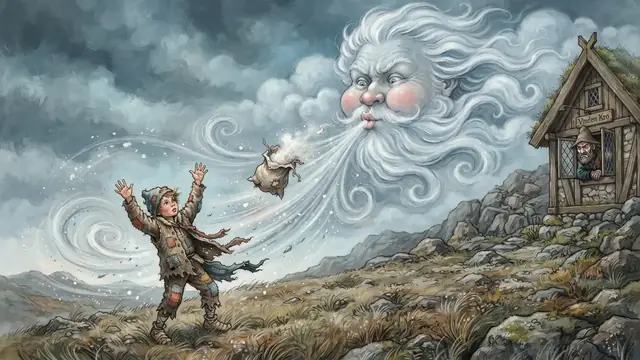 Myth or legend
The boy who went to the North Wind: a Norwegian tale of flour, thieves and a cudgel
In the Norwegian tale collected by Asbjørnsen and Moe, a boy goes to demand from the North Wind the flour it blew away. See the plot, the origin of the tale and why it pleased so many.
Read →
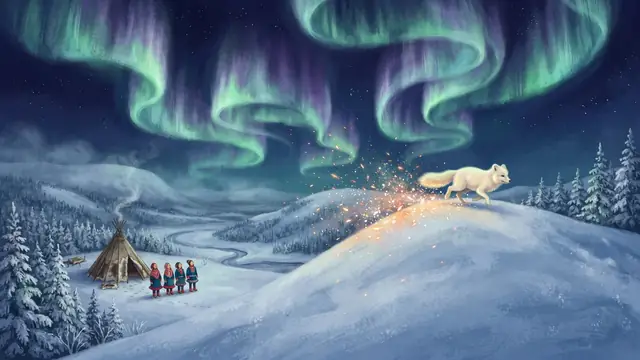 Saga or medieval source
The northern lights in the old North: the King's Mirror, the fire fox and the silence of the Sámi
More than seven hundred years ago, a Norwegian text tried to explain the northern lights, and peoples of the north tied them to foxes, souls and prohibitions. See what the sources say and what science adds.
Read →
 Myth or legend
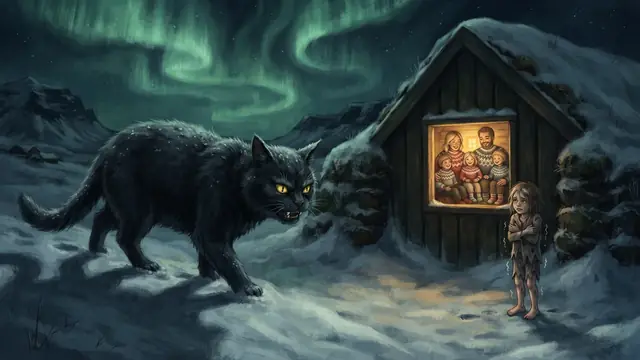
Jólakötturinn, the Yule Cat of Iceland: whoever got no new clothes might become its dinner
In Icelandic folklore, the Yule Cat threatened to eat anyone who got no new clothes before Christmas. Many scholars link it to wool work. Here is what the sources say.
Read →
 Myth or legend
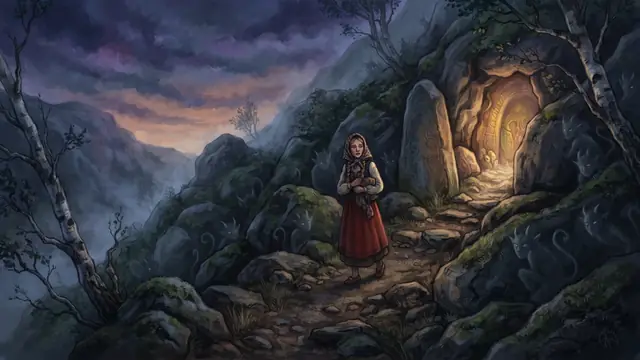
Bergtatt: the Norwegian belief in those taken into the mountain
In Norwegian folk tradition, someone who was "bergtatt" had been taken into the mountain by the hidden people. Here is what accounts collected in the 19th century say, and how the idea reached Peer Gynt.
Read →
 Myth or legend
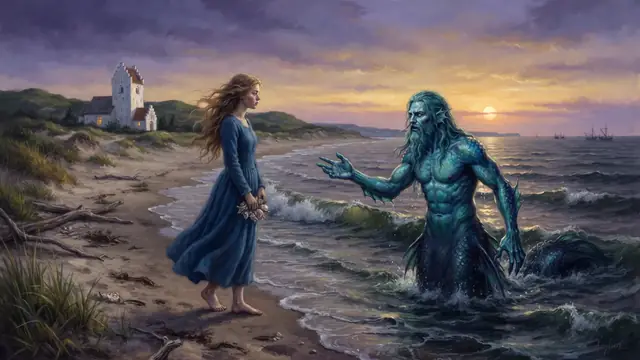
Agnete and the merman: the Danish ballad of the woman who lived at the bottom of the sea
In the Danish ballad "Agnete og Havmanden", a young woman follows a merman to the sea floor and lives there for years, until she hears the bells of a church. Here is the ballad and its long life.
Read →
 Myth or legend
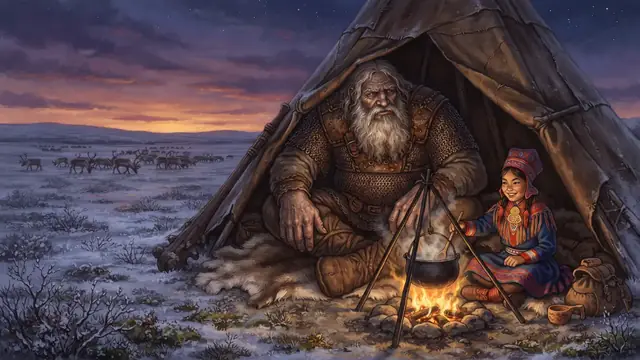
Stállo: the foolish giant of the Sámi tales, who always loses to the cunning of those he wants to devour
In Sámi tales, Stállo is a being of iron and hunger who chases people but is almost always tricked by someone cleverer. See what the tradition tells and how scholars read it.
Read →
 Myth or legend
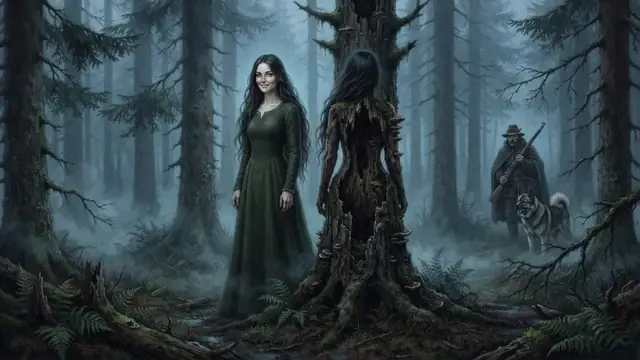
Skogsrå: the lady of the Swedish forest, who gives luck to hunters and leads charcoal burners into the woods
In Swedish folklore, the skogsrå is a female forest spirit who lures hunters and charcoal burners. See how she was described in 19th-century collections and which rules men followed.
Read →
 Saga or medieval source
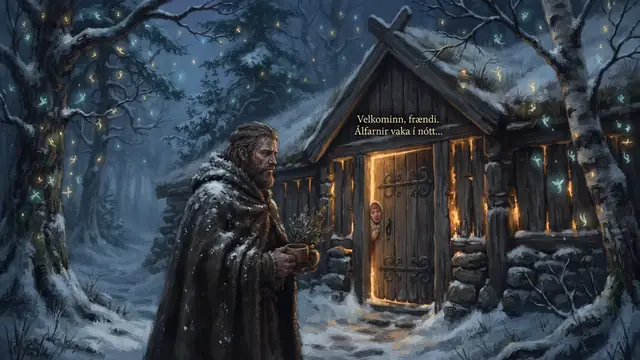
Álfablót: the sacrifice to the elves, the door closed to a Christian skald and what the sources say about the rite
A Christian poet knocking on Swedish doors in the 11th century was told he could not enter because an álfablót was under way. See what the sources say about this rite for the elves.
Read →
 Documented history
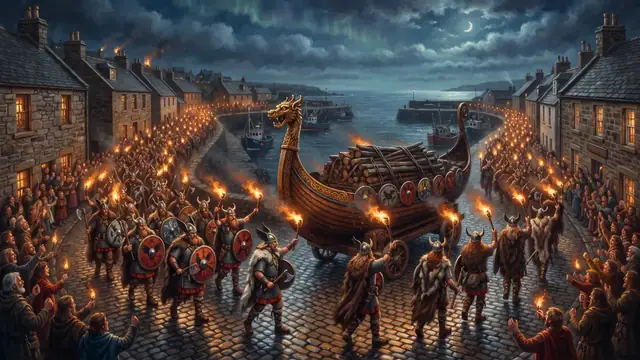
Up Helly Aa: the fire festival in which Shetland burns a Viking ship, and what is old and what is modern in it
Every January, hundreds of men with torches march through Lerwick and burn a replica Viking ship. The festival dates from the 19th century, but recalls a real Norse past.
Read →
 Documented history
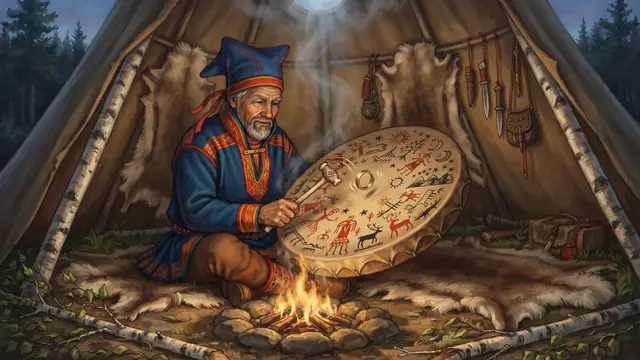
The Sámi noaidi and the drum: what missionaries recorded and what museums still keep
The reindeer-skin drum was used by the noaidi, the Sámi ritual specialists. Most of what is known comes from missionary accounts and from confiscated drums.
Read →
 Myth or legend
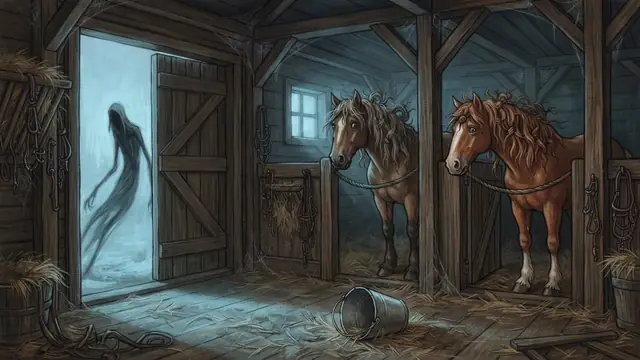
The mara: the spirit that rides sleepers and gave its name to the nightmare
In Nordic tradition, the mara is a being that treads on the chest of sleepers. The Ynglinga saga tells how one killed a king, and the word “nightmare” keeps her name.
Read →
 Myth or legend
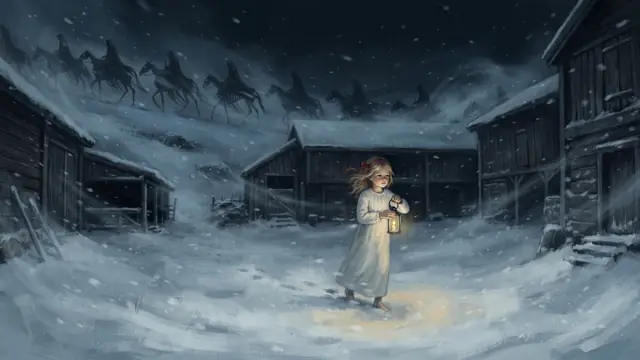
Lussinatta: the longest night and the legend of Lussi riding with the shadows
In Norwegian and Swedish folk tradition, the night of 13 December was the longest of the year and the most dangerous. It was time to light candles and finish work before dark.
Read →
 Myth or legend
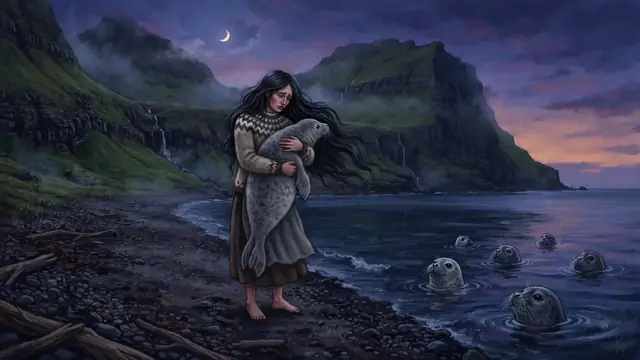
Kópakonan: the seal woman of Mikladalur, a legend from the Faroe Islands
In Faroese tradition, a man from Kalsoy steals the skin of a seal that was dancing in the shape of a woman. She lives for years on land, until she finds the skin and returns to the sea.
Read →
 Myth or legend
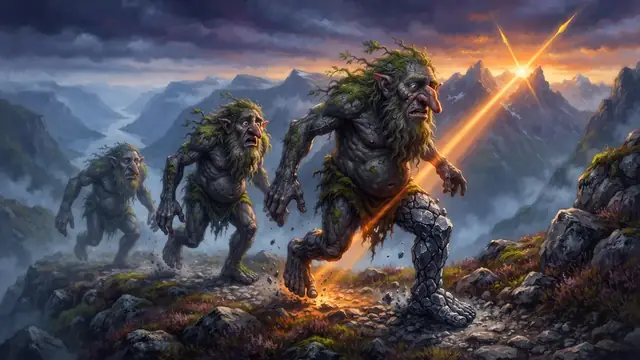
Why trolls turn to stone in the sun: the Nordic belief that teaches how to read the landscape
In Scandinavian folk tales, trolls live by night and, if the sun reaches them, turn to rock. The idea explains oddly shaped stones and has been used in many stories.
Read →
 Myth or legend
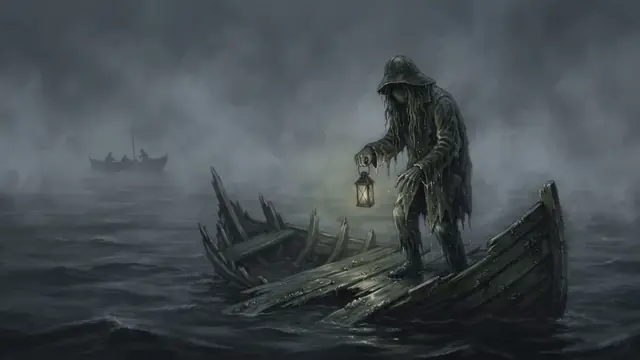
Draugen: the sea ghost Norwegian fishermen feared to see
In the tradition of the Norwegian coast, the draug is the spirit of a drowned man without a grave who appears in the fog and foretells deaths. The accounts were collected by folklorists in the 19th century.
Read →
 Myth or legend
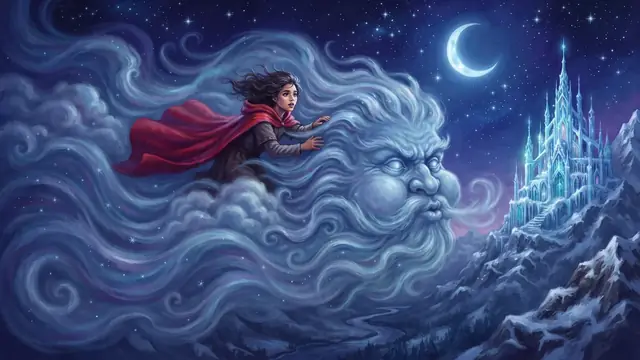
East of the Sun and West of the Moon: the Norwegian tale of the white bear and the North Wind
A poor girl agrees to live with a white bear, breaks a promise and crosses the world to undo the mistake. The tale was published in Norway in the 19th century.
Read →
 Myth or legend
Soria Moria: the castle every Norwegian seeks without ever having seen it
In a tale by Asbjørnsen and Moe, the lad Halvor sails to a golden castle, beats trolls and marries a princess. The name became a synonym for perfect happiness and longing.
Read →
 Myth or legend
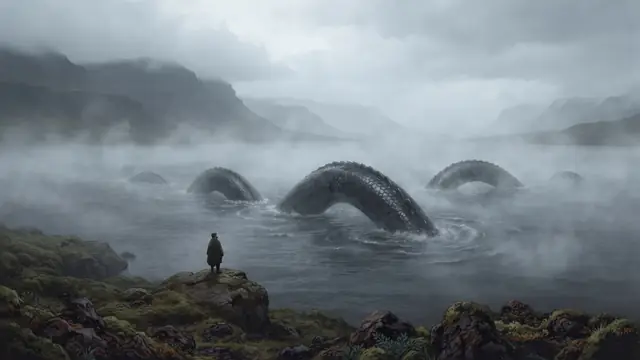
The Lagarfljót worm: the Icelandic lake monster that was filmed in 2012
For centuries Icelanders have told of a golden worm living at the bottom of a lake in the east. In 2012, a public-television video reignited the debate, and a panel voted 7 to 6 that it was authentic.
Read →
 Myth or legend
Huldufólk: the hidden people who divert roads in modern Iceland
In the 21st century, works in Iceland have been argued over because of rocks where the hidden people are said to live. What the surveys say about how many Icelanders believe in elves is subtler than it seems.
Read →
 Myth or legend
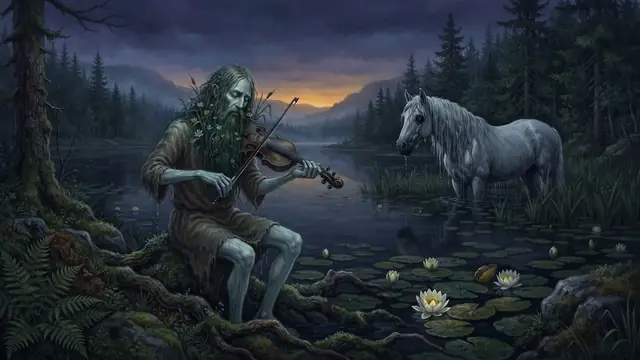
The Nøkken: the lake spirit who plays the fiddle and drowns those who come near
In Scandinavian folklore, the nøkken lives in lakes and rivers and changes shape to lure victims. The stories, collected mostly in the 18th and 19th centuries, show how people explained the dangers of water.
Read →
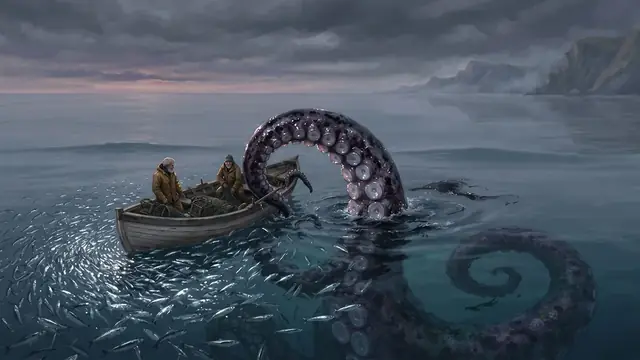 Myth or legend
The Kraken: from the sea monster of Norwegian fishermen to the giant squid science eventually confirmed
In 1752, Bishop Erik Pontoppidan described a creature that looked like an island and attracted fish. The giant squid, which does exist, was only well documented in the 19th century.
Read →
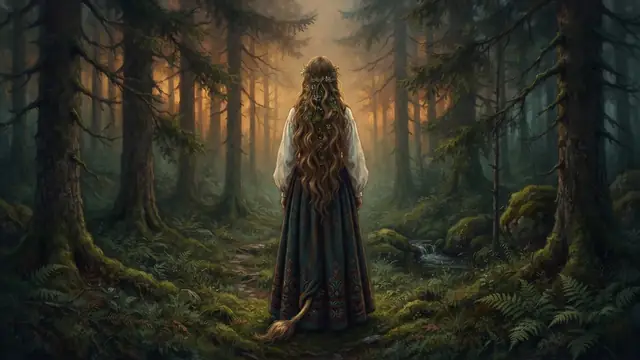 Myth or legend
Huldra: the beautiful forest woman who hides a cow's tail
In the folklore of Norway and Sweden, the huldra seduces men in the woods, but her tail and hollow back give her away. She can also be generous to those who treat her with respect.
Read →
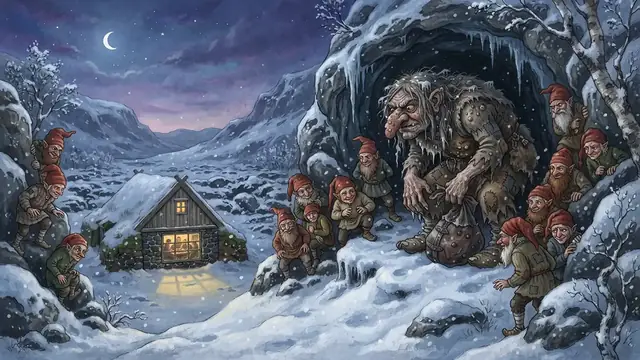 Myth or legend
Grýla and the thirteen Yule Lads: Icelandic Christmas has an ogress and thirteen naughty sons
In Iceland, Christmas is announced by thirteen Yule Lads, one a night, sons of the troll Grýla. Their names describe each one's mischief, and the tradition has moved from fright to play.
Read →
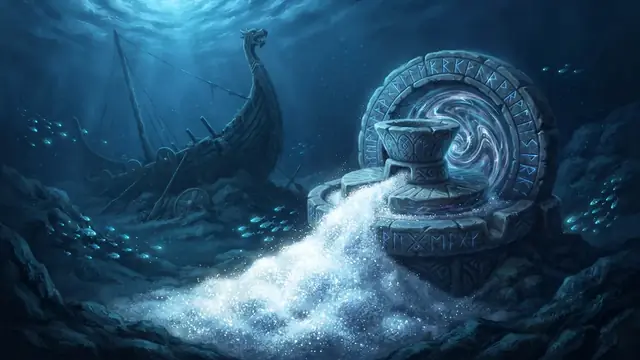 Myth or legend
The mill that still grinds salt at the bottom of the sea: the Norwegian tale and its relative in the Edda
A magic mill grinds whatever it is asked, but no one knows the word to stop it. The Norwegian tale explains why the sea is salty.
Read →
 Myth or legend
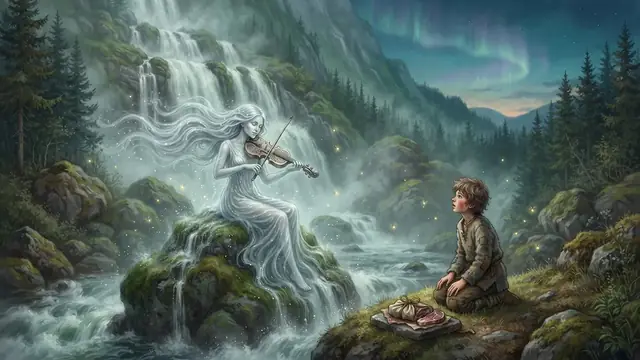
Fossegrim: the waterfall spirit who teaches the fiddle to those who bring a gift
In Norwegian folklore, an unseen musician lives in waterfalls. Whoever gives him meat on the right night learns to play in a way that makes trees dance.
Read →
 Myth or legend
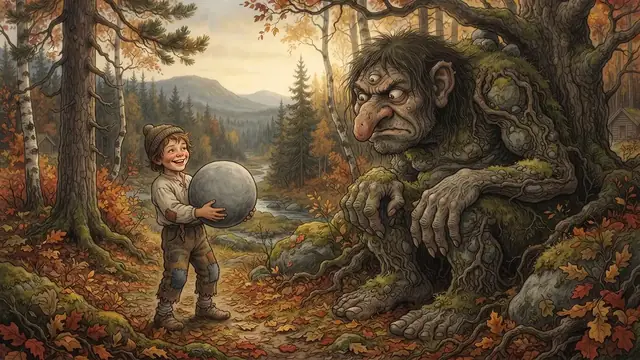
Askeladden and the troll: the Norwegian tale of the boy who squeezed the stone
Askeladden is the clever youngest son of Norwegian tales. In the contest with the troll, he wins by cunning, from a stone that turns into cheese to a hidden bag.
Read →
 Myth or legend
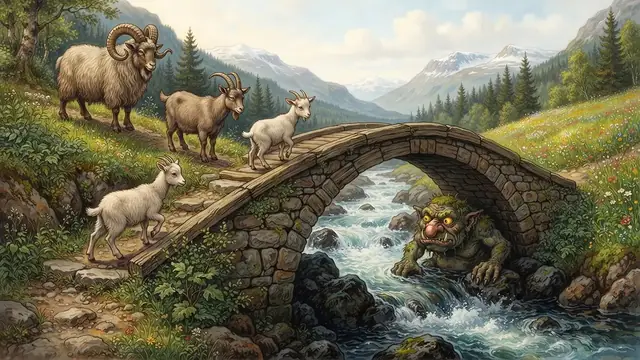
The Three Billy Goats Bruse: the Norwegian tale of the bridge and the troll
Collected by Asbjørnsen and Moe in the 19th century, the tale of three goats crossing a bridge guarded by a troll is one of the best-known in Norwegian folklore.
Read →
 Original tale
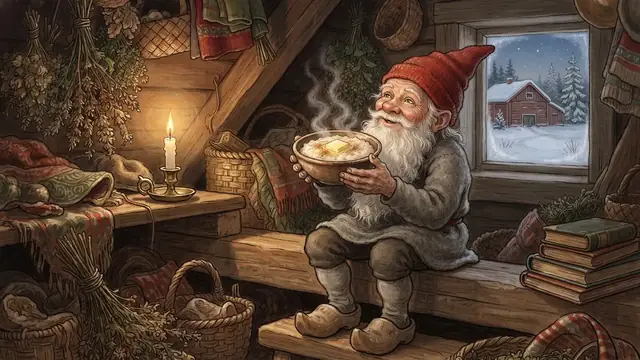
The farm nisse and the bowl of porridge on Christmas Eve
An original tale about the nisse, the small spirit who, in Scandinavian folklore, protects the farm and expects, on Christmas Eve, a bowl of porridge with butter.
Read →
Play this realm
Games tied to the stories here. Fullscreen, no sign-up.
New
The mill that grinds salt
Turn the magic mill to fill the ship with salt, but let go in time: it is slow to stop and the ship can sink.
Play ▶
Askeladden and the troll
Hide porridge in a bag without the troll noticing, like Askeladden in the eating contest.
Play ▶
The Three Billy Goats Bruse
Run across the bridge with the three goats, jump the gaps and the troll's hands, and reach the pasture.
Play ▶
The barn nisse
Be the barn nisse and look after the animals through the winter night, until the girl brings the porridge at dawn.
Play ▶
New
The waterfall fiddle
Tap the strings of Fossegrim's fiddle when the golden notes reach the line, and make the forest trees dance.
Play ▶
New
Who has a tail?
Find the huldra among the forest girls by the tail that shows under her dress.
Play ▶
New
Fishing over the Kraken
Fish as much as you can before the kraken rises, and keep your catch in time.
Play ▶
New
The Nøkken's name
Tap the letters of the Nøkken's name, in order, before it reaches the child.
Play ▶
New
The thirteen Yule Lads
Protect the pantry from the mischief of Grýla's thirteen sons, one night at a time.
Play ▶
New
To Soria Moria
Cross three maze forests to the golden castle of Soria Moria.
Play ▶
New
The Lagarfljót worm
Steer the lake serpent, collect the gold and grow without hitting the shores.
Play ▶
New
Reroute the road
Draw a road from the green dot to the red dot without touching the rocks of the hidden people.
Play ▶
New
The North Wind
Fly through the gaps in the storm clouds carrying the girl to the castle.
Play ▶
New
The fog of the Draug
Gather the buoys in the fog without being caught by the Draug.
Play ▶
New
Before the sun rises
Send the trolls to their caves before the sunlight turns them to stone.
Play ▶
New
Lussi's flame
Protect the candle flame on the longest night of the year.
Play ▶
New
The sealskin
Swim like the seal woman, gathering pearls and dodging hooks.
Play ▶
New
The noaidi's drum
Listen to the noaidi's drum rhythm and repeat it in the same tempo.
Play ▶
New
The Up Helly Aa galley
Assemble the parts of the Viking galley for the Shetland fire festival.
Play ▶
New
The mara's stable
Find the five differences between two drawings of the stable after the mara's visit.
Play ▶
New
Stállo's trail
Move along the trail while the giant looks the other way.
Play ▶
New
The lady of the forest
Answer eight questions about beings of Nordic folklore.
Play ▶
New
The Álfablót
Connect each offering to its altar without crossing the paths.
Play ▶
New
Wool before the cat
Collect the balls of wool without letting the thread tangle on itself.
Play ▶
New
The mountain hall
Dodge the falling stones and cross the mountain hall.
Play ▶
New
Treasures of the sea floor
Swap neighbouring pieces until three alike line up and gather the treasures.
Play ▶
New
Tapio's forest
Step on the safe stretches of woodland by reading the numbers of detours around.
Play ▶
New
The North Wind's cudgel
Whack the thieves popping up at the windows and spare the guests.
Play ▶
New
The lights of the sky
Put out all the lights of the aurora, knowing each tap switches its neighbours.
Play ▶
New
The river of Tuonela
Gather the pieces in the river without being caught by the black swan.
Play ▶
New
The bride's whip
Land the whip at exactly the right moment to remove the worm's ten skins.
Play ▶
New
Ilmatar's vessels
Measure the exact amount of water using only two vessels.
Play ▶
New
Kullervo's flock
Drive the six animals into the pen, even though they run from you.
Play ▶
New
The Mountain King's hall
Change lanes and dodge the trolls over 300 metres.
Play ▶
New
The man and the housework
Catch what falls with the basket and avoid the pig.
Play ▶
New
Pohjola's frozen field
Cross the frozen field, lane by lane, dodging the gusts of cold.
Play ▶
New
The dance of the elves
Tap each lane at the right moment and dance until dawn.
Play ▶
New
The Black School
Cross the maze to the exit before the devil catches your shadow.
Play ▶
New
The stones of the lake
Jump over neighbours on a 15-hole triangle until a single mark is left.
Play ▶
New
The sowing of the guardians
Sow stones around the pits of the board and store more than your rival.
Play ▶
New
The duel of songs
Return the ball in the duel and score seven points before the rival.
Play ▶
New
The spirit that follows
Lead the spirit, gather 12 lights that make it grow, and do not touch the edges or itself.
Play ▶
New
The sacred stone
Throw offering stones, adjusting angle and force, and hit the sacred stone 5 times with 8 stones.
Play ▶
New
The Åsgårdsreia hunt
Capture the rival's pieces on a 6-by-6 board, as in a hunt through the night.
Play ▶
New
The brook horse's ford
Find the hidden ford, by trial, guided by hot and cold clues.
Play ▶
New
Beaivi's suns
Tap the sixteen suns in order, from 1 to 16, as fast as you can.
Play ▶
New
The mylings' road
Change lanes on a road at night to dodge the small souls and reach the cemetery.
Play ▶
New
The straw goat code
Crack a four-colour straw code in eight guesses, guided by black and white pegs.
Play ▶
New
The Áhkká's drum
Tap the drum at the instant each ring reaches the centre, until you hit twenty beats.
Play ▶
New
The nuckelavee on the moor
Flee the nuckelavee to the river, in the right-hand column, dodging the stones, in up to 30 steps.
Play ▶
New
The knight-raven
Visit all 25 squares of a board with the knight's move, repeating none.
Play ▶
New
The seeds of the mound
Sow pits against the draugr and finish with more seeds in your store.
Play ▶
New
The Mestermøy's stable
Slide eight numbered bales until they are in order, with the empty space in the corner, in up to 50 moves.
Play ▶
New
The threads of Jón's tales
Link four tokens of your colour in a row, on a board of 7 by 6, against the opponent.
Play ▶
New
The bull and the crates
Push crates onto the golden marks, in 3 levels, without being able to pull them.
Play ▶
New
The climb of the glass mountain
Switch lanes to dodge the falling stones and gather three golden apples, with at most 2 mistakes.
Play ▶
New
Tatterhood's rags
Flip the stack of six rags from any point until they are in order, in up to 10 flips.
Play ▶
New
The shape that vanished
Memorise coloured shapes and find the one that vanished over 6 rounds, with at most 2 mistakes.
Play ▶
New
Kalevipoeg’s stones
Choose stones of different weights and values for the sack, without exceeding the maximum weight and reaching the target, in 3 rounds.
Play ▶
New
Assipattle’s embers
Swipe over 24 embers in the air without touching the water bubbles, with at most 2 mistakes.
Play ▶
New
Gudbrand’s bet
Three in a row against an opponent; win two games before losing two.
Play ▶
New
The vittra’s milk
Collect 14 jars of milk on a three-lane trail, dodging the stones, with at most 2 mistakes.
Play ▶
New
The dream bridge
Memorise the path of safe stones on a bridge and repeat it, with at most 2 mistakes, in 3 rounds.
Play ▶
New
The Finfolk’s coins
Put a stack of silver coins in order by flipping those at the top, with limited flips and time, in 3 stacks.
Play ▶
New
The door of the mound
Find the hidden door of a mound by probes that give the distance to it, with limited probes and time, on 3 maps.
Play ▶
New
The seals on the rocks
Tap the seals that appear on the rocks before they vanish, with a limit of mistakes and limited time, in 3 rounds.
Play ▶
New
The melody of the trows
Repeat in the right order the sequence of stones that light up, with limited time, in 3 melodies.
Play ▶
New
The brothers of stone
Turn squares to stone until only numbers with no repeats in rows and columns remain, with limited time, on 3 grids.
Play ▶
New
Listen and recognise
Hear a melody and find the line that draws the rise and fall of the sounds, with a limit of mistakes, in 3 stages.
Play ▶
New
The ice maze
3D game: lead the white bear through ice mazes to the castle, with a limit of mistakes and limited time.
Play ▶
New
The fiddle that makes them dance
3D game: play the fiddle in rhythm when the rings reach the golden circle, with a limit of mistakes and limited time.
Play ▶
New
Against the stream
3D game: row upriver alternating the sides of the boat against the current, with a limit of mistakes and limited time.
Play ▶
New
The trolls' feast
3D game: scare off the trolls that lift the fork and spare those that are only eating, with a limit of mistakes and limited time.
Play ▶
New
Fishing through the ice
3D game: put the tail in the hole and pull when the water bubbles, with a limit of mistakes and limited time.
Play ▶
New
The queen's chain
3D game: cut the glowing link of the chain as it passes under the sword, with a limit of mistakes and limited time.
Play ▶
New
The guarded supper
3D game: hide the object each Jólasveinn wants to steal, with a limit of mistakes and limited time.
Play ▶
New
Down the hill
3D game: change lanes so the pancake dodges the animals on the road, with a limit of hits and limited time.
Play ▶
New
The king's hares
3D game: call back with the pipe the hares that run for the edge of the field, with a limit of mistakes and limited time.
Play ▶
New
The fiddle strings
3D game: tap the right string when the note passes the line, with a limit of mistakes and limited time.
Play ▶
New
The thistle in silence
3D game: change lanes to gather the thistles and dodge the bubbles, with a limit of mistakes and limited time.
Play ▶
New
The three trades
3D game: remember the order in which the three golden objects glow and tap them in the same order after they swap places, with a limit of mistakes and limited time.
Play ▶
New
The steps before the person
3D game: wait in silence and tap the door in front of which the steps appear before the person arrives, with a limit of mistakes and limited time.
Play ▶
New
The Easter cards
3D game: find the pairs of Easter cards by turning two at a time, with a limit of mistakes and limited time.
Play ▶
New
An answer for every sentence
3D game: tap the object that answers each sentence of the princess, even after the objects swap places, with a limit of mistakes and limited time.
Play ▶
New
The girl and the broom
3D game: change lanes to catch the loaves and dodge the brooms and rakes, with a limit of mistakes and limited time.
Play ▶
New
The marbendill in the water
3D game: tap the spot of water where the marbendill appears before he dives, with a limit of mistakes and limited time.
Play ▶
New
The wolf at the door
3D game: drive off the wolves before they reach the door and do not tap the animals of the house, with a limit of mistakes and limited time.
Play ▶
New
The boy among the reeds
3D game: tap the clump of reeds that the sun lights up to find the boy, with a limit of mistakes and limited time.
Play ▶
New
The hat, the cloak and the boots
3D game: repeat the order in which the hat, the cloak and the boots glow, with a limit of mistakes and limited time.
Play ▶
New
The right horseshoes
3D game: give Dapplegrim the right horseshoes for each trial, with a limit of mistakes and limited time.
Play ▶
New
The witches and the bonfire
3D game: drive off the witches before they reach the bonfires and spare the villagers, with a limit of mistakes and limited time.
Play ▶
New
The three hairs of Búkolla
3D game: repeat the order in which the river, the fire and the mountain glow, with a limit of mistakes and limited time.
Play ▶
New
The door against the deacon
3D game: bar the door where the pale light appears before the deacon arrives, with a limit of mistakes and limited time.
Play ▶
New
The silver and gold of the hillside
3D game: tap the mound that gleams to gather the silver and gold of the hillside, with a limit of mistakes and limited time.
Play ▶
New
The sack of stones
3D game: put the stones in the sack and do not touch Buttercup, with a limit of mistakes and limited time.
Play ▶
New
The hags' three gifts
3D game: repeat the order in which the sword, the ship and the malt barrel glow, with a limit of mistakes and limited time.
Play ▶
New
Each aunt her craft
3D game: match each sentence to the right aunt: spinner, weaver or seamstress, with a limit of mistakes and limited time.
Play ▶
New
The boy's hill
3D game: stack stones to raise the hill of the boy with the blue belt, with a limit of mistakes and limited time.
Play ▶
New
Silver for the shepherds
3D game: catch the silver objects for the shepherds and avoid the troll's stones, with a limit of mistakes and limited time.
Play ▶
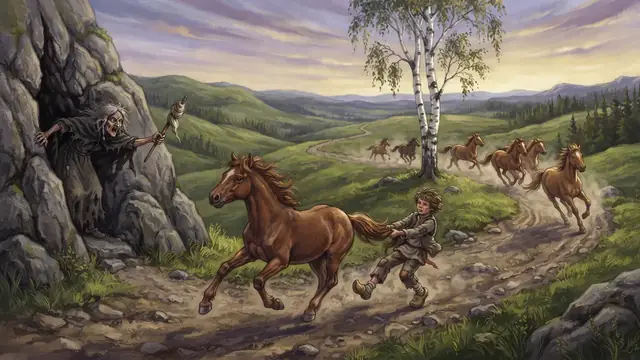 New
Boots gallops with the foals
3D game: gallop along three lanes collecting flasks of wine and dodging rocks, with a limit of mistakes and limited time.
Play ▶
New
The master's hammer
3D game: strike the steel purse on the anvil at the right rhythm, with a limit of mistakes and limited time.
Play ▶
Other realms
Myths & Gods
105 stories · Enter →
Sagas & Kings
113 stories · Enter →
Viking Age
127 stories · Enter →
Get the next stories
New myths, sagas and tales arrive every week, always with the source and the difference between history and legend.
I want to subscribe