 MMXXVI
Marjatta: the shepherdess of the berry and the boy who dethroned Väinämöinen
In the last rune of the Kalevala, the shepherdess Marjatta becomes pregnant from a berry, the son is born in a stable and Väinämöinen loses his place. See what the poem says and what is scholars' reading.
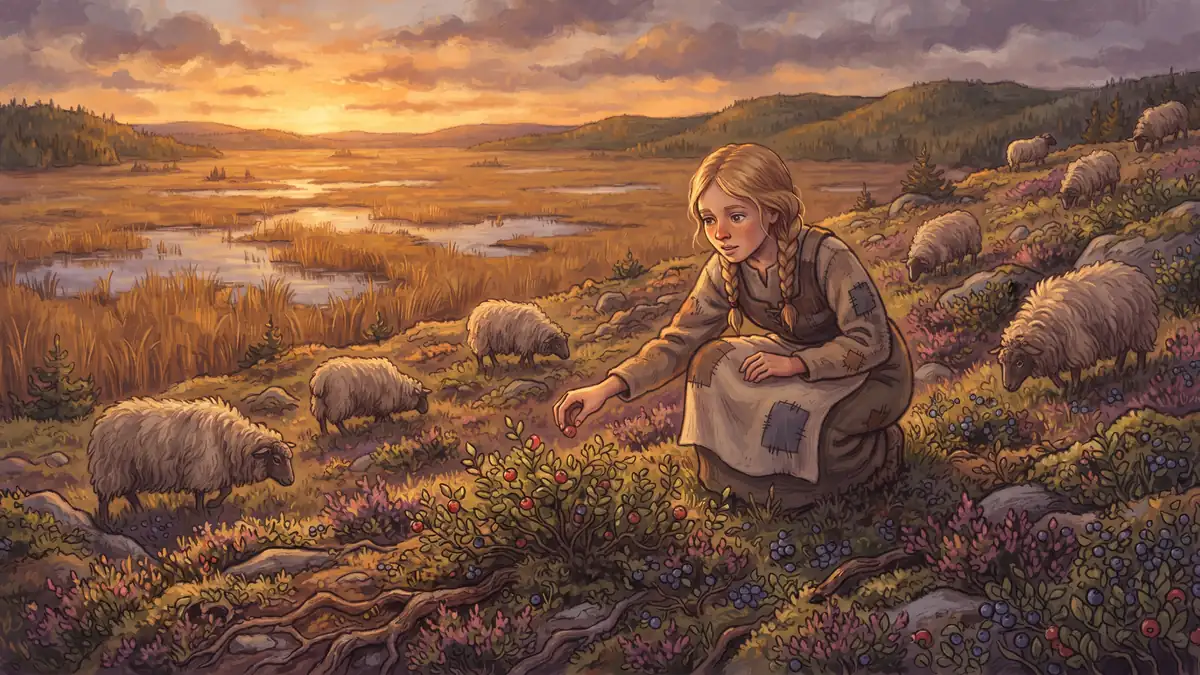
The Kalevala ends with a shepherdess. Rune 50 tells how Marjatta becomes pregnant and how her son changes the fate of the hero Väinämöinen. It is the last rune of the 1849 edition that the physician Elias Lönnrot put together from folk poems gathered in Finland and Karelia.
The berry
Marjatta lives in her father’s house in the north. One day, while tending the sheep, she picks a berry on the hillside. The berry rolls down her throat and settles in her breast, and Marjatta becomes pregnant. The text does not give her a lover. Scholars note that the name recalls the Finnish word marja, “berry”, and also Mary, which is an observation about the name, and the poem does not say it.
The stable
Her family rejects her. Marjatta asks for a place to bear the child, and the house of Ruotus denies her shelter. She gives birth in a stable in the forest, and the horse breathes warm vapor around her, which warms her during the birth.
The lost boy
After the birth, the boy disappears. Marjatta asks the moon and the stars, and only the sun answers: the boy is hidden among reeds in a swamp. She finds him and takes him home.
Väinämöinen and the boy
Väinämöinen, the old singer and sage, examines the boy and says he is worthless and should be left in the swamp to die. The boy is two weeks old and answers. He rebukes Väinämöinen for his own wrongs, such as the one that led to Aino’s death, and says he was never punished so harshly. After the speech, the priest Wirokannas, who had refused to baptize him before, baptizes the child and declares him king of Karelia. His mother named him Flower, and others call him Son of Sorrow.
The departure
Väinämöinen understands that his time has passed. He builds a copper boat and sails west, leaving behind his kantele and his songs. He promises to return when Finland needs him.
What is scholars’ reading
Many readers see in rune 50 the meeting of the pagan poetry of the Kalevala and Christianity: the mother, the birth in a stable, the baptism and the king who defeats the old sage. This is an interpretation. The poem names no Christian figures, and the one who ordered it was Lönnrot, who assembled the rune from verses of different origins.
In short
Marjatta eats a berry, becomes pregnant, gives birth in a stable and finds her son among reeds. The son contradicts Väinämöinen and is made king of Karelia, and the ancient hero leaves by boat. The sources we have for this rune are Lönnrot’s poem and the summaries that go with it.
To find the boy among the reeds before sunset, play The boy among the reeds.
Sources.
- Elias Lönnrot, Kalevala (1849 edition), rune 50 (in John Martin Crawford's English translation)
- Kalevalaseura (Kalevala Society), summary "What happens in the Kalevala"
- English Wikipedia, "Kalevala (synopses)", to check the order of events