 MMXXVI
Sæhrímnir: the boar the warriors eat every night in Valhalla, and that comes back whole
According to the Edda, the cook Andhrímnir boils the boar Sæhrímnir every day, and by evening it is whole again. See what Grímnismál and Gylfaginning say, and where scholars disagree.
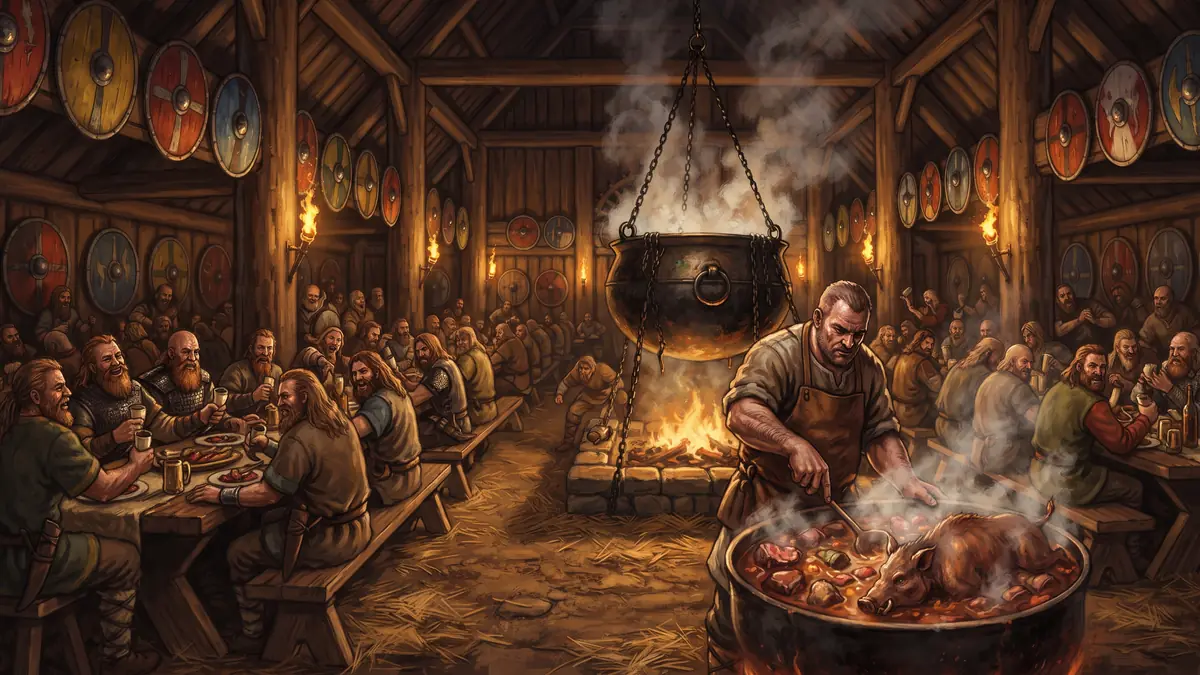
Valhalla is the hall where Odin gathers the warriors who died in battle, the einherjar. But what do they eat there? The Norse sources answer with a strange name: Sæhrímnir, an animal that is cooked every day and comes back whole every night.
The stanza in Grímnismál
In the poem Grímnismál, from the Poetic Edda, the speaker is Grímnir (Odin in disguise). In stanza 18 he says that Andhrímnir cooks Sæhrímnir in the cauldron Eldhrímnir. The next phrase, in Bellows’s translation, is “the best of food, but few men know” what the einherjar live on. Notice that the poem, in several translations, does not say what kind of animal Sæhrímnir is. Hollander’s translation calls it a boar. Thorpe, Bellows and Faulkes do not specify.
What Snorri adds
The one who says plainly that it is a boar is Gylfaginning, in the Prose Edda, chapter 38. There Gangleri (King Gylfi in disguise) asks how Odin feeds the dead in Valhalla. High answers: Sæhrímnir is a boar, cooked every day by Andhrímnir in Eldhrímnir, and whole again every evening. The meat is enough for everyone in the hall. And High adds that, when the wolf comes, “there will seem too few”, an allusion to Ragnarök. Then he quotes Grímnismál. The text also says that Odin gives his own food to his wolves and drinks only wine.
There is a third mention, in Skáldskaparmál, in the lists of names (Nafnaþulur): Sæhrímnir appears among the names of hogs.
Cook, cauldron and animal
The three names form a set. Andhrímnir is the cook. Eldhrímnir is the cauldron, whose name suggests “fire-sooty”. Sæhrímnir is the animal. The feast never ends, because the meat returns every night.
Where scholars disagree
The name is a problem. Wikipedia says the most common modern proposal is “sooty sea-beast”, perhaps tied to Old Norse seyðir, “cooking pit”. That contradicts the idea of a boar. The scholar Rudolf Simek points out that an animal that is reborn also appears in the myth of Thor’s goats, Tanngrisnir and Tanngnjóstr, and that this may point to sacrificial practices. He attributes the difference between Grímnismál and Gylfaginning to an embellishment by Snorri, influenced by the medieval image of paradise. Jacob Grimm, for his part, proposed a link with hero worship, because heroes received the flesh and blood of sacrifices while the gods received only the entrails and fat. Both remain hypotheses.
In short
Sæhrímnir is the feast that renews itself: an animal cooked every day by Andhrímnir in the cauldron Eldhrímnir, for the warriors of Valhalla. Grímnismál names it without giving the species, Gylfaginning calls it a boar, and the name itself points to something else. That shows how the same myth changed between the poem and Snorri.
To serve the supper every night, play The supper that returns whole.
Sources.
- English Wikipedia, article "Sæhrímnir", with the passages from Grímnismál (stanza 18), Gylfaginning (ch. 38) and Skáldskaparmál
- Poetic Edda, Grímnismál, Bellows translation: "the best of food, but few men know"
- Prose Edda, Gylfaginning, ch. 38, on how Odin feeds the dead in Valhalla