 MMXXVI
Reykjavík 871±2: the longhouse under the city and the ash that dates the settlement
In a basement in central Reykjavík, remains of a settlement-age hall lie under a layer of ash. See what the excavation found, how the date was worked out and what it does not prove.
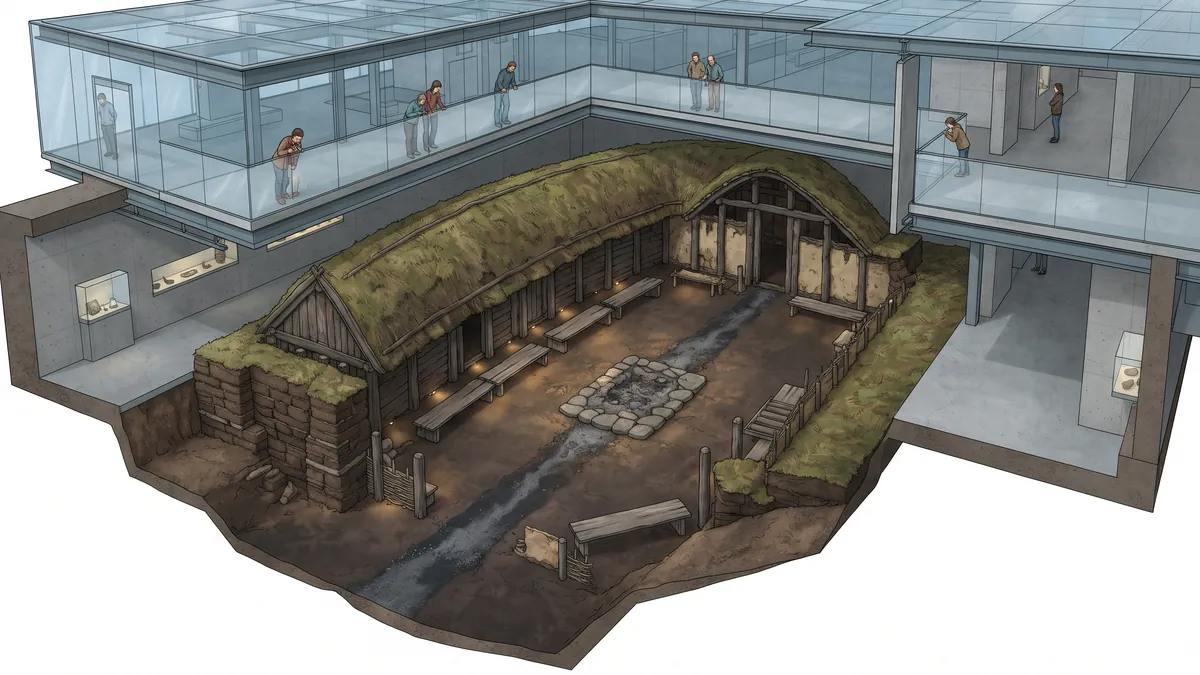
At Aðalstræti 16, in central Reykjavík, there is a hotel basement where you can walk around a turf hall from the settlement age. It is the exhibition called Reykjavik 871±2. The name is a date, and the date comes from a layer of ash, not from a text. This text gathers what was found, how it was dated and what that means about the first Icelanders.
The excavation
Preparatory trenches were dug in autumn 2000, and the Icelandic Institute of Archaeology began excavating in January 2001. The site is at the corner of Aðalstræti and Suðurgata, and the exhibition is now run by the Reykjavík City Museum.
What appeared
The remains are those of a hall from the settlement age, inhabited around 930 to 1000. The walls were of turf, with some stone at the base, and the roof was also turf, held up by two posts. In the middle was one of the largest hearths ever found in Iceland. The floor was trampled earth, and in the west there was a timber bench or platform, probably the householders’ sleeping area. North of the hall, fragments of a turf wall appeared, built before the layer of ash fell.
The ash that dates
A layer of volcanic ash, from an eruption in the Torfajökull area, about 400 kilometres to the east, covers the site. The layer was dated to 871, with a margin of two years either way, with the help of ice layers drilled from the Greenland ice sheet, where the same ash also fell. This is where the exhibition’s name comes from.
What the date means
The turf wall is older than the ash, which suggests that someone was already living there before 871 or near that date. The hall, on the other hand, is later, from about 930 to 1000. The Landnámabók, written in the twelfth century, says that the first settler, Ingólfr Arnarson, made his home on this spot. The finds are compatible with the texts and with the period in which they place the settlement, but archaeology cannot say the name of who lived there.
The exhibition
The hall was preserved in its original place, in a basement beneath a hotel. Visitors walk around it and see information, multimedia tables, a reconstruction window, touch screens, glass cabinets of finds and a children’s area with replicas of Viking Age toys and games.
In short
In Reykjavík, a turf hall from the settlement age was found under a layer of ash dated to 871, with a margin of two years. The oldest wall is older than the ash. The texts say Ingólfr made his home there, but the finds do not confirm the name.
Terms
Tephra is volcanic ash. Turf is earth with roots used to build walls and roofs. Landnámabók is the book of the settlers of Iceland.
What remains uncertain
The page consulted does not give the hall’s measurements. Archaeology does not identify the inhabitants. The link with Ingólfr is a reading of the Landnámabók, written centuries later, and not proof.
To sift the finds from the hall, play The sieve of finds.
Sources.
- English Wikipedia, article "The Settlement Exhibition", on the excavation at Aðalstræti 16 and the exhibition (Reykjavík City Museum)
- Landnámabók, the book of the settlers, in the passage on Ingólfr Arnarson