 MMXXVI
The Hunnestad Monument: the greatest Viking Age work in Scania, destroyed and rediscovered
The Hunnestad Monument, in Scania, was the largest and most famous of the Viking Age in the region. It was destroyed in the 18th century, but stones from it survive, and one turned up in a bridge in 2020. See what is known.
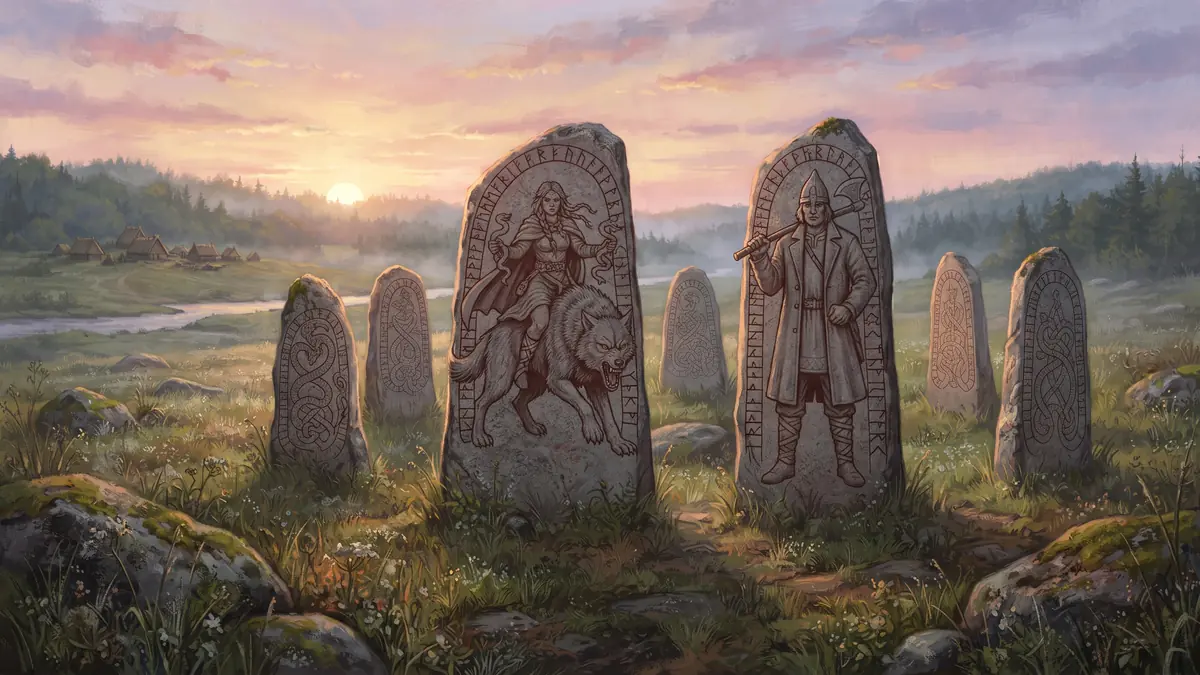
At Hunnestad, northwest of Ystad, in Scania, stood the largest and most famous Viking Age monument of the region, then part of Denmark. In Denmark, only the Jelling stones were comparable. The group has the designation DR 282–286, from Danmarks Runeindskrifter.
What Ole Worm saw
The antiquary Ole Worm (1588–1654) recorded the monument when it still had eight stones: five with images, two of them also with a runic inscription. Worm’s illustrations, published in Danicorum Monumentorum (1643), are the main evidence for the lost stones.
The destruction
The monument was destroyed at the end of the 18th century by Eric Ruuth of Marsvinsholm, probably between 1782 and 1786, in a time of estate modernisation. In the 18th century, all the stones were moved or destroyed. Three were recovered in the 19th century and are in the Historical Museum at Lund University. On 16 December 2020, during excavations for a sewage line in Ystad municipality, DR 285 was found, which had been reused in a bridge over the Hunnestad stream, with the image side up.
The runestones
DR 282 was raised by Ásbjörn and Tumi in memory of Tumi’s two brothers, Hróir and Leikfrøðr, sons of Gunni Hand. The image shows a large man in a long coat and pointed helmet, with an axe on his right shoulder, possibly a member of the Varangian Guard.
DR 283 was raised by Ásbjörn after the death of Tumi, son of Gunni Hand, and carries a cross.
The image stones
DR 284 shows a huge animal, probably a wolf, ridden by a woman holding two snakes. The page says she “appears to be” Hyrrokkin, the giantess who rode a wolf and helped push Balder’s ship into the sea at his funeral, which would suit a funerary monument. This stone survives in good condition.
DR 285, the 2020 find, shows the animal alone. DR 286, lost, is known only from Worm’s drawing, which shows it beside a man’s mask.
Doubts
The identification with Hyrrokkin is tentative, the Varangian Guard link is only “possible” and the date of destruction is “probably” 1782–1786. The image stones carry no inscription, so their meaning rests on iconography and comparison. The wolf’s mane and ears resemble those on the Tullstorp stone (DR 271) and the Lund 1 stone (DR 314), and the poem Helgakviða Hjörvarðssonar describes a troll-woman riding a wolf with serpent reins.
In short
The Hunnestad Monument gathered eight stones, was destroyed in the 18th century and survives in part: three stones in Lund and DR 285, found in a bridge in 2020. Of the eight, five had images, two of them also with runes, among them the woman on the wolf with snakes.
To find the pairs of images on the monument, play The pairs of images.
Sources.
- English Wikipedia, article "Hunnestad Monument", with the passages on Ole Worm, the destruction, stones DR 282–286 and the 2020 rediscovery