 MMXXVI
Bergþóra at Bergþórshvoll: "I promised Njáll we would share the same fate" and the house that was not left
In the burning scene of Njáls saga, Flosi offers a way out to the women, children and servants. Bergþóra answers that she promised Njáll, when young, that they would share the same fate. See the passage as Dasent translates it and what it leaves said.
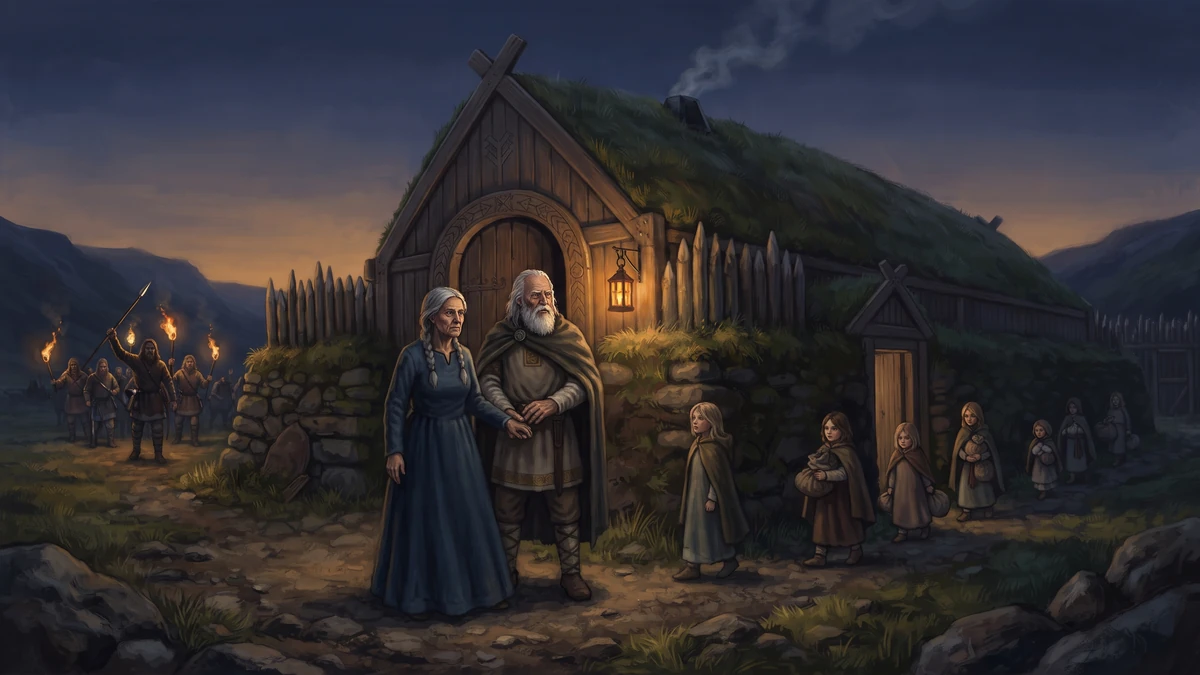
Njáls saga has one of the best-known endings in Norse literature: the burning of Bergþórshvoll, a farm whose name means “Bergþóra’s knoll”. In the middle of the scene there is a line of hers that tradition kept.
Flosi’s offer
According to Dasent’s translation, in the chapter called “Njal’s Burning”, Flosi and his men surround the house. Before the fire takes hold, Flosi says: “But I will allow the women and children and house-carles to go out.”
Bergþóra’s reply
Bergþóra answers, in Dasent’s translation: “I was given away to Njal young, and I have promised him this, that we would both share the same fate.” She stays. Njáll, in the same scene, says: “We will go to our bed and lay us down; I have long been eager for rest.” He also tells his steward that he means not to stir “an inch hence, whether reek or burning smart me”, and the steward spreads an ox hide over the two, as Njáll instructed.
Who leaves
The scene is not only Bergþóra’s. Njáll says to Thorhalla, Asgrímr’s daughter, who leaves the house: “Go, and good go with thee, for thou art a brave woman.” The saga shows that the doors opened for those Flosi was willing to let out and that those who stayed chose to stay.
What the scene leaves said
Bergþóra’s line does not explain the outcome: she accepts what her husband decided, and the saga does not say whether this is fidelity, pride or a way of staying with what was left of the family. What the scene shows is a promise of youth kept in full, said in few words, without a speech.
In short
Bergþóra, in the burning, neither fights nor begs. She chooses, and the saga records her in that choice. The game on this page is about a household task, not about the burning, because the scene asks for respect, not a scoreboard.
For a calm rhythmic moment in Bergþóra’s household, play Bergþóra’s churn.
Sources.
- The Story of Burnt Njal, English translation by George Webbe Dasent (1861), in the Sacred Texts edition, chapter "Njal's Burning"