 MMXXVI
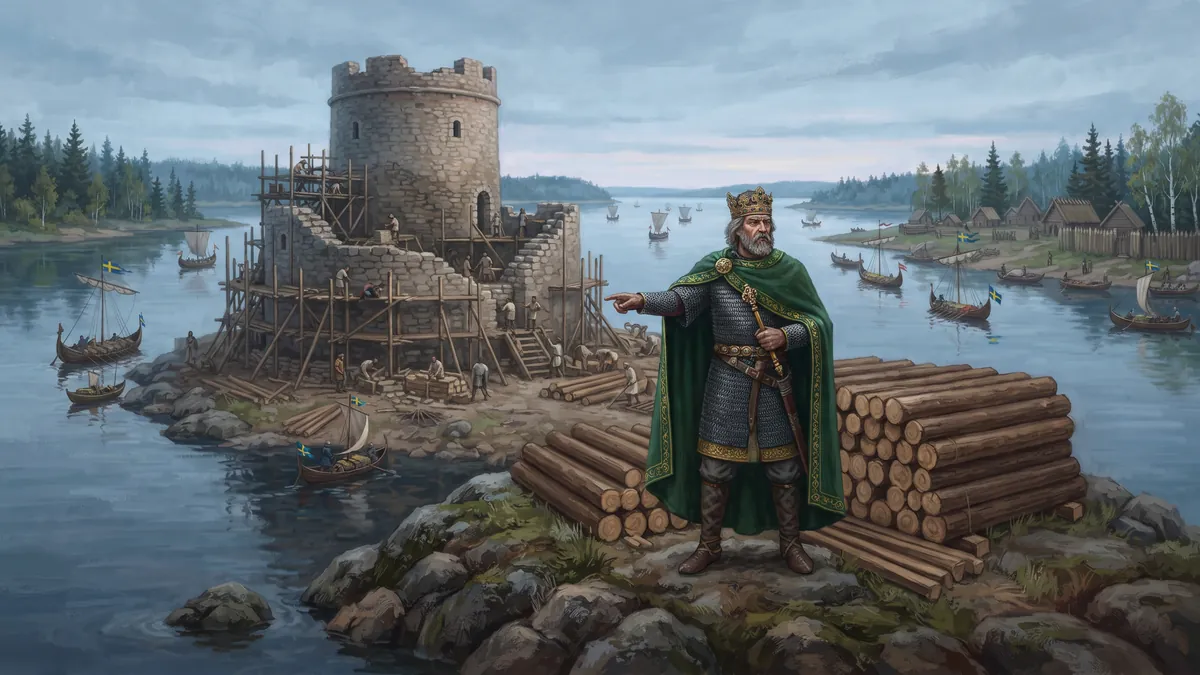
Birger Jarl: the Swedish regent who, by tradition, founded Stockholm around 1250
Jarl from 1248, Birger ruled Sweden in the name of his son Valdemar until he died in 1266. The founding of Stockholm is tradition: the first mention is two letters of 1252.
Birger Jarl, also called Birger Magnusson, was a Swedish statesman, regent and jarl of the House of Bjälbo. According to the sources, he was born around 1210, probably in Östergötland, and died on 21 October 1266 at Jälbolung in Västergötland. The birth date is uncertain: remains examined in 2002 suggest he was about 50 at death, which points to 1216.
Family and power
His father was Magnus Minnesköld and his mother Ingrid Ylva. In the mid-1230s he married Ingeborg Eriksdotter, sister of King Erik Eriksson, which gave him a power base. Among their children were Valdemar, the future king, Magnus Ladulås and Rikissa, who became queen of Norway. Birger consolidated his power over some fifteen years and received the title of jarl from King Erik in 1248.
The fight against the Folkungs
In 1247 royal troops defeated the Folkung rebels at the battle of Sparrsätra, and the pretender Holmger Knutsson was captured the next year and beheaded. Birger sided with the Church after the legate William of Modena urged reform. In 1249 the Treaty of Lödöse ended decades of hostility with Norway and arranged Rikissa’s marriage to Haakon Haakonsson the Young. When Erik died in 1250, Valdemar was elected king, and Birger ruled as regent until his death.
The crusade in Finland
Birger led the Second Swedish Crusade to Finland. Erik’s Chronicle says he defeated the pagan Tavastians and forced them to convert. The date is disputed: the traditional one is 1249–1250, but many scholars now prefer 1238–1239. The story that he won a battle on the Neva in 1240 comes from late sources and does not appear in Swedish records.
Stockholm
By tradition, Birger is credited with founding Stockholm, around 1250. What exists is two carefully dated letters of 1252, the first known mention of the city. They do not describe the site. Suggested motives include limiting the local magnates by controlling access to Lake Mälaren, defending the surrounding lands and creating a trade base for German merchants. The source calls his direct role speculative.
Afterwards
Birger was buried at Varnhem Abbey, with his son Erik and his second wife Mechtilde. The grave was forgotten after a fire in the 16th century and rediscovered in the 1920s. A statue of him by Bengt Erland Fogelberg (1854) stands in Stockholm.
To stack the logs of the wall on the island and raise the city, play The logs of Stockholm.
Sources.
- Reference work in English, article "Birger Jarl"