 MMXXVI
Dumbarton, 870: the four-month siege of Alt Clut's rock by Amlaíb and Ímar, the well that ran dry and the 200 ships back to Dublin
In 870, the Viking kings Amlaíb and Ímar besieged for four months the fortress of Dumbarton, capital of the Brittonic kingdom of Alt Clut. The defenders surrendered when the well ran dry, and a fleet of 200 ships took captives to Dublin.
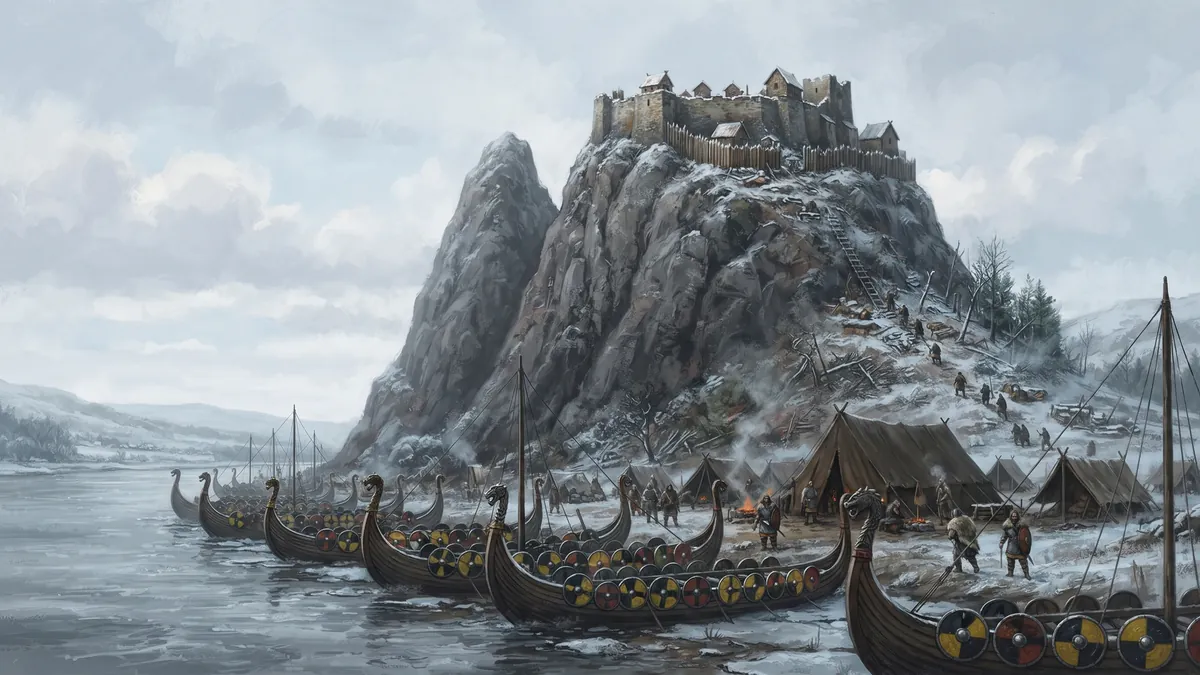
Dumbarton Rock is a volcanic rock rising beside the River Clyde in Scotland. In the Middle Ages it was the capital of the Brittonic kingdom of Alt Clut. In 870, the Vikings Amlaíb, king of Dublin, also called Olaf, and Ímar, the same Ivar the Boneless who had conquered York in 866, besieged it. The king of Alt Clut was Arthgal ap Dyfnwal.
Four months of siege
The siege lasted four months, a length of time that historians call unprecedented in the history of Viking warfare in the British Isles. The fortress was strongly placed, at the junction of the rivers Clyde and Leven, and the Clyde gave access to the interior of the central lowlands. The attackers sought plunder and may have wanted to end Alt Clut’s sea power.
The well that ran dry
The defenders surrendered when the well ran dry. The historian Macquarrie suggests that the attackers may have taken the lower part of the rock, where the well was, and forced the defenders to the summit. Welsh chronicles speak of the destruction of the rock’s summit.
200 ships to Dublin
The Annals of Ulster record that a fleet of 200 ships returned to Dublin with captives, among them Britons and people taken in earlier raids, such as Picts, Scots and Northumbrians. Dublin was a great slave market, and many of the captives were probably sold. Whether Arthgal was among them is not known.
After the siege
The centre of power moved to Govan, about 19 kilometres upriver, and the kingdom came to be called Strathclyde. The rock may have served as a Viking outpost for a time. Strathclyde grew weaker and gradually fell under the influence of Alba. Arthgal was murdered in 872, possibly on the advice of Constantine I of Scotland, and his son Rhun ab Arthgal succeeded him, probably as a subordinate of Constantine.
To defend the rock against the attacks of Amlaíb and Ímar, play The rock of Alt Clut.
Sources.
- Annals of Ulster, entry on the siege of Alt Clut and the fleet of 200 ships returning to Dublin (870–871)
- Welsh chronicles on the destruction of the rock; studies of the kingdom of Alt Clut and Strathclyde (among them Macquarrie)