 MMXXVI
Eldgjá: the fire fissure of 939 in Iceland, 18.6 km³ of lava, the ice that kept the date and the poem that may remember it
The Eldgjá eruption, in the Katla volcanic system, began in 939 and lasted into 940. It covered 780 km² in lava and left ash over about 20,000 km², about seventy years after settlement began.
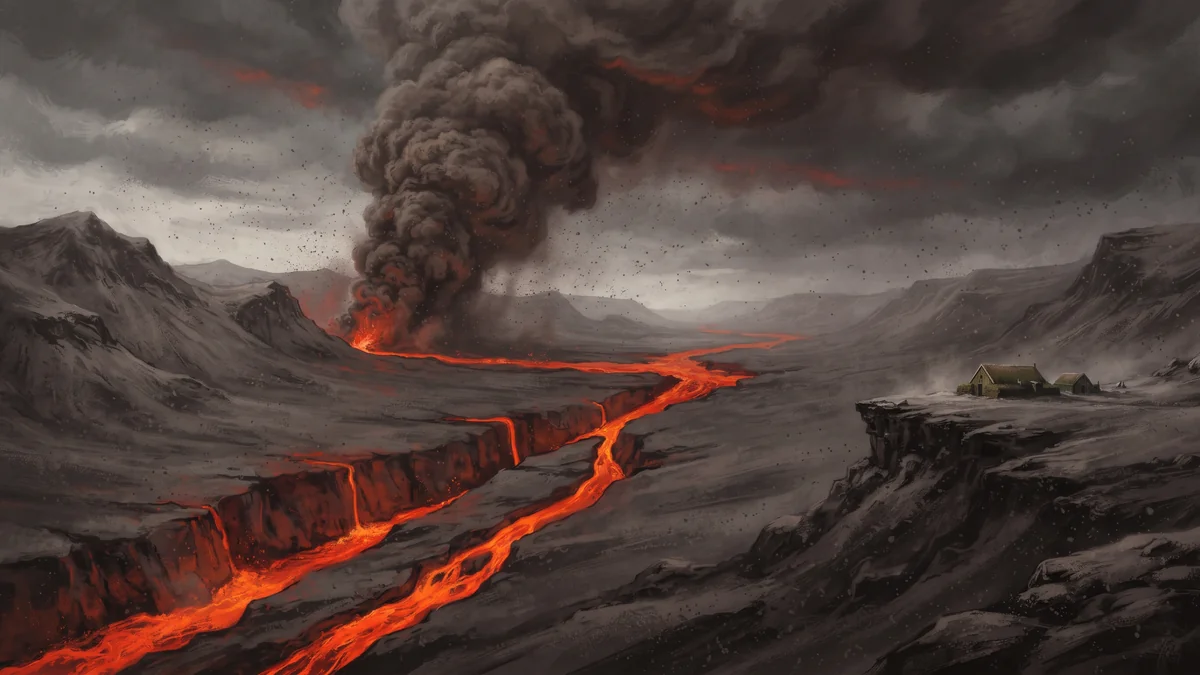
Eldgjá, “fire gorge”, is the longest volcanic fissure in Iceland. It lies in the Katla volcanic system, and the eruption that opened it began around 939 and ran into 940. Early research suggested years between 934 and 938, but a 2015 ice-core study fixed the start in 939. A 2024 study identifies a cluster of ash layers between 936 and 943.
The size
The fissure chain is about 40 km long. The central canyon measures roughly 8.5 km in length, 600 m in width and 150 m in depth. The eruption involved a 75 km stretch of the Katla system and had about 16 episodes, with plumes up to 15 km high. The lava covered about 780 km² and totalled 18.6 km³, the largest lava eruption in recent history. The ash covered about 20,000 km² of Iceland.
The sulphur and the climate
One estimate gives about 232 million tonnes of sulphur dioxide, more than Tambora, in 1815, and Huaynaputina, in 1600. Another study, from 2024, suggests it may have been less than Laki, in 1783. Tree rings point to a cooling of 0.7 to 1.5 °C in 940 in Alaska, the Canadian Rockies, Central Asia, Central Europe and Scandinavia. There were severe winters in Europe and China between 939 and 942, and food crises in several places, but part of these effects is only tentatively tied to the eruption.
What Iceland suffered
Two farms at Álftaver were abandoned because of the lava, and a 12th-century source calls the area a wasteland. The island already had settlers. Researchers think the impact was smaller than Laki’s, because the population was probably more resilient.
Chronicles and a poem
Darkened skies were recorded in Germany, Ireland, Italy and the Iberian Peninsula, but linking those reports to Eldgjá is controversial. Iceland left no written record from the time. Some scholars think the Völuspá may remember this eruption or another one at Katla.
To collect the ash on the plain without stepping into the lava fissures, play Escape from the fire fissure.
Sources.
- Volcanology studies and ice-core evidence on the Eldgjá eruption, dated by studies from 2015 to 2024
- Landnámabók, written about 200 years later, with scattered accounts of the affected region
- Studies by Oppenheimer and others (2018) on the climatic and historical effects of the eruption