The burning of Njál: the Icelandic saga's revenge in which a whole house was set on fire
In Njáls saga, the chieftain Flosi surrounds the farm of Bergþórshvoll and sets it alight. Njál and his wife refuse to leave, and only one man, Kári, escapes the flames.
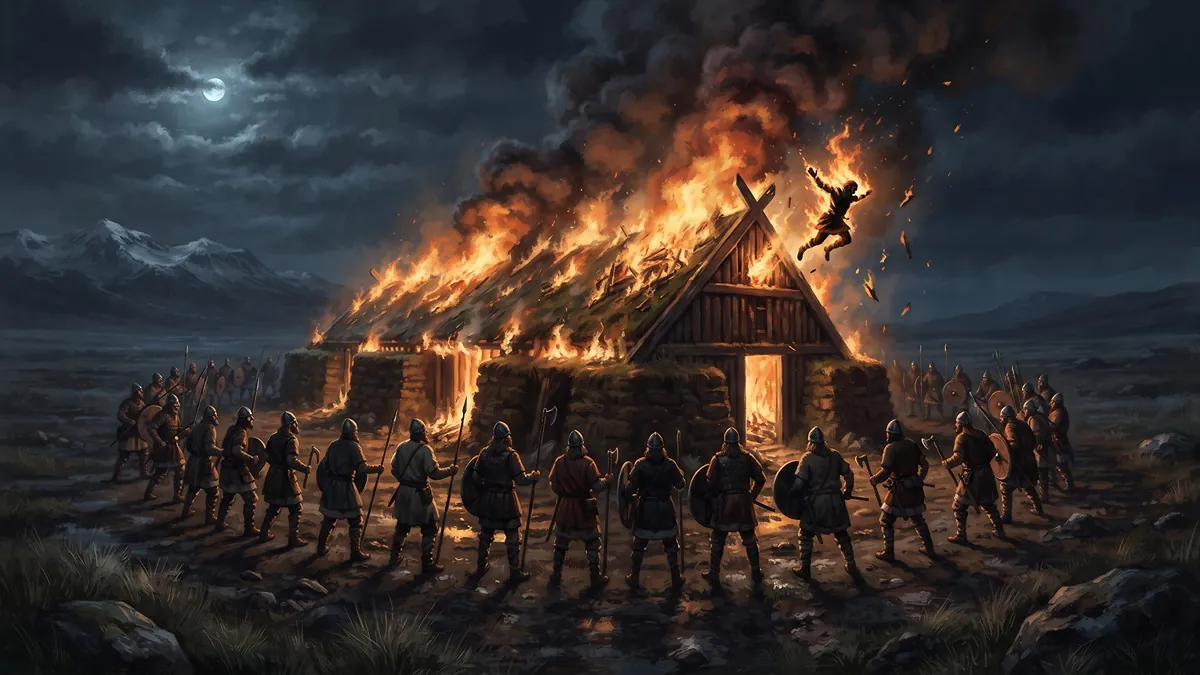
Njáls saga is considered one of the greatest Icelandic sagas, and its central scene is a fire: a chieftain surrounds his enemy’s farm, sets the house alight and waits. Inside is a wise and peaceful man, Njál, with his wife and his family. The story is a work of literature, written in the late 13th century, but the events it tells take place around the year 1000, when Iceland was converting to Christianity.
How it came to fire
The saga follows a chain of killings that will not stop. Njál Thorgeirsson is a respected lawyer and counsellor, and for years he tries to keep the peace. But his sons kill Höskuld, Njál’s foster-son and a man beloved by all. Flosi, uncle of Höskuld’s widow, gathers a hundred men to avenge him, and Njál cannot calm him with money.
One night, Flosi arrives at Bergþórshvoll, Njál’s farm, and piles fire in front of the doors. Those inside try to put it out with whey and water, but the flames grow.
The refusals
Flosi sends word that the women, the children and the servants may leave. Njál asks whether he would accept compensation for his sons. Flosi refuses. He then offers Njál, and afterwards his wife, Bergthora, the chance to leave the house.
Njál says no: he is too old to avenge his sons and does not want to live in shame. Bergthora answers that she was given to Njál while young and promised to share his fate. Their grandson, Thord, son of Kári, refuses the offer to be carried outside, telling his grandmother that she had promised him to stay.
Njál and Bergthora lie down in the bed with the boy between them. A servant spreads an ox-hide over them. They make the sign of the cross and commend their souls to God. These are the last words the men outside hear from them.
What happened to Kári
Inside the house, Njál’s sons fight, hurling out the brands and spears that fall upon them. When the beams begin to give way, Kári, Njál’s son-in-law, runs along a burning beam, hurls a blazing bench at the attackers, with his clothes and hair on fire, leaps from the roof and throws himself into a stream to put out the flames. According to the saga, he then hides in a hollow in the ground that came to be called Kári’s Hollow. Skarphedin, Njál’s eldest son, stays behind, and the saga tells of his death in the next chapter.
Literature and history
Historians debate what is real behind the saga. Njál seems to have existed, and the Iceland of that time did know feuds between families and house burnings. The author of the saga lived in a century in which such fires were also part of the struggles between chieftains, such as the one at Flugumýri in 1253, described in the Sturlunga saga, and some scholars see in that setting an inspiration for the scene.
The saga mixes the Christian conversions of Njál and his family with old notions of honor and revenge. Njál’s line, that God will not let them burn in this life or the next, is one of the passages where the two traditions meet.
To escape the fire like Kári, play Kári’s escape.
Sources.
- *Brennu-Njáls saga*, Njál's Saga, the Burnt Njál (late 13th century)
- *Sturlunga saga*, the chronicle of the struggles among Icelandic chieftains (13th century)