The Lagarfljót worm: the Icelandic lake monster that was filmed in 2012
For centuries Icelanders have told of a golden worm living at the bottom of a lake in the east. In 2012, a public-television video reignited the debate, and a panel voted 7 to 6 that it was authentic.
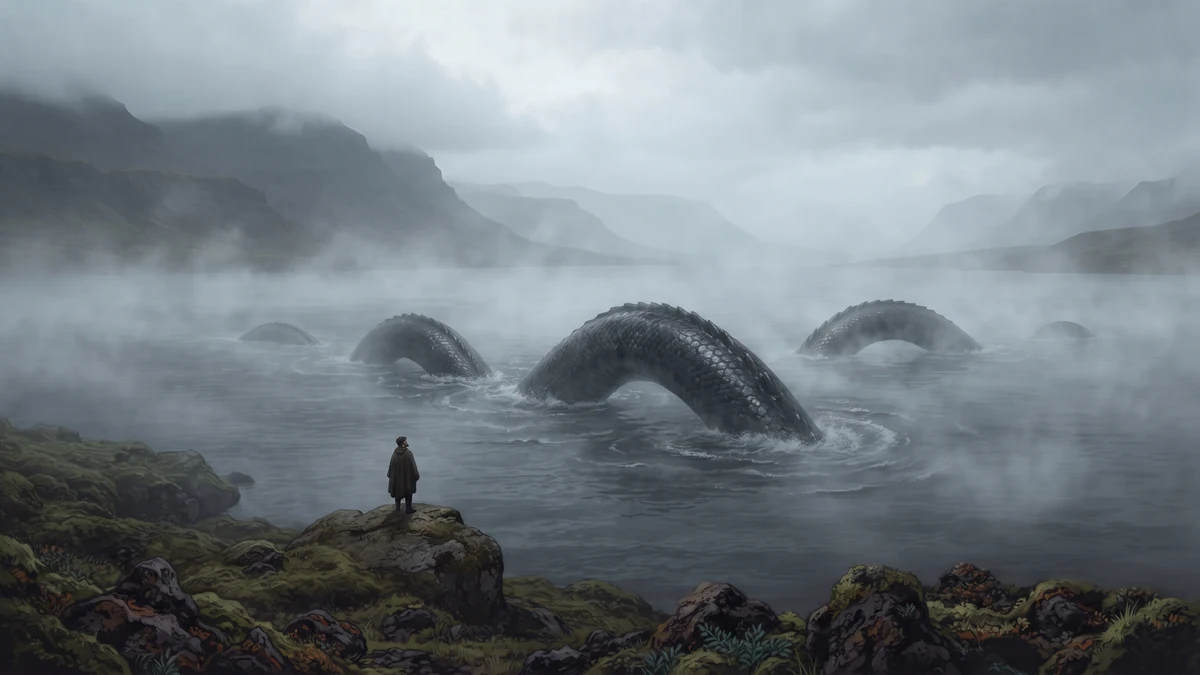
The Lagarfljót is a long, narrow lake in eastern Iceland, near Egilsstaðir. Its waters are murky, a milky grey carried by glacial melt, and it is in them that, according to a centuries-old tradition, a serpent lives.
How it is described
The Lagarfljótsormur, the worm of the Lagarfljót, is described as a creature of about twelve metres, or forty feet, with several humps that show above the water. That is why the animal is sometimes seen as a row of moving islets.
The oldest story
The earliest possible mention is from 1345, in the Annals of Skálholt, which speak of a marvellous thing with humps or islands in the lake. That passage does not say it was a serpent. A map of 1585 notes that the monster appears before memorable events.
The tale of the girl and the ring
According to folklore, a girl was given a gold ring by her mother and, so that the gold would grow, was advised to put it under a heath worm. The girl put the worm in a box with the ring. The worm grew so much that the box could no longer hold it. Frightened, the girl threw the box and the worm into the lake, along with the gold. The creature kept growing in the water and became a monster threatening the region.
Two Finnish sorcerers, called Finnar, tied the worm’s head and tail to the bottom of the lake. When the monster stirs, it is said, something bad is near: harsh winters, bad harvests.
The sightings
In 1998, a teacher and his pupils saw something in the water at the school in Hallormsstaður. In February 2012, a farmer called Hjörtur Kjerúlf filmed a long object moving in the river, and the video was broadcast by RÚV, Iceland’s public television. A panel of experts, convened to assess the recording, voted seven to six that the video was authentic, in the sense that it was not a hoax. Critics said the matter was mostly tourism marketing.
Explanations
Scientists propose natural causes. Methane bubbles from the lake bed, logs and other debris dragged by the current, and light refraction over the water can create undulating shapes and make them look like a long body.
What remains
Whatever people saw, the worm is a local symbol, and the more interesting question may be another: why a murky, long, cold lake produces so many humps in so many stories.
To make the creature grow and fill the lake with gold, play The Lagarfljót worm.
Sources.
- Icelandic folklore on the Lagarfljótsormur
- Skálholts Annáll (1345) and later accounts
- RÚV reports and encyclopedia entries on the Lagarfljót