Gísli Súrsson: the saga of the outlaw who ran for years through the fjords of Iceland, between dreams and ambushes
Gísli's saga tells of a revenge that makes him an outlaw, hunted through the western fjords of Iceland. See what the saga narrates, how it is read and where history and literature mix.
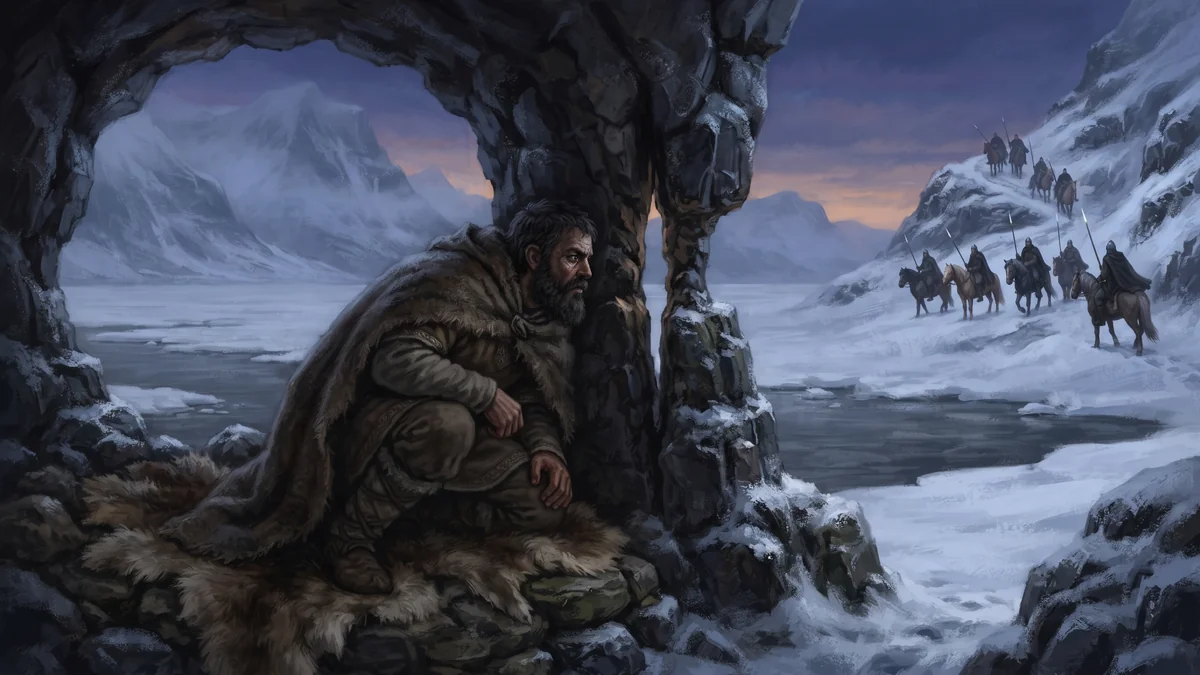
Among the sagas of the Icelanders, that of Gísli Súrsson has a reputation as one of the darkest. It is the story of a man from a respected family whose life falls apart because of an oath left unfinished, a death and a revenge. The saga was written in the 13th century, and the plot is set in the 10th, in the western fjords of Iceland.
The oath that was not sworn
According to the saga, Gísli, his brother Þorkell, his brother-in-law Þorgrímr and his friend Vésteinn think of making a pact of blood brotherhood. The rite consisted of letting blood run under a strip of turf lifted from the ground. The pact is left incomplete when one of those present refuses to include another, and the break is told as an ill omen.
Soon after, Vésteinn is killed, and suspicion falls on people within the family. The saga tells that Gísli, to avenge him, kills Þorgrímr during the night, and that makes him a killer. Icelandic law allowed compensation, but the victim belonged to the family of Gísli’s sister, and the case escalated.
Outlawed
A sentence of outlawry, in Icelandic law, stripped the condemned of the law’s protection, and anyone could kill him without paying a fine. The saga says Gísli lived like this for about thirteen years, moving from hiding place to hiding place. He relied on the help of his wife, Auðr, and a few friends, and was pursued by Þorgrímr’s kin, who hired bounty hunters.
One of the most remembered episodes involves Auðr. When the hunter Eyjólfr tries to buy her with silver to reveal her husband’s whereabouts, she strikes him with the purse of coins. The scene appears in the saga as an example of loyalty.
The dreams
What sets the Gísla saga apart is the role of dreams. Gísli dreams of two women, one who protects him and another who foretells misfortune, and in scholarship they are often read as guardian spirits, an idea common in the sagas. The verses he recites, narrating the dreams, are the most admired part of the text.
The end and the modern reading
At the end of the saga, Gísli is cornered on a cliff, at Geirþjófsfjörður, and fights until he dies, reciting verses. The scene has been widely read as the portrait of a tragic hero.
Researchers debate how much of the saga is history and how much is literature. Two manuscripts preserve quite different versions, which shows that the text changed as it was copied. No records outside the saga confirm the events, and it is prudent to read it as a work of art based on oral traditions.
What it teaches clearly is how the logic of honour worked, in which a broken oath and an avenged death could destroy a family.
To help Gísli push the stones and close the entrance to his hideout, play Gísli’s hideout.
Sources.
- Unknown author, *The Saga of Gísli Súrsson* (*Gísla saga Súrssonar*, Icelandic text of the 13th century, in two versions)
- Studies of the sagas of the Icelanders, blood feud and the law of medieval Iceland