The dísir: female spirits, the sacrifice at Uppsala and the fair that still exists
The dísir are spirits or goddesses tied to fate, and the dísablót was the sacrifice in their honour. See what the sources say, from the Edda to the sagas, how the Uppsala Disting survived and what scholars still cannot decide.
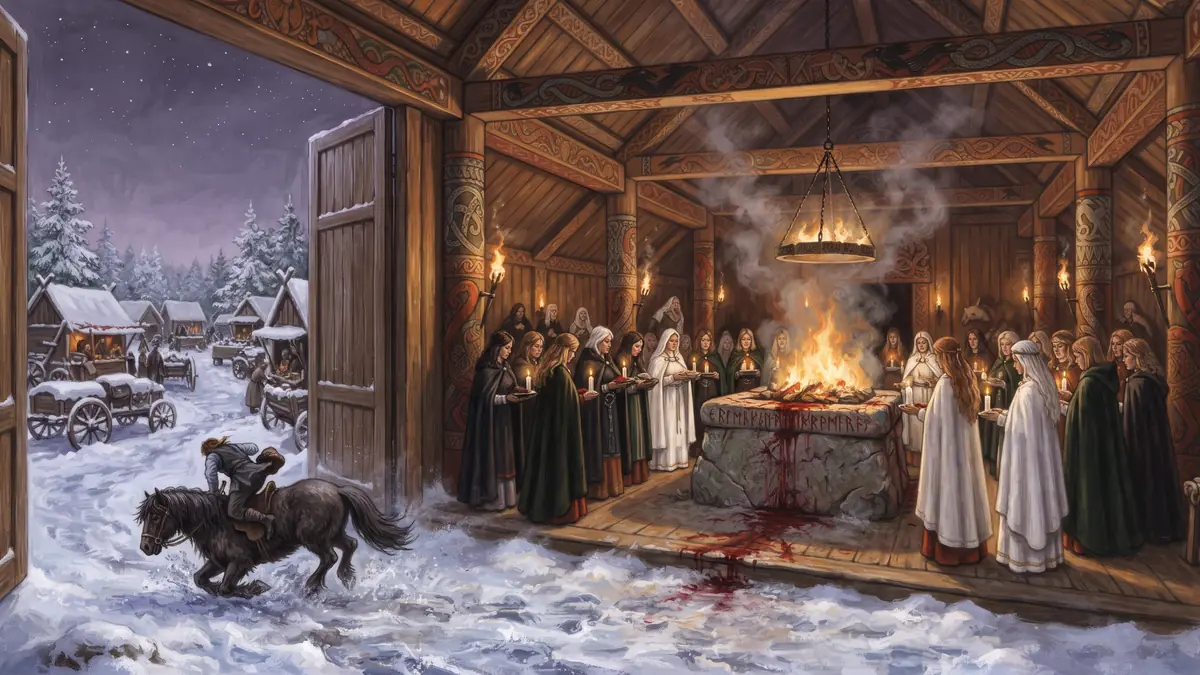
The word dís, in Old Norse, means “lady”, and the plural is dísir. According to the source consulted, it can denote a goddess, a ghost or a spirit tied to fate, benevolent or hostile. Researchers suggest the basic meaning is “goddess”, but the etymology, tied to an Indo-European root of “to suck, suckle”, is only a proposal.
Where they appear
In the Guðrúnarkviða I, the valkyries are called “Herjan’s dísir”, that is, Odin’s. In the Atlamál, stanza 28 says the dísir are dead women, and Glaumvör’s dream about them survives only in part. In the Hamðismál, Sörli blames the dísir for having led him to kill Erpr, and in the Grímnismál, Odin says the wrath of the dísir killed a king: in both, the term stands in for norns. In the Reginsmál, an unmarried woman is insulted as a “dís ulfhuguð”, and the dísir accompany a warrior to see him die in battle, like valkyries. In the Krákumál, Ragnarr says “the dísir invite me home”.
The First Merseburg Charm, the only pagan German text of the kind, speaks of the Idisi, women who work battle magic. Snorri never mentions the dísir in the Prose Edda, but lists Vanadís, a name of Freyja, and öndurdís, a name of Skaði. In the Þiðranda þáttr, dísir in black kill Þiðrandi, and those in white fail to save him. In the Hervarar saga, a king’s daughter holds an autumn dísablót, and Helga hangs herself in the dísarsalr.
The dísablót
In western Scandinavia, it seems to have been a private family observance. At Gamla Uppsala, according to Snorri’s Heimskringla, it took place in the month of Gói, between late February and early March, with an assembly and a fair that lasted about a week. The purpose was peace and the king’s victory. Snorri visited Sweden in 1219 and says the chief sacrifice in Svíþjóð was at Uppsala.
In the Ynglinga saga, King Aðils dies at a dísablót: his horse stumbles while he rides around the dísarsalr, the goddess’s hall, and he dies from the fall. The article suggests it may have been a ritual death, but that is only a possibility. The Víga-Glúms saga speaks of a dísablót at the start of winter, among family and friends, and the Egils saga is also cited.
Today’s Disting
After Christianisation, the assembly and fair moved to Candlemas, on 2 February. The name Dísaþing, now Disting, survived, and the Uppsala fair still takes place on the first Tuesday of February. It may be one of the oldest in Sweden.
Dísir, norns, valkyries and fylgjur
Some scholars think dísir may be the original term and “valkyrie” a kenning for it. In two poems, dísir and norns blur together. In the Þiðranda þáttr, the character Thorhall identifies the dísir as fylgjur, protective family spirits.
What remains uncertain
It is not known whether the dísir were fertility goddesses, clan guardians, war figures or spirits of the dead. Rudolf Simek sees them as varied manifestations of female goddesses. The dísarsalr is also poorly understood, as is the purpose of the Uppsala sacrifice. The Hervarar saga suggests the rite was performed by women, and the Ynglinga saga, that the king was the priest. And the article records that Gabriel Turville-Petre associated it with the Anglo-Saxon modranect, the “mothers’ night”, without saying whether this is accepted.
To repeat a sequence of lights that grows ever longer, without a mistake, play The dísir’s lights.
Sources.
- Wikipedia, "Dís" (meaning, attestations in the Poetic Edda, Merseburg Charm, sagas, relation to valkyries, norns and fylgjur)
- Wikipedia, "Dísablót" (Uppsala, Heimskringla, Ynglinga saga, Hervarar saga, Disting)
- Wikipedia, "Disting" (the Uppsala fair)