Finfolk: the sea sorcerers of Orkney, the silver coin and the chalk cross
In Orkney, folklore speaks of the Finfolk, sorcerers who change shape, live in the sea and abduct people in spring and summer. See what three sources say, what they cite and what remains unanswered.
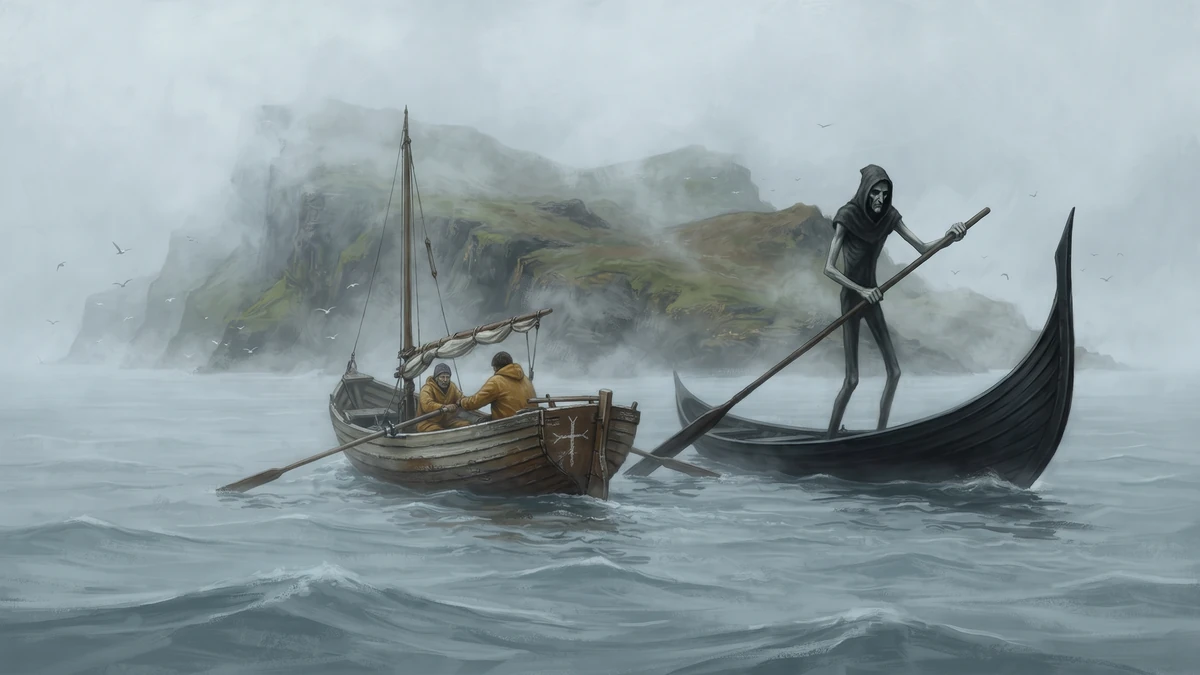
The Finfolk are beings of the folklore of Orkney, in Scotland, described as sea sorcerers who change shape. This piece uses three sources, an entry of an encyclopaedia in English, a text from the blog Archaeology Orkney and a student essay, from January 2021, which was not peer reviewed and has inconsistencies in its citations. For that reason, what comes only from the essay is marked as such.
Who they are
According to the first source, the Finman is tall and thin and rows from Norway to Orkney in seven strokes. The Finwife begins as a mermaid who seeks a human husband. The Finfolk spend the winter in Finfolkaheem, their home at the bottom of the sea, with crystal halls and seaweed gardens. In spring and summer, they go ashore to look for captives.
Hildaland
There is also Hildaland, a hidden land, wrapped in fog. The sources do not say where it would be.
How to defend oneself
According to the sources, there were ways to escape. A silver coin would drive the Finfolk away, and a cross of chalk or tar made on the boat would protect it. They also say the Finfolk use invisible ships.
Where the ideas come from
Among the references cited in the sources are Ernest Marwick, from 1975, the Orkneyinga saga and the site Orkneyjar, by Towrie. The student essay cites Wallace, from 1684, and Brand, from 1701, who speak of “Finmen”, and leather boats. It also cites Westaway, from 2020, on historical foreigners, and Grydehøj, from 2013.
In brief
The Finman is tall and thin and crosses the sea by boat, while the Finwife begins as a mermaid. Their home is Finfolkaheem, with crystal halls and seaweed gardens, and there is also the hidden land of Hildaland. In spring and summer they go ashore to take captives. Against them, the sources cite the silver coin and the cross of chalk or tar. Each statement comes from one source or another, and none is proof that the stories have a historical basis.
Terms
Folklore is the body of stories and beliefs of a people. A shapeshifter is one who changes form. Finfolkaheem is the name of the Finfolk’s home in the sea. A captive is a person taken by force.
What remains uncertain
The location of Hildaland is not stated. The sources differ on whether the captured bride or groom goes to live in Finfolkaheem and on the tail of the Finwife. The origin of the stories is another open point. The essay says the Finmen probably were foreigners from Scandinavia, and that is an interpretation, not an established fact. The essay also was not reviewed and has citation errors, so it does not serve as support on its own. The role of Eynhallow, another island of Orkney, also remains unexplained in the sources.
To flip silver coins from a stack, as a defence against the Finfolk, play The Finfolk’s coins.
Sources.
- Wikipedia, "Finfolk" (description, Finfolkaheem, Hildaland, cited sources)
- Archaeology Orkney, blog text on the Finfolk (general description of the Finfolk)
- Francesca Meneghetti, student essay (January 2021) on the Finfolk, not peer reviewed and with citation inconsistencies (Wallace 1684, Brand 1701, Westaway 2020, Grydehøj 2013)