 MMXXVI
Gná and Hófvarpnir: Frigg's messenger, the horse that runs through the air and over the sea and the question of the Vanir that nobody can explain
In the Gylfaginning, Frigg sends Gná to other worlds on errands, and she rides Hófvarpnir, a horse that runs through the air and over the sea. The Vanir see her pass and ask what flies there. That is all that is known of her.
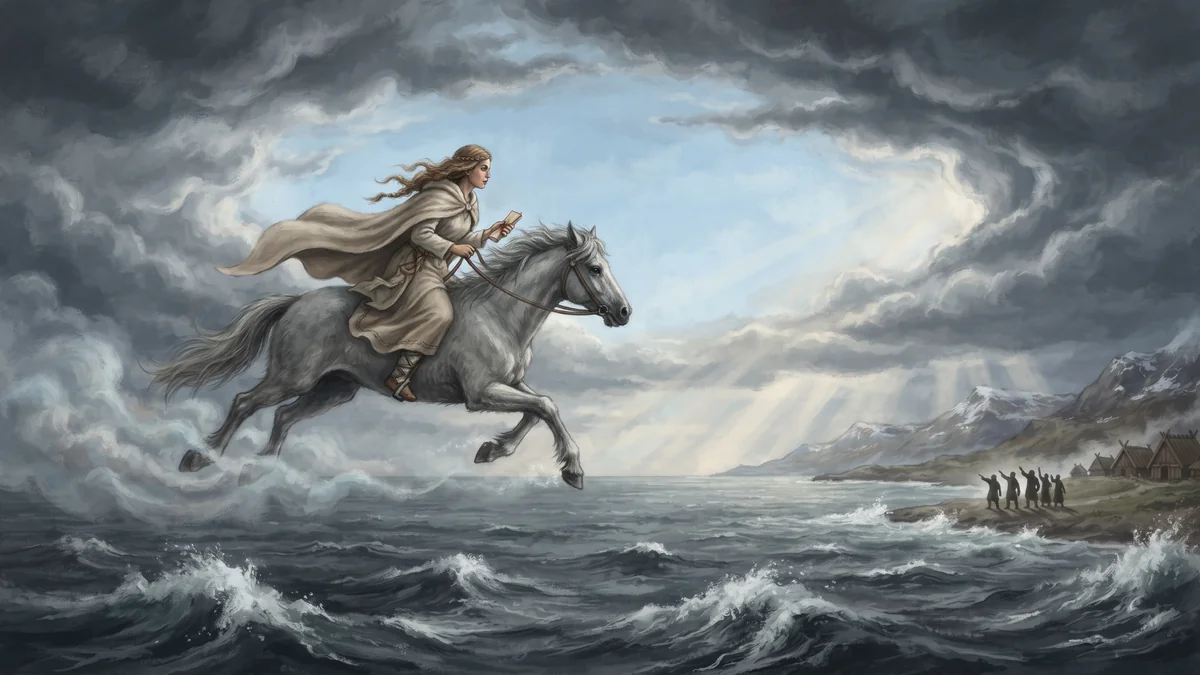
Gná is a goddess known only from a passage in the Gylfaginning, the part of Snorri Sturluson’s Prose Edda that describes the goddesses. There, Frigg sends her to other worlds to deal with matters, and Gná rides Hófvarpnir, a horse that runs through the air and over the sea. The horse’s name is translated in different ways by scholars: “he who throws his hooves”, “hoof-thrower” or “hoof-kicker”.
The question of the Vanir
Snorri tells that once some Vanir saw her path through the air as she rode. One of them asked in verse: what flies there, what fares, what glides in the air? Gná answers: she does not fly, but she fares and glides in the air, on Hófvarpnir, whom Hamskerpir begot with Garðrofa. John Lindow calls the exchange “strange” and wonders why it is the Vanir who see her.
Parents and name
These two names, Hamskerpir and Garðrofa, appear only here. Snorri does not say where he took the stanzas from, and they exist in no other source. Gná also figures in a list of 27 names of ásynjur in the Skáldskaparmál, beside several goddesses who have almost no stories.
What scholars propose
Rudolf Simek thinks the etymology Snorri gives for Gná may be wrong, and suggests a goddess of “fullness”, though the meaning of the name is uncertain. Jacob Grimm, in the 19th century, linked the name to that of the Roman Fama, the personified rumour. Grimm noted that Gná is not described with wings, though Hófvarpnir might have had them, like Pegasus. Loumand cites Hófvarpnir and Sleipnir as examples of horses that pass between the worlds.
A messenger without tales
Gná has no myth, no victim, no hero. What there is, is a function, carrying Frigg’s messages, and a horse able to go where no one goes.
To steer Frigg’s horse and catch the messages that fall from above, without touching the storm clouds, play Frigg’s messages.
Sources.
- Gylfaginning by Snorri Sturluson (Iceland, around 1220), chapter with the list of the goddesses
- Skáldskaparmál by Snorri Sturluson, where Gná appears in a list of names of ásynjur
- Studies by Rudolf Simek, John Lindow, Jesse Byock and Faulkes on the Norse goddesses