 MMXXVI
Grípisspá: the prophecy of uncle Grípir, who tells young Sigurd, in an Edda poem, all that is going to happen
Grípisspá is an Eddic poem in which young Sigurd visits his uncle Grípir, who foretells his whole life, from the dragon Fáfnir to death at the hands of Gudrún's brothers, in one of the latest poems of the Codex Regius.
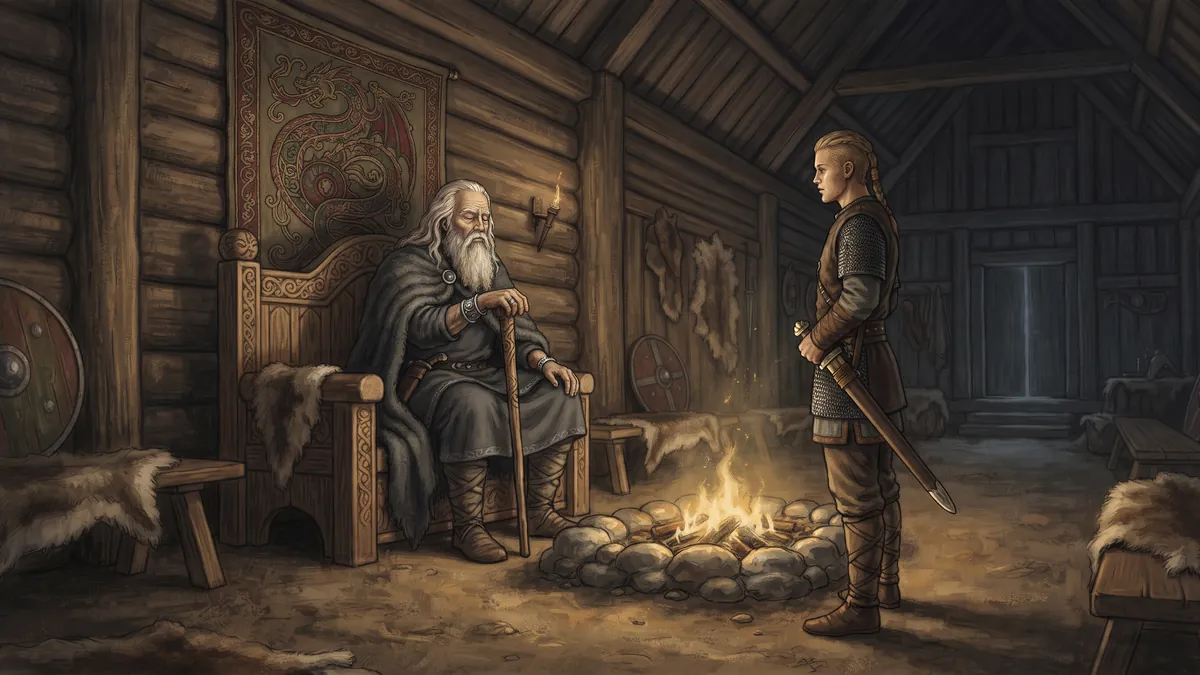
Grípisspá, “Grípir’s prophecy”, also called Sigurðarkviða Fáfnisbana I, “first lay of Sigurd, slayer of Fáfnir”, is an Eddic poem in fornyrðislag. It is in the Codex Regius, after Frá dauða Sinfjötla and before Reginsmál.
The frame
Sigurd rides alone to the hall of Grípir, son of Eylimi and brother of Hjördís, Sigurd’s mother. Grípir is described as the wisest and most far-seeing of men. A servant, Geitir, meets Sigurd outside, and Grípir greets him warmly. The notes to Bellows’s translation say that Grípir and Geitir were probably invented by the poet.
What Grípir foretells
Throughout the poem, Sigurd asks Grípir to look ahead and say more. Grípir foretells, in order, that Sigurd will avenge his father Sigmund and his uncle Eylimi on Hunding’s sons, will kill the dragon Fáfnir at Gnitaheiðr, will take the hoard and will kill Regin too. Then, on a rock, he will find a sleeping woman in armour, whom he wakes by cutting the mail and who will teach him runes and wisdom. Grípir names Brynhildr and warns that she will take his peace.
Forgetting, exchange and death
The prophecy goes on with the oaths Sigurd will break and with forgetting Brynhildr after one night as Gjúki’s guest, through Grímhildr’s doing. Grímhildr urges Gunnarr to woo Brynhildr, and Sigurd changes shape with him to cross the fire. After the weddings Sigurd keeps his sword between himself and Brynhildr for three nights, while she plots revenge. Grípir says that Brynhildr will accuse Sigurd before Gunnarr, that Gunnarr’s brothers will kill him and that Gudrún will mourn him without end.
When it was composed
In Bellows’s translation the poem has 53 stanzas, and some appear out of order. The translator’s introduction calls it one of the latest Eddic poems, from not long before 1200, probably Icelandic. The author knew the other Sigurd poems, apparently from written copies, and some suggest he was the compiler of the Codex Regius himself. Bellows judges him skilled in verse but uninspired, and sees its value in summing up the Sigurd story as it was known in 12th-century Iceland.
In short
It is a summary in verse of Sigurd’s life, put in the mouth of an uncle who knows the end. To hit the prophecies that come true and avoid the illusions, play Grípir’s prophecies.
Sources.
- Reference work in English, article "Grípisspá"
- The Poetic Edda, translation by Henry Adams Bellows (1936), "Grípisspá"
- Codex Regius, manuscript of the Poetic Edda