 MMXXVI
Hávarðar saga Ísfirðings: the old man who rose from his bed to avenge his son, the bag of teeth thrown at the Althing and the conversion in Norway
In Hávarðar saga Ísfirðings, an old farmer in the Westfjords rises after a year in bed to avenge his son Óláfr, killed by a local chieftain. The saga, from about 1300, is about vengeance and change.
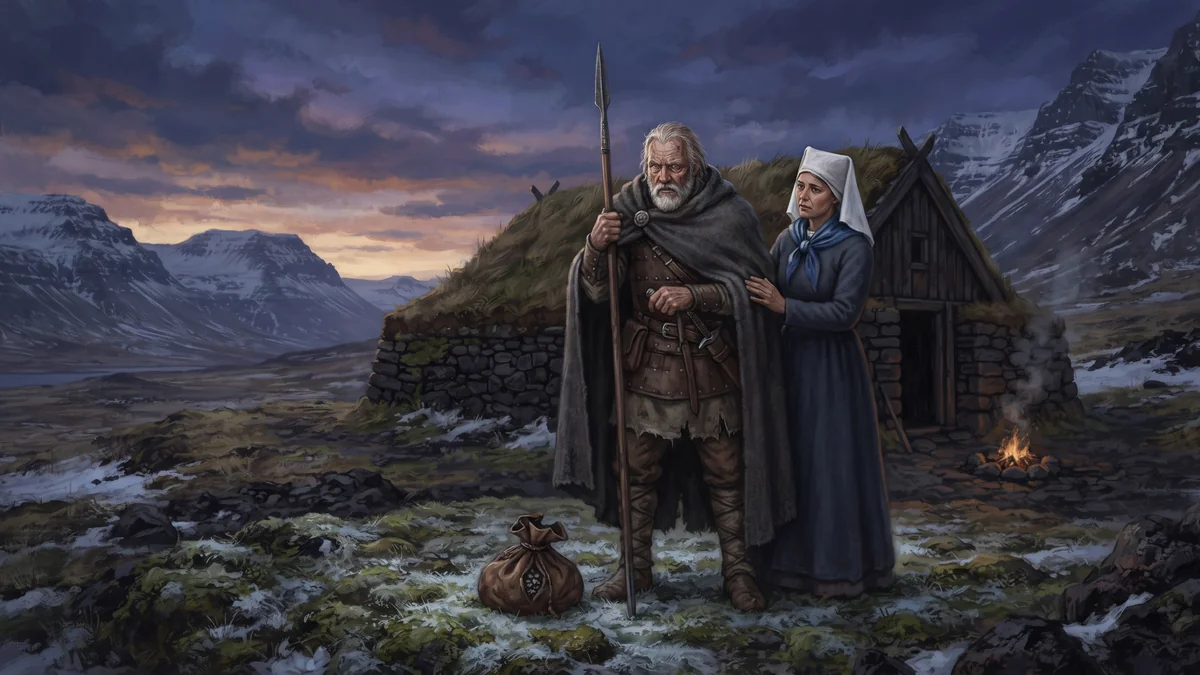
Hávarðar saga Ísfirðings is one of the sagas of Icelanders that is about an old man. Hávarðr is a former viking, now a farmer, who lives with his wife, Bjargey, and his son, Óláfr, in the Westfjords. The saga is probably from the early 14th century.
The son and the chieftain
Óláfr is loved by his neighbours for his good deeds; in one episode he faces a walking dead man, a draugr, that had been tormenting the neighbours. The local chieftain, Þorbjörn Þjóðreksson, is unjust and difficult. Óláfr helps a maidservant of Þorbjörn’s, held against her will, to leave, and the tension grows. Þorbjörn kills Óláfr, pulls out his teeth and keeps them in a bag.
The year in bed
Hávarðr spends a year bedridden. Bjargey presses him to seek redress, but Þorbjörn insults him and refuses. At the Althing, thanks to the help of Gestr, Þorbjörn agrees to pay compensation, but throws the bag of teeth at Hávarðr, and Gestr breaks with him.
The revenge
Bjargey calls her nephews. Hávarðr, who has risen, attacks Þorbjörn’s farm and kills him, and then kills one of his brothers. Another brother, Ljótr, dies at the hands of two boys. The last, Þórarinn, sends assassins to the farm of Atli, who was sheltering the group; Atli is warned in a dream and the attackers are defeated.
In the end, at the Althing, Gestr rules that the killings cancel out, but Hávarðr’s nephews must leave Iceland as long as Þórarinn lives.
A saga about change
Before the revenge, Hávarðr swears to adopt a foreign faith, which he had heard of in his youth, if he survives. Afterwards he goes with Bjargey to Norway and converts to Christianity. When Bjargey dies, he returns to Iceland.
Scholars note that the saga is about kinship, reciprocity and the capacity of a person to change. As it is late, it is hard to know what in it comes from oral tradition and what is the author’s invention.
To defend old Hávarðr from the blows coming from every side, play The blows of vengeance.
Sources.
- Hávarðar saga Ísfirðings (Icelandic saga, probably from the early 14th century)
- The Saga of Hávarður of Ísafjörður, by Durrenberger and Durrenberger, with an essay on the context (Hisarlik Press, 1996)
- Heinemann's translation in The Complete Sagas of Icelanders, volume V