 MMXXVI
Hekla: the Icelandic volcano the Middle Ages called the gate to hell
Hekla, in southern Iceland, erupted in 1104 and covered half the island in ash. In medieval Europe, it gained a reputation as the entrance to hell.
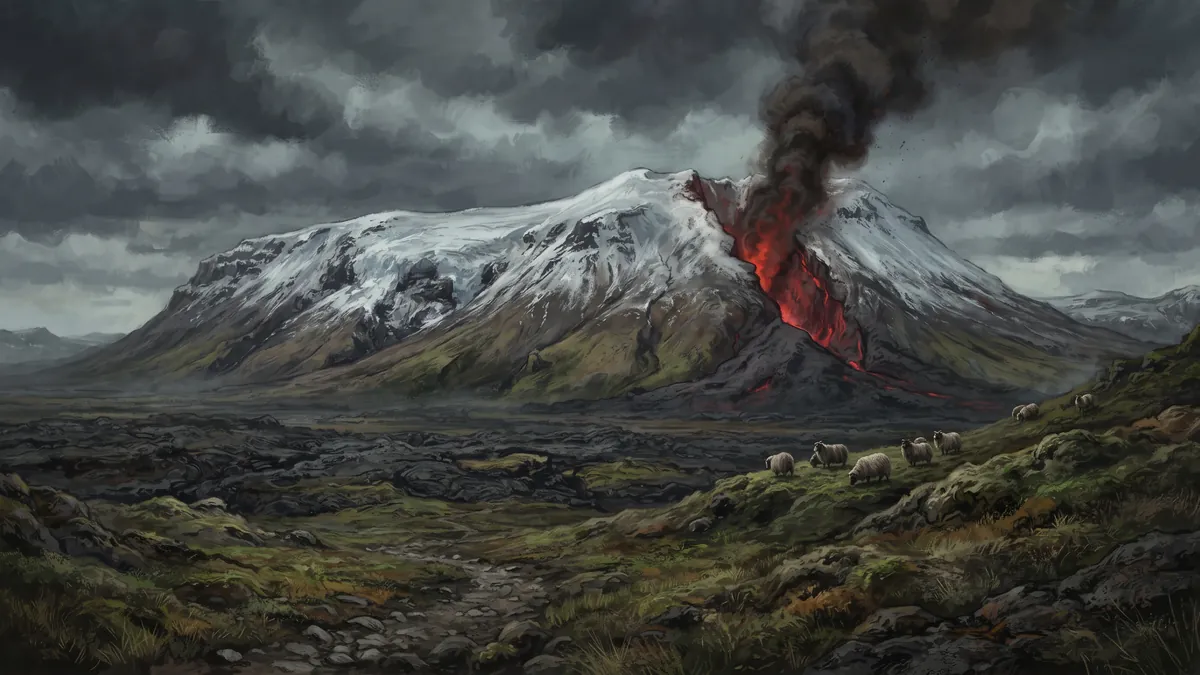
Hekla is a volcano in southern Iceland, about 1,491 metres high (the article’s infobox gives 1,488). The name means “short hooded cloak”, and the article records that the summit, when clouds cover the top, resembles that garment. In medieval Latin it appears as Mons Casule.
The eruption of 1104
The first historical eruption the source describes in detail is that of 1104, of VEI 5. It spread tephra over more than half of Iceland, and the farms of the Þjórsárdalur valley were abandoned.
How it became the “gate to hell”
According to the article, Cistercian monks probably spread, after 1104, the stories that Hekla was the entrance to hell. The text itself treats this as an interpretation. Around 1120, Benedeit, an Anglo-Norman monk, names Hekla as the prison of Judas. The Flatey Book, from 1341, tells that birds seen in the fire were taken for souls. Caspar Peucer, in the 16th century, also repeated the idea. The belief lasted until the 19th century.
The witches on the mountain
A legend, according to the article, says that witches gather on Hekla at Easter. The figure links the volcano to the European folklore of Maundy Thursday, the same as the broom-riding witches.
Later eruptions
Hekla stayed active: the article lists eruptions in 1300 (with more than 500 dead), 1693, 1947–48, 1970, 1991 and 2000.
What counts for the tale
The volcano’s fire is real, but the gate to hell is a medieval belief, and the game of this saga mixes the two. The sheep and the rain of tephra are inventions of the game, which does not represent a historical fact.
To save the sheep and dodge the rain of ash, play The sheep and the rain of ash.
Sources.
- Reference work in English, article "Hekla"