 MMXXVI
Hryggjarstykki, the lost saga of Eiríkr Oddsson: the first written account of the Norwegian civil wars, known only through quotations
Hryggjarstykki was written around 1150 by the Icelander Eiríkr Oddsson, about near-contemporary events. No copy survives. It is known through Heimskringla, Morkinskinna and Fagrskinna. See what is known and what was lost.
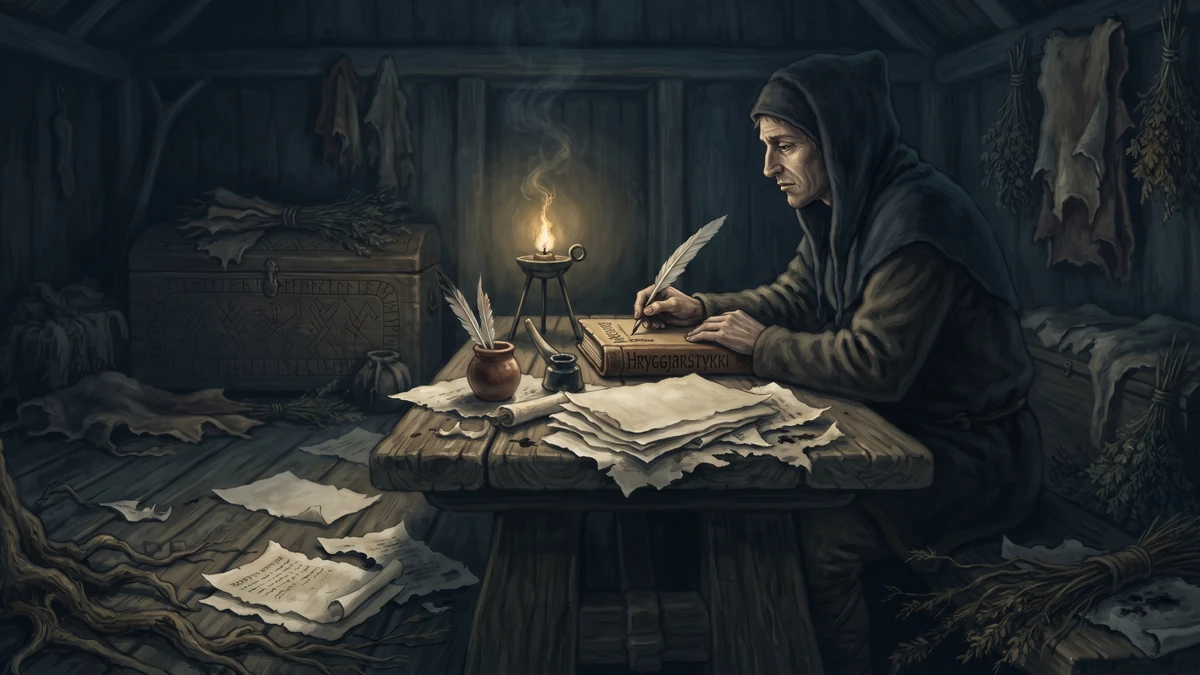
Hryggjarstykki is a lost kings’ saga in Old Norse. It was written in the mid-twelfth century, about near-contemporary events. The author was Eiríkr Oddsson, an Icelander about whom little is known. The work may be the earliest of the sagas.
When it was written
Around 1150. Earlier studies thought it covered from the 1130s to the 1160s or 1170s. More recent analysis suggests it covered only the years 1136 to 1139.
What it told
It told the story of Harald Gilli and his two sons, Magnus the Blind and Sigurd Slembe, down to their deaths. It also covered the sons of King Harald, Inge and Sigurd.
Where the information came from
Eiríkr relied mainly on Hákon magi, a landed man in the service of Harald’s sons who took part in many of the events. He also cited other reliable men who were nearby, and some observations of his own.
What form it had
It may have been entirely prose, but it seems to have used some skaldic poetry.
What survives
No copy survives. The work is known only from later books that used it. Snorri Sturluson’s Heimskringla cites it and stresses its reliability. Morkinskinna cites Eiríkr’s account in a similar way. Fagrskinna used it without explicitly citing it. It has been suggested that the three works drew on three different versions of Eiríkr’s text.
What can be said
A text that existed and was lost can only be described by what others say of it. What is recorded is that an Icelander wrote around 1150 about recent wars, heard those who took part in them, and was cited, a generation later, as a source to trust.
To touch the parchment leaves that still shine, without touching those already lost, play The parchment leaves.
Sources.
- Heimskringla (Snorri Sturluson), Morkinskinna and Fagrskinna, which cite or use the work
- reference works (English), entry "Hryggjarstykki", with the sources cited