 MMXXVI
Jordanes and the island of Scandza: the northern "workshop of peoples", the forty-day sun and the black-fox pelts of the Suehans
In 551, in Constantinople, Jordanes described Scandinavia as a great island from which the Goths supposedly came. His catalogue of Northern peoples is the oldest surviving description of the region.
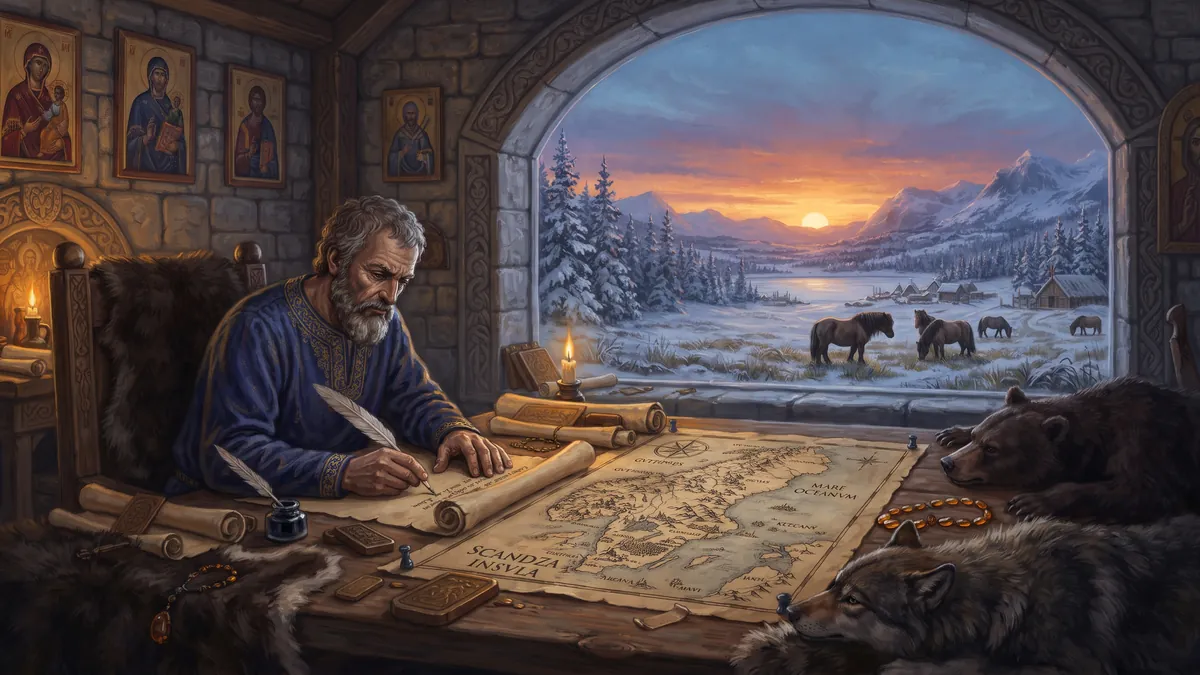
Jordanes was a 6th-century Eastern Roman bureaucrat of Gothic descent who wrote in Late Latin. According to the sources, his best-known work, the Getica, was written in Constantinople around 551, as a summary of Cassiodorus’s lost twelve-volume history of the Goths. He says he had only three days to consult it, and so relied heavily on memory.
The island of Scandza
The Getica opens with a geography and ethnography of the North. Jordanes calls Scandza a “great island”, in the Arctic regions of the sea that surrounds the world, and describes it as an officina gentium, a “workshop producing peoples”, and a “womb of nations”. He says its peoples were taller and fiercer than the Germans. The location is usually identified with Scandinavia. For the shape of the island he drew on Ptolemy, who saw it as a juniper leaf.
The peoples he lists
The Adogit lived in continual light for forty days and nights in midsummer, and in continual darkness for as long in midwinter. The screrefennae were hunter-gatherers, and the source identifies them with the Sami. The Suehans, usually read as Swedes, had splendid horses and supplied black fox skins to the Roman market. The Dani, the Danes, were “of the same stock” and drove the Heruls from their lands. The list also includes Vagoths, Gautigoths, Ostrogoths, Rugii, Raumarici and many other names, some probably duplicates, since they came from different travellers. Rodwulf from Bohuslän is one of the Scandinavians who joined the Goths.
Did the Goths come from there?
The Getica says the Goths left Scandza with Berig in three ships and went to Gothiscandza, near the mouth of the Vistula. But the work is heavily criticised: Jordanes confused the Getae with the Goths, and some say he invented episodes, such as a Gothic war against Egypt. Whether the Goths came from Scandinavia remains disputed. The archaeologist Göran Burenhult calls the account a unique glimpse into Scandinavian tribes of the 6th century.
To run across the snow of Scandza, gathering black fox pelts and dodging the blocks of ice, play The pelts of Scandza.
Sources.
- Reference work in English, article "Jordanes"
- Reference work in English, article "Scandza"