 MMXXVI
Marsk Stig: the murder of King Erik Klipping at Finderup in 1286, and the outlaw of the island of Hjelm
On the night of 22 November 1286, King Erik V of Denmark was killed in a church barn at Finderup, and the marshal Stig Andersen Hvide, accused, fled to an island in the Kattegat, from which he raided the coast.
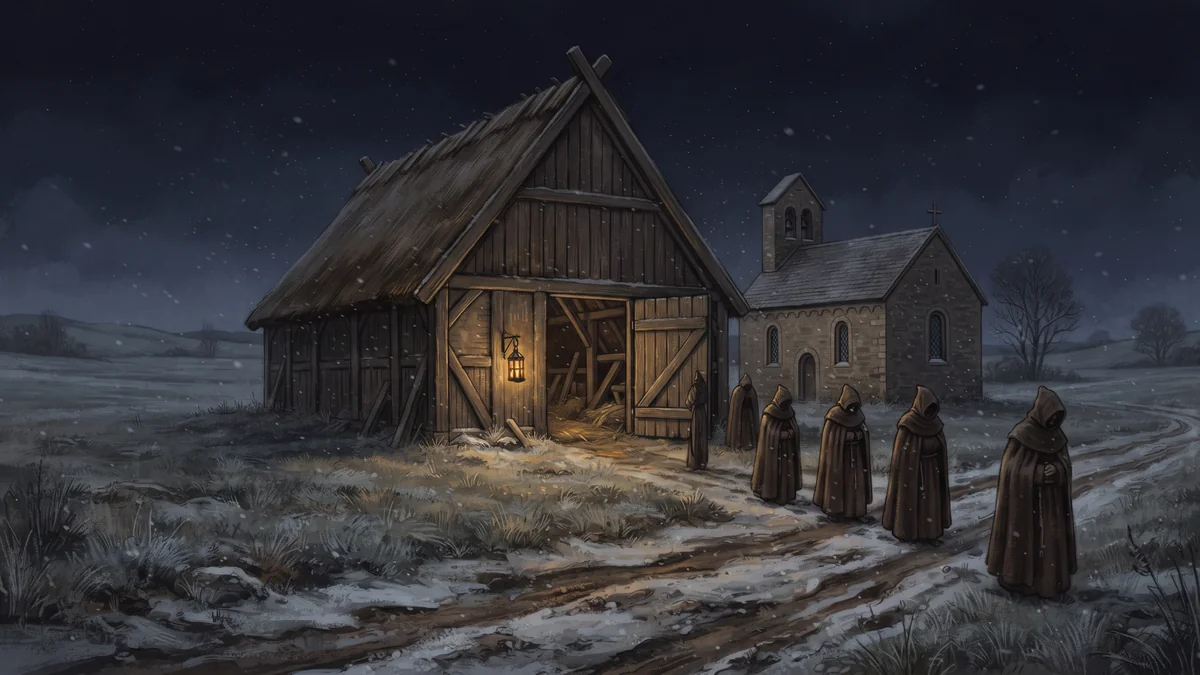
On the night of 22 November 1286, King Erik V of Denmark, known as Erik Klipping, was killed at Finderup, near Viborg, in central Jutland. His body was found the next morning. Since then the name most tied to the crime has been that of the marshal Stig Andersen Hvide, Marsk Stig.
The night at Finderup
According to the account that has reached us, the king’s party could not find its way back to his farm at Viborg, and Rane Jonsen, one of the companions, suggested they spend the night in the church barn at Finderup. The assassins, said to have dressed as Franciscan friars, waited until the king slept. Tradition speaks of 56 stab wounds, but that number is not confirmed. Rane Jonsen is said to have been paid by the conspirators to report where the king was, and that too comes from legend.
The accused
A court held the marshal Stig and Jacob Nielsen, Count of Halland, responsible, and outlawed the two of them and seven other men. Only one was accused of the blow itself, and the rest of involvement. It is not known whether any of them took part. Many nobles also had reason to hate the king, and exiles had been raiding Denmark for about twenty years, with the support of the king of Norway.
The island of Hjelm
Stig, who had been the country’s leading general and minister of war, fled and, in 1287, settled on Hjelm, a small island in the Kattegat, with help from the king of Norway. From there he and his men practised piracy and minted false coins until 1295. In 1289, according to recent excavations, they destroyed the royal castle of Brattingsborg, on Samsø. Stig died on Hjelm in December 1293, never rehabilitated. In 1306 King Erik Menved retook the island.
The popular version
Popular tradition says he killed the king to avenge the seduction of his wife, but that is only the version of the ballads. Later historians often see him as the victim of a political miscarriage, and some as an idealist trying to create a parliament, which cannot be proven. Svend Grundtvig collected the ballads in 1861.
In short
There is a king dead in a barn, a marshal in flight and many doubts about who did what. To run along the coast and escape your pursuers, play The flight to Hjelm.
Sources.
- Reference work in English, article "Stig Andersen Hvide"
- Reference work in English, article "Eric V of Denmark"
- Reference work in English, article "Hjelm (island)"
- Svend Grundtvig (ed.), "Marsk Stig: Dansk Folkevise fra 13de Aarhundrede" (1861)