 MMXXVI
Ormurin Langi: the Faroese ballad of the "Long Serpent", which sounds old and was composed around 1830
Ormurin Langi is one of the most famous ballads of the Faroe Islands, about King Olaf Tryggvason and the battle of Svolder, but the version sung today was composed around 1830 by Jens Christian Djurhuus.
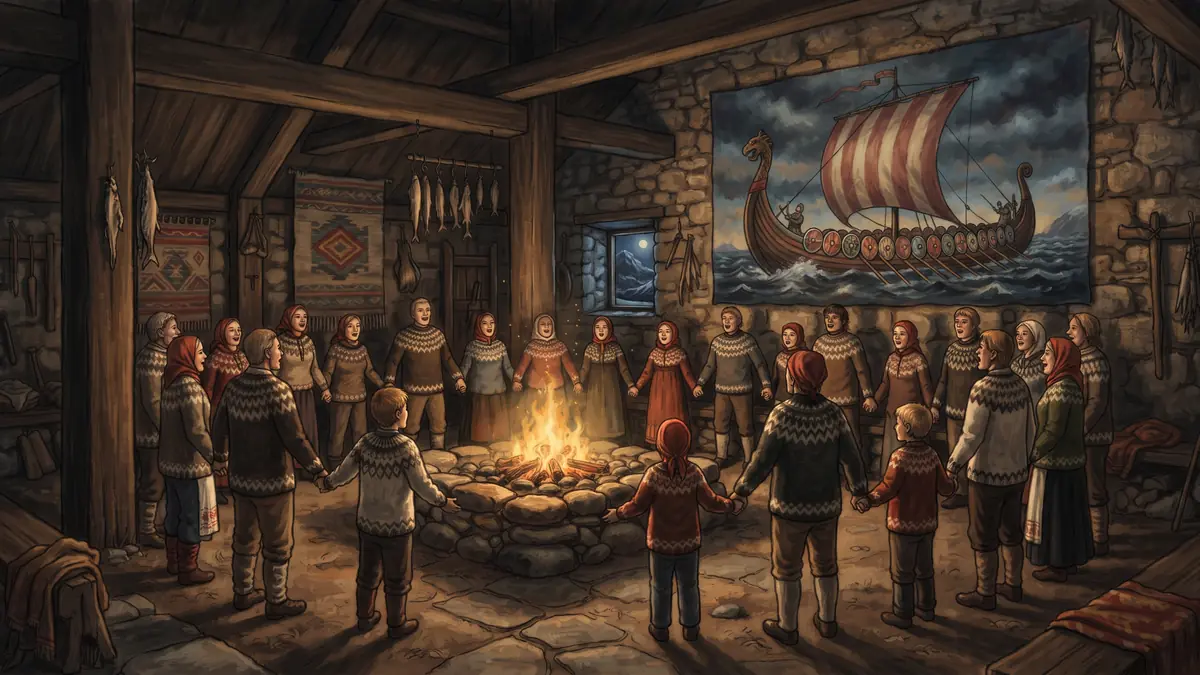
Ormurin Langi, “the Long Serpent”, is a Faroese ballad, a kvæði, that tells of the battle of Svolder, in the year 1000, and the death of the Norwegian king Olaf Tryggvason. The title is the name of his ship, Ormrinn langi in Old Norse. It sounds like an ancient song, but the version sung today is much more recent.
Who composed it
According to the sources, it was written around 1830 by Jens Christian Djurhuus (1773-1853), a farmer at Kollafjørður, and has 86 stanzas in Faroese. Djurhuus followed Snorri Sturluson’s account and composed many ballads on sagas in the Romantic period. Hammershaimb praised his ballad on Olaf Tryggvason.
The story the ballad tells
Kings of Sweden and Denmark, with the Norwegian Eiríkr Hákonarson, attack Olaf on his ship the Long Serpent. Olaf loses, and when defeat is certain he leaps into the sea with the men who remain. The ballad places the battle in the Øresund, but the source says the location is unknown and that it is doubtful an island called Svolder existed. The sources on the battle are sagas written about two centuries later, and the sagas are unreliable in their details.
How the text reached today
The title “Ormurin langi” was only identified around 1846. Before that, Djurhuus and others who recorded the ballad called it “Olaf Trygvasons kvad”. V. U. Hammershaimb used it in the “Færøsk Anthologi” of 1891, and it was that form that became the standard text, always sung that way today. The old texts disagree on which refrain, and therefore which melody, to use. The present refrain appears in only one of the oldest versions and is the one in Hammershaimb’s anthology.
Dance and song
Faroese kvæði were sung to accompany dancing. They survived through oral tradition, and interest in them grew around 1800, when old ballads came to be valued for their history. The heavy metal version by the band Týr, from 2002, gave the ballad followers abroad.
In short
It is a ballad that sounds medieval and is a little over two centuries old, about a ship more than nine hundred years earlier. To dance in time with the ballad, play The dance of the ballad.
Sources.
- Reference work in English, article "Ormurin Langi"
- Reference work in English, article "Battle of Svolder"
- V. U. Hammershaimb, "Færøsk Anthologi" (1891)