 MMXXVI
Sigurd Slembe, the "noisy deacon": the pretender who killed Harald Gille in his sleep in 1136 and was hunted down to Holmengrå
Sigurd Slembe claimed to be an illegitimate son of King Magnus III and killed King Harald Gille in 1136. He made the blind king Magnus his ally and was captured in 1139. See what is known and what the sagas leave in doubt.
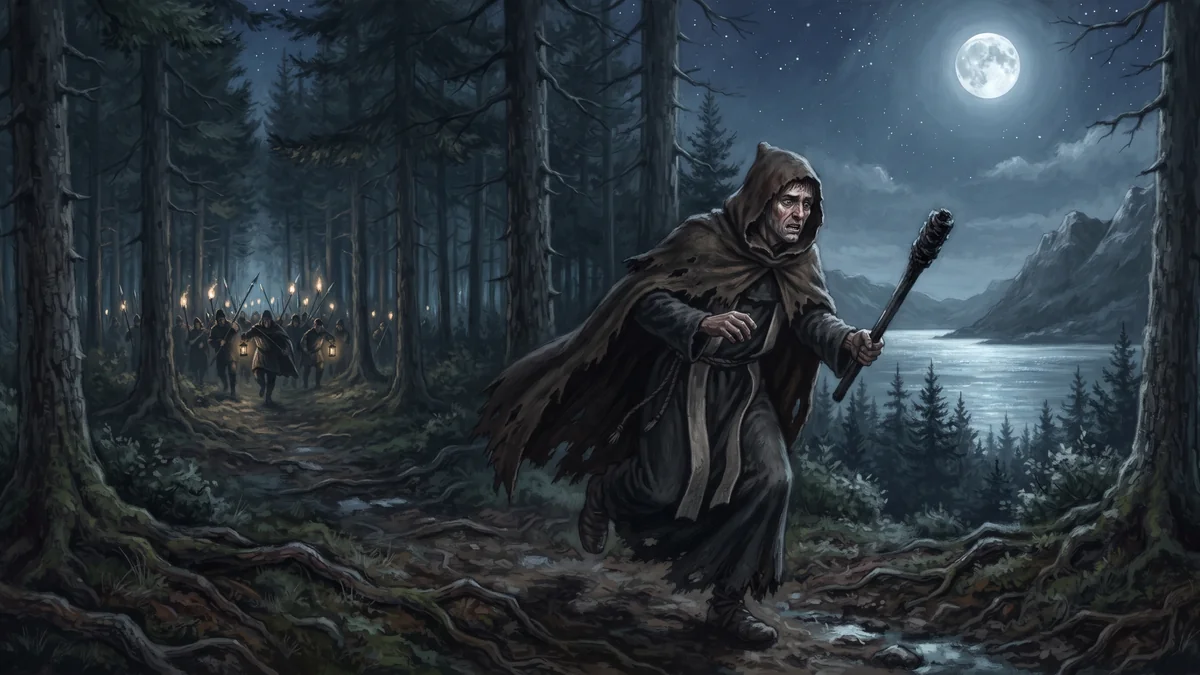
Sigurd Magnusson Slembe, or Slembidjákn, is one of the strangest figures of twelfth-century Norway. Slembi, in Old Norse, means something like “noisy” or “clumsy”, and Slembidjákn would be “the noisy deacon”, because Sigurd was ordained a deacon. He died on 12 November 1139.
Who Sigurd was
He was probably born around 1100 in southern Norway and is said to have been raised by the priest Adalbrikt. His mother seems to have been Thora Saxesdatter. He claimed to be an illegitimate son of King Magnus III. He appeared before King Harald Gille, called him a half-brother of origins like his own and demanded a share of power. He married Audhild, daughter of Thorleif Maddadsson. In 1135, he proclaimed himself king, but Harald did not recognise the claim.
The death of Harald
In 1136, Sigurd had Harald Gille killed in his sleep. Right afterwards, he restored as co-king his putative nephew Magnus IV, the Blind, whom Harald had imprisoned, blinded and mutilated. As Magnus was almost incapacitated, Sigurd began to speak and command in his name, probably to win support and secure his own position. Even so, he was convicted of regicide and declared an outlaw.
Two kings without a country
Sigurd and Magnus found little support in Norway. The Danish king Erik II helped them in a campaign that failed. On 12 November 1139, the Danish-backed forces, under Magnus and Sigurd, faced the supporters of the child king Inge I in the naval battle of Holmengrå, near Hvaler in the Oslofjord. Magnus died in the battle. Sigurd was captured and betrayed.
The end
The source tells that Sigurd was tortured to death and that his body was thrown into a scree. It is one of the harshest endings in the kings’ sagas, and shows how the civil war had stopped having rules.
What the sagas say, and what they leave in doubt
The main sources are the kings’ sagas Heimskringla, Fagrskinna and Morkinskinna. They rely on the now lost Hryggjarstykki, by Eiríkr Oddsson, who saw the events or spoke to those who did. That is why the narrative is quite close to the events, although the texts are hostile to Sigurd and favourable to Harald’s sons. The expressions used in the literature, such as “it is believed” and “apparently”, show that his birth and family remain uncertain. The writer Bjørnstjerne Bjørnson made him the hero of a drama in 1862.
What remains
Sigurd is an extreme case of what the era of civil wars allowed: a cleric who declares himself a king’s son, kills a sleeping king and uses a blind king as a banner. Historians attribute the age of wars to unclear succession laws, to social conditions and to conflicts between Church and king.
To run through the forest, gathering the torches and fleeing the soldiers, play The flight through the forest.
Sources.
- Snorri Sturluson, Heimskringla; Fagrskinna and Morkinskinna, which use the lost saga Hryggjarstykki, by Eiríkr Oddsson
- Bjørnstjerne Bjørnson, Sigurd Slembe (drama, 1862)
- reference works (English), entry "Sigurd Slembe", with the sources cited