 MMXXVI
The Nibelungenlied: the German poem of Siegfried, Kriemhild and Hagen, a medieval cousin of the Völsunga saga
Composed around 1200, probably in the Passau region, the anonymous poem tells of the death of Siegfried and the revenge of Kriemhild. Its three main manuscripts were inscribed by UNESCO in 2009.
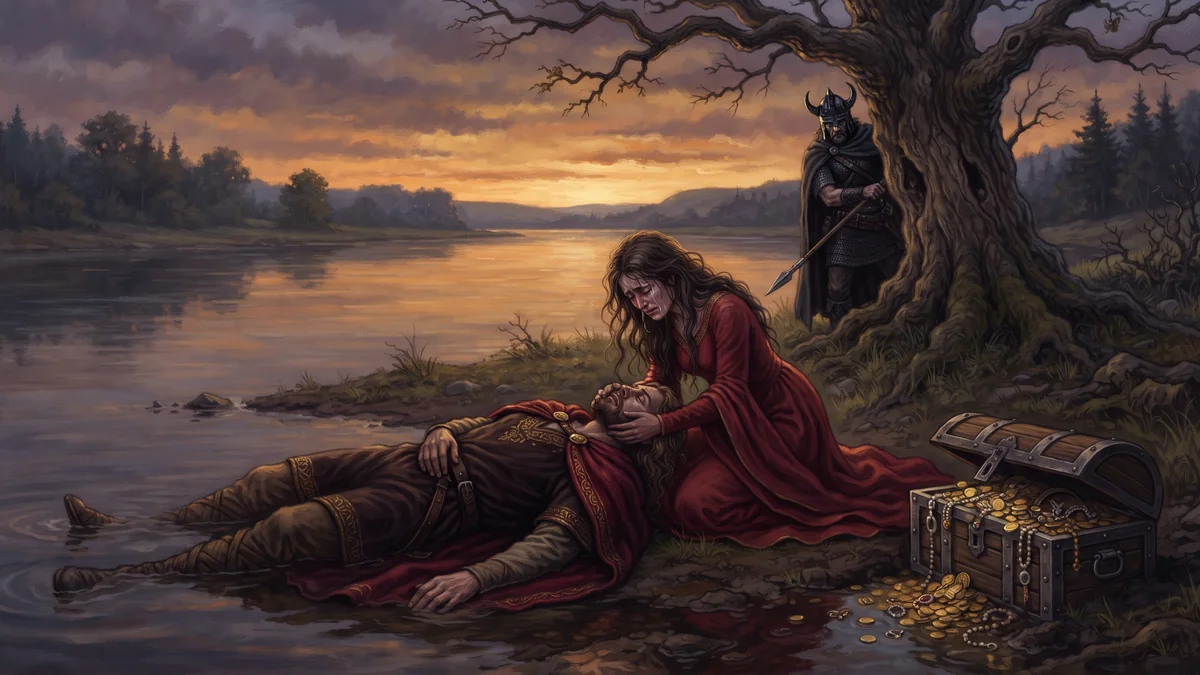
The Nibelungenlied is a Middle High German epic poem composed around 1200, most likely in the region of Passau. Its author is anonymous. According to the sources, it draws on an older oral tradition with roots in events and figures of the 5th and 6th centuries, known across most of the Germanic-speaking world. Bishop Wolfger von Erla, who reigned from 1191 to 1204, is considered a likely patron.
The manuscripts
There are some 36 or 37 manuscripts and fragments. The three oldest complete ones are A (Munich, c. 1275–1300), B (St. Gallen, c. 1233–1266) and C (Karlsruhe, c. 1225–1250). In 2009 UNESCO inscribed the three in its Memory of the World Register.
The story in two parts
In the first, Kriemhild, sister of the Burgundian kings Gunther, Gernot and Giselher, lives in Worms. Siegfried helps Gunther win the warrior queen Brünhild, with a cloak of invisibility, and in return marries Kriemhild. The two queens quarrel over rank, and Kriemhild reveals the ring and belt taken from Brünhild. Hagen, Gunther’s vassal, persuades the king to have Siegfried killed, and kills him at a spring during a hunt, after learning his weak spot from Kriemhild. Hagen takes Siegfried’s hoard.
In the second part, Kriemhild, a widow for thirteen years, marries Etzel (Attila), king of the Huns, with the aim of revenge. She invites the Burgundians to his court. Nearly all of them die in the burning hall. Hagen refuses to reveal where the hoard is, and Kriemhild kills him with Siegfried’s sword. Hildebrand then kills Kriemhild.
Norse cousins
The story has parallels in the Poetic Edda and in the Völsunga saga, written down in the late 13th century. The Norse Atlakviða tells the fall of the Burgundians without Siegfried, which points to an older, separate tradition. The historical basis is the Burgundian kingdom on the Rhine, destroyed in 436–437.
Afterwards
The poem was forgotten around 1500 and rediscovered in 1755. Karl Simrock’s translation of 1827 was influential. Richard Wagner used the material in The Ring of the Nibelung, but relied mostly on the Norse sources.
To catch the coins of the treasure that the current of the Rhine carries, without taking the logs, play The treasure in the Rhine.
Sources.
- Reference work in English, article "Nibelungenlied"