 MMXXVI
Torf-Einarr: the earl of Orkney, the peat nickname and the fine of sixty gold marks
Torf-Einarr, a Norwegian jarl's illegitimate son, became earl of Orkney and founded a dynasty that lasted until 1470. See what the sagas tell, what is doubtful and why the peat nickname may not mean what is said.
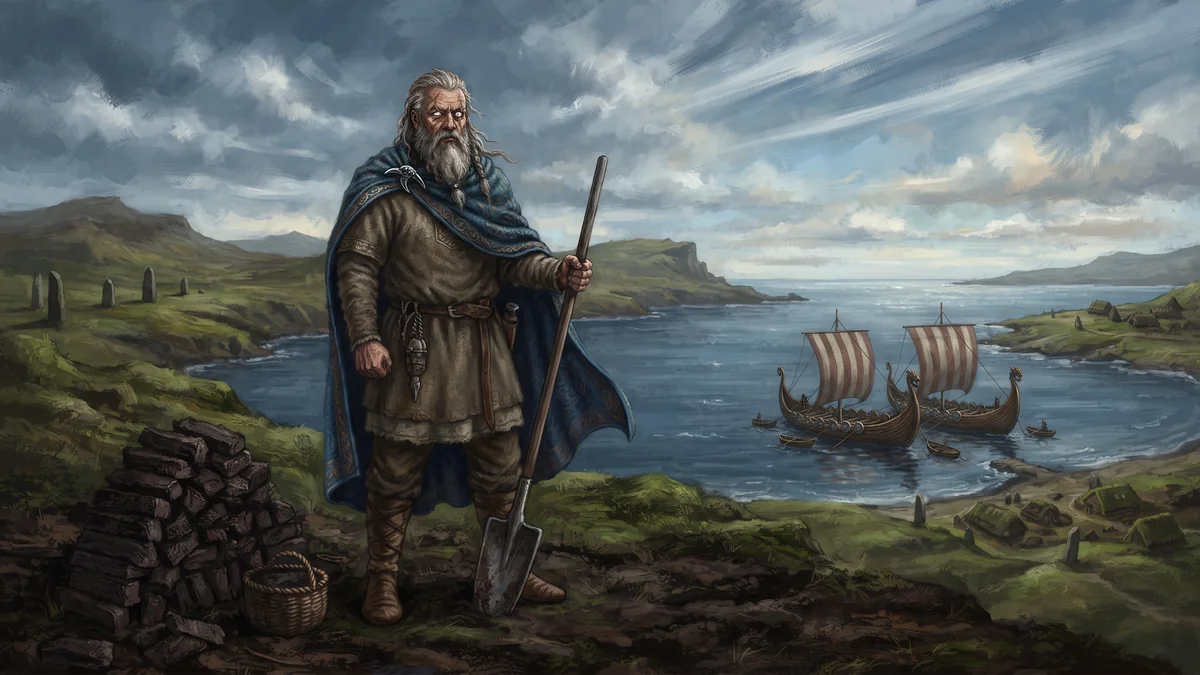
Torf-Einarr is known only from sagas, written centuries after his life. He existed, his historicity is not in doubt, but the story the sagas tell has a lot of literature in it. It is worth separating what is told from what can be stated.
From illegitimate son to earl
Einarr was the youngest, illegitimate son of Rognvald Eysteinsson, jarl of Møre, by a concubine. The saga says his mother was “slave-born on each side of her family”. His brothers included Hallad, Hrollaug, Ivar, Hrólfr, who is identified with Rollo of Normandy, and Thorir the Silent.
Hallad failed to hold Orkney against Danish pirates and returned to Norway. Rognvald asked his sons who would take the islands. Einarr volunteered, and his father gave him a ship and crew, hoping, according to the account, that he would not return.
In Orkney, Einarr defeated the Danish warlords Thorir Treebeard and Kalf the Scurvy and established an earldom over Orkney and Shetland. A couplet celebrating him says, in translation: “He gave Treebeard to the trolls, Torf-Einarr slew Scurvy.”
Halfdan and the blood eagle
Halfdan and Gudrød, sons of King Harald Finehair, killed Rognvald by trapping him in his house and setting it alight. Halfdan took Orkney from Einarr. Einarr resisted from Caithness, won a sea battle and a land campaign, and found Halfdan hiding on North Ronaldsay. The sagas say Halfdan was sacrificed to Odin as a “blood eagle”.
The modern source doubts it. Historia Norwegiae confirms that Halfdan was killed by the islanders but not the manner, and early verses suggest he was killed by spears. The blood eagle may be a misunderstanding or a saga invention.
The fine of sixty marks
Harald wanted revenge but could not dislodge Einarr from the islands. He agreed to end the conflict for a fine of sixty gold marks, levied on Einarr and the islands’ landowners. Einarr offered to pay the whole of it if the landowners transferred their lands to him, and they agreed.
For some scholars, this was the moment when the earls came to hold the islands from the Norwegian king. Others read the payment as compensation for a killing.
The nickname
The sagas say he earned the name “Torf”, “peat”, by introducing the burning of peat as fuel because wood was scarce. The article says this is incorrect, since the use of peat predates the Norse. The real origin of the nickname is unknown.
Verses, sons and dynasty
Five verses attributed to Einarr in Landnámabók describe the feud between the families of Rognvald and Harald. Háttatal, from the 13th century, names a metre Torf-Einarsháttr after him, which suggests he was known as a poet.
He died in his bed, of sickness, leaving sons Arnkel, Erlend and Thorfinn, who succeeded him as jarls. His line ruled Orkney until 1470. The descriptions of his appearance, tall, ugly and blind in one eye, and the sacrifice to Odin have literary features.
In short
Torf-Einarr was earl of Orkney, victor over Thorir Treebeard and Kalf the Scurvy, and payer of the fine of sixty gold marks. The blood eagle and the peat story are doubtful. The dynasty he founded lasted until 1470.
To cut the right turf on the hills of Orkney, play The right turf.
Sources.
- English Wikipedia, article "Torf-Einarr", with the passages on his origin, the Orkneyinga saga, the verses in Landnámabók and the fine of sixty gold marks