Ragnar Lodbrok and the snake pit: the hero of the sagas and what the chronicles kept of him
According to the sagas, Ragnar died in King Ælla's pit of serpents, singing. The chronicles record only a chief with a similar name and the Great Heathen Army of 865.
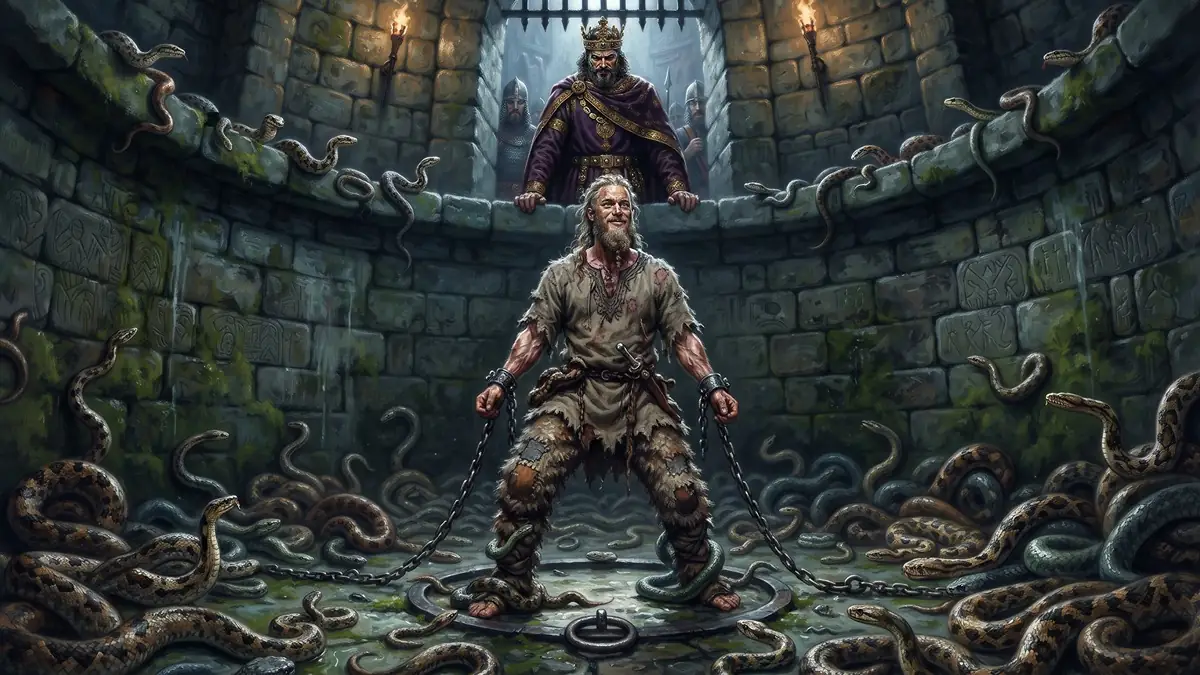
Ragnar Lodbrok, “Ragnar Hairy-Breeches”, is one of the most famous heroes of the Viking Age, and his death is one of the best-known scenes in Norse literature: thrown into a pit of serpents by the English king Ælla, he sings until he dies. The story comes from the Icelandic sagas. What the chronicles of the time kept is much less, and the link between the two is debated.
The hero of the saga
The Ragnars saga loðbrókar, written in Iceland in the 13th century, says that Ragnar won his nickname by killing a serpent that guarded a king’s daughter, Thora. To protect himself from the venom, he put on trousers of fur, which he dipped in pitch and then rolled in sand. After the victory, he married Thora and, later, Aslaug, daughter of Sigurd and Brynhild, with whom he had famous sons: Ivar the Boneless, Bjorn Ironside and others.
Late in life, Ragnar sets out for England with only two ships, to prove his courage. He loses the battle, is captured by King Ælla of Northumbria, and is thrown into a snake pit.
The poem of death
In the saga, Ragnar dies without asking for mercy. One line of his became famous: the piglets would grunt if they knew how the old boar suffers. It was a warning: his sons would avenge him. According to the saga, they took cruel revenge on Ælla.
The Krákumál is a poem that presents itself as the song Ragnar sang in the pit. It repeats the refrain “we fought with swords” and recalls his battles. The text is medieval, but it survives only in later manuscripts. A Latin translation of the 17th century spread the idea of Vikings drinking from skulls, through a misreading of an expression that meant “horns”.
What the chronicles say
No English chronicle records a Ragnar captured by Ælla. The Annales de Saint-Bertin say that in 845 Vikings under a chief called Reginherus went up the Seine and attacked Paris, and that the Frankish king paid a ransom for them to leave. Some historians see in him the Ragnar of the legend, others do not.
The Anglo-Saxon Chronicle records that a great Norse army, the Great Heathen Army, landed in East Anglia in 865. Years later, in 867, Ælla died when the Vikings took York. The chronicle does not say that they were sons of Ragnar, and the names of Ivar and Halfdan, whom the sagas give as his sons, appear in later sources.
A hero made of several
Scholars who study Ragnar generally conclude that the figure in the saga combines the deeds of more than one chief, woven with legendary motifs such as the serpent and the pit. That is why some historians doubt that a single Ragnar existed. Others argue that a real leader stands behind the legend.
To face the pit, play The snake pit.
Sources.
- *Ragnars saga loðbrókar* (13th century)
- *Krákumál*, poem attributed to Ragnar (late manuscripts, medieval text)
- *Anglo-Saxon Chronicle*, entries for the years 865 and 867
- *Annales de Saint-Bertin*, entry for the year 845