Huldufólk: the hidden people who divert roads in modern Iceland
In the 21st century, works in Iceland have been argued over because of rocks where the hidden people are said to live. What the surveys say about how many Icelanders believe in elves is subtler than it seems.
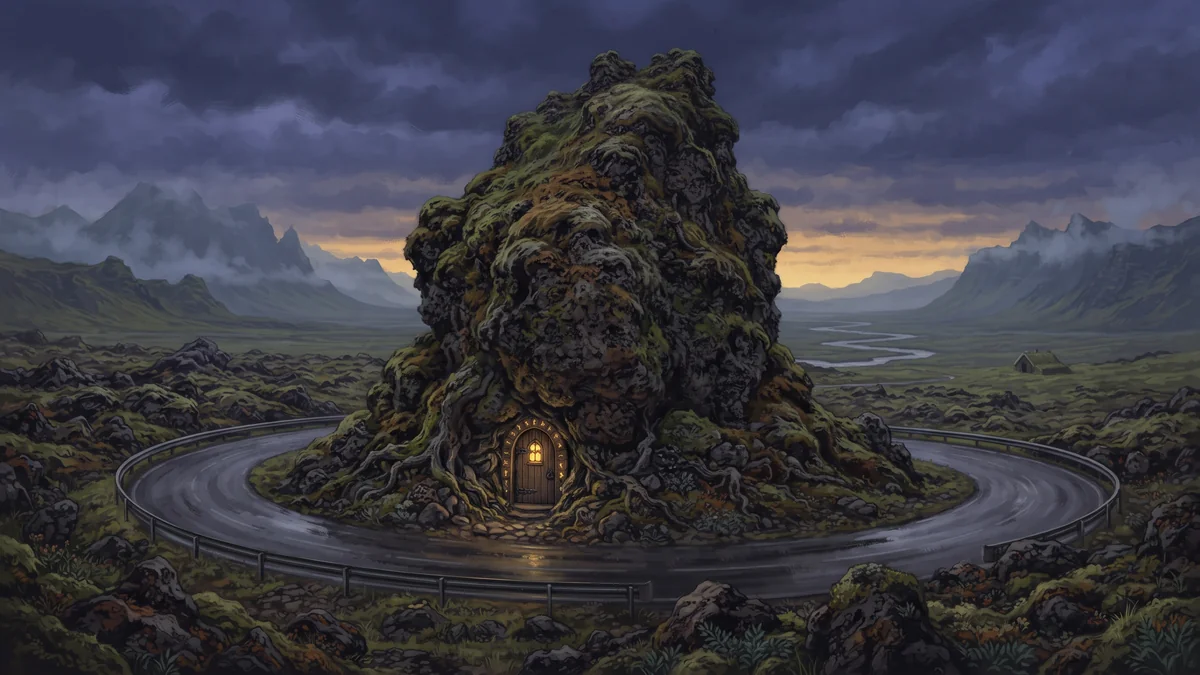
In Iceland, the huldufólk, the hidden people, are part of folklore and, in a way, of everyday life. They are beings resembling humans who live in rocks, hills and lava crags, and who generally stay invisible. Icelanders often call them elves, and stories about them turn up from time to time in news about construction and the environment.
The Álftanes road
The best-known case is a road at Álftanes, near Reykjavík. An environmental group, the Friends of Lava, took the project to court, since it would cross a lava field, and the case reached the Supreme Court. Among the arguments cited was that there was a rock there where elves were said to live. The article does not claim the rock was removed, and the dates vary in the sources.
Other episodes
In 1982, about 150 Icelanders went to the Keflavík base to protest. In 2004, the building of an Alcoa smelter required experts to certify that there were no places inhabited by elves on the site. In 2011, rocks at Bolungarvík that fell onto a work site were blamed by some on the elves.
How many believe?
Surveys give varied answers. In one by the University of Iceland in 2007, 62% of a thousand respondents said the existence of elves was at least possible. In 1998, a poll by the newspaper DV found 54.4% who believed. The folklorist Terry Gunnell studied the subject in 2006, and the anthropologist Kirsten Hastrup reminds us that the wording of the question changes the answer: saying elves are possible is different from asserting they exist.
The elf houses
The álfhóll, the elf hill, is a recognised concept, and there are maps with elf houses marked. The writer Andri Snær Magnason observed that the matter is not quite believing or not, but an attitude of caution: if there is a chance something lives in a place, it is prudent not to disturb it. President Ólafur Ragnar Grímsson remarked on one occasion that Iceland has no reason to rule out the possibility.
What this says
For scholars, the huldufólk shows how a modern society can keep a respectful relationship with the landscape. Treating a rock as someone’s home is a way of asking a place for leave before transforming it, and the willingness to divert a road is only its most visible expression.
To steer the road around the rocks, play Reroute the road.
Sources.
- Opinion surveys by the University of Iceland (2007) and the newspaper DV (1998)
- Studies by folklorist Terry Gunnell (2006) and anthropologist Kirsten Hastrup
- Reports and encyclopedia entries on the huldufólk and road works