The mara: the spirit that rides sleepers and gave its name to the nightmare
In Nordic tradition, the mara is a being that treads on the chest of sleepers. The Ynglinga saga tells how one killed a king, and the word “nightmare” keeps her name.
Many people have woken up feeling a weight on the chest, unable to move or cry out. In Nordic tradition, that weight had a name: mara. The word survives in the way several languages name the bad dream.
A king and a mara
The oldest and best-known mention appears in the Ynglinga saga, part of the Heimskringla, written by the Icelander Snorri Sturluson around 1230. The saga tells the story of Vanlandi, king of the Swedes. According to it, Vanlandi visited the region the saga calls Finnland (a name that does not always match modern Finland), married Drífa, daughter of Snær, and left promising to return in three years. He stayed ten.
Drífa then sent for the witch Huld. The saga says the witch cast a spell, and that when Vanlandi wanted to sleep, a mara trod on him. He cried out that she was treading on him. His men held his head, and the mara trod on his legs. They held his legs, and she trod on his head, and the king died. It is a tradition preserved in writing centuries after it was told, and the saga is not a record of facts.
A figure of folklore
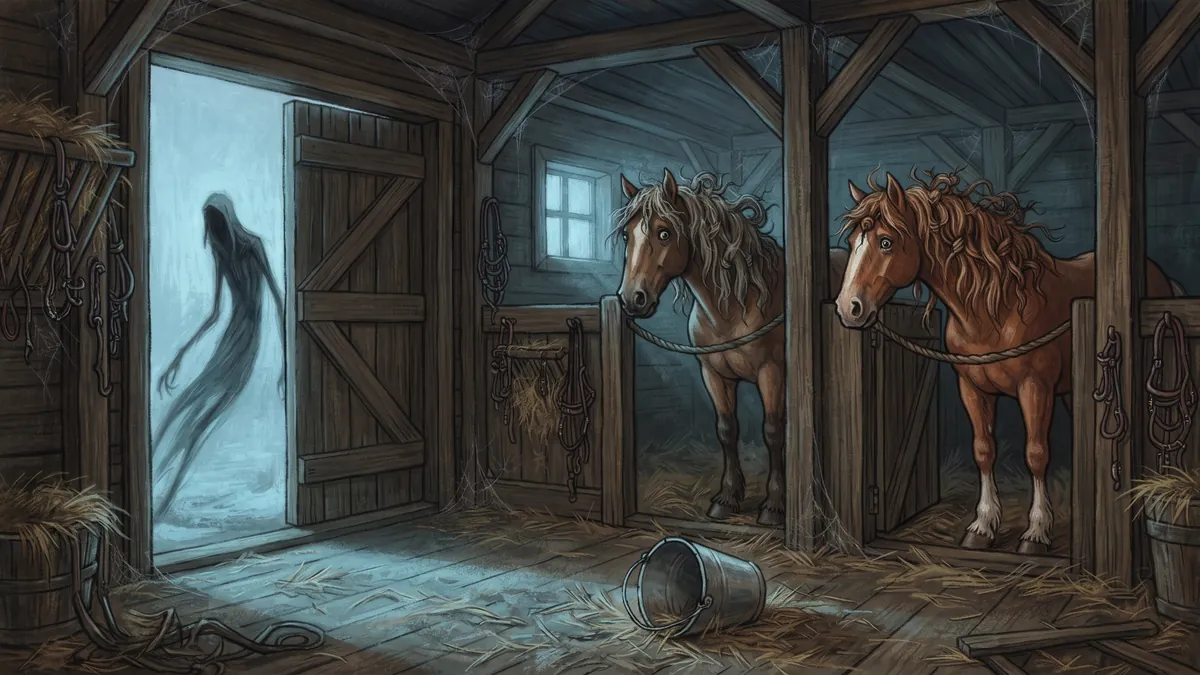
In Scandinavian folklore collected in the 19th and 20th centuries, the mara appears as a being that sits on the chests of sleepers and suffocates them. In many accounts, she is the spirit of a living person, usually a woman, who leaves the body during the night. In others, she is a separate creature. People also blamed the mara for the knots that appeared in the mornings in the manes of horses in the stable.
The word that remained
The English nightmare comes from night and the Old English mære, the same being. In Norwegian, the nightmare is mareritt, literally “the mara’s ride”, and in Danish, mareridt. In Swedish, it is mardröm, “mara dream”. Similar words exist in German and French.
What science says
Doctors today recognise a phenomenon called sleep paralysis. It occurs at the edge between sleeping and waking, when a person is conscious but cannot move, and often feels a presence or a weight on the chest. The folklorist David Hufford showed in 1982 that accounts of this kind appear in very different cultures, with local explanations. The mara is one of them.
Explaining a belief does not devalue it. It shows how the peoples of the North gave a name to what they experienced at night.
Relatives in other languages
The theme is old and widespread. The French cauchemar joins the old verb caucher, “to tread”, to the same term mare, and the image of something that treads on a sleeper is the same as in the Ynglinga saga. Old German had Mahr, and Old English mære. The forms vary, but the idea of a being that rides or treads on sleepers recurs all over Europe.
To find out what the mara moved in the stable during the night, play The mara’s stable.
Sources.
- Snorri Sturluson, *Heimskringla* (around 1230), especially the *Ynglinga saga*
- Gunnar Olof Hyltén-Cavallius, *Wärend och Wirdarne* (1863–1868), on the folklore of southern Sweden
- David J. Hufford, *The Terror That Comes in the Night* (1982), on supernatural assault traditions during sleep