The vittra: underground beings of northern Sweden and the milk among the stones
The vittra is a being of northern Swedish folklore, tied to the underground world and to cattle. See what three sources say about her, what the neighbourly beliefs tell and what still has no clear origin.
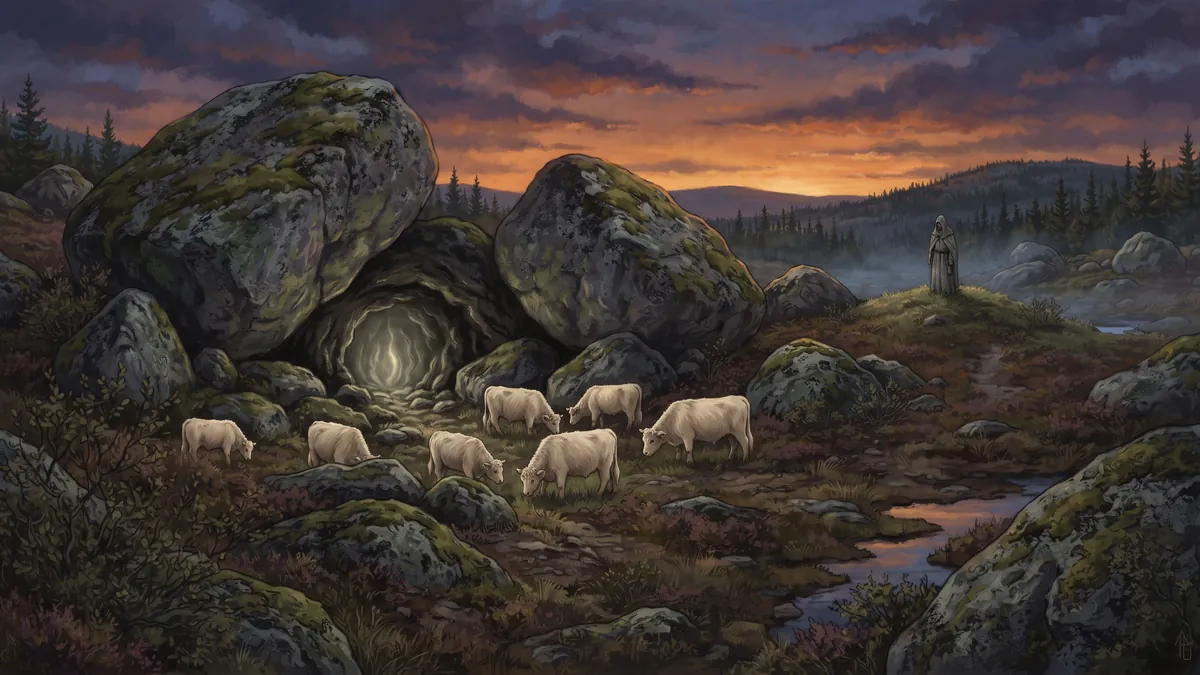
The vittra is a being of Swedish folklore, associated mainly with northern Sweden. This piece uses three sources: an encyclopaedia in English, a tourism text on the country’s folklore and an open-access encyclopaedia. The first relies on academic authors, the other two cite no sources. For that reason, everything here is presented as what is told, not as historical fact.
Who the vittra is
The first source describes the vittra as a female being, an entity or spirit of northern Sweden, who tends herds and, according to tradition, seduces men. The source compares her with the hulder and the skogsrå, other female beings of Scandinavian folklore. These statements are tied to two cited academic studies, by Wicker and Arnold, from 1999, and by Raudvere, from 2021.
Beneath the ground
The second source describes the beings that live beneath the ground, among them the vittra, as creatures with their own cattle and homes under the soil. According to the text, if they are treated well, they also look after the cattle of their human neighbours. The same text says that, further south, the equivalent being is called a vätte, and that in the north the word vittra takes that place. The third source repeats this distinction and gives the beings of the north the roles that, in other regions, would belong to the troll, the tomte and the vätte.
The rules of coexistence
The third source says the vittra can be dangerous when angered. According to it, one should warn her before pouring hot water on the ground, so as not to scald her, and one must avoid blocking the path she uses, called the “vittra way”. In return for respect, the source says, the vittra lends her cattle and returns them with more milk. The relation is one of neighbourliness: care on one side, a favour on the other.
What these accounts show
In common, the three sources treat the vittra as a presence tied to pasture, to cattle and to the ground beneath one’s feet, and all describe her as someone with whom one must live carefully. The customs of warning before pouring hot water and of not closing the path appear as practical rules of respect between neighbours, and the open-access source does not say from which place or period they come.
Terms
Folklore is the body of beliefs and tales handed down by popular tradition. A vätte is an underground spirit of Swedish folklore. The hulder and the skogsrå are female beings of Scandinavian folklore. A herd is a group of animals kept together.
What remains uncertain
None of the sources gives the origin of the word vittra, and there is no date for the belief. Two of the three sources cite no authors, so the accounts of coexistence, such as the lending of cattle, have no verifiable origin. The sources also do not fully agree on what the vittra is: a female being who seduces, in the first, and an underground creature of pasture and neighbourhood, in the others. It is not known how much of the rules was followed in real life.
To dodge the stones and protect the milk on the way, play The vittra’s milk.
Sources.
- Wikipedia, "Vittra" (female being of northern Sweden, relation to cattle, comparison with the hulder and the skogsrå)
- Visit Sweden, text on Swedish folklore (vittra and vätte, underground beings and cattle)
- Encyclopedia.pub / HandWiki, "Vittra" (rules of coexistence, lending of cattle)