Hogboon: the mound spirit of Orkney and the stories of Maeshowe
In Orkney, the hogboon, or hogboy, is the spirit of a burial mound, with a name that comes from Old Norse haug-búi. See what two sources say about what it did, the accounts from Maeshowe and what remains uncertain in them.
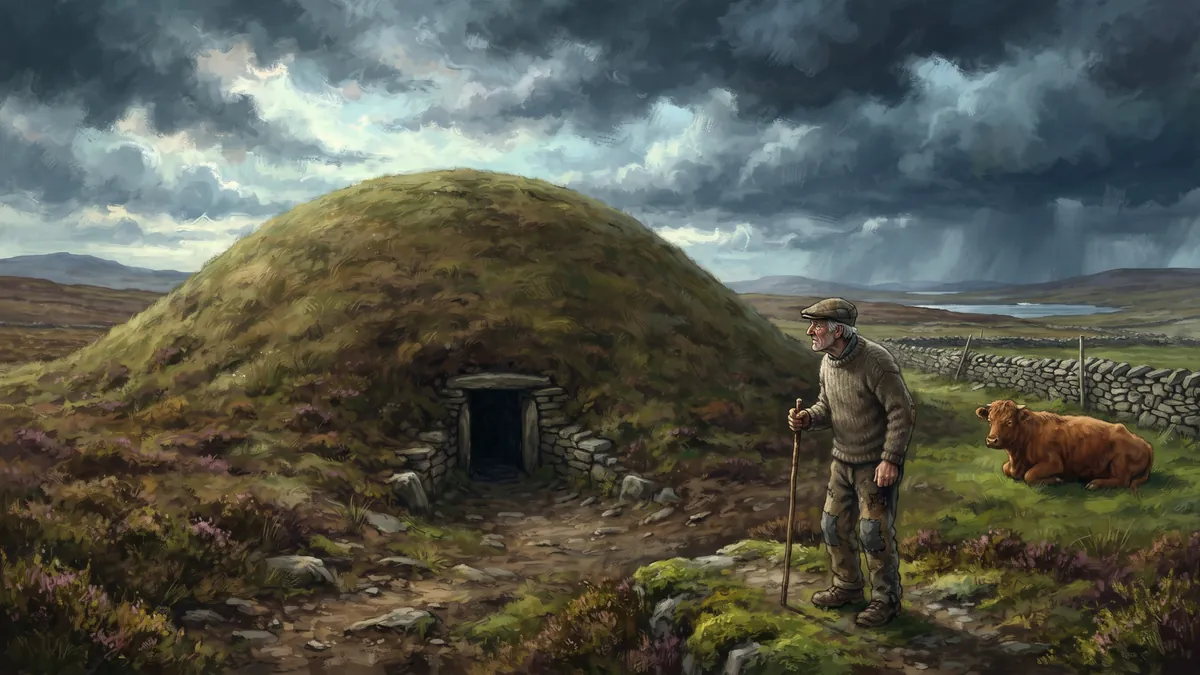
The hogboon, also written hogboy, is a character of the folklore of Orkney, in Scotland, the spirit that dwells in a burial mound. The name comes from Old Norse haug-búi, “the mound-dweller”. This piece uses two sources, a text from Digit Scotland and another from the site Ness of Brodgar, and separates what they state from what they leave open.
What the hogboon does
According to the first source, the hogboon was a spirit that grew angry when it felt slighted. An offended hogboon could cause storms, the death of cattle and trouble in marriages. One of the examples cited is the Hogboon of Hellihowe, in Sanday.
Maeshowe
The first source recalls Farrer’s notice of 1862 on Maeshowe, in which a strong man named Hogboy is mentioned. Maeshowe was excavated in 1861 and 1862, and has about 32 runic inscriptions. The second source tells that The Orcadian, of 20 July 1861, reported that the excavation had found two mummies and a skeleton ten feet long, or about three metres.
Taversoe Tuick
The first source also cites an account from 1898, at Taversoe Tuick, in Rousay, linked to a thunderstorm, recorded by Eliza Traill-Burroughs and published by D. M. Reynolds in 1985.
The stories fade
J. T. Smith Leask, in 1931, wrote that these stories were already forgotten.
The saga
The second source mentions the Orkneyinga saga, which tells that warriors sheltered in Maeshowe and that two of them went mad. It presents the link with the hogboon as the author’s inference, and not as something the saga says.
In brief
The hogboon is the spirit of a burial mound, and the name comes from haug-búi. When it felt slighted, it could bring storms, the death of cattle and trouble in marriages. The accounts cited run from Hellihowe, in Sanday, to Taversoe Tuick, in Rousay, and to Maeshowe, excavated in 1861 and 1862. The sources do not speak of offerings, and the link with the saga is an inference. It is folklore recorded in writing, and not a documented practice.
Terms
A burial mound is a mound of earth that covers a tomb. Runic describes the writing of runes. Haug-búi is the mound-dweller, in Old Norse. Folklore is the body of stories and beliefs of a people.
What remains uncertain
The sources do not speak of offerings, and for that reason this piece does not state any. There is no way to confirm the 1861 report of the mummies and the skeleton, which is a newspaper account cited by the source. The link between the mound of Maeshowe and the hogboon, and the madness of the saga’s warriors, is the author’s inference, and the first source also observes that these stories were already forgotten in 1931.
To find the hidden door of a mound by hot and cold clues, play The door of the mound.
Sources.
- Digit Scotland, "Think twice before excavating a mound" (Nela Scholma-Mason) (the hogboon, the name, accounts from Sanday and Rousay, Maeshowe)
- Ness of Brodgar, "Maeshowe – the mummies, the giant and the mound-dweller" (Maeshowe, the 1861 excavation, newspaper report, the Orkneyinga saga)