The saga of Króka-Ref: the sly Icelander who went through Greenland, Norway and Denmark
An Icelandic saga tells the life of Ref, son of Stein, who kills a man, builds a notable ship, goes to Greenland and wins from a king the nickname "the Sly". See what two sources say and where the doubts lie.
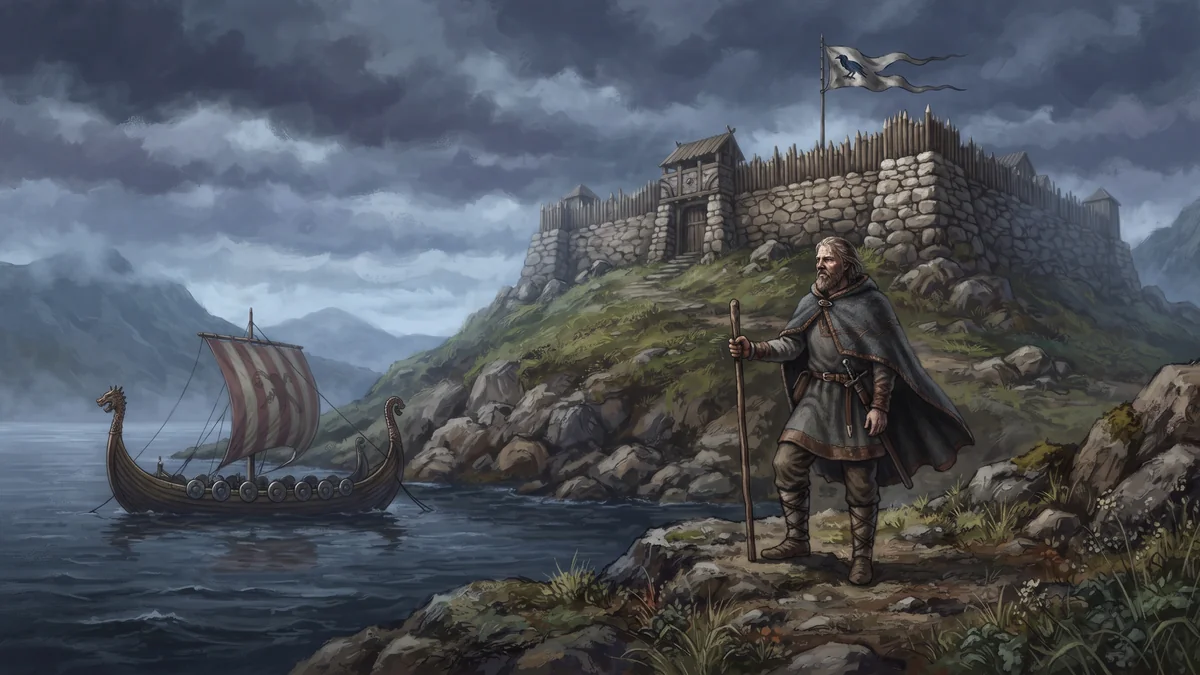
The Króka-Refs saga is an Icelandic saga about a man called Ref. This piece uses two sources, an entry of an encyclopaedia in English and an essay of the site Dark Company, whose author gives readings of his own that are not facts, and they are marked as such. The authorship of the saga is not known.
Time and places
The story is set around 950 to 1050, in Iceland, Greenland, Norway and Denmark. The saga was first recorded between 1350 and 1400, and the only complete version that survives is from the second half of the 15th century. The entry does not say whether Ref was a real person.
Ref’s life
Ref is the son of Stein and Thorgerd. He kills a man called Thorbjorn, and the name of Gest appears in the story. Ref builds a notable ship and goes to Greenland, where he marries Helga. King Harald Hardrada sends Bard. Ref raises a fortress, and Harald gives him the name “Ref the Sly”. Later Ref goes to Norway and Denmark, in the service of King Sveinn, and dies on a journey to Rome.
The rímur
In the 17th century, Hallgrímur Pétursson composed rímur, narrative poems, on the saga. This shows that the story went on being told after the Middle Ages.
The essay’s reading
The Dark Company essay is the opinion of its author. He finds a launch with wheels unrealistic, and says that Ref’s fortress is probably exaggerated. These are assessments, not findings. They serve as a critical reading, and not as proof that something did not happen.
Why the date matters
The story is set around 950 to 1050, and the saga was only recorded from 1350. Between one and the other there are more than three centuries, and the only complete version is later still. For that reason the text shows how the story was told at the end of the Middle Ages, and not a record made in the time of the events.
In brief
Ref leaves Iceland, crosses three countries, gets a name from a king and dies on the way to Rome. His story mixes a ship, a fortress and the sending of Bard by a king. The saga is a late text, and what the source tells is the plot, not a proven biography.
Terms
A saga is a prose narrative of medieval Iceland. Rímur are Icelandic narrative poems. A fortress is a construction for defence. Dating is the estimate of the time when a text was written.
What remains uncertain
Who wrote the saga, and whether Ref was a real person, is not said. The date of the text is centuries after the time in which the story is set. The details of Gest, of Bard and of the fortress appear in the sources in summary form, and the essay mixes plot and opinion. For that reason, what can be affirmed with safety is the plot, and not the facts behind it.
To push the crates onto the golden marks, like Ref with his ship, play Ref’s crates.
Sources.
- Wikipedia, "Króka-Refs saga" (plot, dating, manuscripts, rímur)
- Dark Company, essay on the Króka-Refs saga (plot and the essay author's own reading)