Flóamanna saga: Þorgils Orrabeinsfóstri and the voyage to Greenland
The Flóamanna saga follows Þorgils through four generations of an Icelandic family and takes the hero to Greenland, where he is shipwrecked and falls out with Eiríkr the Red. See what the text holds and what scholars debate.
The Flóamanna saga, also called Þorgils saga Ørrabeinsstjúps, is one of the sagas of Icelanders. This piece follows the article on the saga, which describes the manuscripts, the date, the plot and the discussions of specialists.
The manuscripts and the date
At least 67 manuscripts survive, attesting two medieval versions. The longer version, called M, is found mainly in the manuscript AM 445 b, 4o, with some material in AM 515, 4to. It probably best represents the original, but it survives only in fragments. The shorter version, X, is the source of almost all the other manuscripts. The saga is conventionally dated to about 1300. Richard Perkins proposed a date between 1290 and 1385, favouring 1290 to 1330, and suggested that Haukr Erlendsson might have sponsored or written the work.
Four generations
The saga covers four generations, from roughly 870 to 1020. Chapters 1 to 9 and 18 deal with Þorgils’s ancestors and lean on the version of the Landnámabók by Sturla Þórðarson. The text also adds legendary figures, such as Ragnarr Loðbrók, Sigurðr Fáfnisbani and Óðinn, from the saga of the Völsungs. The narrative opens in Norway, with Atli and his sons, and follows Hallsteinn Atlason in his migration to south-western Iceland.
Þorgils, the hero
In his prime, Þorgils is a classic hero, and one episode comes from Grettis saga. At 16 he goes to Norway and then to the British Isles, where he gains a sword and a Scottish bride. Later he gives his wife to his best friend and marries an Icelandic woman. He converts to Christianity, defying the god Þórr, who appears to him in dreams. In the last part, chapters 29 to 35, he becomes stubborn and difficult, remarries and dies at 85.
The voyage to Greenland
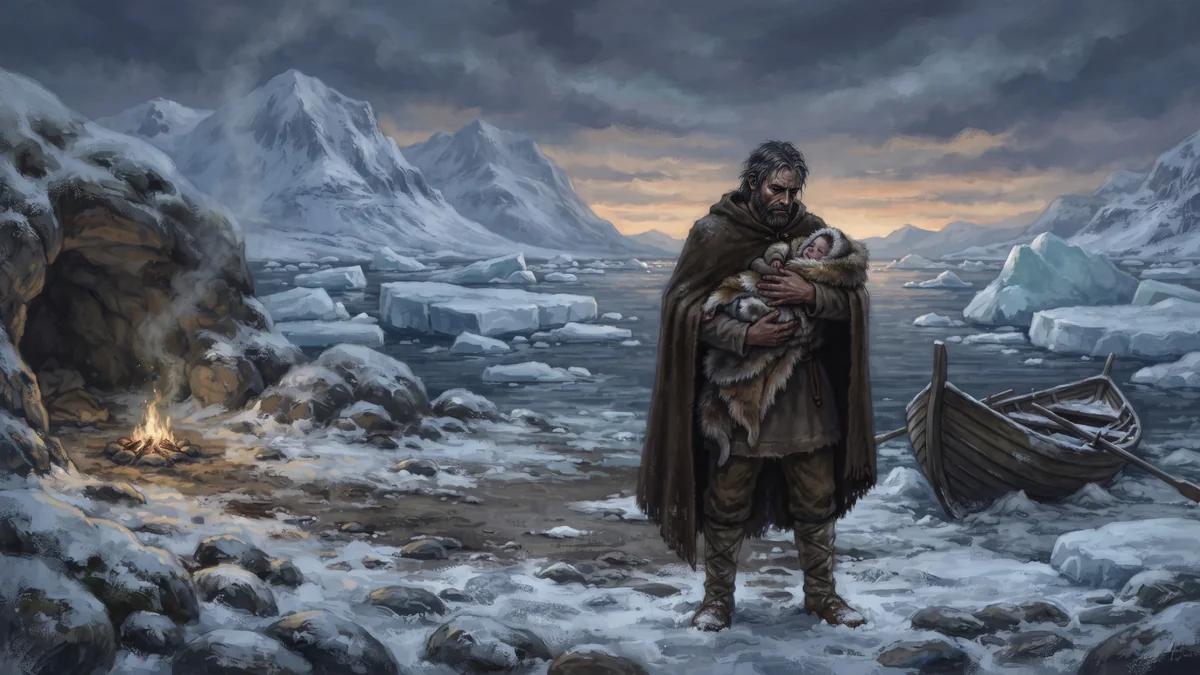
The voyage to Greenland is remembered for its realistic portrayal. Þorgils is shipwrecked, his companions fall ill and his wife is killed, leaving him with an infant to raise. The stay is cut short by his difficult relationship with Eiríkr the Red. He returns to Iceland by way of Ireland and Hálogaland.
In short
It is a family saga with a travelling hero whose character changes with time. The Greenland part stands out for its harshness and its detail.
Terms
Saga of Icelanders is a prose narrative about families of Iceland. Landnámabók is the book of settlements. Manuscript is a text copied by hand.
What remains uncertain
The date and the author are debated. The article says it is not certain whether the Greenland account comes from the author’s experience or from an informant. It also notes that the saga may have been influenced by Eiríks saga rauða, Grænlendinga saga and saints’ lives. Scholars read Þorgils as a blend of traditional Scandinavian honour with a European Christianity.
To gather provisions and dodge the blocks of ice that fall on the coast of Greenland, play Provisions in Greenland.
Sources.
- Wikipedia article "Flóamanna saga"
- Richard Perkins, studies on the dating of the saga, as cited in the article
- Landnámabók, in the version of Sturla Þórðarson, as cited in the article