 MMXXVI
Svein Asleifarson: the Orkney raider who went "viking" twice a year
Svein Asleifarson is one of the liveliest characters of the Orkneyinga saga: a farm on Gairsay, raiding in spring and autumn, and a death in Dublin around 1171. See what the saga says and how much of it is doubtful.
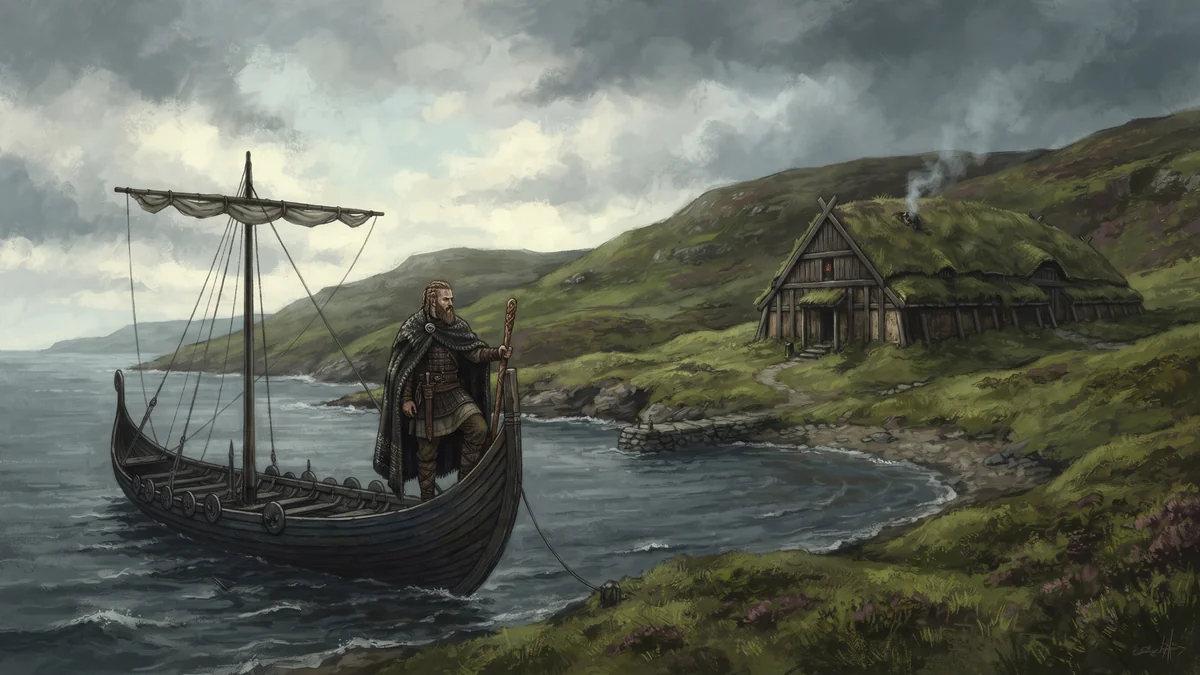
Svein Asleifarson, in English Sweyn Asleifsson, lives in the pages of the Orkneyinga saga, the saga of the earls of Orkney. The saga was written around 1200 by an unknown Icelandic scribe, and Svein’s story takes up about a quarter of it. It is the portrait of the raider the saga takes as typical of its time.
A life in two “vikings”
The saga calls him “the greatest man in the Western Lands, in olden times or present day”. He spent the winter at home, feasting and drinking. In spring he sowed his fields and then set out on what he called his “spring viking”, coming back after midsummer. After the harvest he went out again, on the “autumn viking”. The raids reached as far south as the Scilly Isles. His farm was on Gairsay, in Orkney.
The origin of the revenge
According to Wikipedia, which summarizes the saga, Svein was born in the early twelfth century, and his father, Olaf Hrolfsson, was killed by Olvir Rosta. Svein later attacked Olvir and killed his grandmother, and Olvir fled to the Hebrides. The saga also tells that around 1134 Svein killed Earl Paul’s cup-bearer in a quarrel over a drinking game and fled to Tiree, where Holdbodi Hundason sheltered him.
Wales and the Isle of Man
In 1140 Holdbodi invited Svein to raid the Welsh coast. They were beaten off. Holdbodi withdrew to the Isle of Man and Svein to Lewis. In early summer 1141 Svein went to Man to rejoin Holdbodi, but Holdbodi had allied with the Norman-Welsh lord Robert, who had defeated them the year before, and attacked Svein. A feud began.
The Isle of May
In one of the best-known episodes, Svein and his men, held by bad weather on the Isle of May, plundered the monastery and were pursued by the monks’ men. They sailed to Edinburgh, where King David I received Svein well and later compensated the victims from his own money. The date of the raid is not given in the sources I consulted.
Dublin and death
Around 1171 Svein attacked from Orkney and took Dublin. He went back to his ships for the night, and the citizens dug pits into which his men fell the next day. After a hard fight, the saga says Svein was the last to die. The events match the brief recapture of Dublin by Haskulf Rognvaldson, but the circumstances are uncertain, and the Anglo-Norman accounts differ. In his dying words he claims to belong to the bodyguard of Saint Rögnvald, which scholars read as either irony or sincerity.
What is doubtful
The saga was written decades later and describes events up to three centuries earlier, so its accuracy is doubtful. The identification of Svein with “John the Furious”, a warlord named by Giraldus Cambrensis, is only a hypothesis.
In short
Svein is the raider of two “vikings” a year, a landowner on Gairsay and the hero of a saga written after his death. What we know comes from it, and the facts should be read with caution.
To face the wind gusts of an Orkney sea, play The wind of the spring viking.
Sources.
- Orkneyinga saga (written around 1200 by an unknown Icelandic scribe)
- Caithness.org, article on Swein Asleifsson, with passages quoted from the saga
- English Wikipedia, article "Sweyn Asleifsson", for dates and episodes