The Oseberg and Gokstad ships: two Viking boats buried with their dead
Found in graves in Norway in 1880 and 1904, the Gokstad and Oseberg ships are among the best-preserved Viking vessels in the world.
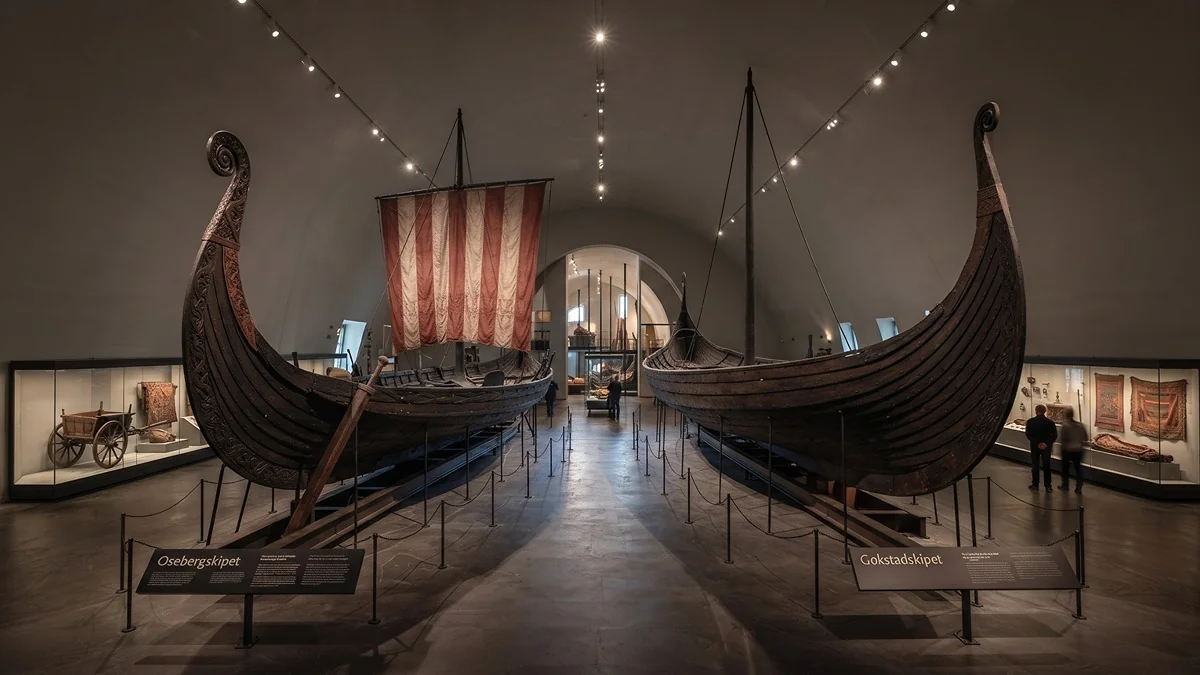
Two of the best-preserved Viking ships in the world were found in Norway, both inside graves. The Gokstad ship was discovered in 1880, in Sandefjord, and the Oseberg ship in 1904, near Tønsberg. Today they are in the Viking Ship Museum, in Oslo.
Buried with honour
High-status Vikings were sometimes buried inside ships, covered by a mound of earth. The bluish clay of the soil in the region protected the wood for more than a thousand years, which is why the boats survived almost whole.
The Gokstad ship is about 23 metres long and was built of oak. It had 16 oars on each side and a sail, and could sail on the open sea. In 1893, a replica, called Viking, crossed the Atlantic to Chicago, for the World’s Columbian Exposition.
The grave was dated to around the year 900. In it lay a man, whose identity is not known, buried with weapons, horses, dogs and other objects. The grave had already been plundered in ancient times.
The ship of the two women
The Oseberg ship is a little smaller, about 22 metres, and far more ornamented: the bow and stern carry carvings of interlaced animals. Because of its lower, more delicate hull, scholars see it as a vessel better suited to coastal waters and ceremonies than to ocean crossings.
Analysis of the tree rings of the wood used in the grave indicated that the burial took place in the year 834. The ship itself was built around 820.
Inside were the remains of two women. One was about 70 to 80 years old, the other younger, around 50. Also found were sleds, carts, a loom, kitchen utensils, sacrificed animals and fine textiles.
Who they were is an open question. Many scholars think one of them was of high rank, perhaps a queen or a priestess, but there is no proof of name or role. The popular idea that she was a specific queen is no more than a hypothesis.
What the boats teach
The finds show advanced knowledge of shipbuilding. The oak planks overlapped and were fastened with iron rivets, which gave the hull lightness and flexibility. For historians, these vessels help explain how the Vikings sailed so far, from the North Atlantic to the rivers of Eastern Europe.
Where to see the ships
Both boats are part of the collection of the Viking Ship Museum, on the Bygdøy peninsula, in Oslo, which also houses the Tune ship, another Norwegian find, as well as carts, sleds and carved wooden objects taken from the graves. The wooden objects from Oseberg, including a post with an animal head and decorated sleds, are among the museum’s best-known pieces.
The finds were excavated in the late 19th and early 20th centuries, and restoring the boats took years of work.
To build a hull yourself, play The Oseberg hull.
Sources.
- Viking Ship Museum, Museum of Cultural History, University of Oslo, information on the Oseberg, Gokstad and Tune ships
- Bonde, N. and Christensen, A. E., tree-ring dating of the Oseberg grave, *Antiquity* (1993)