The Birkebeiner and the ski crossing that saved the future King Haakon of Norway
In the winter of 1206, two skiers carried little Prince Haakon over snowy mountains to Trondheim. The escape became a symbol of Norwegian skiing.
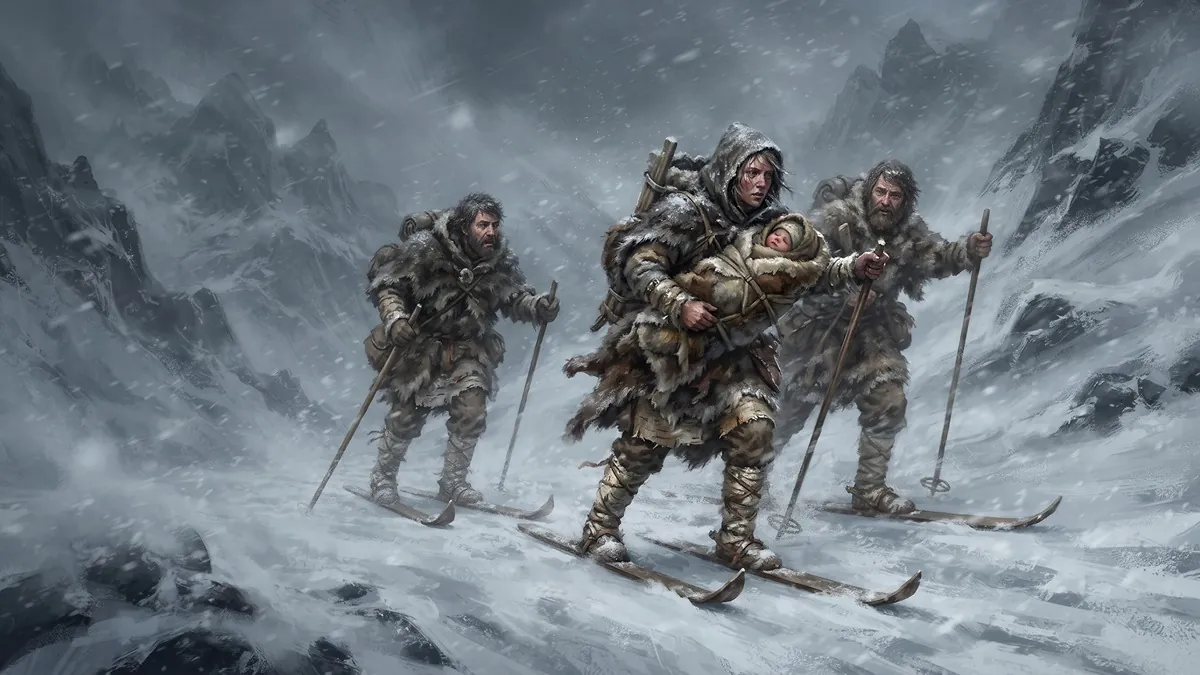
In 1206, in the middle of the Norwegian winter, two skiers crossed the mountains carrying in their arms a boy of about a year and a half. The child was the son of the dead king, and the future of Norway depended on his arriving alive. The episode is one of the most famous in the country’s history and still inspires a ski race today.
A Norway at civil war
In the late 12th and early 13th centuries, Norway lived through a long civil war between factions disputing the crown. On one side were the Birkebeiner, supporters of King Sverre and his heirs. The name, “birch legs”, is usually explained as a reference to the rags and birch bark they wore on their legs, and they were seen as poor. On the other were the Baglers, who backed another candidate for the throne.
In 1204 King Haakon III Sverresson, Sverre’s son, died, and soon afterward his son, Haakon Haakonsson, was born. The Baglers wanted to find the boy, the Birkebeiner heir, and eliminate him.
The crossing
According to the saga, in the winter of 1205 to 1206, the mother, Inga, and the boy were taken by a small group of fleeing Birkebeiner. To cross the mountains between Gudbrandsdalen and Østerdalen, two of the best skiers, Torstein Skevla and Skjervald Skrukka, went on with the child toward Trondheim, where he was safe.
Skiing was already an old practice in Scandinavia long before 1206. In Norse myths, the god Ullr and the goddess Skaði are associated with it, and prehistoric skis have been found in the region. The Birkebeiner crossing is remembered because it turned an everyday winter skill into an episode of political importance.
The prince who became king
The boy grew up protected by the Birkebeiner and was crowned in 1217 as Haakon IV, at thirteen. His long reign, until 1263, is associated with the end of the civil war and the consolidation of the kingdom. The main source is the Saga of Haakon Haakonsson, written by Sturla Þórðarson in the 1260s, at the request of a son of the king himself.
The race that remembers the crossing
The crossing is remembered every year in the Birkebeinerrennet, a ski race created in 1932 that links the mountains of Østerdalen to Lillehammer. Participants must carry a backpack of about 3.5 kilos, to recall the weight of the child.
Details vary by source, and the saga clearly has an interest in glorifying the royal family. The core of the story, however, is accepted by historians: a baby prince was saved by skiers in the mountains of Norway.
To ski down the mountain with the little prince, play The Birkebeiner crossing.
Sources.
- Sturla Þórðarson, *Hákonar saga Hákonarsonar* (1260s)
- Birkebeinerrennet organization, page on the history of the Birkebeiner