Fljótsdœla saga: Droplaug, Þórdís and a saga probably written much later
Fljótsdœla saga retells the story of the Droplaugarsons brothers and adds characters, family alliances and fantastical episodes. See the plot, the uncertain date and the readings the source proposes.
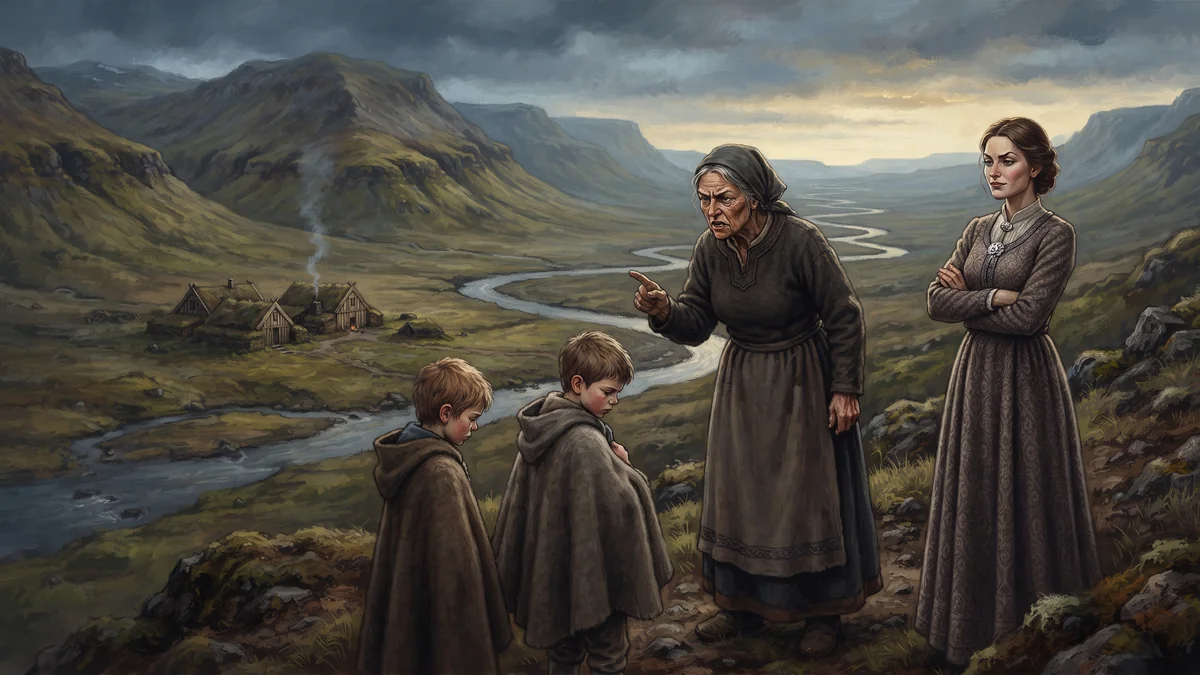
Fljótsdœla saga is one of the sagas of Icelanders and, according to the source consulted, probably the last one to have been written. It concentrates on the people of Fljótsdalur, in eastern Iceland, and the source describes it as a sequel to Hrafnkels saga. A large part of the text deals with families of northeastern Iceland who marry into local families. This piece separates what the source states from what it presents only as a possibility.
Date and manuscripts
The source says the saga was probably written in the 16th or 17th century, but makes clear that this is uncertain. The text survives in several manuscripts from the early 18th century. The author was probably from eastern Iceland.
The characters
The most prominent are the brothers Grímr and Helgi Droplaugarson, whose name comes from their mother, which the source points out as unusual. The mother, Droplaug Spak-Bersadóttir, is a widow whom the saga shows as powerful and cunning. Her husband, Þorvaldr Þiðrandason, of the Njarðvíkingar family of Fljótsdalur, drowned when his boat capsized in a storm. Among the other names are Þiðrandi, the old, chieftain and patriarch of the Njarðvíkingar; Helgi Ásbjarnarson, grandson of Hrafnkell, married to Þórdís, called Todda; and Geitir Lýtingsson, of Krossavík in Vopnafjörður, who marries Hallkatla, daughter of Þiðrandi.
The plot, in outline
The source says Droplaug was a princess from the Shetland Islands, rescued from a giant by Þorvaldr, whom she later married. The source itself classes this kind of episode as fantastical. Droplaug grew distant from her sons until they killed Þorgrímr, nicknamed Dungbeetle, for slandering their mother. The slander falsely linked Droplaug to Svartur, a slave. Droplaug’s cold counsel, the source says, indirectly pushed her sons toward violence. She also told them to stop hunting birds, which the source reads as a sign that the activity made them look more like Svartur than like their father, and it links the scene to a passage in the Eddic poem Rígsþula.
Þórdís and the Norwegian
Þiðrandi Geitirsson, a beloved character, is accidentally killed by the son of a Norwegian hersir. Þórdís wants to avenge him, even against her husband’s wishes, by sending the Norwegian to her brother, Víga-Bjarni. Helgi reminds Þórdís of her humble origins and threatens to send her back to Hof if she persists. In the end, Helgi and Þórdís receive payment for protecting the Norwegian.
The themes, with caution
The source proposes that the saga may reflect the situation of Iceland in the 15th or 16th century, under Danish rule in the Kalmar Union, and that it may have wished to address social class under a monarchy. It also says that the kinship ties between Fljótsdalur and Vopnafjörður are probably based on fact, and that the stories were perhaps kept to reinforce alliances between chieftains. It points out, too, that in this narrative justice can be shaped by wealth and power.
Terms
Hersir is a Norwegian military leader. Rígsþula is an Eddic poem. A sequel is a work that continues another. The Kalmar Union is the union of Scandinavian kingdoms that began in 1380.
What remains uncertain
The date of composition is given as “perhaps” the 16th or 17th century, and the author’s origin as “probably” eastern Iceland. The saga’s social and political motives appear as “may reflect” and “may have wished”. The source describes Droplaugarsona saga as a similar tale about the same brothers, without giving further details.
To put out the torches of a valley, one by one, without lighting others by accident, play The torches of the valley.
Sources.
- Wikipedia, "Fljótsdæla saga" (probable dating in the 16th or 17th century, characters, plot, relation to Droplaugarsona saga, themes)