The papar: the "Christian men" the sources say lived in Iceland before the Norse
The papar are "Christian men" who, according to medieval Icelandic sources, lived in Iceland before the Norse. See what two sources say, what they rest on and why archaeology has not yet confirmed their presence.
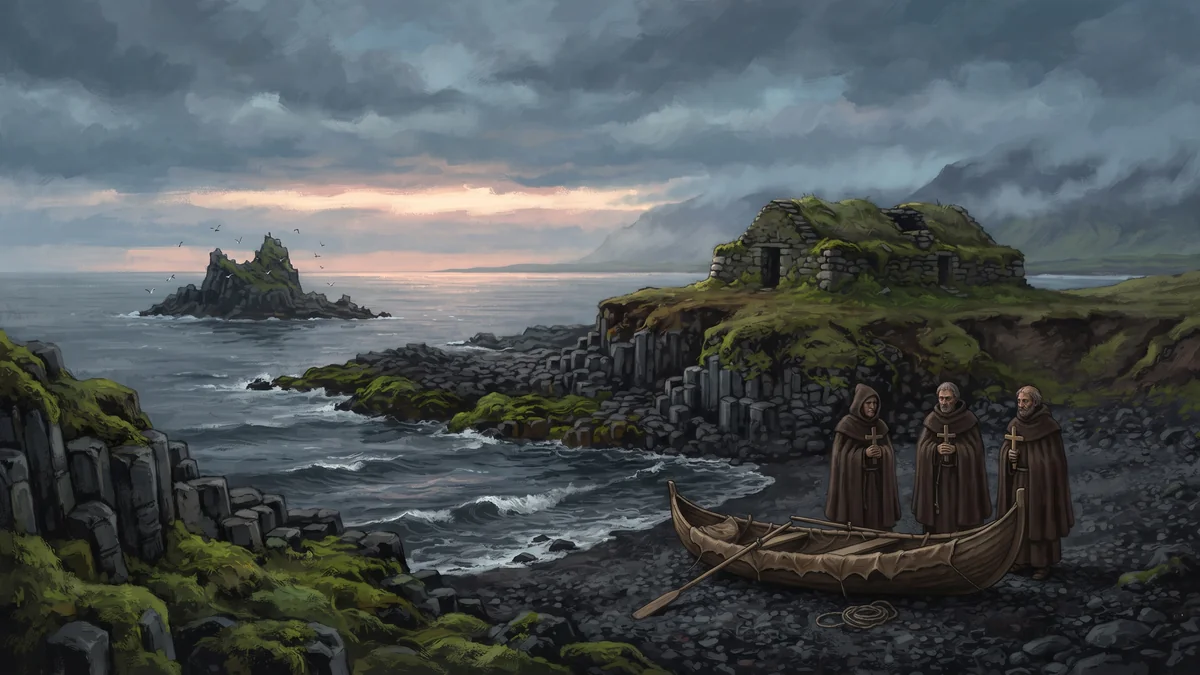
The papar are “Christian men” mentioned in the medieval sources of Iceland as inhabitants of the island before the arrival of the Norse. This piece uses two sources, an entry of an encyclopaedia in English and a text from the site Hurstwic on the settlement of Iceland, and separates what they state from what they leave open.
What the written sources say
The Íslendingabók, by Ari, written between 1122 and 1133, states that there were on the island “Christian men”, called papar, who left when the Norse arrived. The Landnámabók tells that Irish monks left books, bells and crosiers. The first source also cites Dicuil, who speaks of “holy men”, and the Historia Norwegiæ, which describes the papar differently. It also mentions Grímr Kamban and the Færeyinga saga.
Place names
There are place names that carry the word papar: Papey and Papafjörður, in Iceland, and Paparøkur, in the Faroe Islands, among others. The source cites them as a sign that the name circulated, and not as proof of who lived there.
The dating of the settlement
The second source places the beginning of the Norse settlement in 874, with Ingólfur, according to the Landnámabók. Tephrochronology, which dates layers of volcanic ash, supports a date around 872. The settlement would have been complete by about 930.
What archaeology has shown
The second source states that archaeology has not proved the presence of the papar. Ruins called Írskra búðir, attributed to them in tradition, are later than the Norse settlement. The source also cites traces in names such as Papafjörður.
Two sources, two roles
The first source gathers the medieval texts and the place names, and shows that the idea of the papar appears in more than one text and in more than one place in the North Atlantic. The second source looks at the settlement: it gives the dates, 874 and about 872 by the ash, and says what archaeology has found and not found. Together they show the written tradition on one side and the lack of material confirmation on the other.
Terms
Papar is the word used in the sources for the “Christian men” of the island. A crosier is a cleric’s staff. Tephrochronology is dating by layers of volcanic ash. A place name is the name of a locality.
What remains uncertain
Neither source demonstrates that the papar lived in Iceland. The written ones are late in relation to the settlement, since the Íslendingabók is from the 12th century, and archaeology has not confirmed their presence. The sources differ in how they describe them: Irish monks, in the Landnámabók, and another description in the Historia Norwegiæ. The place names show that the word existed, but not that anyone lived in those places. It is also not known how long they would have stayed or where they went.
To fill and pour water between skins until the requested amount is measured, as on a hermits’ voyage, play The waterskins of the papar.
Sources.
- Wikipedia, "Papar" (Íslendingabók, Landnámabók, place names, other sources)
- Hurstwic, "Settlement of Iceland" (dates of the settlement, traces attributed to the papar, the state of archaeology)