The saga of Finnbogi the Strong: from the exposed infant to Constantinople and Iceland
An Icelandic saga tells of an abandoned infant who is given the name Finnbogi, serves in Norway, goes to Constantinople and receives from an emperor the epithet "the Strong". See what two sources say and what remains unanswered.
The Finnboga saga ramma is an Icelandic saga about a hero called Finnbogi. This piece uses two sources, an entry of an encyclopaedia in English and an entry of the Store norske leksikon, a Norwegian encyclopaedia. What is a discussion among scholars is marked.
The plot
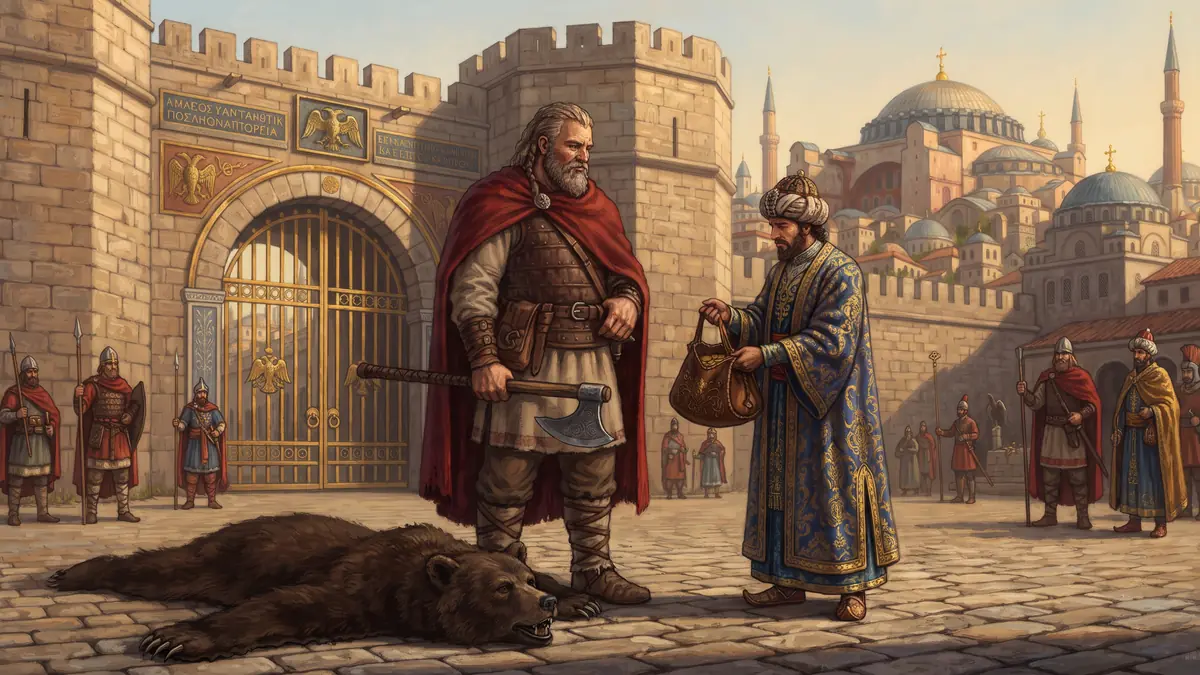
An infant is left exposed and is given the name Urðaköttr. Later he is renamed Finnbogi. Grown, he goes to Norway, to Jarl Hákon, and kills a man called Álfr. He kills a bear and, in Constantinople, collects a debt from Bersi.
The epithet
Emperor John I Tzimisces gives Finnbogi the epithet rammi, which means “the Strong”. The epithet goes with him from then on.
Back in Iceland
Finnbogi returns to Iceland and enters into disputes with Þorvaldr moðskegg, Eyjólfr and Jökull. According to the summary, the plot in Iceland turns on these disputes.
Three names
The hero has three names in the course of the saga. First he is Urðaköttr, the infant left exposed. Then he is Finnbogi, the name he comes to use. Last comes the epithet rammi, given by the emperor, which he carries together with the name. The names mark the stages of his life in the plot.
Manuscripts and dating
The saga survives in the Möðruvallabók, from about 1350, catalogued as AM 132 fol., and in the Tómasarbók, AM 519 4to, of the 15th century. The entry speaks of 41 manuscripts in total. The saga was probably composed in the 14th century.
Debate and afterlife
The relation to the Vatnsdæla saga is discussed, and Ólsen and van Hamel are cited in the debate. There are rímur on the saga from 1686 and a ballad from the Faroe Islands.
How the sources complete each other
The two entries together give the plot, the manuscripts, the debate on the Vatnsdæla saga and the rímur, and one completes the other in the details. Whoever reads both is left with a picture of the text, but not with proof that the facts occurred.
In brief
Finnbogi follows a path that goes from a humble beginning, as an exposed infant, to a fame that reaches Constantinople and ends in disputes in Iceland. The word rammi sums up what the saga wants to say of him, and the sources tie the epithet to the emperor.
Terms
An epithet is a nickname that accompanies a name. Jarl is a Nordic title of a noble. An exposed infant is one left in the open. Rímur are Icelandic narrative poems.
What remains uncertain
The saga was written centuries after the facts it narrates, and the sources do not say whether Finnbogi existed. The exact link with the Vatnsdæla saga is debated, and opinions differ. The number of manuscripts and the dates are approximate. The details of the disputes in Iceland appear in summary form, and what is affirmed here is the general plot.
To land the blow when the marker is in the golden zone, like a hero who deserves the epithet, play Finnbogi’s strength.
Sources.
- Wikipedia, "Finnboga saga ramma" (plot, manuscripts, dating, relation to the Vatnsdæla saga)
- Store norske leksikon (snl.no), entry on the Finnboga saga ramma (plot, manuscripts, rímur)