The saga of Bósi and Herrauðr: the treasurer Sjód, the purse and the curse of the sorceress Busla
An Icelandic saga tells of a king, his son, a treasurer whose name would give "purse" and a sorceress who curses a king. See what two sources say about the Bósa saga ok Herrauðs and what remains uncertain.
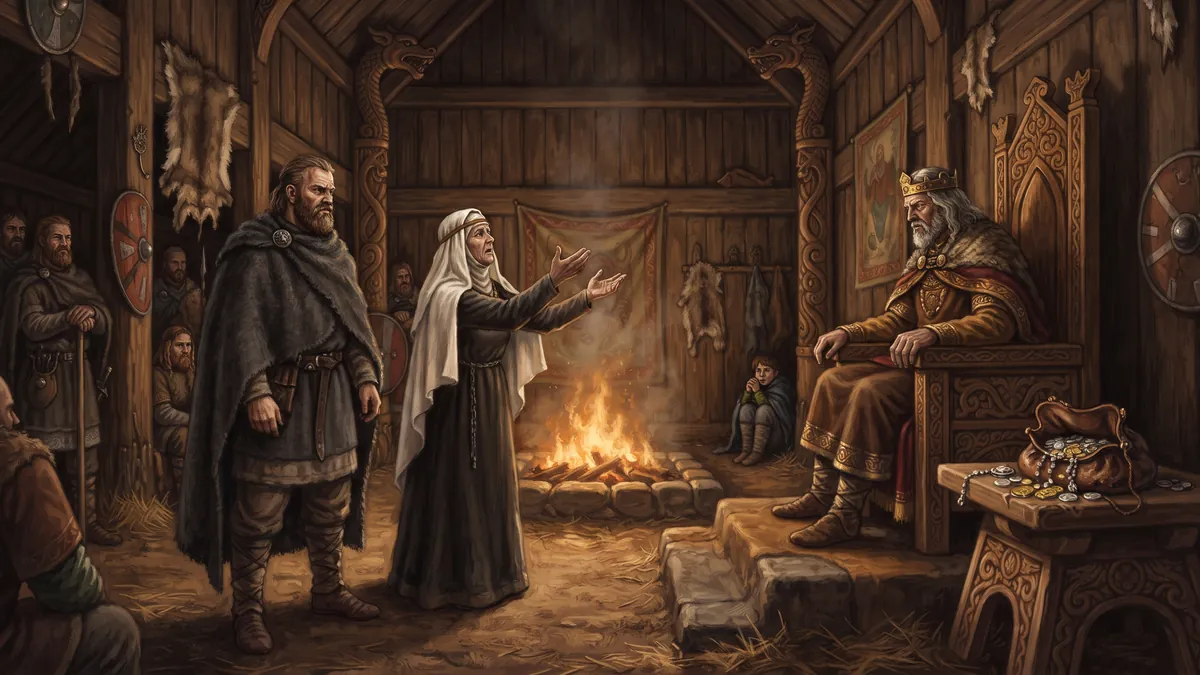
The Bósa saga ok Herrauðs is a late Icelandic saga, written well after the time in which it is set. This piece uses two sources, an entry of an encyclopaedia in English and the page of the database Arlima on the saga, with data on the manuscripts. What is the reading of scholars or a classification is marked.
The characters
Hring is the king of Östergötland. Herraud is his son. Sjód is the king’s treasurer and tax collector, and the saga says that the word “sjóðr”, which means “purse”, comes from his name. Bósi is the son of Thvari and Brynhild and was fostered by the sorceress Busla.
What happens
Among the episodes, Bósi kills Sjód, and Busla curses King Hring, in a text known as the Buslubæn, “Busla’s prayer”. There is a quest for the egg of a vulture in Bjarmaland. There is a fight at Bråvalla. Þóra Town-Hart appears, with her serpent, and Ragnar Lodbrok. Nothing in the summarised sources says the exact order in which all this occurs.
The manuscripts
According to Arlima, one of the manuscripts is AM 586 4to. The entry says that there are three manuscripts of the 15th century. The saga falls into the category of legendary sagas, which tell of a distant past with much fantasy, and the chronology is flattened, with characters of different times in the same story.
Translations
There is a translation into English made by Pálsson and Edwards, of 1968, with a new edition in 1985.
Two sides of the plot
According to the summary, two episodes set opposite sides face to face: the death of Sjód, who looks after the king’s purse, and the curse of Busla against King Hring. On one side are Bósi and the sorceress who fostered him, and on the other are the king and the treasurer. The quest for the vulture’s egg, the fight at Bråvalla and the characters who appear later come as other episodes of the saga.
In brief
The saga joins a king, a son, a treasurer, a sorceress’s foster-son, a curse and a quest in a distant place. It is an adventure narrative and not a historical record, and the explanation of the word “purse” from the name of Sjód is the explanation that the saga itself gives.
Terms
A legendary saga is a saga that tells of a remote past, with fantastic elements. Etymology is the origin of a word. A manuscript is a text written by hand. A curse is a spoken wish of harm.
What remains uncertain
The sources do not say who wrote the saga. The chronology is flattened, and for that reason the characters do not serve to date anything. The etymology of the name of Sjód is the explanation given by the saga itself, and should not be taken as proof of the origin of the word. The exact role of each episode in the plot is not detailed in the sources used here.
To gather coins up to the right value of the purse, play Sjód’s purse.
Sources.
- Wikipedia, "Bósa saga ok Herrauðs" (characters, plot, editions and translations)
- Arlima (Archives of Icelandic and Old Norse literature), page of the Bósa saga ok Herrauðs (manuscripts)