Trow: the mound spirits of Orkney and Shetland, the fiddlers and the dance of stone
In Orkney and Shetland, folklore speaks of the trows, spirits that live in mounds, come out at night and love fiddle music. See what two sources say about them, where the name comes from and what remains in doubt.
Trows are spirits of the folklore of Orkney and Shetland. This piece uses two sources, an entry of an encyclopaedia in English and a PDF text of the site medievalists.net. Ideas of origin that are one author’s interpretation are marked.
Who they are
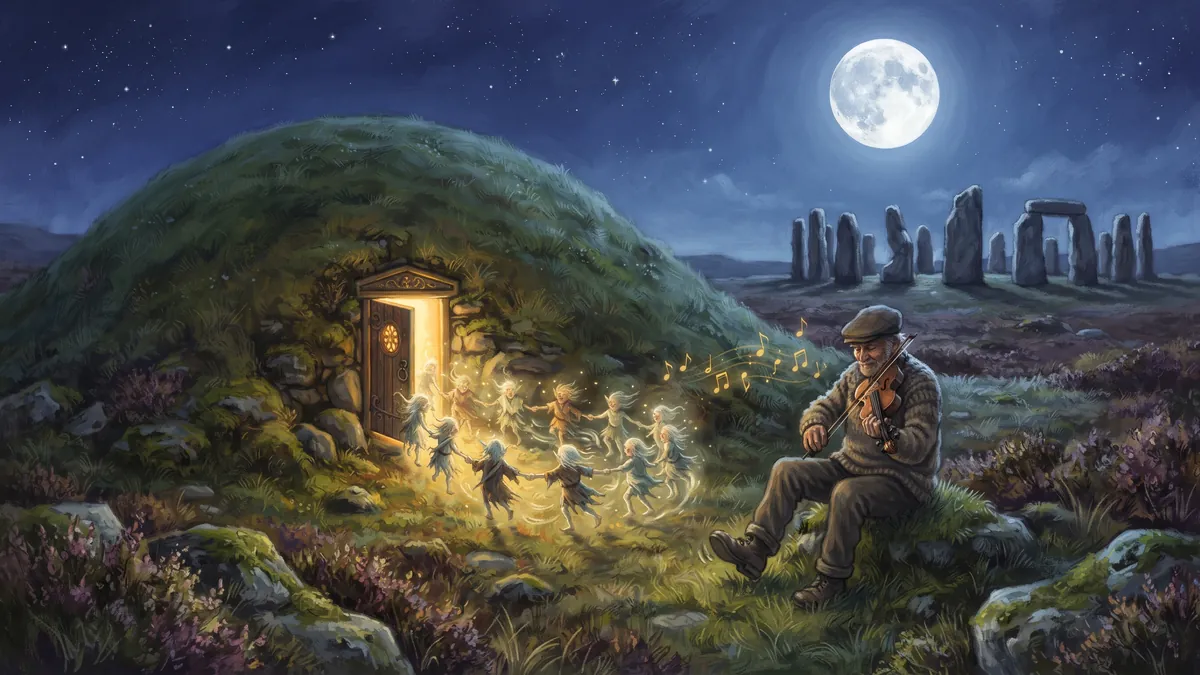
Trows are spirits that live in mounds. There are hill-trows and sea-trows. They are nocturnal, and the tradition says that they love fiddle music. According to the stories, they take fiddlers into the mounds, and there time passes in a different way from outside.
The name
The origin of the word is debated. One hypothesis links it to troll. Another links it to draugr, the Norse word for a walking dead man, or to a form of the drow type. Jakobsen and the Scottish National Dictionary are cited in this discussion. Another word, haugbúi, “the one who lives in the mound”, gave rise to hogboon, another being of the folklore of Orkney.
The dance of stone
In Fetlar, in Shetland, there are the stones of the Haltadans. It is said that they are trows who were dancing and turned to stone. It is a popular explanation, and the sources tell it as tradition, not as a fact about the stones.
A record of 1529
The entry mentions a reading of “trowis” in a text by Jo. Ben, of 1529. That reading is disputed, and for that reason it is not a firm basis for dating the word.
Two explanations of origin
Marwick argues that the trows descend from the trolls, and Towrie links them to the draugar. Emerick makes a synthesis of the two ideas, but she herself presents it as speculation of her own. Joan Dey proposes a link with the Norse conquest of the islands, and that too is speculative.
How the sources complete each other
The entry gives the description, the hill-trows and sea-trows, the etymology, the Haltadans and the reading of 1529. The medievalists.net text brings the proposed origins and the interpretations of Marwick, Towrie, Emerick and Dey. For that reason the descriptive part comes from the first source and the part of hypotheses comes mostly from the second.
In brief
The trow is a mound spirit that comes out at night and loves the fiddle. The word is debated, and the explanations of origin are interpretations. The stones of Fetlar keep a tradition about dancers turned to stone.
Terms
Folklore is the body of stories and beliefs of a people. Draugr is a walking dead man, in Norse tradition. Etymology is the origin of a word. Haugbúi is the dweller of the mound.
What remains uncertain
The etymology of trow, whether from troll or from draugr, is not settled. The reading of “trowis” in 1529 is disputed. Emerick’s synthesis is speculation of hers, and Dey’s idea about the Norse conquest is also speculative. What the stories say about time in the mounds is tradition, and there is no proof of any of it.
To repeat the melody in the right order, like one learning a trow tune, play The melody of the trows.
Sources.
- Wikipedia, "Trow (folklore)" (description, hill-trows and sea-trows, etymology, Haltadans, 1529)
- medievalists.net, PDF text on the trows (proposed origins, interpretations of Marwick, Towrie, Emerick and Dey)