Little Freddy with his Fiddle: the Norwegian tale of the fiddle that makes everyone dance
A poor boy gives his three pennies to three beggars and gains three wishes: a fiddle that makes people dance, a gun that never misses and the power not to be refused. See the plot of the tale and what stays open.
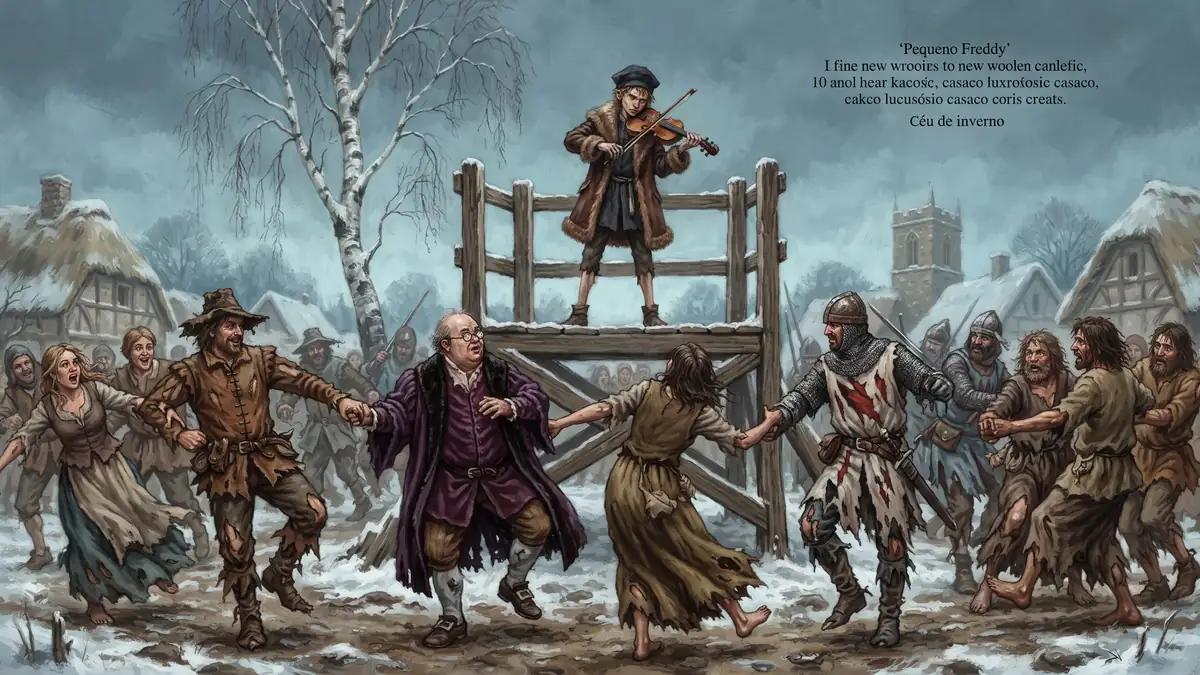
Little Freddy with his Fiddle is a Norwegian tale, collected by Asbjørnsen and Moe and translated into English by George Webbe Dasent in Tales from the Fjeld. This piece summarizes the plot from the English translation I consulted, and so the names follow the English.
A poor boy
Freddy is the only son of a poor cottager, frail and small, and no good for farm work. The family has little food, and his father cannot find anyone to hire him. The sheriff takes him on for three years, only for board, with wages of a penny a year. When the term ends, Freddy receives three pennies and no clothes, although his rags are falling apart.
The three beggars
Freddy sets out to buy clothes and climbs a mountain pass, where he meets three beggars, each taller and more ragged than the last. Each asks for a penny, and Freddy gives. The beggar seems to be the same man in disguise, putting the boy to the test. As Freddy has given everything he had, the beggar grants one wish per penny. Freddy asks for a fiddle that makes everything alive dance, a gun that never misses and, for the third, that no one can refuse his first request.
The sheriff, the magpie and the gallows
The next day, Freddy asks for clothes, a horse, a sledge and a fur coat, and everyone grants them, even the stingiest. He meets the sheriff, who hardly remembers him. Freddy shoots a magpie from far away, and the sheriff bets his horse, his servant and a large sum that he will not hit it. The bird falls into a bramble thicket, the sheriff goes in to fetch it, and the fiddle makes him dance until his clothes are rags. Freddy collects the wager.
At an inn, Freddy plays, and everyone dances. The sheriff accuses him of robbery and attempted murder, and he is sentenced to hang. Watchmen and soldiers who try to arrest him are forced to dance until they collapse. They finally catch him asleep. At the gallows, Freddy asks to play one last tune, and the third wish means no one can refuse. He plays, and everyone dances, the clergy, the lawyer, the bailiff, the sheriff, the servants and the animals. The sheriff, tied to a birch, scrapes his back raw on the trunk. Freddy walks away with his fiddle and gun, and lives happily.
In short
It is a tale of a poor boy who wins by kindness and cleverness, with a magic object that makes the powerful look ridiculous. The ending is a satire of justice.
Terms
Sheriff here is the local authority of the tale, in the English translation. Magpie is a bird with black and white feathers. Gallows is the platform for hanging.
What remains uncertain
There is no date of collection in this piece, and the text depends on the English translation consulted. The identity of the beggar is not stated outright. Other versions of the tale may differ in the details of the plot.
To play the fiddle in the right rhythm and make everyone dance, play The fiddle that makes them dance.
Sources.
- Tale "Little Freddy with his Fiddle", by Asbjørnsen and Moe, in English translation (Tales from the Fjeld, by George Webbe Dasent)
- English version of the tale consulted online (Project Gutenberg and Wikisource)
- Asbjørnsen and Moe, Norske Folke-Eventyr