The thirteen Jólasveinar of Iceland and the Christmas nights of naughty lads
The Jólasveinar are thirteen figures of Icelandic Christmas, one per night. See the names and mischief of each, the 1746 ban on scaring children, the 1932 poem that fixed the list, and what remains uncertain.
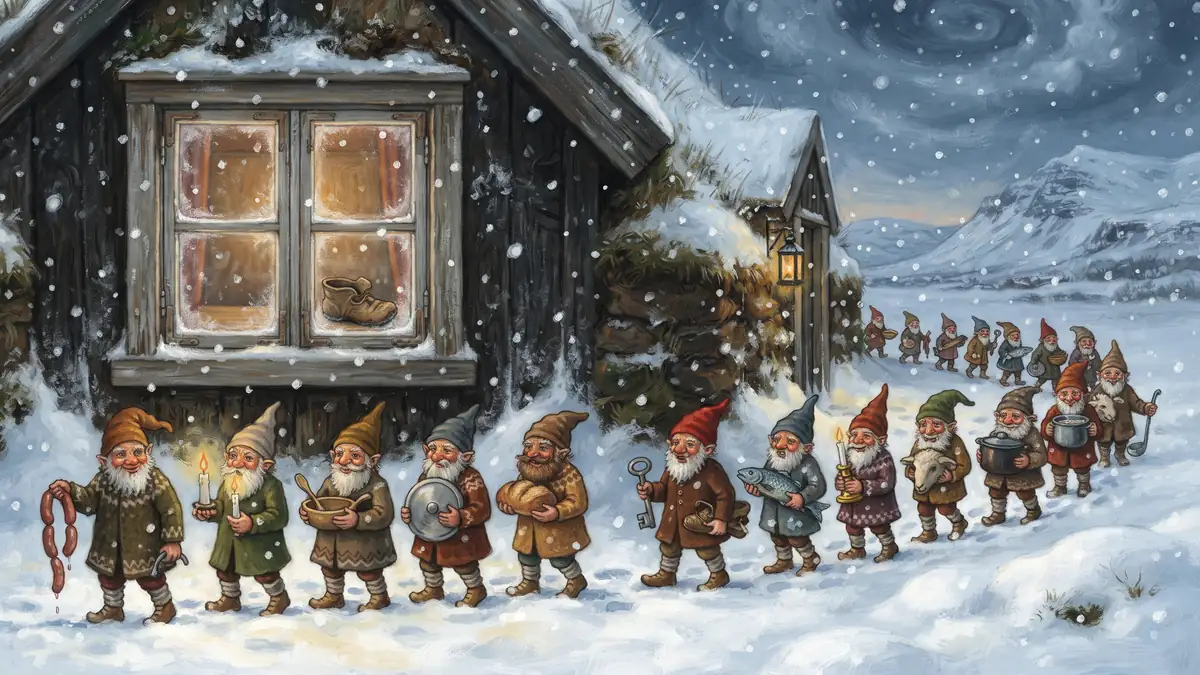
In Iceland, Christmas does not arrive on a sleigh. It arrives little by little, over thirteen nights, with thirteen visitors who enter houses to steal food and make noise. The Jólasveinar, or “Yule Lads”, are friendly figures today, but they were not always.
Thirteen nights, thirteen names
The Jólasveinar come one per night on the thirteen nights before Christmas. Children put a shoe on the windowsill each night. Those who behaved find a sweet, and those who misbehaved find a rotten potato. Each lad has a name that says what he does. In the list Icelanders use today, in order of arrival, are Stekkjastaur, who tries to nurse from the ewes, and Giljagaur, who steals the foam from the milk. Then come Stúfur, the little one who steals food from frying pans, Þvörusleikir, who licks spoons, Pottaskefill, who steals dirty pots to scrape them, and Askasleikir, who steals bowls kept under the bed. Next are Hurðaskellir, who slams doors, Skyrgámur, who gobbles the skyr, Bjúgnakrækir, who steals sausages, and Gluggagægir, who peeps through windows. The list closes with Gáttaþefur, with an enormous nose, who sniffs out bread, Ketkrókur, who hooks hanging meat, and Kertasníkir, who steals candles, which in old Iceland were valuable.
From fright to gift
The Jólasveinar were scarier in the past. In 1746, according to the sources, parents were officially forbidden to scare children with monster stories about them. Many different names appear in the old folk tales, and the list of thirteen names became known to everyone only in 1932, when Jóhannes úr Kötlum published the poem in the book Jólin koma, “Christmas is coming”. Most Icelanders still use the names from that poem.
A folklore family
In popular tradition, the lads are the sons of the ogress Grýla, who has another story on this site. They share the Christmas folklore with the Christmas cat, the Jólakötturinn. The shift from figures of fear to figures of gifts is similar to what happened with other winter traditions in Europe.
In short
The Jólasveinar are thirteen lads of Icelandic folklore who visit houses on the thirteen nights before Christmas. The list of names was fixed in Jóhannes úr Kötlum’s poem in 1932, and their power to frighten faded after the ban of 1746.
Terms
Jólasveinar is the plural of jólasveinn, “Yule lad”. Skyr is a thick Icelandic dairy product, similar to yogurt. Shoe on the windowsill is the custom of leaving footwear out to receive the gift.
What remains uncertain
The sources consulted do not give the dates of the first mention of each Jólasveinn or explain how each name arose. It is also unclear how much of the mischief comes from old beliefs and how much was added by writers of the nineteenth and twentieth centuries.
To hide the right food before each lad steals it, play The guarded supper.
Sources.
- Jóhannes úr Kötlum, Jólin koma (1932)
- Smithsonian Magazine, "Meet the Thirteen Yule Lads, Iceland's Own Mischievous Santa Clauses"
- Wikipedia, "Yule Lads"