 MMXXVI
Halldór Snorrason and King Harald: the quarrel over half a mark of silver in Morkinskinna
An Icelander who knew Harald Hardrada from his days in Constantinople quarrels with the king over a ship, a humiliating Yule and half a mark of silver the king refuses to pay. See the plot of the tale.
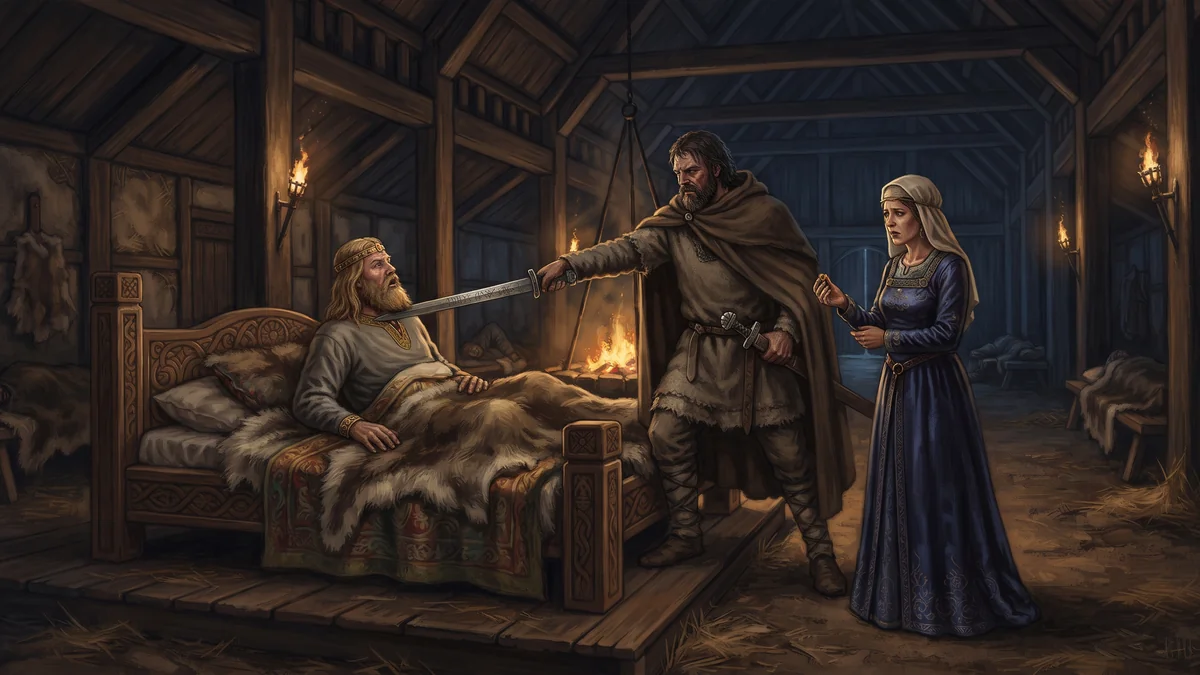
Among the stories that Morkinskinna keeps about King Harald Hardrada, there is one in which the king is not even the hero. It is the tale of Halldór Snorrason, the second about him, and it tells of a quarrel between the two over something anyone understands: money.
Who Halldór is
Halldór Snorrason is the son of Snorri the chieftain (goði) and an ancestor of Snorri Sturluson. He had been a friend of Harald since before Harald was king, when both served in the Varangian Guard in Constantinople. He entered Harald’s service after Harald became king. The text insists on treating him as a man of low birth, despite his powerful family in Iceland. Wikipedia says Harald distrusted him because of his strength of character, especially when Halldór commanded other men.
The ship and the lie about war
Halldór wanted to return to Iceland, but was too poor. Harald gave him a ship, which he could not crew. The king then claimed there was war with King Sweyn II of Denmark, and this let Halldór recruit men. He sailed for Iceland and returned a year later.
Yule
At court, Harald mocked Halldór’s drinking and loyalty, apparently to hide the declining drinking tolerance of Thorir, one of the older followers. At Yule, bribed bell-ringers caused a breach of etiquette, and Halldór was made to sit in straw and drink a forfeit-cup. At first he refused, but Harald forced him after Halldór insulted the king. That evening, Halldór accused the king of paying in impure silver.
The king’s ship
After Yule, Harald ordered Halldór onto the king’s ship, which crashed while Harald was trying to override Halldór’s orders. Halldór threatened to leave, but Bard, a companion who acts as a voice of reason, persuaded him to stay, with the promise of payment in pure silver and a ship of his own. Svein, a ship’s owner, disapproved of the king’s orders and took the ship back, and Halldór regained control of it. To end the dispute, Harald bought the ship and returned it to Svein. Wikipedia itself says the wording here is unclear.
The half mark
Almost all of the payment was made, but the king refused to pay the last half mark. With spring approaching, Halldór wanted to leave.
So he woke the king and queen with a sword at the king’s throat and demanded the gold. Harald offered to pay the next day. Halldór refused and demanded the queen’s ring. Harald suggested he get a scale to weigh it. The queen criticized the king’s stinginess and gave Halldór the ring. He fled to Iceland.
The invitation
The following season, Halldór received a message inviting him back to court, saying he “will have a higher place than any man of low birth”. He took it as a veiled threat of hanging and did not return.
What scholars see
Wikipedia says scholars have used the tale to argue for links between Icelandic and Norwegian identity, to suggest that Norwegians viewed Icelanders as low-status, and to characterize Harald’s erratic attitude toward money. It has also been proposed that Halldór’s close ties to Harald passed family traditions down the generations, and perhaps supplied Snorri Sturluson with material for King Harald’s Saga in Heimskringla.
In short
It is a story of a proud Icelander and a miserly king: a ship without a crew, an invented war, a humiliation at Yule and a sword at the royal bed over half a mark. The end is an invitation that Halldór reads as a threat and refuses. Wikipedia gives no date for the tale or for Morkinskinna.
To tell who did what at court, play Who did what at court.
Sources.
- English Wikipedia, article "The Tale of Halldor Snorrason II" (Halldórs þáttr Snorrasonar inn síðari), preserved in Morkinskinna
- Theodore M. Andersson, The Growth of the Medieval Icelandic Sagas (1180-1280), cited on Wikipedia
- Snorri Sturluson, King Harald's Saga (Heimskringla), cited on Wikipedia