 MMXXVI
Völsa þáttr: King Olaf and the household ritual of the völsi in the Flateyjarbók
Völsa þáttr is a short tale in the Flateyjarbók, set in 1029. In it, King Olaf arrives in disguise at a farm where a family worships a pagan object. See what the text tells and why scholars treat it with caution.
Völsa þáttr is a short tale, a “þáttr”, that survives only in the Flateyjarbók, an Icelandic manuscript, within a chapter of the saga of Olaf the Saint. The reference page says the text is probably from the 14th century, though the story is set in 1029, when Scandinavia was still largely pagan.
The family and the object
On a remote headland live an old man, an old woman, their brisk son, their intelligent daughter and several thralls. A thrall butchers a horse and is about to throw away the animal’s organ. The son takes it and makes a joke at a slave woman’s expense. The daughter asks him to throw it away, but the old mother stands and says the thing is useful and must be kept.
She wraps it in linen with onions and herbs to preserve it, and stores it in her coffer. This is the völsi.
The ritual
Each autumn evening, the mother takes the völsi out of the coffer and prays to it as her god, and the household joins in. She recites a verse over the object and passes it to her husband, who does the same. It goes around until everyone has taken part. The verses end with a request: that the giantess Mǫrnir accept the holy object.
The king’s visit
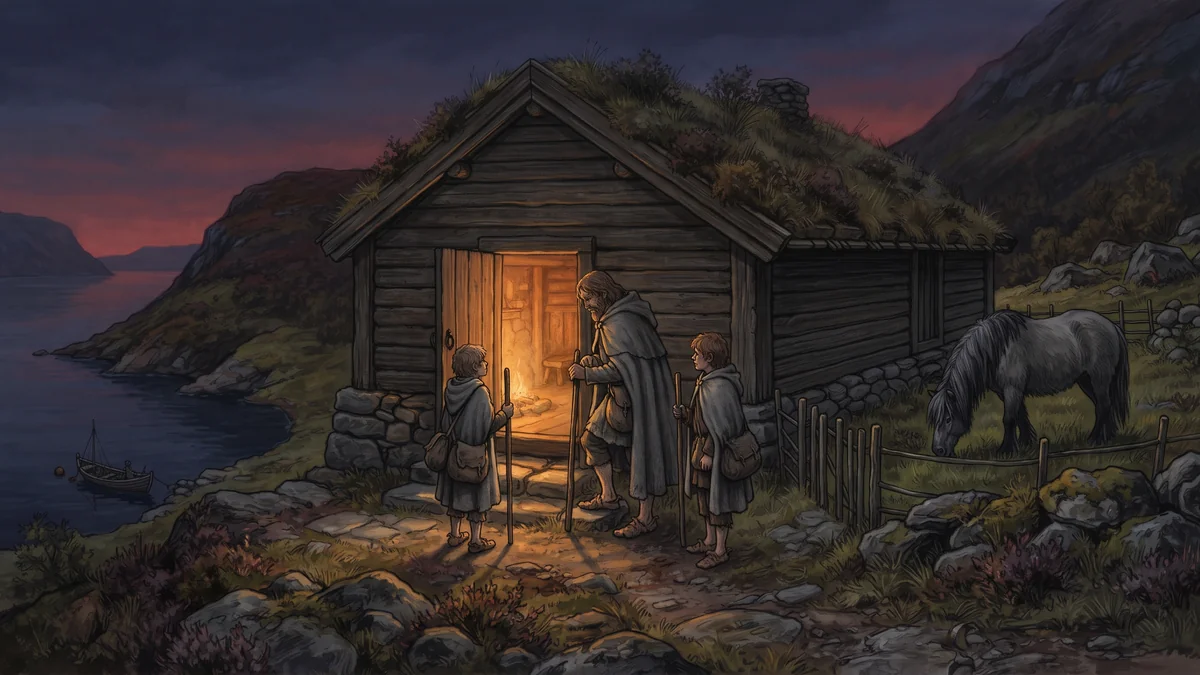
King Olaf II of Norway is fleeing Canute the Great and passes the headland. He has heard of the practice and wants to convert the family. He travels with only Finnr Árnason and Þormóðr Kolbrúnarskáld, and all three wear grey cloaks to hide who they are.
They arrive after dark, and the daughter asks who they are. All three say their name is Grímr, “hooded”. The girl is not fooled, says she recognises Olaf, and he asks her to keep quiet.
The dinner and the conversion
The household invites them to dinner. The old woman comes in last with the völsi, places it in her husband’s lap and recites the verse. The husband does the same, and the ritual goes on until everyone but the king has recited. When his turn comes, Olaf reveals himself and preaches Christianity. The old woman resists, and her husband is interested. In the end, all agree to be baptised by the king’s chaplain and remain Christian.
What scholars say
The page says the tale “appears to preserve traditions of a pagan phallus cult”, the völsi. But it carries a notice that it needs more citations, and the passage on the ritual is the one most lacking a source. The text is late and was written by Christians with an aim of edification. It may hold an old memory, but it does not prove by itself that the ritual existed like this.
In short
Völsa þáttr tells how King Olaf, with Finnr Árnason and Þormóðr Kolbrúnarskáld, all three in grey cloaks and under the false name Grímr, came to a farm where the völsi was worshipped, a horse’s organ wrapped in linen with onions and herbs. The ritual ends with the family’s baptism. It is a possible clue, but not proof, of an old cult.
To repeat the order of the three travellers in grey cloaks, play The three travellers in grey cloaks.
Sources.
- English Wikipedia, article "Völsa þáttr", with the summary of the Flateyjarbók account and the note on the cult